

Personal Trainer Blog
Fitness | Wellness | Diet Self-Improvement

Health and Fitness at your finger tips
Learn fitness, healthy whole food diets, wellness, and other personal training tips/recipes from Denver's weight loss personal trainer.

6 Transformational Wellness Books Recommended by a Denver Personal Trainer
ABSTRACT
Explore Michael Moody’s curated list of the best wellness books for personal transformation and holistic health. Each science-backed title, from metabolic health to longevity, delivers actionable strategies to boost energy, focus, and emotional well-being. Discover why a Denver personal trainer recommends these reads to every client seeking sustained motivation and deeper mindfulness. Start your holistic health journey today with this powerful wellness reading list.
Keywords
Wellness books
Best wellness books
personal transformation books
Holistic Wellness Reading List
Metabolic Health Book
Longevity Science Book
Focus and productivity book
Mindfulness Meditation Book
Personal Trainer Book Recommendations
Denver personal trainer
Good Energy Casey Means
Deep Work Cal Newport
Stolen Focus attention
Compound effect habits

Transforming yourself is more than focusing on your physique in the personal training studio. It is a comprehensive approach that examines your emotional, mental, and physical being and their unique intersection. If you truly want to elevate who you are and how you live, I recommend reading these books. Over the past year, I compiled this short list based on my research and generous recommendations from trusted people. You will notice a heightened awareness of your health if you check off each one. My personal training clients have benefited from reading these books, and you might be the next!
List of Wellness Books
Good Energy: The Surprising Connection Between Metabolism and Limitless Health – Casey Means
In Good Energy, Casey Means reveals how optimizing your metabolic health can unlock abundant energy and overall wellness. The book explains in an approachable way how metabolism affects everything from your physical fitness and weight management to mood and mental clarity. It highlights science-backed strategies, such as nutrition and lifestyle changes, to improve metabolism, offering a blueprint for preventing disease and promoting a longer, healthier life. Packed with actionable advice, Good Energy empowers you to take control of your metabolism and improve your energy levels and long-term health outcomes. This book has influenced my recommendations for annual health tests and helped restore a focus on the metabolic health of my personal training clients. It will soon replace Dr. Fuhrman’s book as the complimentary book I offer to anyone who signs up for in-person sessions with a personal trainer.
Deep Work: Rules for Focused Success in a Distracted World – Cal Newport
Cal Newport’s Deep Work: Rules for Focused Success in a Distracted World is an eye-opening guide to mastering concentration for greater productivity and personal success. Newport argues that the ability to focus deeply on a task is like a superpower in today’s world, filled with distractions. He provides practical rules to help you eliminate digital distractions and train your mind for sustained attention. By cultivating mental clarity and discipline, you can achieve more in less time, whether it's completing your work projects or staying committed to your fitness and wellness goals. Approachable and insightful, Deep Work inspires you to create an environment and mindset that foster peak performance and meaningful progress in all areas of life. Arguably, this book will be the most influential in my personal and professional life by the end of 2025.
Why Buddhism is True: The Science and Philosophy of Meditation and Enlightenment – Robert Wright
Robert Wright’s Why Buddhism is True: The Science and Philosophy of Meditation and Enlightenment explores how ancient mindfulness practices can improve modern mental health and focus. Wright combines evolutionary psychology and neuroscience with Buddhist philosophy to explain why our minds often struggle with anxiety and distraction, and how meditation can help rewire our brains for greater peace and clarity. The book is both scientific and encouraging, showing that practices like mindfulness meditation are not just spiritual ideals but practical tools for emotional well-being and concentration. If you're on a wellness journey, 'Why Buddhism is True' offers approachable insights into meditation that can help reduce stress, enhance self-awareness, and even complement your fitness and personal growth goals. At the very least, this book has helped my personal training clients separate themselves from their feelings and reassess their connection to the present moment.
Stolen Focus: Why You Can't Pay Attention—and How to Think Deeply Again – Johann Hari
Johann Hari’s Stolen Focus: Why You Can't Pay Attention—and How to Think Deeply Again investigates the modern-day attention crisis and offers solutions to regain your ability to concentrate. Hari explains how factors like technology, stress, and information overload are hijacking our focus, leading to reduced productivity and more anxiety. The book offers actionable ideas to rebuild your attention span and think deeply again – a skill that benefits not only work and learning but also your overall health, fitness, and personal growth. With its engaging storytelling and research, Stolen Focus motivates you to reclaim mental clarity and become more present, which is essential for mindful wellness and effective training. Most certainly, Hari’s book has reshaped my relationship with social media.
The Compound Effect – Darren Hardy
Darren Hardy’s The Compound Effect shows how small, consistent actions can compound into extraordinary results in your fitness, career, or personal life. Hardy illustrates that every healthy choice – whether it's a daily workout, a nutritious meal, or a positive habit – adds up over time to improve your physical health and motivation significantly. This book offers practical tips on building routines and staying consistent, emphasizing that gradual progress is the key to long-term success and wellness. With its motivational tone and clear examples, The Compound Effect inspires you to take charge of your daily habits and realize your full potential on your personal development journey.
How to Know a Person: The Art of Seeing Others Deeply and Being Deeply Seen – David Brooks
In "How to Know a Person: The Art of Seeing Others Deeply and Being Deeply Seen," David Brooks explores the power of empathy and genuine connection for your overall well-being. In this thoughtful book, Brooks explains how truly understanding and listening to others, and allowing yourself to be seen, can enrich your relationships and emotional well-being. He offers practical advice and heartwarming stories on improving communication skills, presence, and compassion, which can reduce stress and loneliness. By fostering deeper human connections, How to Know a Person helps you grow personally and build a supportive social environment – an often-overlooked aspect of a healthy, balanced wellness journey.
ABOUT THE AUTHOR: MICHAEL MOODY, PERSONAL TRAINER
As an author, a personal trainer in Denver, and podcast host, Michael Moody has helped personal training clients achieve new fitness heights and incredible weight loss transformations since 2005. He also produces the wellness podcast "The Elements of Being" and has been featured on NBC, WGN Radio, and PBS.
Michael offers personal training to Denver residents who want to meet at the 2460 W 26th Ave studio….or in their homes throughout LoHi (80206), LoDo (80202), RiNo (80216), Washington Park (80209), Cherry Creek (80206, 80209, 80243, 80246, 80231), and Highlands (80202, 80211, 80212). Michael also offers experiences with a personal trainer in Jefferson Park (80211) and Sloan's Lake (80204, 80212).
PERSONAL TRAINER BLOG

Nutrition for Pain Relief and Energy: How Food Lowers Inflammation, Fatigue, and Depression
ABSTRACT
Discover how an anti‑inflammatory diet rich in colorful fruits, vegetables, and lean protein can curb pain and chronic inflammation. Eating a balanced, nutrient-dense breakfast helps stabilize blood sugar and combat midday fatigue. Learn the link between nutrition and depression, and how omega‑3 and vitamin‑rich foods boost mood naturally. Start prioritizing nutrition for pain relief, sustained energy, and total body wellness today.
Keywords
Nutrition for pain relief
Anti‑inflammatory diet
Foods that fight fatigue
Healthy breakfast ideas
Nutrition and depression
Eliminate inflammatory foods
Omega-3 rich foods
Benefits of colorful fruits and vegetables
Diet to reduce chronic pain
Food and mood connection

Candy Bar Weight Loss / Photo: Karolina Grabowska
Introduction
It's incredible how easily we overlook the hidden powers of your plate. If you're looking to curb pain, fatigue, and more, the honest answer lies in front of you (from the nutrition article "How Your Food Can Minimize Pain, Fatigue, and More").
1. “You’re Not You When You’re Hungry.”
So goes the famous advertising campaign which portrayed Snickers candy as a “bar of substance” that could change Betty White into a healthy 20-something man playing football with his friends. It was an ad that catapulted Snickers sales sky high with a simple message: When you’re hungry, you aren’t yourself.
While the candy bar may not be the energy-sustainer it’s claimed to be in commercials; the message rings true for nutrition. Our bodies and moods are affected when we don’t eat or when we make bad food choices. A classic example (and the one that Snickers feeds into) is skipping meals. When you miss meals, your blood sugar slumps and your mood falls right along with it. Studies have shown that a healthy breakfast really should be considered the most important meal of the day, as it helps people of all ages fuel themselves for the day, and helps enable them to make healthy choices all day long. But with busy lifestyles, it’s no wonder many of us skip breakfast completely, or eat something devoid of nutrition (like donuts) on the go. But a processed breakfast won’t cut it if we want to reap nutritional benefits.
Personal Trainer Wisdom: A nutritional breakfast may not ultimately fuel your day, but it will provide the necessary fuel until your next meal. Our body is equipped with a peripheral system to handle deficiencies. However, it doesn't mean it will operate most effectively or efficiently under those constant conditions. Eat a breakfast with the vitamins, phytonutrients, fiber, and protein your body needs. Save the donuts for a treat, not a meal.
2. Minimize Pain, Inflammation, and More
Doctors at the Mayo Clinic note that a healthy diet for everyone should include fruits, vegetables, and lean proteins. Furthermore, people suffering from pain should avoid foods that exacerbate inflammation. Inflammation leads to pain and is the body’s response to foods like refined sugar, processed flour, cereals, white rice, potatoes, and red meats. Eliminating these foods from your diet can help if you suffer from chronic pain. Certain foods also have analgesic (pain-relieving) properties. Adding colorful fruits and vegetables supplies your body with rich vitamins and omega-3s to regulate pain.
Personal Trainer Wisdom: Whether you routinely experience bouts of gout or live with chronic pain, the answer to your relief may lie on your plate. Not only do you want to incorporate the appropriate nutritional ratio for your body to operate efficiently, but you also want to avoid the big inflammatory six: dairy, alcohol, grains, red meats, processed foods, and refined sugars. While this list will depress any Midwestern resident, it shouldn't be ignored. If you're not prepared to go "all in," you may want to see what you can get away with by removing a little of each from your diet.
3. Nutrition and Depression
Body chemistry is also important when it comes to the treatment of depression. We typically think of depression as an emotional issue, but what goes into our bodies matters. In addition to emotional triggers, psychological triggers, and biochemical imbalances, nutritional deficiency can contribute to depression. Lack of amino acids, omega 3s, and vitamin D play a role. Understanding blood sugar and food intolerance are also important, and increasing intake of specific vitamins and nutrients can be a big factor in treating depression.
Personal Trainer Wisdom: The connection between the mind and body extends beyond a meditation session on a pier in Guatemala. Any deficiency or improper nutrition will affect all aspects of your health, including your mental and emotional well-being.
4. A Broken Record Worth Listening To
If this is starting to sound like a broken record, that’s because the message is consistent: Managing blood sugar, reducing processed foods, and increasing intake of colorful vegetables and fruits are effective strategies in managing health. But could nutrition even help with drug and alcohol rehabilitation? As a matter of fact, it can play a huge role in addiction recovery. Drug and alcohol use is often coupled with bad nutritional habits that vary depending on the class of substance; for marijuana users, obesity may be an issue, while stimulant users may be severely underweight. In any case, good nutritional habits can reduce withdrawal symptoms, repair damaged cells, and reduce the risk of relapse. That’s because proper nutrition helps deter exhaustion or mood issues that may lead to using again. It is also an important part of how your body naturally detoxes and can reduce the discomfort of withdrawal.
It is amazing how a diet rich in vitamins, protein, and complex carbohydrates not only improves weight but can also reduce or eradicate the symptoms of illness and disease. A healthy diet can be preventative, but also curative.
Personal Trainer Wisdom: When your basic survival needs are met, you will have the strength, energy, and focus to participate effectively and efficiently in the world around you. Make your nutrition a priority. It is the foundation of your physical, mental, and emotional self.
ABOUT THE AUTHOR: MICHAEL MOODY, PERSONAL TRAINER
As an author, a personal trainer in Denver, and podcast host, Michael Moody has helped personal training clients achieve new fitness heights and incredible weight loss transformations since 2005. He also produces the wellness podcast "The Elements of Being" and has been featured on NBC, WGN Radio, and PBS.
Michael offers personal training to Denver residents who want to meet at the 2460 W 26th Ave studio….or in their homes throughout LoHi (80206), LoDo (80202), RiNo (80216), Washington Park (80209), Cherry Creek (80206, 80209, 80243, 80246, 80231), and Highlands (80202, 80211, 80212). Michael also offers experiences with a personal trainer in Jefferson Park (80211) and Sloan's Lake (80204, 80212).
If you’re looking for a personal trainer who can curate a sustainable (and adaptable) routine based on your needs and wants, Michael is the experienced practitioner you’ve been looking for. Try personal training for a month…your body will thank you!

5 Breakfast Mistakes Sabotaging Your Weight‑Loss Goals
ABSTRACT
Are your breakfast habits secretly sabotaging weight loss? Learn the biggest breakfast mistakes—from low protein to refined carbs—and how to fix them fast. Get expert portion control tips and low‑calorie, high‑protein breakfast ideas that curb cravings all morning. Master healthy breakfast habits and start your morning routine for sustained fat‑loss success.
Keywords
Breakfast mistakes
Weight loss breakfast tips
Healthy breakfast habits
High‑protein breakfast ideas
Avoid refined carbs breakfast
Portion control breakfast
Low-calorie breakfast ideas
Breakfast smoothie calories
Best breakfast for weight loss
Morning routine weight loss

Breakfast Weight Loss / Photo: Pixabay
Introduction
My head often spins when I hear what my personal training clients choose for breakfast, although I’m not perfect either. There’s no doubt about it: Your weight loss is affected by every little choice you make after rolling out of bed. I’ve highlighted the biggest mistakes you’re making from the MSN article "If You're Trying to Lose Weight, Don't Make These 10 Breakfast Mistakes.”
The List of Mistakes
1. NOT ENOUGH PROTEIN
While toast or a bowl of granola is quick and easy, it does not offer nearly as much protein as you need to have energy all morning. You'll just feel blah and end up reaching for a sugary pick-me-up. There is no need to go overboard and slurp down a 30-gram protein shake—13 to 20 grams is perfect.
Personal Trainer Wisdom: Translation: You probably need more protein because of a protein deficiency due to your cereal-donut-cinnamon roll ways. It isn’t permission to overload your diet with protein, though. Despite what you hear, 13-20 grams of protein is more than enough for the average human (that’s you…and me!). Skip the refined carbs (also known as Cookie Crunch Cereal) and make an organic veggie skillet with onions, green peppers, jalapenos, cubed butternut squash, almonds, hemp seeds, and salsa. Add it to an organic corn tortilla for another twist.
2. NOT MEASURING INGREDIENTS
Whether you're pouring a bowl of cereal with fruit, nuts, and coconut, crafting a jar of overnight oats, or whipping up a smoothie, just because you're using all healthy ingredients doesn't mean it'll help you lose weight. It all boils down to portion sizes and measuring ingredients (instead of eyeballing) to ensure you stay within your limit.
Personal Trainer Wisdom: If you’ve never measured what you’re eating, you’re most likely pretty far off from what you think. We can rely on our beautiful minds for everything, but let’s be honest: It has skewed past things and might be skewing your breakfast perspective now (maybe your relationship, too :) ). Determine your proper intake by measuring each of your favorite meals. If you plan to eat those dishes “on repeat” anyway, you might as well be confident you’re getting what you expect.
3. TOO MANY REFINED CARBS
Sometimes, a baked good for breakfast is necessary, but if you load up on refined carbs and sugar (even if those blueberry muffins are made with flax meal!), you'll need a baked good for breakfast. Still, if you load up on refined carbs and sugar (even if those blueberry muffins are made with flax meal!), you'll feel super hungry within a few hours after that last bite. If you crave these foods, go for small portions and pair them to end up feeling super hungry within a few hours after that last bite. If you crave these foods, go for small portions and pair it with a protein smoothie, or bake your own with protein powder, whole grains like rolled oats, and less sugar.
Personal Trainer Wisdom: Normally, I would overlook this type of paragraph and pretend it never existed. I know that you’ll see it anyway, though. What starts with the right message—too many refined carbs (i.e., most cereals, donuts, sugary sweet goodness, etc.)—ends with unconscious permission and another push for a protein focus. First, a baked good is never necessary (don’t kid yourself). You can easily keep a jar of organic applesauce or fresh fruits around the house. Nothing in the house? I’m sure you can steer your vehicle towards a quick shop to find them, too. If you choose a baked good, call it what it is- An indulgence. Accept the consequences, dance around in glory, and return to your nutritionally balanced habits with meal number two (which will be sooner than later). You haven't met your nutritional needs, and your body needs proper fuel. Second, quit focusing on protein already… You think bigger than that. You need fiber, vitamins, protein, (good) fat, and the million other micronutrients you can find in your whole foods. If you must indulge in just a tiny bite of donuts, be sure the rest of your plate is the proper mix of what’s best. A highly processed, nutritionally stripped powder won’t cut it either, Arnold Schwarzenegger.
4. TOO MANY CALORIES
With all the amazingly delicious options out there for breakfast, it's easy to go a little overboard. Aim for a range between 300 and 400 calories. If you're not into counting calories, Leslie Langevin, MS, RD, CD, of Whole Health Nutrition, suggests eating slowly and stopping when you are 80 percent full.
Personal Trainer Wisdom: We think we need more calories than we do. On average, you only need 300-500 calories per meal, a far cry from the typical Midwestern diet. Anything above is mainly stored as fat (or converted into something else nasty…and nobody likes nasty). Since I don’t expect my personal training clients to count the calories of every meal, I think eating slowly and mindfully stopping when appropriate is an excellent recommendation from Langevin.
5. DRINKING YOUR CALORIES
A frozen banana here, a scoop of peanut butter there, a big splash of vanilla soy milk - while smoothies are full of healthy ingredients if you mindlessly throw things in the blender, you could end up sipping down 800 calories or more! The same goes for specialty coffee drinks. Could you look at the menu before ordering a 500-calorie Frappuccino?
Personal Trainer Wisdom: Smoothies aren’t always as healthy as you think. Sugar-packed smoothies are often more dangerous than a Snickers bar. Even if you mindfully choose a slate of nutritious ingredients, the calorie count can still exceed what you need. Stick to the 300-500 calorie rule for your liquid meals and be mindful of the sugar content.
ABOUT THE AUTHOR: MICHAEL MOODY, PERSONAL TRAINER
As an author, a personal trainer in Denver, and podcast host, Michael Moody has helped personal training clients achieve new fitness heights and incredible weight loss transformations since 2005. He also produces the wellness podcast "The Elements of Being" and has been featured on NBC, WGN Radio, and PBS.
Michael offers personal training to Denver residents who want to meet at the 2460 W 26th Ave studio….or in their homes throughout LoHi (80206), LoDo (80202), RiNo (80216), Washington Park (80209), Cherry Creek (80206, 80209, 80243, 80246, 80231), and Highlands (80202, 80211, 80212). Michael also offers experiences with a personal trainer in Jefferson Park (80211) and Sloan's Lake (80204, 80212).
If you’re looking for a personal trainer who can curate a sustainable (and adaptable) routine based on your needs and wants, Michael is the experienced practitioner you’ve been looking for. Try personal training for a month…your body will thank you!

Trail Ridge Road Hike: Scenic Snowshoe Adventure from Many Parks Curve to Rainbow Curve in Rocky Mountain National Park
ABSTRACT
Discover the beauty of the Trail Ridge Road hike in Rocky Mountain National Park during mid-April. Experience scenic snowshoeing from Many Parks Curve to Rainbow Curve, enjoying panoramic views and moderate terrain with minimal traffic. Ideal for hikers of all endurance levels, this route provides an unforgettable spring hiking adventure in Colorado. Plan your RMNP visit for breathtaking vistas without the summer crowds.
Keywords
Trail Ridge Road hike
Rocky Mountain National Park hiking
Snowshoeing Colorado
Moderate hikes Colorado
April hikes Rocky Mountain National Park
Trail Ridge Road snowshoeing
Many Parks Curve to Rainbow Curve
RMNP winter trails
Scenic Colorado hikes
Best spring hikes RMNP

Rainbow Curve Trail Ridge Road
Colorado Hikes: Trail Ridge Road in Rocky Mountain National Park
Time of Year: Mid-April.
Weather: 42 degrees and sunny at 9:58 am.
Cover: 65% covered with a tree canopy.
Time: 9:58 am - 1:12 pm.
Distance: 8.01 miles total.
Cost: Daily or annual Rocky Mountain National Park pass.
Bathroom at Trailhead: No.
Difficulty: Moderate level 1 for altitude (10828 feet), elevation gain (1112 feet), and length (8.01 miles).
Route: Many Parks Curve parking lot to the Rainbow Curve parking lot on Trail Ridge Road and back.
Traffic: Light.
Parking: 5% full by 9:58 am, 95% at 1:15 pm.
Equipment: La Sportiva Trango Tech GTX Hiking Boots, Black Diamond Alpon Carbon Cork Trekking Poles, Osprey Talon 33 Backpack, MSR Lightning Ascent Snowshoes
Terrain: A paved road with intermittent sections of slushy snow (2-4 feet deep).
Experience: Hiking Trail Ridge Road at this time of year is truly a special experience. From mid-May through September, Rocky Mountain National Park is overwhelmed with tourists. While you can pull off onto sections of this iconic road, you most definitely won’t hike this path during that period (too many cars). During the winter, though, you can indulge in the views without steering off the side of the road. Yes, it’s a paved road, and this review probably makes many hard-core Colorado hikers cringe. We don’t need to lose ourselves in the woods every time for an adventure, right? It was truly a dystopian pleasure to check off eight miles with views from start to finish that are worthy of your consideration. Outside the last half mile, I also intersected with five other people. Undoubtedly, it was an intimate snow-shoeing experience from the Many Parks Curve parking lot to the Rainbow Curve parking lot.
Personal Trainer Notes: Personal training clients of any endurance level can enjoy this stretch of closed road in the Rocky Mountain National Park. While I extended my hike to eight miles, you will be equally satisfied with any less mileage. The scenic views begin as early as a block past the closed gate and continue as long as you want to trek.

Trail Ridge Road

Rocky Mountain National Park Winter

Rainbow Curve

Longs Peak Rocky Mountain National Park

Trail Ridge Road Rocky Mountain National Park

Colorado Hikes

Rocky Mountain National Park Hikes

Colorado Hiking

Trail Ridge Road Snowshoeing

Many Parks Curve

Rocky Mountain National Park Winter Hiking

Rocky Mountain National Park Snowshoeing
List of Hiking Trails in Colorado
To check out more hiking reviews with pictures, visit “List of Colorado Hikes.” You’ll find options across a spectrum of difficulty, including many trails in the foothills and front range.

Mount Democrat Hike
ABOUT THE AUTHOR: MICHAEL MOODY, PERSONAL TRAINER
As an author, a personal trainer in Denver, and podcast host, Michael Moody has helped personal training clients achieve new fitness heights and incredible weight loss transformations since 2005. He also produces the wellness podcast "The Elements of Being" and has been featured on NBC, WGN Radio, and PBS.
Michael offers personal training to Denver residents who want to meet at the 2460 W 26th Ave studio….or in their homes throughout LoHi (80206), LoDo (80202), RiNo (80216), Washington Park (80209), Cherry Creek (80206, 80209, 80243, 80246, 80231), and Highlands (80202, 80211, 80212). Michael also offers experiences with a personal trainer in Jefferson Park (80211) and Sloan's Lake (80204, 80212).
If you’re looking for a personal trainer who can curate a sustainable (and adaptable) routine based on your needs and wants, Michael is the experienced practitioner you’ve been looking for. Try personal training for a month…your body will thank you!
Personal Trainer Blog

Ultimate Guide to Whole Food Plant-Based Macros: Protein, Fiber, Healthy Fats, and Complex Carbs
ABSTRACT
Discover the ultimate list of whole food plant-based options rich in protein, fiber, healthy fats, and complex carbohydrates. Enhance plant-based nutrition with cashews, black beans, chia seeds, broccoli, and more. Optimize your diet with nutrient-dense greens, nuts, seeds, beans, lentils, fruits, and grains. Achieve optimal health effortlessly with these essential plant-based macro foods.
Keywords
Whole Food Plant-Based Protein
Whole Food Plant-Based Fiber
Whole Food Plant-Based Fat
Whole Food Plant-Based Complex Carbohydrates
Plant-based nutrition
Plant-based macro foods
High-protein vegan foods
High-fiber vegan foods
Healthy fats plant-based
Nutrient-rich vegan foods
Whole food vegan sources
Plant-based macros list
Plant-based diet essentials
Introduction
For whole-food, plant-based people with a macro focus, here is a master list of many options to meet your optimal health needs!

Whole Food Plant-Based Protein with Cashews
Whole Food Plant-Based Protein
Greens: Spinach, Broccoli, Collard greens, Green peas, Edamame, Avocado
Nuts: Cashews, Pistachios, Almonds, Brazil nuts, Hazelnuts, Walnuts, Macadamia nuts
Seeds: Chia seeds, Hemp seeds, Ground flaxseeds, Pumpkin seeds, Sunflower seeds, Pine nuts, Sesame seeds
Beans/Lentils: Garbanzo beans, Black beans, Black turtle beans, Pinto beans, Navy beans, Black-eyed peas, Split peas, White beans, Lentils, Italian beans, Kidney beans, Lima beans, Fava beans, Chickpeas, Great northern beans
Grains: Bulgar, Quinoa, Wild rice, Oats, Farro

Whole Food Plant-Based Fiber with Black Beans
Whole Food Plant-Based Fiber
Vegetables/Fruits: Spinach, Broccoli, Collard greens, Green peas, Edamame, Avocado, Apples, Bananas, Strawberries, Kale, Peas, Prunes, Asparagus, Blueberries, Raspberries
Nuts: Cashews, Pistachios, Almonds, Brazil nuts, Hazelnuts, Walnuts, Macadamia nuts
Seeds: Chia seeds, Hemp seeds, Ground flaxseeds, Pumpkin seeds, Sunflower seeds, Pine nuts, Sesame seeds
Beans/Lentils: Garbanzo beans, Black beans, Black turtle beans, Pinto beans, Navy beans, Black-eyed peas, Split peas, White beans, Lentils, Italian beans, Kidney beans, Lima beans, Fava beans, Chickpeas, Great northern beans
Grains: Bulgar, Quinoa, Wild rice, Oats, Farro

Whole Food Plant-Based Fat with Chia Seeds / Courtesy of Eat This Not That .com
Whole Food Plant-Based Fat
Vegetables: Avocado
Nuts: Cashews, Pistachios, Almonds, Brazil nuts, Hazelnuts, Walnuts, Macadamia nuts
Seeds: Chia seeds, Hemp seeds, Ground flaxseeds, Pumpkin seeds, Sunflower seeds, Pine nuts, Sesame seeds

Whole Food Plant-Based Complex Carbohydrates
Vegetables: Spinach, Broccoli, Collard greens, Green peas, Edamame, Avocado, Kale, Peas, Bok choy, Brussels sprouts, Cabbage, Kale, Chard, Radishes, Arugula, Dandelion greens, Artichoke, Raddichio, Endives, Eggplants, Rocket, Tomato, Red cabbage, Bell peppers, Carrots, Turnip greens, Sweet potatoes, Acorn squash, Pumpkin, Spaghetti squash, Zucchini, Beets, Cauliflower, Turnips, Okra, Onions, Mushrooms (low but healthy), Garlic (low but healthy), Cucumbers
Fruits: Açaí, Apple, Banana (high sugar), Blackberry, Black currant, Blueberry, Boysenberry, Cactus pear, Cherry (high sugar), Coconut, Date (high sugar), Dragonfruit, Elderberry, Fig (high sugar), Gojiberry, Gooseberry, Grape (high sugar), Grapefruit, Guava, Jackfruit, Kiwifruit, Lychee, Mango (high sugar), Melon, Cantaloupe, Honeydew, Watermelon, Nectarine, Orange, Blood orange, Clementine, Mandarine, Tangerine, Papaya, Passionfruit, Peach, Pear, Plantain, Plum (high sugar), Prune (dried plum/high sugar), Pineapple, Pomegranate seeds, Raspberry, Star fruit, Strawberry
Beans/Lentils: Garbanzo beans, Black beans, Black turtle beans, Pinto beans, Navy beans, Black-eyed peas, Split peas, White beans, Lentils, Italian beans, Kidney beans, Lima beans, Fava beans, Chickpeas, Great northern beans
Grains: Bulgar, Quinoa, Wild rice, Oats, Farro
ABOUT THE AUTHOR: MICHAEL MOODY, PERSONAL TRAINER
As an author, a personal trainer in Denver, and podcast host, Michael Moody has helped personal training clients achieve new fitness heights and incredible weight loss transformations since 2005. He also produces the wellness podcast "The Elements of Being" and has been featured on NBC, WGN Radio, and PBS.
Michael offers personal training to Denver residents who want to meet at the 2460 W 26th Ave studio….or in their homes throughout LoHi (80206), LoDo (80202), RiNo (80216), Washington Park (80209), Cherry Creek (80206, 80209, 80243, 80246, 80231), and Highlands (80202, 80211, 80212). Michael also offers experiences with a personal trainer in Jefferson Park (80211) and Sloan's Lake (80204, 80212).
If you’re looking for a personal trainer who can curate a sustainable (and adaptable) routine based on your needs and wants, Michael is the experienced practitioner you’ve been looking for. Try personal training for a month…your body will thank you!

The Elements of Being with Dr. Joel Fuhrman
EPISODE #10 - EAT FOR LIFE, WEIGHT LOSS, AND AN OPTIMAL IMMUNE SYSTEM WITH BEST SELLING AUTHOR DR. FUHRMAN
On “The Elements of Being” podcast, Michael dissects and explores the minds and habits of psychologists, filmmakers, writers, and industry icons. Essentially, you learn what makes them flip the switch to achieve incredible feats, goals, and milestones…and a chance to geek out over the psychology behind human behavior. In this episode, Michael interviews Dr. Joel Fuhrman, an internationally recognized nutrition and natural healing expert and author of seven New York Times bestsellers, including his most recent book, Eat for Life. His other bestsellers include Eat to Live and The End of Dieting (which I give to all my clients).
Read more and listen here…..You can also listen to all episodes on Apple, Spotify, Overcast, Castbox, Stitcher, or your favorite podcast platform!
Personal Trainer Blog

7 Proven Ways to Lose a Pound a Day | Cut Sugar, Boost Fiber, and Stop Counting Calories
ABSTRACT
Discover how to lose a pound daily with proven strategies that eliminate added sugars, boost healthy fiber intake, and retrain your taste buds. Learn why mindful eating beats calorie counting and how ditching soda can rapidly accelerate your weight loss journey. Say goodbye to processed foods and hello to a naturally slimmer you. Start your fast, healthy, and sustainable weight loss today!
Keywords
Lose a pound a day
How to lose weight fast
Eliminate added sugars
Healthy fiber for weight loss
Retrain taste buds
Stop counting calories
Mindful eating weight loss
Stop drinking soda
Avoid processed foods
Natural weight loss tips

Fast Food Diet / Photo: Giona Mason
Introduction
Are you ready to jump on the weight-loss wagon before the start of summer? I've found a few ways you probably haven't tried yet (from the weight loss list "14 Ways to Lose a Pound a Day").
1. DITCH THE ADDED SUGARS
I’m not here to tell you that you’ve got to give up your sweets, comfort foods or guilty pleasures...target added sugars—the sugars and syrups added to foods and drinks when they’re processed or prepared. You’ll learn how to spot them, eliminate them, and break free of them for life. The result will be almost instantaneous weight loss....test panelist Sandy Villegas, 62, of Monroe Township, NJ, tried diet plans like Weight Watchers, but says: “I was not eating healthy because I ate a lot of refined carbs every day. Pretty soon, I noticed I was hitting a weight loss plateau, and my stomach was as bloated as ever!” After two weeks of eliminating added sugars....“My stomach is gone,” she says, “and my husband lost six pounds!”
Personal Trainer Wisdom: As we know, not all calories are the same. The perfect start to changing your diet is to dissect the list of ingredients of each item. What is in your favorite foods? Do you know? Many experts tell you to avoid ketchup because of high fructose syrup. Did you know Heinz makes ketchup with all-natural ingredients and zero high fructose syrup (Simply Heinz)? A simple product change could be the answer before you remove everything from your weight loss diet.
2. UP THE HEALTHY FIBER
By simply ensuring your foods have enough fiber, ....they slow the progress of carbohydrates through your body; it gives you a continuous, steady dose of energy, so you never get the “I’m empty” signal. Oh, you’ll eat plenty of food, but not because you’re ravenous. Because it tastes so good! Fiber also lowers the glycemic index (GI) of foods, meaning the rate at which they’re turned into toxic blood sugar, leading to all sorts of health benefits. In fact, a review from the University of Texas MD Anderson Cancer Center discovered that habitual intake of fiber from whole grains reduced the risk of coronary heart disease by 20 to 40 percent, and the risk of diabetes by 20 to 30 percent.
Personal Trainer Wisdom: On the other hand, whole grains can also lead you to diabetes or weight gain. Despite the health claims, whole grains are a mixed bag of beans (pun intended). It is a valuable fiber source but can also destroy your health. If you incorporate unprocessed whole grains (oats, bulger, wild rice, etc.) in your weight loss diet, never consume more than 1 serving or a quarter of your plate for each meal. Or choose a serving of the less inflammatory portion of beans.
3. RETRAIN YOUR TASTEBUDS
It’s easy to give up the added sugars because, after just 14 days, the sweet stuff will taste too sweet. That’s the secret to long lasting results... Test panelist Tara Anderson, 42, of Leonardo, NJ, says that after four weeks... “What I love about it is the way it’s retrained my taste buds. I have had a little sugar a few times, and it’s way too sweet now. I’m still trying to get used to coffee without sugar!” Better yet, it’s helped her feel healthier overall. “The best part for me is not feeling sick anymore or having migraines! I feel really good and will continue this way of life."
Personal Trainer Wisdom: The same applies to salt. The more you eat with each meal, the more immune you become to its natural, robust flavor. You might be surprised how little you need of each when you retrain your taste buds (and mind).
4. STOP COUNTING CALORIES
I found proof that it just doesn’t work. Researchers in Australia looked at different kinds of diets, including low-sugar and high-protein diets, to see if they made a difference in how the dieters’ bodies reacted. They put all of the subjects on the same number of calories, and broke them into four groups, trying out variations on high- and low-protein and high and low-sugar plans. They found that all things being equal, reducing sugar helped people lose weight faster, even when overall calories remained the same. In short, a high-carb, low-sugar diet was the best for cutting both fat and cardiovascular risk.
Personal Trainer Wisdom: Hmmmm....the author says don’t count calories, but everyone on these diets was on the same number of calories. The moral of the story here is that substance is king. The simple analysis of calories in vs. calories out isn't enough. Again, you can still have too much of a good thing (think: Watching Gilmore Girls repeatedly....). I've witnessed personal training clients gain weight while cutting out inflammatory foods. Keep your overall calorie count at the appropriate level for your body.
5. EAT MINDFULLY
Becoming more aware—not just of what you eat, but of every aspect of your daily life— can have a serious impact on your body and your overall health. In a 2015 study, Brown University researchers asked nearly four hundred people to complete a mindfulness-awareness survey. Then, they X-rayed the subjects’ bellies to determine their degree of belly fat. What they found was that the higher people scored on the mindfulness survey, the less visceral fat they were likely to have! In fact, people who are less mindful have, on average, an extra pound of fat inside their bellies.
Personal Trainer Wisdom: Mindfulness and meditation may help you minimize the emotional connection to your foods and stress (which can also lead to less belly fat).
6. STOP THE SODA
Every can of Coke has the sugar equivalent of four Krispy Kreme glazed doughnuts. And the soda industry is doing every they can to help you forget that. Coca-Cola was recently unmasked as the number one sponsor of the Academy of Pediatrics’ HealthyChildren.org website, and it has given nearly $3 million to the academy over the past six years, according to The New York Times. And recent studies finding that a lack of energy expenditure in adolescents contributed greatly to the obesity crisis turn out to have been funded by Coke. Fight back by swapping your soda for unsweetened Honest Tea or Tejava Tea instead—each has zero sugar.
Personal Trainer Wisdom: Repeat after me: "ALL flavored sodas (regular and diet) are treats, not drinks....ALL flavored sodas (regular and diet) are treats not drinks....ALL flavored sodas (regular and diet) are treats, not drinks....."
7. SKIP THE CHEMICALS
You’re probably eating them without even knowing it. “Ultra-processed” foods now make up more than half of all calories consumed in the United States, according to a 2016 report in the online journal BMJ Open. “Ultra-processed” means any product that uses a non-food substance (preservatives, emulsifiers, artificial flavorings) that you simply wouldn’t use in a recipe you were making from scratch. And that, by the way, is where 90 percent of all our added sugar comes from.
Personal Trainer Wisdom: If you can't pronounce the ingredient's name in your favorite food, your body won’t process it well. Your choice: Do you want your body to waste energy on foreign invaders or help you lose weight efficiently?
How else do you think you can lose a pound a day?
ABOUT THE AUTHOR: MICHAEL MOODY, PERSONAL TRAINER
As an author, a personal trainer in Denver, and podcast host, Michael Moody has helped personal training clients achieve new fitness heights and incredible weight loss transformations since 2005. He also produces the wellness podcast "The Elements of Being" and has been featured on NBC, WGN Radio, and PBS.
Michael offers personal training to Denver residents who want to meet at the 2460 W 26th Ave studio….or in their homes throughout LoHi (80206), LoDo (80202), RiNo (80216), Washington Park (80209), Cherry Creek (80206, 80209, 80243, 80246, 80231), and Highlands (80202, 80211, 80212). Michael also offers experiences with a personal trainer in Jefferson Park (80211) and Sloan's Lake (80204, 80212).
If you’re looking for a personal trainer who can curate a sustainable (and adaptable) routine based on your needs and wants, Michael is the experienced practitioner you’ve been looking for. Try personal training for a month…your body will thank you!

Deer Mountain Trail in Rocky Mountain National Park: A Perfect Colorado Hike for Early March
ABSTRACT
Discover Deer Mountain Trail, one of the best moderate hikes in Rocky Mountain National Park, offering stunning views without the crowds. Ideal for Colorado hiking in March, this 6.45-mile trail at 10,007 feet elevation has minimal avalanche risk and manageable terrain. Enjoy an easy-to-follow route with sunny conditions, excellent traction, and spectacular scenery near Estes Park. Plan your winter hike now for unforgettable Rocky Mountain National Park trails.
Keywords
Deer Mountain Trail
Rocky Mountain National Park hikes
Colorado hiking trails
March hiking Colorado
Winter hikes RMNP
Moderate hikes Rocky Mountain National Park
Avalanche-safe hikes Colorado
Deer Mountain elevation gain
Rocky Mountain National Park trails
Best winter hikes Colorado

National Park Hikes
Colorado Hikes: Deer Mountain Trail in Rocky Mountain National Park
Time of Year: Beginning of March.
Weather: 41 degrees and sunny at 8:58 am.
Cover: 65% covered with a tree canopy.
Time: 8:58 am - 11:53 am.
Distance: 6.45 miles total.
Cost: Daily or annual Rocky Mountain National Park pass.
Bathroom at Trailhead: Nearby.
Difficulty: Moderate level 1 for altitude (10007 feet), elevation gain (1421 feet), and length (6.45 miles).
Route: Deer Mountain Trail and back.
Traffic: Light.
Parking: 50% full by 8:58 am.
Equipment: La Sportiva Trango Tech GTX Hiking Boots, Black Diamond Alpon Carbon Cork Trekking Poles, Osprey Talon 33 Backpack
Terrain: A gravel dirt path with rocks until halfway up. A packed snow-covered trail to the peak.
Experience: For personal training clients looking for the views of Rocky Mountain National Park without the crowds and parking challenges, Deer Mountain Trail is an underrated option. Just situated beyond the entrance of the park, you’re granted outstanding views with less of the work and drive. While the remainder of Rocky Mountain National Park should undoubtedly be explored, Deer Mountain is somewhat from the winter conditions with a lower elevation. The trail was well-marked and easy to follow and offered a hiking experience in March without the threat of avalanches.
Personal Trainer Notes: As I mentioned before in past reviews of winter hikes, avalanche danger is a concern and should be the focus of any trail consideration above 9000 feet of elevation. While I prepared to snowshoe on this hike, the incredible Colorado weather granted me a t-shirt day without risk. Mild temperatures with a warm sun and no mud. While the microspikes were necessary on the upper half of the trail, traction was great. Definitely consider this trail for a taste of a national park during the colder months of Colorado.

Winter Hikes Colorado

Colorado Hikes

Rocky Mountain National Park Hiking

Deer Mountain

RMNP Hikes

Rocky Mountain National Park
List of Hiking Trails in Colorado
To check out more hiking reviews with pictures, visit “List of Colorado Hikes.” You’ll find options across a spectrum of difficulty, including many trails in the foothills and front range.
Mount Democrat Hike
ABOUT THE AUTHOR: MICHAEL MOODY, PERSONAL TRAINER
As an author, a personal trainer in Denver, and podcast host, Michael Moody has helped personal training clients achieve new fitness heights and incredible weight loss transformations since 2005. He also produces the wellness podcast "The Elements of Being" and has been featured on NBC, WGN Radio, and PBS.
Michael offers personal training to Denver residents who want to meet at the 2460 W 26th Ave studio….or in their homes throughout LoHi (80206), LoDo (80202), RiNo (80216), Washington Park (80209), Cherry Creek (80206, 80209, 80243, 80246, 80231), and Highlands (80202, 80211, 80212). Michael also offers experiences with a personal trainer in Jefferson Park (80211) and Sloan's Lake (80204, 80212).
If you’re looking for a personal trainer who can curate a sustainable (and adaptable) routine based on your needs and wants, Michael is the experienced practitioner you’ve been looking for. Try personal training for a month…your body will thank you!
Personal Trainer Blog

Dining Out with Diabetes: The 3 Best and Worst Meals for Diabetics
ABSTRACT
Dining out with diabetes can be challenging, but knowing the best and worst meals helps. Discover diabetes-friendly dishes like oatmeal breakfasts, beef enchiladas, and lean pork meals, plus high-carb, calorie-heavy meals to avoid. Learn effective carb-counting tips for healthier choices and weight loss. Stay mindful to manage your diabetes and make eating out enjoyable again!
Keywords
Meals for diabetes
Best meals for diabetics
Worst meals for diabetics
Dining out with diabetes
Diabetic-friendly meals
Carb counting for diabetes
Weight loss for diabetics
Healthy eating for diabetics
Diabetes diet tips
Prediabetes meal planning
Low-carb restaurant meals
High-calorie restaurant meals to avoid

Diabetes Breakfast / Photo: Rama Khandkar
Introduction
Are you prediabetic or diabetic and attempting to lose weight? You can remember these three examples while dining out (from the Webmd article "Best and Worst Meals for Diabetes-Savvy Dining”).
The List of Best and Worst Meals for Diabetes
The WORSt Meal #1: FARM BREAKFAST
The count: 2,060 calories, 276 g carbs
The ingredients: 3 pancakes, 2 sausage links, 1 hash brown patty, and 2 scrambled eggs
No food is off-limits with diabetes, but this brunch will quickly blow your carb and calorie budget. Experts suggest that meals for people with diabetes should have 45-75 grams of carbohydrates, depending on individual goals. Your body weight, activity, and medications all matter. This meal packs enough carbs for four to five meals.The BEst Meal #1: NEW AMERICAN BREAKFAST
The count: 294 calories, 40 g carbs
The ingredients: Oatmeal with blueberries and scrambled eggs with spinach and light cheese
This quick meal delivers protein in a scrambled egg, and just 40 carbs, mostly from fiber-rich oatmeal and blueberries. Fiber slows digestion to help prevent blood sugar spikes. People with diabetes must watch all carbs: cereal, bread, rice, pasta, starchy veggies, sweets, fruit, milk, and yogurt. Could you spread your total carbs across the day?
Personal Trainer Wisdom: While I think your philosophy should be figuring out what you can get away with when it comes to eating, you have to be careful if you’re prediabetic or diabetic. In many cases, a meal overloaded with carbs can send you into a coma (a concern that shouldn’t be taken lightly….something I learned firsthand when a loved one passed several years ago). With this being said, you need to be mindful of your choices. If a meal is made on the farm, it must be healthy, right? I wish (although I love my visits to the Ray Farm in southern Indiana every summer). Although the farm breakfast is a favorite go-to, a whopping 276 g of carbs will send your blood sugar levels to the moon. Pancakes, potatoes, and syrup, oh my! Settle for WebMD's better combination of complex carbs and protein. Don’t kid yourself, though: Most dairy products contain carbs. Choose unsweetened almond or coconut milk with oatmeal to please your favorite personal trainer. And, by the way, WebMD, some foods SHOULD be off-limits….but that’s another conversation.
The Worst Meal #2: CHIPS, SALSA, BURRITO
The count: 1,760 calories, 183 g carbs
The ingredients: Chips, salsa, and everything you imagine on the burrito
Before one bite of burrito, you can get 98 grams of carbs and 810 calories in a basket of chips and salsa. If you're trying to slim down and eat less sodium, like many people with diabetes, the burrito adds 950 calories. You also get way more than a whole day's worth of sodium.The BEst Meal #2: BEEF AND BEAN ENCHILADA
The count: 443 calories, 48 g carbs
The ingredients: Beef and beans, and veggies in a corn tortilla shell topped with salsa and light sour cream (with a side of guacamole and chips)
Lean beef and black beans make this Mexican dish a good option for a diabetic diet. The fiber in the beans can help lower blood cholesterol and control blood sugar. Go heavy on the veggies and light on the cheese. Enjoy ten small corn chips (1 ounce) with guacamole.
Personal Trainer Wisdom: I love Mexican food. Please believe me when I say that it can be healthy. Of course, this isn’t true when you have something with the name “basket” in it (as well as “burrito as big as your head”). We want carbs…but the good carbs (think: veggies, beans, legumes, etc.). Anything with corn or flour will push you beyond your limits. If you need a tortilla shell, choose a non-GMO corn tortilla shell and cut down on the size. An enchilada may be a smaller option right up your alley. Still, be mindful of your calorie/fat, which increases your cheese consumption.
The WORSt Meal #3: SOUTHERN RIB PLATE
The count: 2,510 calories, 83 g carbs
The ingredients: Ribs, macaroni and cheese, and corn on the cob
This classic Southern meal loads too many splurge foods onto one plate. Fatty pork ribs are dripping in sugary barbecue sauce and flanked by macaroni and cheese and corn on the cob. Corn is a high-carb vegetable, with about 19 grams of carbs in one medium ear. It's just too much all around.The BEst Meal #3: PORK TENDERLOIN MEAL
The count: 360 calories, 42 g carbs
The ingredients: Pork tenderloin, broccoli, and pureed cauliflower
Pork tenderloin is one of the leanest and most versatile cuts of meat. Here, it's prepared in a Dijon mustard glaze and served with steamed broccoli and mock mashed potatoes. Pureed cauliflower beautifully substitutes for carb-heavy white potatoes. Round out the meal with a whole wheat dinner roll.
Personal Trainer Wisdom: I will admit that this isn’t a fair tradeoff, WebMD. Most people won’t say, “I, really, really want ribs with the mac and cheese, but I guess I’ll have the alternative: Pork tenderloin.” Since you’re in the mood for a treat, I recommend the following instead: A well-done portion of ribs without the BBQ sauce (cook off the fat and remove the carbs from the sauce), collard greens with minimal oil and no bacon, and corn on the cob. Less fat, calories, and carbs! Sorry, no mac and cheese, gang.
ABOUT THE AUTHOR: MICHAEL MOODY, PERSONAL TRAINER
As an author, a personal trainer in Denver, and podcast host, Michael Moody has helped personal training clients achieve new fitness heights and incredible weight loss transformations since 2005. He also produces the wellness podcast "The Elements of Being" and has been featured on NBC, WGN Radio, and PBS.
Michael offers personal training to Denver residents who want to meet at the 2460 W 26th Ave studio….or in their homes throughout LoHi (80206), LoDo (80202), RiNo (80216), Washington Park (80209), Cherry Creek (80206, 80209, 80243, 80246, 80231), and Highlands (80202, 80211, 80212). Michael also offers experiences with a personal trainer in Jefferson Park (80211) and Sloan's Lake (80204, 80212).
If you’re looking for a personal trainer who can curate a sustainable (and adaptable) routine based on your needs and wants, Michael is the experienced practitioner you’ve been looking for. Try personal training for a month…your body will thank you!
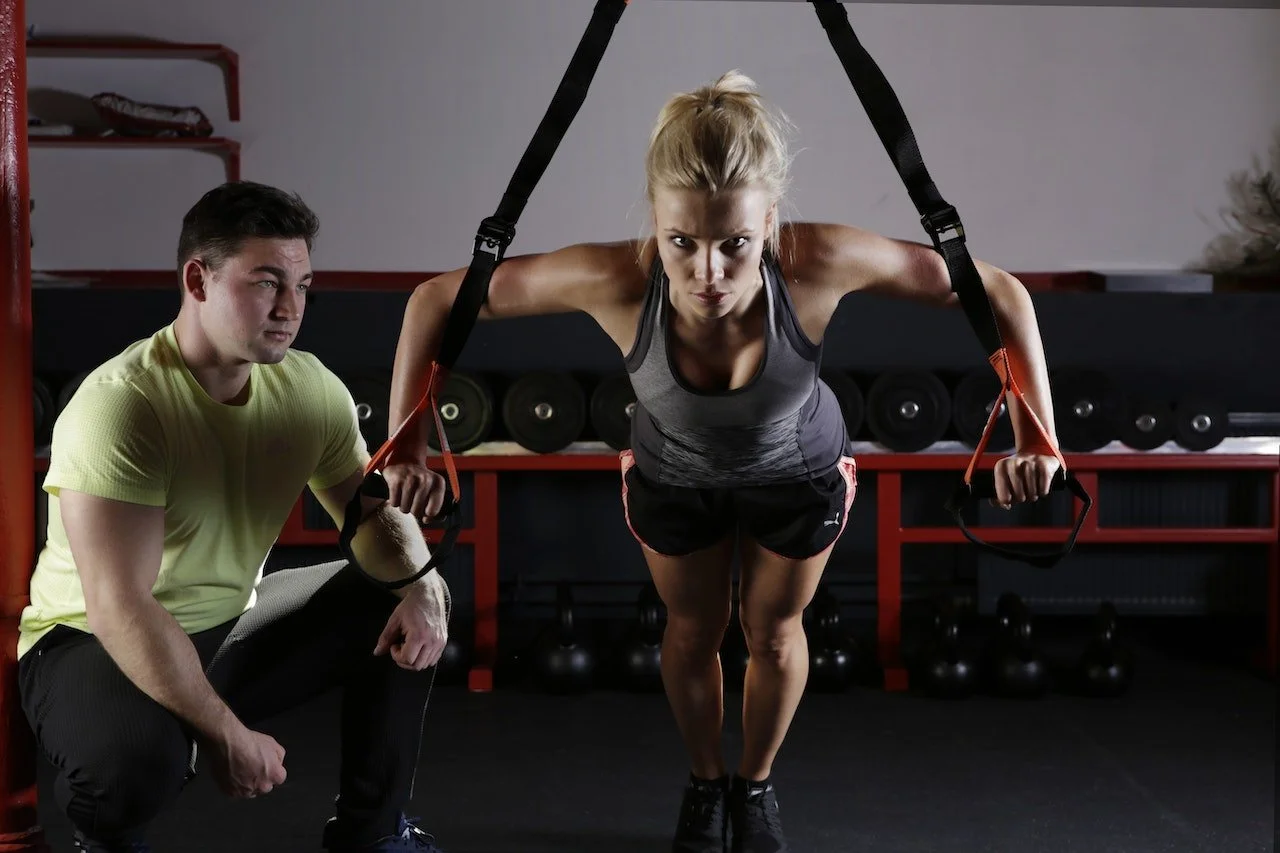
5 Best Fitness Books for Corrective Exercise and Injury Prevention | Denver Personal Trainer Picks
ABSTRACT
Discover the best fitness books recommended by a Denver personal trainer, including works by Gray Cook and NASM. Enhance your understanding of corrective exercise, functional movement, injury prevention, kinesiology, and biomechanics. These scientifically-backed resources will elevate your fitness knowledge and professional skills. Ideal for trainers and athletes aiming to optimize performance safely.
Keywords
Best fitness books
Corrective exercise books
Injury prevention books
Functional movement books
Gray Cook books
NASM sports performance
Kinesiology and biomechanics resources
Personal trainer-recommended books
Fitness education resources
Denver personal trainer

My personal training clients in Denver are always looking to dig deeper into fitness. My list will help. / Photo: Pixabay
Recently, a personal training client in Denver asked about my favorite fitness books. I typically veer from whatever is most popular at a given point and rely primarily upon grounded research and recommendations (although new research will always serve as signals I keep an eye on). Here is a list of books that have steered my personal and professional philosophy and the programs I recommend. Most importantly, the books are scientifically backed with roots in corrective exercise and injury prevention. If you want to elevate your knowledge of movement, I highly recommend digging in for a proper education! They steered the personal trainer experience I provided for nearly 20 years, and it will certainly steer your approach, too!
Fitness Resources
Athletic Body in Balance by Gray Cook: Gray Cook explores how identifying and correcting functional imbalances in athletes can significantly enhance performance and reduce injury risk. He emphasizes a systematic approach to assessing movement patterns and correcting dysfunction through targeted exercises, focusing on stability, mobility, and efficient movement mechanics.
Movement: Functional Movement Systems: Screening, Assessment, Corrective Strategies by Gray Cook: This foundational text introduces the Functional Movement Screen (FMS) methodology, a structured system for evaluating and scoring basic movement patterns. Cook offers detailed guidance on using FMS results to prescribe corrective exercises, address limitations, optimize athletic performance, and prevent injuries.
Corrective Exercise Solutions to Common Hip and Shoulder Dysfunction by Evan Osar: Evan Osar provides a practical approach to understanding, assessing, and addressing common hip and shoulder dysfunctions. He presents a clear framework for corrective exercise, emphasizing movement quality, stability, proper breathing mechanics, and integration strategies that restore optimal function and alleviate chronic issues.
Foundations in Kinesiology and Biomechanics by Vickie Samuels: Vickie Samuels presents an introductory guide to the principles of kinesiology and biomechanics, emphasizing fundamental concepts such as human anatomy, movement mechanics, muscle function, joint action, and the physics of movement. It is a foundational resource for understanding human movement in health and athletic contexts.
NASM Essentials of Sports Performance Training: First Edition Revised by National Academy of Sports Medicine (NASM): This comprehensive resource outlines NASM’s evidence-based approach to improving athletic performance. It covers essential topics including assessments, exercise programming, injury prevention strategies, strength and conditioning methodologies, speed and agility training, and recovery techniques tailored specifically for athletes across various sports.
ABOUT THE AUTHOR: MICHAEL MOODY, PERSONAL TRAINER
As an author, a personal trainer in Denver, and podcast host, Michael Moody has helped personal training clients achieve new fitness heights and incredible weight loss transformations since 2005. He also produces the wellness podcast "The Elements of Being" and has been featured on NBC, WGN Radio, and PBS.
Michael offers personal training to Denver residents who want to meet at the 2460 W 26th Ave studio….or in their homes throughout LoHi (80206), LoDo (80202), RiNo (80216), Washington Park (80209), Cherry Creek (80206, 80209, 80243, 80246, 80231), and Highlands (80202, 80211, 80212). Michael also offers experiences with a personal trainer in Jefferson Park (80211) and Sloan's Lake (80204, 80212).
PERSONAL TRAINER BLOG

Do you have what it takes to pass this physical test to join the FBI?
ABSTRACT
Discover the FBI Physical Fitness Test requirements and scoring system for sit-ups, 300-meter sprints, push-ups, the 1.5-mile run, and pull-ups. Get essential personal trainer tips for effectively training and achieving a passing score on the FBI PFT. Learn how to identify your strengths and weaknesses for strategic test preparation. See if you're physically ready to pass the FBI fitness standards.
Keywords
FBI Physical Fitness Test
FBI PFT requirements
FBI fitness standards
FBI fitness test scoring
FBI physical test training
FBI PFT preparation
FBI physical test events
FBI tactical recruitment program
FBI fitness test exercises
Personal trainer FBI test

FBI Training Morning Habits
Introduction
I’m helping a personal training client train for the FBI physical test. Using their guidelines and scoring system below, see if you have what it takes!
The PFT test consists of four mandatory events administered in the following order, with no more than five minutes of rest between each event. Each event has a strictly defined scoring scale and protocol. Applicants entering under the Tactical Recruitment Program (TRP) must also complete the pull-up event.
1. Maximum number of sit-ups in one minute
2. Timed 300-meter sprint
3. Maximum number of continuous push-ups (untimed)
4. Timed one-and-one-half mile (1.5 miles) run
5. Pull-ups (TRP applicants only)*
Passing Score: Applicants must achieve a minimum cumulative score of 12 points, with at least 1 point in each of the four events.
TRP applicants: TRP applicants must achieve 20 points, with at least 1 point in each of five events (including pull-ups).
Personal Trainer Wisdom: When training for such a test, determine your strongest and weakest events (baseline). From there, evaluate the amount of time you’re willing to spend on each and whether or not it’s worth it based on the point system.

FBI Personal Trainer
The FBI Physical Test Requirements
1. PFT PROTOCOL AND SCORING SCALES: SIT-UPS
The trainee lies back with the tops of shoulder blades touching the floor, hands behind the head, and fingers interlaced. The knees are bent at a 90-degree angle with the feet placed flat on the floor (feet are held in place by a partner with the partner's hands at the tongue of the trainee's shoes and knees on the trainee's toes). Trainee raises upper body until the base of the neck is in line with the base of the spine (back is perpendicular to the floor); trainee then returns to the starting position (i.e., the tops of both shoulder blades must touch the floor). This is a timed one-minute continuous motion exercise.
Score: Female Range / Male Range
(-2): 29 and below / 31 and below
0: 30-34 / 32-37
1: 35-36 / 38
2: 37-40 / 39-42
3: 41-42 / 43-44
4: 43-46 / 45-47
5: 47-48 / 48-49
6: 49-50 / 50-51
7: 51-52 / 52-53
8: 53-54 / 54-55
9: 55-56 / 56-57
10: 57 and over / 58 and over
Personal Trainer Wisdom: Sit-ups are soooooo 1950….but I can see why the FBI still includes them on their test. We must jump out of bed and get off the floor after all! Unfortunately, you will be compromising your neutral spine while completing the movement. Instead of building up inflammation during training, don’t be afraid to focus on the transverse abs (lower abs) while performing a crunch.
2. PFT PROTOCOL AND SCORING SCALES: 300-METER SPRINT
The 300-meter sprint event usually occurs on a 1/4-mile oval track (although this may change based on individual circumstances). Trainees start from a standing position and run 300 meters (3/4 of one lap).
Score: Female Range / Male Range
(-2): 67.5 and over / 55.1 and over
0: 67.4-65.0 / 55.0-52.5
1: 64.9-62.5 / 52.4-51.1
2: 62.4-60.0 / 51.0-49.5
3: 59.9-57.5 / 49.4-48.0
4: 57.4-56.0 / 47.9-46.1
5: 55.9-54.0 / 46.0-45.0
6: 53.9-53.0 / 44.9-44.0
7: 52.9-52.0 / 43.9-43.0
8: 51.9-51.0 / 42.9-42.0
9: 50.9-50.0 / 41.9-41.0
10: 49.9 and below / 40.9 and below
Personal Trainer Wisdom: Interval sprints within a progressive program will help you reach a faster time in no time.
3. PFT PROTOCOL AND SCORING SCALES: PUSH-UPS
Trainees begin in the front leaning rest position (i.e., hands on the floor one to two hand widths beyond the shoulders with elbows away from the body, arms fully extended, and body held straight, with the feet no more than three inches apart and the toes touching the floor). As the arms are flexed, the body is lowered toward the floor until the upper arms are parallel to the floor (a straight line from the elbow's center axis to the shoulder's center axis). Trainees complete the exercise after returning to the starting position. This is a continuous motion exercise.
Score: Female Range / Male Range
(-2): 4 and below / 19 and below
0: 5-13 / 20-29
1: 14-18 / 30-32
2: 19-21 / 33-39
3: 22-26 / 40-43
4: 27-29 / 44-49
5: 30-32 / 50-53
6: 33-35 / 54-56
7: 36-38 / 57-60
8: 39-41 / 61-64
9: 42-44 / 65-70
10: 45 and over / 71 and over
Personal Trainer Wisdom: While most people compromise their shoulders, elbows, and wrists during a pushup, you can build the necessary strength through planks, dumbbell chest presses, band chest presses, and a mix of shoulder and tricep exercises.
4. PFT PROTOCOL AND SCORING SCALES: 1.5 MILE RUN
The 1.5-mile run event most often occurs on a 1/4-mile oval track (although this may change based on individual circumstances). Trainees run six laps around the track.
Score: Female Range / Male Range
(-2): 15:00 and over / 13:30 and over
0: 14:59-14:00 / 13:29-12:25
1: 13:59-13:35 / 12:24-12:15
2: 13:34-13:00 / 12:14-11:35
3: 12:59-12:30 / 11:34-11:10
4: 12:29-11:57 / 11:09-10:35
5: 11:56-11:35 / 10:34-10:15
6: 11:34-11:15 / 10:14-9:55
7: 11:14-11:06 / 9:54-9:35
8: 11:05-10:45 / 9:34-9:20
9: 10:44-10:35 / 9:19-9:00
10: 10:34 and below / 8:59 and below
Personal Trainer Wisdom: While long endurance runs should be included in your program, your sprint training will exponentially increase your speed in this area.
5. PFT PROTOCOL AND SCORING SCALES: PULL-UPS
*Note: Only Tactical Recruiting Program (TRP) candidates will complete this event. The candidate hangs from a horizontal bar, hands at least shoulder width apart (but no more than twenty-three inches apart as measured from the outsides of the hands) with palms turned away from the face and arms fully extended. As the candidate flexes their arms, they pull their body upward until the candidate’s chin is higher than the bar. There can be no swinging or jerking of the body or use of the legs to propel the body upward. The candidate then lowers their body back to the hanging position with their arms fully extended. This is a continuous motion exercise.
Score: Female Range / Male Range
0: 0 / 0-1
1: 1 / 2-3
2: 2 / 4-5
3: 3 / 6-7
4: 4 / 8-9
5: 5 / 10-11
6: 6 / 12-13
7: 7 / 14-15
8: 8 / 16-17
9: 9 / 18-19
10: 10 and over / 20 and over
Personal Trainer Wisdom: Very few people can perform a proper pull-up. Please don't worry, though. A progressive approach with planks, pulldowns, assisted pull-ups, and exercises for your scapula could help you reach and surpass the minimum for this event.
Photo Credit:
Theintercept.com–Do you know what it takes to pass the FBI physical fitness test?

4-WEEK CARDIO ENDURANCE TRAINING PROGRAM FOR THE FBI PHYSICAL FITNESS TEST
4-WEEK CARDIO ENDURANCE TRAINING PROGRAM FOR THE FBI PHYSICAL FITNESS TEST
Looking to jumpstart your training for the FBI physical test? Find Michael’s phase 1 program aimed to increase your cardio endurance here: Cardio Endurance Training Program.

FBI Training Morning Habits
5 Morning Habits that Will Prepare You for FBI Training
If you find your life chaotic, stressful, and unproductive, you may need to rethink your morning routine. Here are five morning habits that will prepare you for a day of FBI training. Read more…..
ABOUT THE AUTHOR: MICHAEL MOODY, PERSONAL TRAINER
As an author, a personal trainer in Denver, and podcast host, Michael Moody has helped personal training clients achieve new fitness heights and incredible weight loss transformations since 2005. He also produces the wellness podcast "The Elements of Being" and has been featured on NBC, WGN Radio, and PBS.
Michael offers personal training to Denver residents who want to meet at the 2460 W 26th Ave studio….or in their homes throughout LoHi (80206), LoDo (80202), RiNo (80216), Washington Park (80209), Cherry Creek (80206, 80209, 80243, 80246, 80231), and Highlands (80202, 80211, 80212). Michael also offers experiences with a personal trainer in Jefferson Park (80211) and Sloan's Lake (80204, 80212).
If you’re looking for a personal trainer who can curate a sustainable (and adaptable) routine based on your needs and wants, Michael is the experienced practitioner you’ve been looking for. Try personal training for a month…your body will thank you!
Wellness Podcast

























personal trainer Blog

Colorado Winter Hikes: Snowshoeing Mayflower Lake and Mohawk Lakes Trail Near Breckenridge
ABSTRACT
Discover the beauty of Colorado winter hikes on the stunning Mayflower Lake and Mohawk Lakes Trail near Breckenridge. Enjoy moderate snowshoeing along Spruce Creek Trail through pristine snowpack and breathtaking scenery near Blue River. With ideal conditions, gear recommendations, and safety tips, this trail offers an accessible adventure in Colorado's high elevations. Experience the perfect winter hike just south of Breckenridge, suitable for outdoor enthusiasts seeking scenic solitude.
Keywords
Colorado winter hikes
Mayflower Lake Trail
Mohawk Lakes Trail winter
Snowshoeing Breckenridge
Spruce Creek Trail winter
Hiking near Blue River
Moderate winter hikes Colorado
Snowshoe hikes Colorado
Breckenridge snowshoe trails
Winter hiking gear

Breckenridge Winter Hikes
Colorado Hikes: Mayflower Lake and Mohawk Lakes Trail (Winter)
Time of Year: Beginning of March.
Weather: 27 degrees and sunny at 9:41 am.
Cover: 70% covered with a tree canopy.
Time: 9:41 am - 1:05 pm.
Distance: 5.53 miles total.
Cost: None.
Bathroom at Trailhead: None.
Difficulty: Moderate level 2 for altitude (11423 feet), elevation gain (1178 feet), and length (5.53 miles); snowshoeing always increases the difficulty.
Route: Spruce Creek Trail to Mohawk Lakes Trail and back.
Traffic: Light.
Parking: Small lot: 70% full by 9:41 am. Only three spots remained.
Equipment: La Sportiva Trango Tech GTX Hiking Boots, Black Diamond Alpon Carbon Cork Trekking Poles, Osprey Talon 33 Backpack, MSR Lightning Ascent Snowshoes
Terrain: A carved snow path until 11423 feet. Untouched snowpack (2-5 feet deep) from that point on.
Experience: It was an absolutely stunning, blue-sky day just south of Breckenridge in Blue River. While the temperature at the start of the hike was in the 20s, the warm sun offered a comfortable snowshoe adventure without wind. Much of the trail was tree-covered, and the occasional branches of the trail led you to the Mayflower Lakes and Falls. Unfortunately, Lower Mohawk Lake was never checked off, but the winter excursion was still worth the effort.
Personal Trainer Notes: The snow-covered trails can often be a barrier for my personal training clients. Luckily, access to snowshoes offers opportunities for hikes in high elevations without post-holing. As noted, the risk of avalanches should never be discounted. Upon reaching any grade around 30 degrees, you should strongly consider turning around. Nothing is worth the risk of being buried under the snow.

Mohawk Lakes

Mayflower Lakes

Breckenridge Trails

Colorado Snowshoeing Trails

Blue River Trails

Blue River Hiking Trails

Beaver Creek Trail

Mohawk Lakes Hike

14ers Colorado

Mayflower Lakes Winter
List of Hiking Trails in Colorado
To check out more hiking reviews with pictures, visit “List of Colorado Hikes.” You’ll find options across a spectrum of difficulty, including many trails in the foothills and front range.
Mount Democrat Hike
ABOUT THE AUTHOR: MICHAEL MOODY, PERSONAL TRAINER
As an author, a personal trainer in Denver, and podcast host, Michael Moody has helped personal training clients achieve new fitness heights and incredible weight loss transformations since 2005. He also produces the wellness podcast "The Elements of Being" and has been featured on NBC, WGN Radio, and PBS.
Michael offers personal training to Denver residents who want to meet at the 2460 W 26th Ave studio….or in their homes throughout LoHi (80206), LoDo (80202), RiNo (80216), Washington Park (80209), Cherry Creek (80206, 80209, 80243, 80246, 80231), and Highlands (80202, 80211, 80212). Michael also offers experiences with a personal trainer in Jefferson Park (80211) and Sloan's Lake (80204, 80212).
If you’re looking for a personal trainer who can curate a sustainable (and adaptable) routine based on your needs and wants, Michael is the experienced practitioner you’ve been looking for. Try personal training for a month…your body will thank you!
Personal Trainer Blog

Master These 6 Beginner Functional Exercises for a Strong Fitness Foundation
ABSTRACT
Kickstart your fitness journey with these essential beginner functional exercises. Perfect foundational movements like squats, single-leg squats, step-ups, pushups, and dumbbell curls with easy-to-follow progressions. Build strength confidently with targeted instructions and tips from professional personal trainers. Begin your at-home strength training routine today and watch your fitness flourish!
Keywords
Beginner functional exercises
Foundational fitness movements
Introductory workout routine
Personal trainer exercises
Squat progression for beginners
Single-leg squat form
Step-up exercises with dumbbells
Pushup modifications for beginners
Beginner dumbbell curls
At-home strength training

Functional Movement / Photo: Antoni Shkraba
Introduction
New to fitness! It's time to set the baseline and refine your foundational movements. Here are six introductory exercises you need to perfect (and how) before you reinvent your routine with a circus act of exercises.
list of functional exercises
PERSONAL TRAINER EXERCISE: SQUAT OVER BENCH OR CHAIR
Prompt: Feet straight and hip width, screw in the feet, draw in the belly button, hinge at the hips, tuck the chin (to create a neutral spine), squeeze the glutes at the top of the movement.
Progression (12 reps/2 sets per workout/every other day):
Phase 1
-Week 1: Stationary squat in front of the wall while holding 5 lb dumbbells
-Week 2: Stationary squat in front of the wall while holding 8 lb dumbbells
Phase 2
-Week 3: Stationary squat away from the wall while holding 5 lb dumbbells
-Week 4: Stationary squat away from the wall while holding 8 lb dumbbells
-Week 5: Stationary squat away from the wall while holding 10 lb dumbbells
-Week 6: Stationary squat away from the wall while holding 10 lb dumbbells
2. PERSONAL TRAINER EXERCISE: Single-leg squat
Prompt: While holding the edge of a cabinet…set your feet straight and hip width, draw in the belly button, plant the front foot, screw in the foot, slight hinge at the hips, tuck the chin (to create a neutral spine), and kick back one leg. Note: Hinging back 90 degrees is typical of your hips sitting in a
chair. Hinging back 45 degrees is halfway to a seated position.
Progression (12 reps/2 sets per workout/every other day):
Phase 1
-Week 1: Hinge back 45 degrees while holding a counter (toes touching the cabinet)
-Week 2: Hinge back 60 degrees while holding a counter (toes touching the cabinet)
-Week 3: Hinge back 75 degrees while holding a counter (toes touching the cabinet)
Phase 2
-Week 4: Hinge back 45 degrees while standing in front of a wall
-Week 5: Hinge back 60 degrees while standing in front of a wall
-Week 6: Hinge back 75 degrees while standing in front of a wall
3. PERSONAL TRAINER EXERCISE: STEP UP
Prompt: Set up a step with one riser. Screw in one foot on the step (heel under the knee), draw in the belly button, slight hinge at the hips, tuck the chin (to create a neutral spine), bring the knee back forward, and squeeze the glutes at the top of the movement. Note: Step on one side for 12 reps before switching to the other
Progression (12 reps/2 sets per workout/every other day):
Phase 1
-Week 1: Step with one riser while holding 5 lb dumbbells
-Week 2: Step with one riser while holding 8 lb dumbbells
-Week 3: Step with one riser while holding 8 lb dumbbells
Phase 2
-Week 4: Step with two risers while holding 5 lb dumbbells
-Week 5: Step with two risers while holding 8 lb dumbbells
-Week 6: Step with two risers while holding 8 lb dumbbells
4. PERSONAL TRAINER EXERCISE: Pushup
Prompt: Stand one foot away from a wall. Feet straight and hip width, set up your hands outside your armpits on the wall, draw in the belly button, lower your body towards the wall, and push your body back to the start.
Progression (12 reps/2 sets per workout/every other day):
Phase 1
-Week 1: Pushup against the wall with your feet 12 inches back
-Week 2: Pushup against the wall with your feet 24 inches back
-Week 3: Pushup against the wall with your feet 24 inches back
Phase 2
-Week 4: Pushup against the bathroom counter with your feet 24 inches back
-Week 5: Pushup against the bathroom counter with your feet 36 inches back
-Week 6: Pushup against the bathroom counter with your feet 36 inches back
5. PERSONAL TRAINER EXERCISE: DUMBBELL CURLs
Prompt: Feet straight and hip width, screw in the feet, draw in the belly button, hips under your shoulders, elbow tucked to your side, and keep your head centered. Notes: Alternating curls require you to curl with your right arm and then switch to the left (and repeat), and non-alternating curls require you to curl with both arms simultaneously.
Progression (12 reps/2 sets per workout/every other day):
Phase 1
-Week 1: Alternating curls against the wall with 8 lb dumbbells
-Week 2: Non-alternating curls against the wall with 8 lb dumbbells
-Week 3: Alternating curls away from the wall with 8 lb dumbbells
Phase 2
-Week 4: Alternating curls away from the wall with 10 lb dumbbells
-Week 5: Non-alternating curls away from the wall with 8 lb dumbbells
-Week 6: Non-alternating curls away from the wall with 10 lb dumbbells
ABOUT THE AUTHOR: MICHAEL MOODY, PERSONAL TRAINER
As an author, a personal trainer in Denver, and podcast host, Michael Moody has helped personal training clients achieve new fitness heights and incredible weight loss transformations since 2005. He also produces the wellness podcast "The Elements of Being" and has been featured on NBC, WGN Radio, and PBS.
Michael offers personal training to Denver residents who want to meet at the 2460 W 26th Ave studio….or in their homes throughout LoHi (80206), LoDo (80202), RiNo (80216), Washington Park (80209), Cherry Creek (80206, 80209, 80243, 80246, 80231), and Highlands (80202, 80211, 80212). Michael also offers experiences with a personal trainer in Jefferson Park (80211) and Sloan's Lake (80204, 80212).
If you’re looking for a personal trainer who can curate a sustainable (and adaptable) routine based on your needs and wants, Michael is the experienced practitioner you’ve been looking for. Try personal training for a month…your body will thank you!

Healthy Eating for Kids: Debunking the 'Eat Anything' Myth
ABSTRACT
Think kids can eat anything? Think again: childhood nutrition is vital. Get tips for parents on introducing healthy foods and modeling healthy eating habits.
Keywords
Healthy eating for kids
Childhood nutrition
Healthy diet for kids
Nutrition for kids
Healthy eating habits for kids
Introducing healthy foods to kids
Picky eater tips
Teaching kids to eat healthy
Modeling healthy eating habits
Improving kids diet

Healthy Eating Child / Photo: Andrea Piacquadio
Myth
Kids can eat whatever they want.
Reason Parents Give
“They’re children…they can get away with it.”
The TRUTH
Many parents believe the myth that children can really eat whatever they want. As a parent, I wish this was true! It was a lot of work once showing my 17-month old son, Preston, a powerpoint presentation about the benefits of broccoli. Unfortunately, that first statement is false (and it makes sense why). Think about the period of 0-11 years of life for a child. Do you see any other period of physical and mental development as drastic in a human’s life? Absolutely not. The growth during this span of time is tremendous and pivotal to the physical foundation of one’s life. Why wouldn’t you give your child the proper fuel to not only build it efficiently and effectively but also protect the process with the best immunity? The good Dr. Fuhrman says it best:
The poor dietary habits of today’s children are contributing to the development of obesity, reduced brain function, higher incidence of allergies, asthma, autoimmune diseases, and emotional and behavioral disorders, such as depression and ADD. Poor nutrition also increases occurrence and severity of infections and results in chronically reoccurring infections such as sinusitis and otitis media (ear infection). It is also laying a foundation for poor academic performance, chronic disease later in life, violent behavior, and premature death. A Nutritarian diet is essential for a disease-free, healthy, and happy child.
I know what you’re thinking, “Good luck getting your kid to eat a plant-based diet.” I fully realize the difficulties here. Preston sometimes refuses everything until he gets what he wants (a tough customer sometimes!). It would be best to remember that our little ones aren’t much different from adults. Here are several strategies to dramatically improve your child’s diet and health without running for cover.
STRATEGIES
INTRODUCE NEW FOODS…AND TRY IT AGAIN NEXT MONTH.
Personal Trainer Wisdom: Do you want to eat the same thing all the time? Unless it’s pizza, bacon, and ice cream, you’ll probably answer “No” (and rightfully so). Not only does neural stimulation greatly diminish after the 5th bite, but you also lose the mental and emotional excitement of eating a new dish. Poor Preston suffers whenever we discover he likes a new dish. “Do you like frozen peas and butternut squash, Master P?” Yessssssssssssssssssssssssssss! And then we feed him that for ten straight meals until he throws it on the ground (and we don’t have a dog).
If your approach is on repeat, too, I get it. Be mindful of your (and my) laziness, though. Chalk up a new food gobbled up in seconds as a victory, but continue your experimentation. Your child has not tried the vast array of dishes our world offers (and you most likely haven’t). Move onto something new and help your child stimulate her senses. You’ll always have the peas and butternut squash in your backpack. And if it doesn’t work today, try the dish again in 4 weeks. Your child’s pallet and senses are evolving, and his or her preference or sensitivity will change over time, too. With this being said,….ADD A VARIETY OF DIFFERENT TASTES, SMELLS, AND TEXTURES (INCLUDING DIFFERENT SEASONINGS AND SAUCES).
Personal Trainer Wisdom: Babies and kids are curious animals exploring the world. I honestly admit to restricting Preston’s scientific tendencies. After all, who wants to see their eggs cracked across the kitchen floor for the sake of learning physics? Appeal to your child’s curiosity by opening her senses to the culinary world. Let your child physically touch and feel the difference between different fruits and vegetables, and encourage her to smell and taste the bites of goodness (and it’s okay to get messy).
Take your experiment to a new level and assign a different ethnic style of food to each day. Combine the seasonings and sauces most commonly found in that culture. For instance, if Monday is Mexican Day, add salsa and taco seasoning to the meals (Tuesday can be Italian, Wednesday can be Indian, etc.).MODEL GOOD BEHAVIOR.
Personal Trainer Wisdom: If you’re serving a dish to your child, it’s a great time for you to eat, too! Everybody loves company while they eat….and your child is no different. You've been out to dinner at a restaurant and noticed a friend not ordering anything. You probably wondered, “Is Amy on a diet?”….”Is Amy upset?”…..”Does Amy not like me?”….etc., etc. Your child might be thinking the same about you in those moments! Interestingly, Preston will not eat at times but will not hesitate to sit on my lap moments later to lovingly (and grub-bingly) grab the same food off my plate. Little P wants to share the experience with Papa!
Modeling good behavior goes beyond simply eating in front of your child. Eating the right foods is just as, if not more, important. What message are you sending while saying “No candy” to your child while eating the candy bar in front of her? It scares me to think about the things that Preston witnesses me doing. I recently started throwing his shoes to a rack near the door. What a surprise when I witnessed Preston tossing a bell strap across the daycare room….hitting the helpless victim, baby Liam, in the forehead. Shame on Papa! It’s a good reminder, though, that I can positively shape my son’s behavior by acting like a good, healthy citizen (especially while eating dinner). Take the initiative and demonstrate healthy eating behavior by eating healthy food WITH your child.DETERMINE YOUR CHILD’S FOOD PREFERENCES AND FIND THE HEALTHIEST VERSIONS.
Personal Trainer Wisdom: Let’s be honest: Your kids will be introduced to unhealthy foods at school, friends’ homes, parties, and more. It seems that many kids could eat endless candy and pasta (and they’ll let you know). If it’s a constant fight, not all is lost. Don’t forget that a piece of food can be a comprehensive experience for the senses. It’s possible to replicate the experience with a healthy substitute. Not surprisingly, Preston instantly loved pasta (who doesn’t?). Instead of feeding him the enriched flour and blood-sugar-spiking versions found on most American tables, we cook a chickpea pasta noodle. It is a more beautiful, nutrient-dense option with protein and fiber than the white flour, wheat, AND whole wheat versions. Although it may take research, there are other thoughtful substitutes for your child’s other unhealthy preferences, too!
EXPLAIN THE BENEFITS OF EVERY MEAL AND THE REASONS WHY YOU’RE EATING IT TOO.
Personal Trainer Wisdom: Why has parenting become so complicated????? Life is so much easier when you can respond to your child’s Socratic question, “Why do I have to do this?” with the answer, “Because I said so.” Now you have to explain things and….wait, never mind….we should’ve been doing this all along! Why? Because they don’t know better and need the message reinforced repeatedly (a lesson I now understand as an obligation of effective parenting). Your kids may not know why they need hemp seeds, nuts, collard greens, and a piece of fish on one plate. They haven’t established any value of eating healthfully. Take the time to illustrate why it’s essential that your kids eventually make the same independent choices without your supervision.
ABOUT THE AUTHOR: MICHAEL MOODY, PERSONAL TRAINER
As an author, a personal trainer in Denver, and podcast host, Michael Moody has helped personal training clients achieve new fitness heights and incredible weight loss transformations since 2005. He also produces the wellness podcast "The Elements of Being" and has been featured on NBC, WGN Radio, and PBS.
Michael offers personal training to Denver residents who want to meet at the 2460 W 26th Ave studio….or in their homes throughout LoHi (80206), LoDo (80202), RiNo (80216), Washington Park (80209), Cherry Creek (80206, 80209, 80243, 80246, 80231), and Highlands (80202, 80211, 80212). Michael also offers experiences with a personal trainer in Jefferson Park (80211) and Sloan's Lake (80204, 80212).
If you’re looking for a personal trainer who can curate a sustainable (and adaptable) routine based on your needs and wants, Michael is the experienced practitioner you’ve been looking for. Try personal training for a month…your body will thank you!
PERSONAL TRAINER BLOG

Improve Posture at Work: Ergonomic Tips for Professionals
ABSTRACT
Improve posture at work with ergonomic office solutions for professionals. Get posture tips and workstation setup advice for a pain-free, healthier workspace.
Keywords
Improve posture at work
Ergonomic office solutions
Ergonomic office setup
Office ergonomics
Workplace ergonomics
Better posture at work
Proper posture at work
Office posture tips
Ergonomic desk setup
Ergonomic office chair
Ergonomic workstation
Reduce back pain at work

Poor posture at work / Photo: Cottonbro Studio
Introduction
Whether testifying in a House hearing or presenting at a board meeting, poor posture will send unintended nonverbal cues and lead to poor physical health. Putting aside the "look" of poor posture, anything beyond the neutral spine while sitting (think of your body naturally and symmetrically stacked in the neutral position) may put you at severe and long-term risk of injury. I've included tips from my interview with Wayfair to help you reverse this effect and redefine how you sit at work.
Interview Questions
WAYFAIR Question #1: HOW CAN YOU TELL IF YOU HAVE BAD POSTURE DURING YOUR DAY-TO-DAY?
Personal Trainer Wisdom: Most likely, you are experiencing many symptoms, including lower back, hip, and shoulder discomfort and pain, that are surefire to tell of your bad posture. Considering the constant distractions, it's not surprising that you don't recognize these symptoms or realize how you shift your weight to one hip while speaking to someone or round your back while working 8-10 hours daily on the computer. Your body is adaptable in small amounts and can function out of a neutral zone (Translation: Pick up light objects with a rounded back). When reinforced repetitively, you create an imbalanced, inefficient system that can eventually lead to rounded shoulders or a posterior hip tilt (rounded lower back).
WAYFAIR Question #2: WHAT ARE SOME TIPS TO IMPROVE POSTURE WHILE AT YOUR DESK?
Personal Trainer Wisdom: Awareness is the key to your best physical health and perfect posture. Simple check-ins throughout the day can minimize or eliminate most chronic problems. Although the human body isn't meant to sit for extended periods, most industries require it. If you're going to do it, you must do it well. Essentially, you're fighting nature while maintaining a flexed position at your desk under quite a bit of sustained stress. However, our bodies are meant to move in a neutral position, and you're most likely guilty of doing the opposite up to this point.
While it's not realistic to assume that you'll walk and type on a Stairmaster at the office, you can take several measures to maintain a neutral spine--the natural position of the spine that doesn't place unnecessary stress on your disks and maintains the natural curve of your neck and lower back. First, you can adjust your seat to the appropriate height to reduce a tilt in your hips or a round in your lower back. Your knees should directly extend from your hips at a 90 angle or lower. Second, please be sure to maintain a neutral position while seated. Keep your ears above your shoulders, shoulders above your hips, heels under your knees, and feet flat on the floor. Third, stand up and walk when you fidget or reposition your body while seated. If you begin to shift in your seat, listen to your body! It's time to move! It takes muscle activation and strength to fight gravity and maintain perfect posture. Although you may be using the right muscles, they will fatigue, too! With this being said, could you relight the system and find a reason to walk around?WAYFAIR Question #3: ARE ANY TOOLS, ACCESSORIES, OR FURNITURE BEST SUITED FOR HAVING GOOD POSTURE THROUGHOUT A WORKDAY?
Personal Trainer Wisdom: Your best tool for maintaining good posture is self-awareness. No matter what system you would put in place, you may unconsciously compensate in one way or another. An adjustable, ergonomic chair that allows you to fit your neutral spine and the adjustable height to find the appropriate level for your hips is a priority. An adjustable desk will also help you find the proper height for your computer keyboard and the screen placement to limit slouching. You may want to elevate your computer screen to eye level if your desk doesn't offer an adjustable function.
WAYFAIR Question #4: FOR OFFICES WITH RAISEABLE DESKS, HOW MUCH TIME SHOULD SOMEONE SWITCH BETWEEN SITTING AND STANDING FOR THE MOST COMFORT?
Personal Trainer Wisdom: In response to the constant demand on your body (gravity counts), moving or changing position every 20-30 minutes is essential. The same principle applies when utilizing a raiseable desk. As mentioned before, your muscles will fatigue while maintaining perfect posture. Unsurprisingly, ambitious people have bought the raisable desks to resolve their postural issues but still compensate by shifting their weight while standing and placing themselves in compromising positions. When you shift your hips or shoulders, it isn't a failure! It's just a cue to reposition. Sitting, standing, or walking may be the most appropriate response.
ABOUT THE AUTHOR: MICHAEL MOODY, PERSONAL TRAINER
As an author, a personal trainer in Denver, and podcast host, Michael Moody has helped personal training clients achieve new fitness heights and incredible weight loss transformations since 2005. He also produces the wellness podcast "The Elements of Being" and has been featured on NBC, WGN Radio, and PBS.
Michael offers personal training to Denver residents who want to meet at the 2460 W 26th Ave studio….or in their homes throughout LoHi (80206), LoDo (80202), RiNo (80216), Washington Park (80209), Cherry Creek (80206, 80209, 80243, 80246, 80231), and Highlands (80202, 80211, 80212). Michael also offers experiences with a personal trainer in Jefferson Park (80211) and Sloan's Lake (80204, 80212).
If you’re looking for a personal trainer who can curate a sustainable (and adaptable) routine based on your needs and wants, Michael is the experienced practitioner you’ve been looking for. Try personal training for a month…your body will thank you!

10 Time-Saving Routines to Gain 3–4 Extra Hours Every Week
ABSTRACT
Discover proven time-saving routines and time management tips that help you reduce wasted time and reclaim up to four extra hours weekly. Explore productivity hacks like using a grocery delivery service, creating an organized storage system, minimizing repeat offenses, and tackling both mail clutter and email clutter for an efficient, stress-free lifestyle.
Keywords
Time-saving routines
Time management tips
Productivity hacks
Reduce wasted time
Grocery delivery service
Organized storage system
Minimize repeat offenses
Reduce mail clutter
Reduce email clutter
Laundry organization tips

Time-Saving Routines / Photo: Kampus Production
Introduction
I commonly hear, "There isn't enough time in the day..." Despite my best efforts to create a 25-hour day, I think we're stuck with the standard clock. Don't be discouraged! Build these habits, and you'll find an extra 3-4 hours weekly!
List of Time-Saving Routines
SCHEDULE A GROCERY DELIVERY SERVICE
My friend Matt S. jokingly (and not jokingly) advised hiring someone to do everything for you if you want to create more time. It's hard to argue with this! While you should be strategic and hire a professional if you have the budget and need (e.g., an accountant), let’s assume you’re willing to create more time without spending extra money first, with one exception: Scheduling a grocery delivery service. I mention this tip first for a good reason. It’s the easiest to begin today, and you’ll quickly benefit from the time it creates in your schedule. Typically, I spend 15 minutes driving to Trader Joe’s or Whole Foods, 20-60 minutes shopping, and 15 minutes driving home for 50-90 minutes each week. That’s nearly 4-6 hours per month spent on the shopping activity (which isn’t a big deal if you enjoy the experience)!
Our Amazon Prime membership gives us access to Amazon Fresh, a grocery delivery and pickup service for Whole Foods. You can reduce your grocery shopping time to 40 minutes per month. I save a list of staples that I renew weekly while adding new favorites and recipe ingredients for the week. Amazon Fresh offers free delivery for Amazon Prime Members, so you only need to tip! Are you willing to pay a few extra monthly dollars for at least 4 hours? If so, you may want to rethink your shopping approach (significantly if it saves you money from buying nonessential extras during your trip or eating out when you’re out of groceries). You can try a free Amazon Prime or Amazon Prime Student trial today!
2. MINIMIZE REPEAT OFFENSES
Much of our time is lost by the wasted efforts we make daily. Essentially, you’re a repeat offender by hitting snooze again, running to the dryer for five consecutive days, and looking for your car keys. What a waste of your valuable time! Here is the list of the most common repeat offenses and how to eliminate the habit:
Snoozing: Eliminate this time-wasting habit and create an average of 20 minutes of REM sleep instead. That’s right…I’m not telling you to leave bed at the first alarm. Stay in bed! You deserve (and probably need) it. On average, most people snooze 2-3 times. Unconsciously, you have a set time to wake up in your mind and will snooze until you get there. Quit disrupting your REM sleep! You plan to stay in bed anyway, so set your alarm clock for your "need to get up" time. Increasing the quality of REM sleep will make you more productive and efficient throughout your workday (leaving more time for enjoyment).
Placing necessary items anywhere: Place your keys, wallet, phone, and purse/work bag in the same spot when returning home…no ifs, ands, or buts! How much time have you wasted in a frantic hurry because you mindlessly placed these items across your home? No further explanation is needed.
Running to your other drawer, the dryer: Only complete full loads of laundry and remove them from the dryer in one trip (quit running back and forth for one pair of socks...it isn't a drawer). Bonus time saver: Wash all your clothes in cold water to eliminate multiple small loads. Yes, your clothes will still be clean without warm water.
Leaving the kitchen cabinet in the dishwasher: How much time do you waste looking for kitchenware whenever you need something? Empty the dishwasher when it's complete and eliminate the number of locations you need to look to find your favorite coffee cup from Grandma. Bonus time saver: Place all of your dirty dishes inside after the initial rinse in the sink instead of rinsing the dishes, placing them in the sink, and then eventually placing them in the dishwasher. Cut out the middleman. You’re trying to grasp as much time as possible!
3. CREATE A NEW STORAGE SYSTEM
I have wasted too much time searching for things in the abyss of my storage. It should never take more than 5 minutes to find anything I need. With this being said, my storage is organized in the following way: Boxes are divided into three access categories: Annual and Daily. The relics (keepsakes) are tucked in the back corner, while the annual and daily boxes are placed in accessible locations with a clear list of items taped to the front. Bonus time saver: Tape a map or list of boxes and their contents on the wall as a quick reference. Super bonus time saver: Donate, sell, or throw out anything you DON’T use. Translation: Don’t save anything you won’t use in the next month or season with certainty unless they’re holiday decorations or keepsakes.
4. REDUCE MAIL
How much time have you spent moving piles of mail to different spots while looking for specific pieces? Maybe 5 minutes a week? 20 minutes a month? Two hundred forty minutes (4 hours) a year? Wait, I forgot the 30 minutes per month you spend organizing a mail pile that is 75% unnecessary, which is 6 hours per year. Wouldn't you like a 10-hour day this week to do nothing or to binge-watch the show Breaking Bad...again? Sign up for ‘Do not mail’ lists and choose paperless statements for your utilities, credit card bills, bank paperwork, and other bills. As soon as you return home, discard the pieces of mail that you don't need and archive the rest. Do not leave any mail out. If you must, place it in a review file in your drawer.
5. REDUCE EMAIL
I've kept my email inbox at two emails or less since 2012, and you should do the same. If you're like the old me, you probably have 3000 emails. Please create a new account and make it the forwarding address for your new account. "But Michael, I can search for what I need in my account with the right keywords...I don't need to delete anything or change accounts." Perhaps. It will still cost you valuable time, though. Whether you type in an email address or a specific topic, you'll still waste energy and time sifting through the new list of emails that pop up. Yes, it takes less time than rifling through your inbox, but it is still very inefficient. Instead, decide when you open every email to delete, archive, or star it. If you must start it for future correspondence, don't let it sit in your inbox for seven days. Once you respond, either delete or archive it.
6. RETHINK YOUR DIRTY AND CLEAN CLOTHES APPROACH
I know that most people don't like to organize their clothes. Color-coding your hanging clothes is a great benefit, but I know you most likely won't do it (even though it reduces decision fatigue and time). Here are a few rules that can eliminate wasted time trying to figure out what's clean and dirty on your floor and make finding an outfit easier.
I've already discussed the advantages of placing things in the same spot—no need to rehash. I fully recognize your busy schedule and know you don’t have time to organize your drawers and closet. Why not find one designated spot where you can throw your clothes, though (instead of scattering them across the room)? The corner of a closet is ideal. Too busy to open your closet door? Then, place the hamper in the corner of the bedroom to catch your Michael Jordan shots. Just be sure to do laundry when it fills up.
Organize your clothes on hangers or in drawers by categories. While most people already apply this to their drawers (e.g., sock and underwear drawer), their hanging clothes are usually a mess. Since you're taking the time to hang your clothes anyway, why not place them in one of the following distinct sections: pants, skirts, dresses, short sleeves, long sleeves, and suits? How nice would it be to examine your pants supply in one section quickly? Indeed, it will take less time than rifling through every item on the rack when you’re in a rush.
MORE RANDOM THOUGHTS FROM BUSY PROFESSIONALS AND PARENTS
"Routine, routine, routine. I made weekly meal plans and shopping lists on the weekends and picked and ironed my kids ’ clothes for the week on Sunday. Having a regular breakfast routine: oatmeal on Mondays, pancakes on Saturday, etc." - Amanda M.
"We use organizers in the boys’ closets and lay clothes out for the entire week, especially socks (ugh, trying to find matching socks before school is the worst) and underwear. We have a huge central calendar, and everyone is assigned a different color. I make double batches of our favorite meals and freeze one for the following week." - Kelly G.
"It's all about organization. I have calendar reminders for everything, including changing air filters in the AC, oil changes, etc... These small maintenance items will save you a ton of time (and money) down the road." - Dan S.
"Lunches are made the night before, all clothes are set out for the morning, and everything is written on the home calendar and typed into phone calendars. School bags have gone through the minute kids get home; things are signed and sent back when you get them." - Gen S.
ABOUT THE AUTHOR: MICHAEL MOODY, PERSONAL TRAINER
As an author, a personal trainer in Denver, and podcast host, Michael Moody has helped personal training clients achieve new fitness heights and incredible weight loss transformations since 2005. He also produces the wellness podcast "The Elements of Being" and has been featured on NBC, WGN Radio, and PBS.
Michael offers personal training to Denver residents who want to meet at the 2460 W 26th Ave studio….or in their homes throughout LoHi (80206), LoDo (80202), RiNo (80216), Washington Park (80209), Cherry Creek (80206, 80209, 80243, 80246, 80231), and Highlands (80202, 80211, 80212). Michael also offers experiences with a personal trainer in Jefferson Park (80211) and Sloan's Lake (80204, 80212).
If you’re looking for a personal trainer who can curate a sustainable (and adaptable) routine based on your needs and wants, Michael is the experienced practitioner you’ve been looking for. Try personal training for a month…your body will thank you!
PERSONAL TRAINER BLOG

11 Easy Ways to Teach Kids Healthy Habits and Encourage Lifelong Well-Being
ABSTRACT
Help your kids build healthier eating habits with these easy tips, from making veggies the main course to cutting out sugary drinks and hidden high-fructose corn syrup. Discover kid-friendly snack ideas and learn how leading by example can encourage a lifetime of nutritious choices.
Keywords
Healthy eating for kids
Teaching kids healthy habits
Kids nutrition tips
Reducing sugar in children’s diets
How to cut out junk food for kids
Encouraging kids to eat vegetables
Healthy kid-friendly snacks
Avoiding high-fructose corn syrup
Smart food swaps for kids
Tips for modeling good eating habits

Healthy Grocery Shopping / Photo: Greta Hoffman
Introduction
Are you struggling to find ways to teach your kids healthy habits? I've seen several easy ways to adopt today that will change your kids' health forever (from the healthy habits list "40 Ways to Teach Your Kids Healthy Habits").
1. MAKE VEGGIES THE BASE OF EVERY MEAL
You wouldn’t build a building without a solid foundation, so why would you make a meal that’s got a less-than-solid core? Making vegetables the centerpiece of your meals means you’ll almost automatically eat fewer calories while loading up on vitamins, minerals, and fiber. This doesn’t mean eating only salad, either — stir-fries, curries, spring rolls, soups, and even enchiladas can all fit into this healthy eating plan.
Personal Trainer Wisdom: If you train your kids to make vegetables the center of each meal, they will be likelier to do the same. Create this type of plate and discuss the reasons why you should choose these foods (think Popeye and spinach).
2. KICK SODA TO THE CURB
Soda is one of the worst offenders when it comes to sugar, calories, and high fructose corn syrup in our kids’ diets. Research suggests that soda is among the biggest contributors to our ever-growing obesity epidemic, and all those extra calories provide zero nutritional benefits. Give your kids a healthy start by saying to no soda, whether regular or diet. If they’re eager to enjoy a fizzy drink, give them unsweetened seltzer with just a squeeze of fresh lime or lemon juice,
Personal Trainer Wisdom: Luckily, kids aren't employed and receive a wage. They most likely would waste their whole paycheck on soda and candy. I grew up with a new 2-liter RC in the fridge every other day. Let's be honest. If something is in the house, you or the kids are mostly to consume it. Resist the temptation, and don't buy it. Instead, teach your kids about a healthy alternative to satisfy that want.
3. SWAP IN VEGGIES FOR NOODLES
Yes, it’s adorable to hear little kids mispronounce “spaghetti.” However, those white noodles you’re buying at the supermarket may have the not-so-adorable effect of prompting serious food cravings in your kiddos and adding to their risk of diabetes and obesity. Instead, buy yourself a spiralizer and make your own noodles from vegetables like zucchini and yellow squash. Not only are they preservative-free and lower in calories, but they’re also quicker to cook than your regular boxed pasta.
Personal Trainer Wisdom: While this substitution might be a tough sell, it can be convincing...especially if you invite them to help. Call it a nutritious, edible art project! Spaghetti squash is also an option.
4. CUT OUT FRUIT COCKTAIL
Fruit is such a healthy and delicious snack, but somehow, companies have managed to make it bad for you in so many surprising ways. One such unpleasant iteration comes in the form of fruit cocktail, a syrup-laden, sugar-packed treat that’s marketed under the guise of health food. With way more calories and sugar than a fresh piece of fruit, tons of artificial dyes and preservatives, and potentially-obesogenic BPA in the can, you’re far better off giving your kids something else.5. INSPECT LABELS FOR HIGH-FRUCTOSE CORN SYRUP
Even if you’re not a family with a shared sweet tooth, you may be eating more high fructose corn syrup than you bargained for. High fructose corn syrup is being added to everything from condiments to whole grain bread these days, so it’s of the utmost importance you read the nutrition labels before you put even seemingly-healthy items in your cart. Research conducted at Princeton University reveals that consumption of high fructose corn syrup caused greater increases in body fat, weight, and triglyceride levels in rats than consuming a greater number of calories in sucrose.
Personal Trainer Wisdom: I think we see a theme here. Any food served in syrup or with the word 'syrup' in the ingredients should be taken out of the cart. Why challenge your child's health with ingredients that can lead to obesity and diseases? Always choose the simple alternative (and it doesn't necessarily cost more money).
6. REPLACE MILKSHAKES WITH SMOOTHIES
Treat your kids to a healthy snack that tastes just like a milkshake, but without the calories, sugar, or fat. Vegan smoothies are a great way to give your kids a snack that feels like a treat, but is actually packed with vitamins, minerals, fiber, protein, and antioxidants, making it both filling and great for their health.
Personal Trainer Wisdom: With the right combination of fruits, vegetables, and seeds, your child won't know what they're missing. Don't give up when he or she refuses the first! Continue experimenting with different recipes, and you may find a favorite (the same applies to you!).
7. CHECK FOODS FOR HIDDEN NITRATES
Nitrates are just one of the many preservatives that could be wreaking havoc on your gut health and immune system and may even contribute to the risk of cancer. Even worse, they’re found in countless kids’ foods, from pre-packaged lunches to deli meat. Make sure to inspect the ingredients list of your kids’ food for ingredients like sodium nitrate.
Personal Trainer Wisdom: "That sodium nitrate sounds tasty," says no one ever. If it isn't something you would taste separately, it shouldn't be on your list of ingredients. While you want to find a quick lunch for your child, you don't need to settle for the cheapest or most convenient product (notice that I didn't say food). If you must serve lunch meat, Boar's Head meats are the most natural on the market.
8. SAY NO TO MAYO
Bad news for mayo-phobes: even if you’d never willingly come in contact with the stuff, it may still be sneaking into your food. This high-calorie condiment is added to so many foods, from burger buns to salad dressings, that it’s far more difficult to avoid that you might think — and that means it’s in your kids’ food, too. Make sure you’re not contributing to the calorie creep in their foods by cutting out mayo at home and offering healthy, flavorful fats like avocado in its place.
Personal Trainer Wisdom: As you have found in your diet, little amounts of this and that can quickly add up to extra weight. Make every calorie count and choose the most nutrient-dense option. Remember that mayo often offers texture, not taste. Experiment with alternatives such as hummus, salsa, or avocado (with portion size in mind).
9. MAKE HEALTHIER COOKIES
Sugar cookies and gingerbread men may be holiday staples, but for your everyday after school snack, there are healthier options to be had. Fruit-sweetened oatmeal cookies are an easy way to get your kids to eat healthier with no protest; simply combine oatmeal, mashed bananas, almond flour, chocolate chips, and baking powder and bake for a delicious cookie that you can’t believe are good for you.
Personal Trainer Wisdom: I love cookies. It's still one of my favorite foods in life...next to my Grandmother's brownies (which I later discovered were brownies from a box). You and your kids should always enjoy the best of life without substituting every food choice with a untasty, healthy alternative. If sweets are part of the daily routine, something must be given. There's a reason why scientists predict that 1 in 3 people will have or be on the path toward diabetes. You don't need to give up everything, but it's time to replace what's necessary strategically.
10. CUT OUT JUICE
While many juices may claim to be packed with all the health-boosting benefits of fruit, in reality, they’re doing little more than adding sugar and calories to your child’s menu. Instead, give your kids a healthy alternative by offering them whole fruit and water — the combination will fill them up with fiber and none of the sugar and high fructose corn syrup that’s commonly added to juice.
Personal Trainer Wisdom: Whether the juice is 100% natural or not, it is a carb explosion that sends anyone down the path of diabetes (along with your cookies). Stick to the whole fruits and be mindful of the sugars and grains you feed your child (and yourself).
11. LEAD BY EXAMPLE
You are your child’s first teacher and, ultimately, the inspiration for their behavior, so make sure you’re modeling good eating habits for them in your life. If your children see you regularly snacking on unhealthy foods, it’s likely they’ll emulate that behavior as well. Likewise, if you’re constantly discussing your weight and opting for diet foods or skipping meals, they may have a skewed outlook of their bodies and eating habits. Research conducted at King's College London reveals that parental modeling can do more to shape a child's risk of obesity than restricting their food.
Personal Trainer Wisdom: Modeling excellent behavior extends beyond eliminating swear words from your vocabulary. Children are sponges, and they mimic the adult behavior around them. This statement says enough. The habits they develop early could affect them for a lifetime. Sorry, Mom, you were wrong: Children can't eat whatever they want.
What other ways can we teach our kids to eat healthy?
ABOUT THE AUTHOR: MICHAEL MOODY, PERSONAL TRAINER
As an author, a personal trainer in Denver, and podcast host, Michael Moody has helped personal training clients achieve new fitness heights and incredible weight loss transformations since 2005. He also produces the wellness podcast "The Elements of Being" and has been featured on NBC, WGN Radio, and PBS.
Michael offers personal training to Denver residents who want to meet at the 2460 W 26th Ave studio….or in their homes throughout LoHi (80206), LoDo (80202), RiNo (80216), Washington Park (80209), Cherry Creek (80206, 80209, 80243, 80246, 80231), and Highlands (80202, 80211, 80212). Michael also offers experiences with a personal trainer in Jefferson Park (80211) and Sloan's Lake (80204, 80212).
If you’re looking for a personal trainer who can curate a sustainable (and adaptable) routine based on your needs and wants, Michael is the experienced practitioner you’ve been looking for. Try personal training for a month…your body will thank you!

Adaptable Weekly Fitness Plans
ABSTRACT
Discover adaptable 3-, 4-, and 5-day weekly fitness plans from a running personal trainer in Denver. Boost cardio endurance, muscular endurance, and strength training with structured workouts tailored to your lifestyle. Perfect for anyone seeking a personalized fitness routine at a personal training studio in LoHi—optimize your results with range of motion exercises, squats, Pilates, and yoga today!
Keywords
Running Personal Trainer Denver
Squats Personal Trainer LoHi
Personal Training Studio LoHi
Adaptable Weekly Fitness Plan
3-Day Workout Plan
4-Day Workout Plan
5-Day Workout Plan
Cardio Endurance
Muscular Endurance
Strength Training
Range of Motion Exercises
Pilates and Yoga Workouts
Denver Personal Trainer
Fitness Goals
Personalized Fitness Routine
Introduction
As a personal trainer, I wish I could say that there are only three fitness plans that every personal training client can integrate for optimal physical success. Unfortunately, unknowns and various personal and professional demands enhance our lives as much as they create obstacles. Our strengths, limitations, and preferences also expand the endless structure variations. No program will ultimately optimize your physical self or simultaneously meet your wants and needs. The structure will most likely be adapted occasionally and may look completely different depending on your life at a given point. Nevertheless, we must start somewhere; the options below will guide your experience.
Once you decide on an approach, you'll quickly recognize that it will have its specific benefits and drawbacks, like all others. How will you improve your range of motion, cardio, and muscular endurance if you choose a strength approach with a five-day isolated muscle approach? If you integrate a total body aerobic session three days per week, will you break down your muscles enough to gain the tone and sculpt you're looking for? Should you include pilates, yoga, hiking, swimming, other fitness disciplines, and related activities? Oi vai! What to do!!!
Considering your present physical state, preexisting conditions/injuries, and strengths and limitations will also heighten the challenge when selecting a structure. For example, a personal training client with osteoporosis may need to focus more on strength to protect their bones and minimize high-impact activity. A person with great strength but asthmatic may want to incorporate a progressive cardio endurance plan with strength workouts.
To guide your appropriate fitness path, I tried to boil down the endless options to several fitness structures as you mull through the thoughts above. You can choose the one you're most interested in, and we'll adapt it to your goals, history in the gym, injuries, and more. I purposely didn't include daily specifics (e.g., reps, intervals, etc.). First, we start with the big picture, create a personalized structure, and then fill in the specific details. Good luck!

Running Personal Trainer Denver / Photo: Jacoby Clarke
Establishing an Adaptable Weekly Fitness Plan
Establish an adaptable weekly fitness structure (with or without Denver personal training sessions included). First, choose a section based on the number of days you’ll dedicate to formalized exercise (3, 4, or 5) and then review the options under each. Once you determine the structure closest to your lifestyle, needs, and wants, we’ll discuss how to adapt and personalize it. Please note: Our bodies are intended to move daily. We may still see some benefits from only exercising 1-2 sessions per week but may not achieve the desired gains (hence the focus on three days or more below).
Key Terms
Cardio Endurance: The benefits of this focus are lowering the risk of heart disease, higher blood pressure, diabetes, and stroke; prevention of chronic disease; better pulmonary function and improved VO2 function; better sleep; reducing fatigue; greater ease walking greater distances, walking up stairs, and performing daily non-strenuous activities; and better mood. Activities: climbing stairs or the Stairmaster machine, sport-related activity, running, rowing, swimming, plyometric exercises, and walking.
Muscular Endurance: The benefits of this focus are increasing the aerobic capacity of muscles, performing daily activities under demand for more extended periods, better sleep, improving athletic performance in endurance-based sports, prevention of chronic disease, reducing general and muscle fatigue, general toning; reducing injuries resulting from repetition and overuse; and maintaining posture alignment. Activities: circuit training, functional training, bodyweight training, and plyometric training.
Strength: The benefits of this focus are strengthening bones, performing strenuous daily activities for short periods, increasing athletic performance in strength and endurance-based sports, reducing fatigue, reducing injuries resulting from heavy lifts, better mood, sculpting muscles, and maintaining posture alignment. Activities: strength training.
3-Day Fitness Plans: "I’M CONVINCED that I need fitness, BUT MY LIFE IS BUSY"
Option 1 (Cardio Endurance Focused ):
Time per Session: 20-30 minutes
Benefits: Cardio endurance
What’s Missing?: Strength and sculpt optimization; limited time for muscular endurance-focused exercise (although the rowing and Stairmaster machines help)
Workouts:
Day 1: Stairmaster interval session / 8-10 minutes of ROM activity or yoga
Day 2: Rowing machine or swimming interval session / 8-10 minutes of ROM activity or yoga
Day 3: Run or hike interval session / 8-10 minutes of ROM activity or yoga
Option 2 (Muscular Endurance Focused and Cardio Enhanced):
Time per Session: 40-60 minutes
Benefits: Muscular endurance and limited cardio endurance
What’s Missing?: Strength and a sculpt optimization; limited time for range of motion (ROM) exercises and poses
Workouts:
Day 1: Circuit of upper body and core exercises/ 8-10 minutes of interval cardio
Day 2: Circuit of lower body and core exercises / 8-10 minutes of interval cardio
Day 3: Circuit of explosive total body exercises / 8-10 minutes of interval cardio
Option 3 (Strength Focused and ROM Enhanced):
Time per Session: 40-60 minutes
Benefits: Strength, range of motion (ROM)
What’s Missing?: Cardio and muscular endurance optimization; limited time for stabilization exercises (although they can be built into core exercises)
Workouts:
Day 1: Traditional sets of chest, tris, and core exercises (more exercises per muscle and more rest in between sets) / 8-10 minutes ROM exercises and poses
Day 2: Traditional sets of back, bis, and core exercises (more exercises per muscle and more rest in between sets) / 8-10 minutes ROM exercises and poses
Day 3: Traditional sets of legs, shoulders, and core exercises (more exercises per muscle and more rest in between sets) / 8-10 minutes ROM exercises and poses
Option 4 (Sports Cardio Endurance Focused):
Time per Session: 45-60 minutes
Benefits: Cardio endurance and limited muscular endurance for recreational sports
What’s Missing?: Strength and sculpt optimization; limited time for muscle endurance-focused exercise
Workouts:
Day 1: Tennis match or soccer game
Day 2: Circuit of high-intensity, explosive total body exercises with bands and bodyweight / 6-8 minutes of ROM exercises and poses
Day 3: Tennis match or soccer game
Option 5 (Cardio and Muscular Endurance Focused):
Time per Session: 40-60 minutes
Benefits: Cardio and muscular endurance
What’s Missing?: Strength and sculpt optimization; limited time for range of motion (ROM) exercises and poses
Workouts:
Day 1: Circuit of total body and core exercises/ 8-10 minutes of interval cardio
Day 2: 40-45 minutes of interval or endurance cardio
Day 3: Circuit of total body and core exercises / 8-10 minutes of interval cardio
Option 6 (Cardio Endurance Focused and Muscular Endurance Enhanced):
Time per Session: 45-60 minutes
Benefits: Cardio endurance and some muscular endurance for recreational sports
What’s Missing?: Strength and sculpt optimization; limited time for muscle endurance-focused exercise
Workouts:
Day 1: 40-45 minutes of interval or endurance cardio
Day 2: Circuit of total body and core exercises / 6-8 minutes of ROM exercises and poses
Day 3: 40-45 minutes of interval or endurance cardio

Signing up with a Denver Personal Trainer is a commitment inside and outside the gym. / Photo: Ketut Subiyanto
4-Day Fitness Plans: "I’m COMMITTED TO 4…..LET’S DO THIS"
Option 1 (Cardio Endurance, Strength, and Muscular Endurance Focused):
Time per Session: 45-60 minutes
Benefits: Strength, muscular endurance, and cardio endurance
What’s Missing?: You’ll achieve significant gains in each area but may not optimize one over the other.
Workouts:
Day 1: Circuit of upper body and core exercises with dumbbells and machines / 4 minutes of ROM exercises and poses / 8 minutes of interval cardio
Day 2: Circuit of strength-endurance exercises for legs and core / 8-10 minutes of ROM exercises and poses / 8 minutes of interval cardio
Day 3: Circuit of high-intensity, explosive total body exercises with bands and bodyweight / 8-10 minutes of ROM exercises and poses / 8 minutes of interval cardio
Day 4: 30-45 minutes of yoga or pilates / 8 minutes of interval cardio
Option 2 (Cardio Endurance Focused and Strength and Muscular Endurance Enhanced):
Time per Session: 45-60 minutes
Benefits: Cardio endurance is the main goal, but muscular endurance and strength are very important.
What’s Missing?: You’ll see more gain in cardio endurance but may not optimize the other areas.
Workouts:
Day 1: Circuit of upper body and core exercises with dumbbells and machines / 6-8 minutes of ROM exercises and poses / 8 minutes of high-intensity interval cardio
Day 2: Circuit of strength exercises for legs and core / 20 minutes of interval cardio
Day 3: Circuit of high-intensity, explosive total body exercises with bands and bodyweight / 6-8 minutes of ROM exercises and poses / 8 minutes of high-intensity interval cardio
Day 4: 40-45 minutes of interval or endurance cardio
Option 3 (Cardio and Muscular Endurance Focused and ROM Enhanced):
Time per Session: 45-60 minutes
Benefits: Cardio and muscular endurance, limited range of motion (ROM)
What’s Missing?: You’ll see more gain in cardio and muscular endurance but may not optimize strength or a sculpt.
Workouts:
Day 1: Circuit of upper body and core exercises / 6-8 minutes of ROM exercises and poses
Day 2: Circuit of stabilization and core exercises / 30 minutes of high-intensity interval cardio
Day 3: Circuit of lower body and core exercises / 6-8 minutes of ROM exercises and poses
Day 4: 40-45 minutes of interval or endurance cardio
Option 4 (Strength Focused and ROM Enhanced):
Time per Session: 40-60 minutes
Benefits: Strength, limited range of motion (ROM)
What’s Missing?: Cardio and muscular endurance optimization; limited time for stabilization exercises (although they can be built into core exercises)
Workouts:
Day 1: Traditional sets of chest and core exercises (more exercises per muscle and more rest in between sets) / 8-10 minutes ROM exercises and poses
Day 2: Traditional sets of back and core exercises (more exercises per muscle and more rest in between sets) / 8-10 minutes ROM exercises and poses
Day 3: Traditional sets of legs and core exercises (more exercises per muscle and more rest in between sets) / 8-10 minutes ROM exercises and poses
Day 4: Traditional sets of arms, shoulders, and core exercises (more exercises per muscle and more rest in between sets) / 8-10 minutes ROM exercises and poses
Option 5 (Strength and ROM Focused):
Time per Session: 40-60 minutes
Benefits: Strength and range of motion (ROM)
What’s Missing?: Cardio and muscular endurance optimization; limited time for stabilization exercises (although they can be built into core exercises)
Workouts:
Day 1: Traditional sets of chest, triceps, and core exercises (more exercises per muscle and more rest in between sets) / 8-10 minutes ROM exercises and poses
Day 2: Traditional sets of back, biceps, and core exercises (more exercises per muscle and more rest in between sets) / 8-10 minutes ROM exercises and poses
Day 3: Traditional sets of legs, shoulders, and core exercises (more exercises per muscle and more rest in between sets) / 8-10 minutes ROM exercises and poses
Day 4: 30-45 minutes of yoga or pilates
Option 6 (Cardio and Muscular Endurance Focused and ROM Enhanced):
Time per Session: 40-60 minutes
Benefits: Cardio and muscular endurance, limited range of motion (ROM)
What’s Missing?: Strength and sculpt optimization
Workouts:
Day 1: Circuit of total body and core exercises/ 8-10 minutes of range of motion (ROM) exercises
Day 2: 40-45 minutes of interval or endurance cardio
Day 3: Circuit of total body and core exercises / 8-10 minutes of range of motion (ROM) exercises
Day 4: 30-40 minutes of interval or endurance cardio

Personal Training in Denver is part of the bigger fitness picture. / Photo: Andrea Piacquadio
5-Day Fitness Plans: "ALL IN”
Option 1 (Cardio Endurance, Strength, and Muscular Endurance Focused):
Time per Session: 45-60 minutes
Benefits: Strength, muscular endurance, and cardio endurance
What’s Missing?: You’ll achieve significant gains in each area but may not optimize one over the other.
Workouts:
Day 1: Circuit of upper body and core exercises with dumbbells and machines / 4 minutes of ROM exercises and poses / 8 minutes of interval cardio
Day 2: Circuit of strength-endurance exercises for legs and core / 8-10 minutes of ROM exercises and poses / 8 minutes of interval cardio
Day 3: 30-45 minutes of restorative yoga
Day 4: 40-45 minutes of interval or endurance cardio
Day 5: Circuit of high-intensity, explosive total body exercises with bands and bodyweight / 8-10 minutes of ROM exercises and poses
Option 2 (Cardio Endurance Focused as well as Strength, ROM, and Muscular Endurance Enhanced):
Time per Session: 45-60 minutes
Benefits: Cardio endurance is the main goal, but muscular endurance, strength, and range of motion (ROM) are very important.
What’s Missing?: You’ll see more gain in cardio endurance but may not optimize the other areas.
Workouts:
Day 1: Circuit of upper body and core exercises with dumbbells and machines / 6-8 minutes of ROM exercises and poses / 8 minutes of high-intensity interval cardio
Day 2: Circuit of strength exercises for legs and core / 20 minutes of interval cardio
Day 3: 30-45 minutes of restorative yoga
Day 4: Circuit of high-intensity, explosive total body exercises with bands and bodyweight / 6-8 minutes of ROM exercises and poses / 8 minutes of high-intensity interval cardio
Day 5: 40-45 minutes of interval or endurance cardio
Option 3 (Sports Cardio and Muscular Endurance Focused and ROM Enhanced):
Time per Session: 45-60 minutes
Benefits: Cardio and muscular endurance for recreational sports, limited range of motion (ROM)
What’s Missing?: Strength and sculpt optimization; more range of motion (ROM) may be needed because of the demand placed on the body.
Workouts:
Day 1: Tennis match or soccer game
Day 2: Circuit of upper body and core exercises with dumbbells and machines / 6-8 minutes of ROM exercises and poses
Day 3: Tennis match or soccer game
Day 4: Circuit of high-intensity, explosive total body exercises with bands and bodyweight / 6-8 minutes of ROM exercises and poses
Day 5: Tennis match or soccer game
Option 4 (Cardio Endurance, Muscular Endurance and ROM Focused):
Time per Session: 40-60 minutes
Benefits: Cardio and muscular endurance, range of motion (ROM)
What’s Missing?: Strength and sculpt optimization
Workouts:
Day 1: 40-45 minutes of interval or endurance cardio / 8-10 minutes of range of motion (ROM) exercises
Day 2: Circuit of total body and core exercises
Day 3: 30-45 minutes of yoga
Day 4: 40-45 minutes of interval or endurance cardio
Day 5: Circuit of total body and core exercises / 8-10 minutes of range of motion (ROM) exercises
Option 5 (Strength and ROM Focused):
Time per Session: 40-60 minutes
Benefits: Strength and range of motion (ROM)
What’s Missing?: Cardio and muscular endurance optimization; limited time for stabilization exercises (although they can be built into core exercises)
Workouts:
Day 1: Traditional sets of chest and core exercises (more exercises per muscle and more rest in between sets) / 8-10 minutes ROM exercises and poses
Day 2: Traditional sets of back and core exercises (more exercises per muscle and more rest in between sets) / 8-10 minutes ROM exercises and poses
Day 3: Traditional sets of legs (part 1) and core exercises (more exercises per muscle and more rest in between sets) / 8-10 minutes ROM exercises and poses
Day 4: Traditional sets of arms, shoulders, and core exercises (more exercises per muscle and more rest in between sets) / 8-10 minutes ROM exercises and poses
Day 5: Traditional sets of legs (part 2) and core exercises (more exercises per muscle and more rest in between sets) / 8-10 minutes ROM exercises and poses
ABOUT THE AUTHOR: MICHAEL MOODY, PERSONAL TRAINER
As an author, a personal trainer in Denver, and podcast host, Michael Moody has helped personal training clients achieve new fitness heights and incredible weight loss transformations since 2005. He also produces the wellness podcast "The Elements of Being" and has been featured on NBC, WGN Radio, and PBS.
Michael offers personal training to Denver residents who want to meet at the 2460 W 26th Ave studio….or in their homes throughout LoHi (80206), LoDo (80202), RiNo (80216), Washington Park (80209), Cherry Creek (80206, 80209, 80243, 80246, 80231), and Highlands (80202, 80211, 80212). Michael also offers experiences with a personal trainer in Jefferson Park (80211) and Sloan's Lake (80204, 80212).
If you’re looking for a personal trainer who can curate a sustainable (and adaptable) routine based on your needs and wants, Michael is the experienced practitioner you’ve been looking for. Try personal training for a month…your body will thank you!
Personal Trainer Blog






























The Truth About Detox Diets and Juice Cleanses: Myths, Risks, and Natural Detox Tips
ABSTRACT
Discover the surprising truth about detox diets and juice cleanses, including why these popular regimens may do more harm than good. Learn about detox benefits and risks, debunk weight loss myths, and explore natural detox tips to support your body’s self-cleansing organs. Make smarter health choices by understanding how to eliminate toxins and embrace clean eating for lasting wellness.
Keywords
Detox diet
Juice cleanse
Detox benefits
Detox risks
Weight loss myths
Natural detox
Toxin elimination
Self-cleansing organs
Healthy detox tips
Clean eating

Juice Cleanse / Photo: Kübra Doğu
Introduction
If you've ever completed a detox diet or juice cleanse (or considered one), you'll want to learn the surprising truth behind the claims. I've been telling my personal training clients in Lohi, Denver, this for years, and you should know too (Source: Just Say “No” to That Detox Diet or Juice Cleanse). Thanks for the great insight, Dr. John Bernardi!
Summary
If you've overindulged and want to get back on track fast, a "detox" diet might sound like the perfect thing. Detox diets typically include a strict regimen of limited foods, juices, teas and/or a whole lot of nothing (i.e., fasting).
Oftentimes, these diets require you to purchase "detox kits" or prepared juices. The promise: to rid your body of toxins. It's a nice idea: Clear out whatever bad stuff might be lurking within your body and maybe lose a few pounds while you're at it.
Unfortunately, detox diets may do more harm than good. If you're considering a detox diet or juice cleanse, read this first, then decide for yourself.YOU'RE TOXIC
When it comes to food and nutrition, we can't eliminate every toxin. That's because, at some level, nearly everything we consume is toxic.
I'm not just talking about alcohol or sugar; even fruits and vegetables contain forms of toxins that would harm us if we consumed them in extreme amounts. Luckily, our bodies are designed to cleanse themselves. Our major "detox" organs include the digestive tract, kidneys, skin, lungs, liver, lymphatic system and respiratory system.
These systems enable us to eliminate toxic compounds via evacuation, sweat or breathing. The body does a pretty good job of this when we treat it properly.BENEFITS OF A DETOX
Unfortunately, we can get in the way of our bodies' self-cleaning crews. Alcohol, tobacco, pollution, overabundance of medications or supplements, highly processed foods and other nasties can make it harder for our bodies to do their jobs.
With this in mind, detox diets typically recommend nutrient-rich "superfoods" such as:
- Lemons
- Green tea
- Omega-3 fats
- Colorful fruits and vegetables
All of these foods may help the body deal with incoming toxins and can be a healthy addition to your diet.
Plus, most cleansing diets include food and drink that rarely triggers intolerances or allergies. So detox diets may have some benefits. But, generally, they don't live up to their promises — and that includes one of their biggest selling points: weight loss.DON'T DETOX TO LOSE WEIGHT
Detoxing will not help you lose weight. At least not the weight you want to lose — fat weight. In fact, it might even lead to weight gain in the long term. Here's why:
1. Any weight loss from a detox diet is probably water, carbohydrate stores and intestinal bulk -- all of which come back in a few hours after the detox ends.
2. Most detox diets and juice cleanses are extremely low in calories. In other words, they're starvation diets. Many cleanses are so low in calories that they'll negatively affect your hormonal health.
3. The restricted eating involved in a detox diet can result in anticipatory deprivation and trigger preexisting food obsessions. If the thought of a restrictive diet makes you go on red alert and want to overeat ("my diet starts tomorrow so I'm going to fill up now"), let this be a warning.
4. What seems like a harmless cleanse might cause your body to rebound and, even worse, harm your relationship with food. And that is a real step backwards.DETOXING MAY BE HARMFUL
Weight loss aside, a juice cleanse could do your body more harm than good. For starters, it feels unpleasant. Some of the most frequently reported side effects include:
1. Feeling weak, listless or dizzy
2. Pounding headaches (possibly from an abundance of nitrates dumped into your body from an overwhelming amount of fruit and vegetable juice)
3. Inability to sleep
In addition, high levels of fruit juices can cause major swings in blood sugar levels, which makes them dangerous for people with diabetes and potentially risky for others.
Meanwhile, the juicing process strips fiber from the fruits and vegetables. Fiber slows down digestion and aids absorption of nutrients. If you want to "clean out" your body, the last thing you want to do is eliminate fiber.
Many cleansing diets are also low in protein. Protein deficiencies can inhibit the body's ability to eliminate toxins. So if you want to "clean house," temporarily eliminating this macronutrient doesn't make sense.HOW TO DETOX NATURALLY
Here are 10 steps you can take each day to detox naturally:
1. Eat reasonable amounts. If you're eating too much, you're probably accumulating more toxins. Eating one cookie instead of six is a detox diet. Slow down and chew your food. We all have "anatomical juicers" -- our teeth and our stomachs. Use them.
2. Build your plate around plant foods and eat organic when possible. This minimizes exposure to toxins. Veggies and fruits contain compounds that can help the body deal with all of the incoming chemicals.
3. Stay lean. Certain fat-soluble compounds can accumulate in body fat. Less body fat means less real estate for potentially problematic chemicals.
4. Drink enough fluids, including water and tea. And use a filter for your tap water: The kidneys are major organs of elimination, so keep them clean.
5. Allow time between dinner and breakfast. If you finished eating dinner at 7 p.m., maybe you could eat breakfast at 7 a.m. This gives the body a 12-hour break from food for every 24-hour cycle, and it might improve your sleep too.
6. Get outside in the sun and fresh air each day. We synthesize vitamin D from the sun, plus we benefit from fresh air and the stress-reduction power of good old Mother Nature.
7. Exercise and sweat regularly. Our skin is a major elimination organ.
8. Limit unnecessary dietary supplements. Supplements don't automatically equal health; some might be another burden for the body. Make sure each supplement in your cabinet serves a purpose.
9. Eliminate your problematic foods. If one cookie is too many and 10 is never enough, maybe it's time to restructure your relationship with cookies. Seek out support if you need it.
10. Check your body products. Our skin is our largest organ, and each day we lather on hundreds of chemicals that enter our blood and circulate throughout the body. Check the Environmental Working Group's website for a useful database of body products.THE SIMPLE TRUTH
A magical weekend juice cleanse might sound nice in theory, but in reality it's not going to do you any favors. Aside from anecdotal reports, there is very little unbiased research on detox diets.
Truth is, we already know how to improve our bodies and health: Cut down on excess calories and heavily processed foods and eat more whole foods, including fruits, vegetables and lean proteins.
That's it. No fancy juice machine. No expensive diet kits. Just smart daily choices for better health.References
1. Xie L, et al. Sleep drives metabolite clearance from the adult brain. Science 2013;342:373-377.
2. Perlmutter D. Grain Brain. 2013. Little, Brown and Company.
3. Huber R, et al. Effects of one week juice fasting on lipid metabolism: a cohort study in healthy subjects. Forsch Komplementarmed Klass Naturheilkd 2003;10:7-10.
4. Michalsen A, et al. Incorporation of fasting therapy in an integrative medicine ward: evaluation of outcome, safety, and effects on lifestyle adherence in a large prospective cohort study. J Altern Complement Med 2005;11:601-607.
5. Waldman K. Stop Juicing. It's Not Healthy, It's Not Virtuous, and It Makes You Seem Like a Jerk. Slate. November 20th, 2013.
6. Helgoe C. Detox done right. April 2010.
7. Chan A. 5 experts answer: Is there such thing as a healthy juice cleanse? March 23, 2011.
8. Mishori R, et al. The dangers of colon cleansing. The Journal of Family Practice 2011;60:454-457.
9. Nickerson K. Environmental contaminants in breast milk. Journal of Midwifery & Women's Health 2006;51:26-34.
10. Walford RL, et al. Physiologic changes in humans subjected to severe, selective calorie restriction for two years in biosphere 2: health, aging, and toxicological perspectives. Toxicol Sci 1999;52(2 Suppl):61-65.
11. Jeff Novick, MS, RD, LD. (Email communication 2013).
12. Dr. Bryan Walsh. (Email communication 2013).
13. Dr. Spencer Nadolsky. (Email communication 2013).
14. Lustig RH, et al. Public health: The toxic truth about sugar. Nature 2012;482:7383.
15. Balliett M & Burke JR. Changes in anthropometric measurements, body composition, blood pressure, lipid profile and testosterone in patients participating in a low-energy dietary intervention. Journal of Chiropractic Medicine 2013;12:3-14.
16. Examine.com. Limonene.
17. Duker Freuman T. Why Juice 'Cleanses' Don't Deliver. December 26, 2012.
18. Katz KL. Is organic food better? September 4, 2012. US News.
19. Guthrie C. Glutathione: The great protector. April 2011.
20. Newman J. The juice cleanse: A strange and green journey. October 27, 2010.
21. Wu G, et al. Glutathione metabolism and its implications for health. J Nutr 2004;134:489-492.
22. Callahan E. Changes in weight loss and lipid profiles after a dietary purification program: a prospective case series. Journal of Chiropractic Medicine 2013;12:30-38.
23. Rubin C. The truth about juice. Cosmopolitan.
24. Helmus DS, et al. Red meat-derived heterocyclic amines increase risk of colon cancer: a population based case-control study. Nutr Cacner 2013;65:1141-1150.
25. Chu M & Seltzer TF. Myxedema coma induced by ingestion of raw bok choy. N Engl J Med 2010;362:1945-1946.
ABOUT THE AUTHOR: MICHAEL MOODY, PERSONAL TRAINER
As an author, a personal trainer in Denver, and podcast host, Michael Moody has helped personal training clients achieve new fitness heights and incredible weight loss transformations since 2005. He also produces the wellness podcast "The Elements of Being" and has been featured on NBC, WGN Radio, and PBS.
Michael offers personal training to Denver residents who want to meet at the 2460 W 26th Ave studio….or in their homes throughout LoHi (80206), LoDo (80202), RiNo (80216), Washington Park (80209), Cherry Creek (80206, 80209, 80243, 80246, 80231), and Highlands (80202, 80211, 80212). Michael also offers experiences with a personal trainer in Jefferson Park (80211) and Sloan's Lake (80204, 80212).
If you’re looking for a personal trainer who can curate a sustainable (and adaptable) routine based on your needs and wants, Michael is the experienced practitioner you’ve been looking for. Try personal training for a month…your body will thank you!

Wellness Podcast with Dr. Fuhrman
EPISODE #10 - EAT FOR LIFE, WEIGHT LOSS, AND AN OPTIMAL IMMUNE SYSTEM WITH BEST SELLING AUTHOR DR. FUHRMAN
On “The Elements of Being” podcast, Michael dissects and explores the minds and habits of psychologists, filmmakers, writers, and industry icons. Essentially, you learn what makes them flip the switch to achieve incredible feats, goals, and milestones…and a chance to geek out over the psychology behind human behavior. In this episode, Michael interviews Dr. Joel Fuhrman, an internationally recognized nutrition and natural healing expert and author of seven New York Times bestsellers, including his most recent book, Eat for Life. His other bestsellers include Eat to Live and The End of Dieting (which I give to all my clients).
Read more and listen here… You can also listen to all episodes on Apple, Spotify, Overcast, Castbox, Stitcher, or your favorite podcast platform!

7 Surprising Reasons Your Weight Loss Has Stalled—and How to Break Through
ABSTRACT
Struggling to shed pounds? Uncover 7 reasons your weight loss plateau persists, from calorie tracking errors to snack pitfalls, plus trainer tips to break through.
Keywords
Weight loss plateau
Stalled weight loss
Personal trainer tips
Calorie counting mistakes
Cardio machine inaccuracies
Sedentary lifestyle
Workout variety
Snack calorie pitfalls
Inaccurate calorie tracking
Breaking through a weight-loss plateau

Fitness Denver / Photo: Andrea Piacquadio
Introduction
You may want to review these reasons if you’ve hit the weight loss wall. They will help you rethink your approach (from the MSN/Today article "7 Reasons Your Weight Loss May Have Stalled”).
The List of Reasons
1. YOU OVERESTIMATE HOW MANY CALORIES A WORKOUT BURNS.
If you sign up for a fitness class that claims to burn 800 calories in an hour or even provides a calorie burn total, it could be completely wrong.
Huh? The amount of energy exerted in the class varies from person to person. Are you punching your fists as hard as the instructor in the kickboxing class? Do you weigh the same amount as her, and how fast are your feet going? These questions need to be answered for an accurate calorie burn count.
Unless you're wearing a heart-rate monitor, you won’t find an accurate count of the number of calories you've burned in a 60-minute workout class.
Personal Trainer Wisdom: In all honesty, I wouldn’t lean on the calories you burn during your fitness sessions. Considering the number of factors (i.e., intensity, ability, etc.) that can affect your caloric output, it is tough to determine the actual number of calories. Also, you can easily wipe away any progress, no matter the number, with a Snickers bar. You’ll have better luck minimizing your caloric intake instead (to a certain extent).
2. YOU THINK THAT THE CARDIO MACHINES ARE ALWAYS RIGHT.
As a certified personal trainer, I've heard this from my clients time and time again: "But the elliptical machine says I burned 500 calories in an hour, even though I felt like I could've fallen asleep!"
These machines are programmed to give estimates of how many calories you're actually burning. They typically don't know anything about you: your body size, weight, body fat, or exertion level. Many machines only account for how fast you're going, so they provide an inaccurate estimate of how many calories you're burning.
Personal Trainer Wisdom: Well said. I always estimate on the low end.
3. YOU SWEAR BY YOUR CALORIE COUNTER APP.
When you're tracking your food in these apps, Lisa De Fazio, a registered dietitian, suggested that most people need to accurately measure or estimate portions, so their daily caloric intake is often actually more than what they list on a food-tracking app.
"For example, eating 1/2 cup of rice versus 1 cup or one tablespoon of dressing versus three tablespoons makes a big difference in daily caloric intake. These calories add up!" she explained.
Another registered dietitian, Deborah Malkoff-Cohen, told her clients only to trust calorie-tracking apps for pre-packaged items.
"Everything else is subjective. For example, take an apple. Is it a small, medium, or large apple? Every app will give you a different calorie count," she noted.
Personal Trainer Wisdom: There’s no way around this problem…Unless you physically measure the food ingredients yourself. I realize that this task is more of a burden. Since you’re motivated to lose weight, it may be worth measuring your favorite foods once for reference. If you plan to eat it anyway, you might as well know the truth behind it.
4. YOU SPEND MOST OF YOUR DAY SITTING.
When you burn many calories in a grueling workout but then sit at your desk all day or lounge on the weekends, you don't burn many calories beyond your workout.
If you label yourself "extremely active" in health apps, they can wrongly assume you're not sitting all day. As a result, they'll overestimate the number of calories your body burns throughout the day.
Personal Trainer Wisdom: Exercising 5-7 days per week for an hour apiece doesn’t make you active, unfortunately. An active person moves all day (not sitting). Challenge yourself to add extra steps during the most minor tasks. The cumulative effect will show itself on the scale.
5. YOU NEVER SWITCH THINGS UP.
If you've been following the same weight-loss program, which is focused on the same workouts and restricted-calorie diet, your body can tell. When your body gets used to a certain type of exercise, the calories you burn initially aren't necessarily the same as the calories you burn after doing that routine 25 times.
To prevent this from happening, try to change up your workouts every couple of weeks. Mix cardio with high-intensity routines, try cycling classes, or take a speed walk. Keep things new and exciting!
Personal Trainer Wisdom: I'm not sure I agree with the theory of switching things up to keep your body surprised, and I’m not sure there's an anatomic truth in that statement. I can give you other reasons to switch it up, though. First, you may build your muscular strength and endurance for that particular movement (making it more stable and robust to handle and thus easier accessible on the body), which is lovely but less effective for burning calories in the short term (unless you value the muscle-building that's occurring and the calorie-burning benefits of the muscle growth). A slight pivot to something different may relight the body the way you want (but don't overlook the progress you've made in other areas). Second, slight modifications to your typical movement may recruit a whole new level of stabilization (which is more taxing to your system). Be mindful of your progress and switch/spice it up when necessary. Don’t sacrifice your overall progress, though, to burn more calories.
6. YOUR PRE- AND POST-WORKOUT SNACKS ARE CALORIC CATASTROPHES.
There are a few things to consider when reaching for a snack, whether for energy before a workout or post-workout recovery. According to De Fazio, you should think about the type of workout, its intensity, and the length of the workout before deciding what kind of snack to eat.
"Typically carbohydrates like a banana or a 150-calorie protein bar are ideal before an hour of workout," she said. As for a post-workout snack, De Fazio suggested a protein smoothie or an apple with peanut butter. If you're working out longer and harder, such as going on a long-distance run or bike ride, a higher-calorie snack would be appropriate.
Personal Trainer Wisdom: Eliminate the idea of a “snack” (shame on your mother)…It’s nothing but a filler treat with little intent. Instead, plan your meals accordingly. Eat 1-2 hours before your workout to supply the fuel you’ll need for work (exercise), and refuel not long after your session to avoid any nutritional deficiency. Your meal may be as little as 150 or as high as 5-700 calories. Either way, be certain it is a thoughtful combination of fiber, vitamins, protein, and fat. Anything that is a powder or highly processed bar doesn’t count.
7. YOU'VE ALREADY LOST WEIGHT.
Once you've lost weight, your body needs fewer calories to perform everyday activities and, therefore, fewer calories to lose more weight.
"When someone is overweight it is like a healthy weight person carrying 50 or 100 pound weights and going through daily activities. The extra weight puts stress on the body and uses more calories to do everything, from housework to grocery shopping to driving," De Fazio said.
While counting calories isn't always the most accurate or the best way to lose weight, it can be a helpful benchmark to determine where to start to reach your goals. Getting a good baseline to know how many calories a day you should burn and consume to hit your weight-loss goals is beneficial. Still, it's important to remember that other factors, such as stress, sleep, and other lifestyle issues, play an essential role in overall health.
Personal Trainer Wisdom: Assume you’ll use several techniques while pursuing your weight loss goal. If you’re mindful of your progress, you’ll identify the change necessary to challenge yourself appropriately at your new weight. Try to determine the perfect combination of activity and nutrition every three weeks to continue your momentum.
ABOUT THE AUTHOR: MICHAEL MOODY, PERSONAL TRAINER
As an author, a personal trainer in Denver, and podcast host, Michael Moody has helped personal training clients achieve new fitness heights and incredible weight loss transformations since 2005. He also produces the wellness podcast "The Elements of Being" and has been featured on NBC, WGN Radio, and PBS.
Michael offers personal training to Denver residents who want to meet at the 2460 W 26th Ave studio….or in their homes throughout LoHi (80206), LoDo (80202), RiNo (80216), Washington Park (80209), Cherry Creek (80206, 80209, 80243, 80246, 80231), and Highlands (80202, 80211, 80212). Michael also offers experiences with a personal trainer in Jefferson Park (80211) and Sloan's Lake (80204, 80212).
If you’re looking for a personal trainer who can curate a sustainable (and adaptable) routine based on your needs and wants, Michael is the experienced practitioner you’ve been looking for. Try personal training for a month…your body will thank you!

5 Quick Ways to Stay Active and Prevent Weight Gain While Working from Home
ABSTRACT
Stay active at home and prevent weight gain with these five quick workouts designed for your work-from-home routine. Discover easy desk exercises, short dance breaks, and home office fitness tips to avoid sitting too long and keep blood flowing. Create a healthier workspace with simple strategies to boost your energy and mood throughout the day.
Keywords
Working from home
Stay active at home
Home office fitness
Desk exercises
Quick workouts
Prevent weight gain
Avoid sitting too long
Healthy workspace
Improve blood flow
Work-from-home routine

At-Home Workout / Photo: Ron Lach
Introduction
Just because you’re sheltered inside doesn’t mean you’re locked down. Whether you’re at the office or in your home, it’s very easy to get sucked into a project (or Facebook) for hours at end. Before you know it, you’ve gained 15 lbs, and your hips are permanently stuck in the seated position (so awkward looking). Don’t be a victim of your chair! Here are your “Quick 5” to get the juices flowing while staring at your computer.
List of Ways to Keep Moving While You're Working from Home
1.) Set your alarm to alert you every 60 minutes and perform a squat, lunge, and a plank.
While in the luxury of your home, you don’t have to worry about what your office mates think of you. You dress in sweatpants and your favorite t-shirt while your hair looks swept away in a wind tunnel. Why not take it a step further and perform a few exercises periodically? You can’t lunge at the office, but you can at home! Set your alarm to alert you every 60 minutes. No matter what you’re doing, stop and perform 20 reps of a squat and lunge. Cap it off with a 30-second plank, and now you have increased blood flow to tackle the following problem. Schedule this routine 7x, and you’ll nearly have a regular exercise routine in a gym. That’s 21 exercises…I’m proud of you already!
2.) Create a distance between the things you need.
It makes sense to gather your materials first thing in the morning for a successful day…if you don’t want to get up again. You want to move, though! Grab your materials for one project at a time and force yourself to get up again later to grab the next batch. Do you drink water or coffee all day? Only fill half of a mug at a time, and you’ll need to walk over to the kitchen for a refill more often.
3.) Walk around your house during a phone call.
If you must take a phone call, you might as well stand or walk around your house. If you need access to paperwork or your laptop, display them on your kitchen counter while you stand. Do whatever it takes to remove yourself from the chair.
4.) Schedule three 2-minute dance breaks throughout the day.
I know what you’re wondering: “Michael, do YOU really take dance breaks?” The answer is “no,” but you might. Nobody is watching you, and you might look forward to dancing to Enrique Iglesias’s song “Escape.” Swaying hips, fancy footwork, shrugging shoulders…who would’ve known Enrique was writing the soundtrack for a 2-minute workout session? Get it, girrrrl...or guy!
5.) Read your documents while pedaling on your stationary bike.
If you’re forced to read your documents or computer, why confine yourself to the boring stationary chair? Jump on the stationary bike to increase the oxygen to your legs, hips, and heart.
ABOUT THE AUTHOR: MICHAEL MOODY, PERSONAL TRAINER
As an author, a personal trainer in Denver, and podcast host, Michael Moody has helped personal training clients achieve new fitness heights and incredible weight loss transformations since 2005. He also produces the wellness podcast "The Elements of Being" and has been featured on NBC, WGN Radio, and PBS.
Michael offers personal training to Denver residents who want to meet at the 2460 W 26th Ave studio….or in their homes throughout LoHi (80206), LoDo (80202), RiNo (80216), Washington Park (80209), Cherry Creek (80206, 80209, 80243, 80246, 80231), and Highlands (80202, 80211, 80212). Michael also offers experiences with a personal trainer in Jefferson Park (80211) and Sloan's Lake (80204, 80212).
If you’re looking for a personal trainer who can curate a sustainable (and adaptable) routine based on your needs and wants, Michael is the experienced practitioner you’ve been looking for. Try personal training for a month…your body will thank you!