Why You’re Not Getting Results in the Gym: 9 Fixes From a Denver Personal Trainer
Summary
Not seeing gym results? Learn 9 common workout mistakes, how to fix your strength training plan, and why corrective exercise and injury prevention matter from a Denver personal trainer.
Why am I not getting results in the gym?
You may not be getting gym results because your workouts lack progressive overload, consistency, balanced muscle training, proper rest periods, strength training, safe technique, or recovery. The fix is to follow a structured plan, track effort, train weak areas, use appropriate resistance, and include corrective exercise.
Topics
why am I not getting results in the gym, not seeing gym results, gym results plateau, personal trainer Denver, personal training LoHi Denver
workout mistakes, strength training results, progressive overload, corrective exercise, injury prevention exercises, lifting too light, lifting too heavy, gym workout plan, strength training for weight loss, fitness plateau
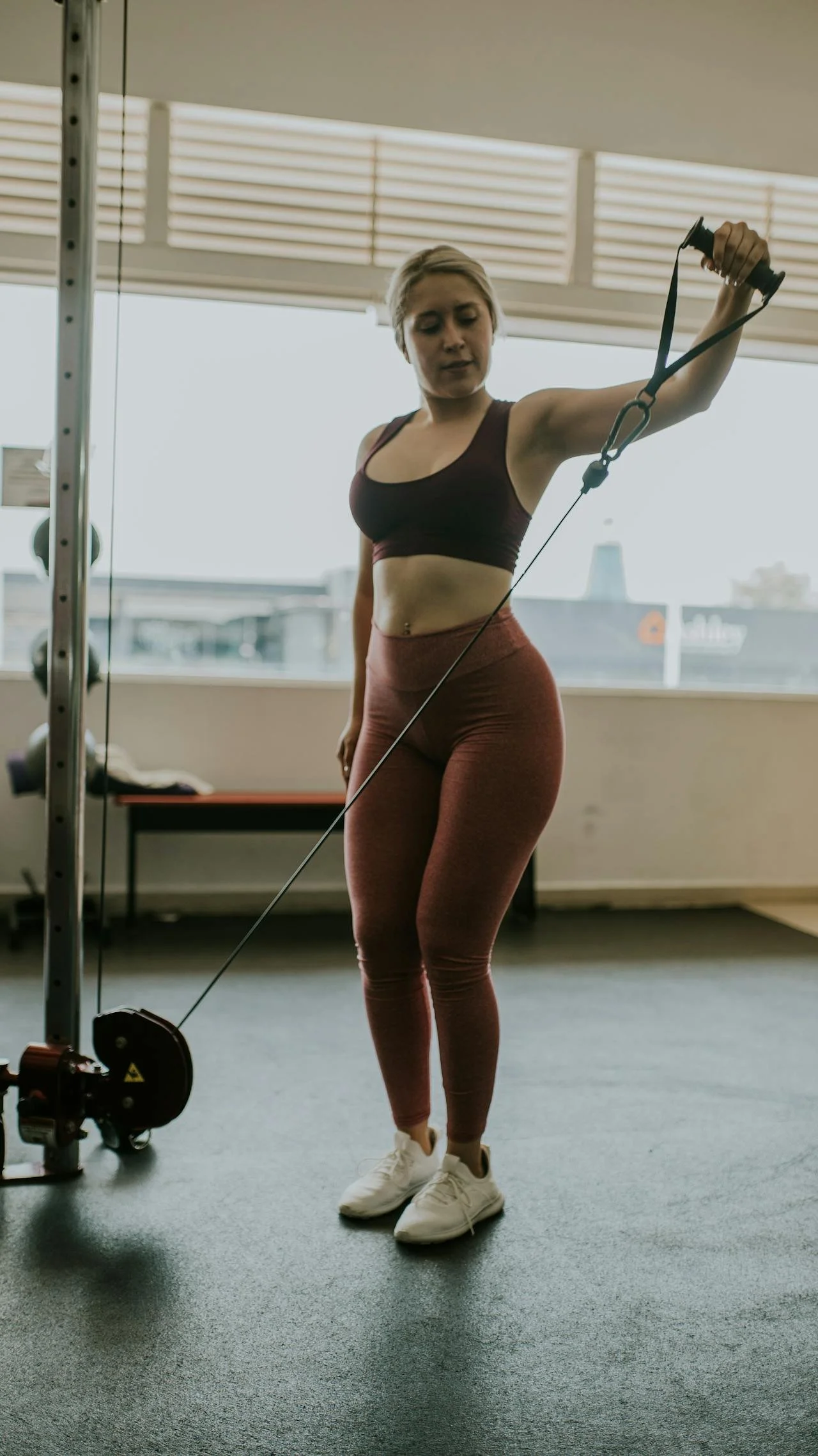
Gym Results Plateau / Photo: Amar Preciado
Table of Contents
Introduction
You’re Showing Up, But Not Training With Intent
You’re Avoiding Weak Muscle Groups
You’re Training at Peak Hours Without a Plan
You’re Resting Too Long Between Sets
You Only Work Out When You Feel Like It
You Don’t Prioritize Strength Training
You’re Lifting Too Light
You’re Lifting Too Heavy
You Blame Genetics Instead of Adjusting the Plan
Corrective Exercise and Injury Prevention: The Missing Layer
Related Articles
Introduction
It’s been many months since New Year’s Eve, and the excitement of a fresh fitness goal may already feel frustrating. You rededicated yourself to your goals and personal training, bought the shoes, made the playlist, and maybe even survived the January crowds. Still, your strength, body composition, posture, energy, or confidence may not be changing as quickly as you expected. That does not mean you are failing. More often, it means your exercise approach needs a more precise structure. Many people assume that gym results come from willpower alone. They believe that if they simply “try harder,” they will eventually break through. Effort matters, but effort without direction can become wasted energy. You can sweat through a workout, spend an hour in the gym, and still miss the training stimulus your body needs to adapt.
This is where a structured approach from a personal trainer in Denver, or from personal training in LoHi Denver, can help. A good training plan does not just tell you what exercises to do. It identifies your weak links, adjusts load and volume, builds progressive overload, and protects your joints through corrective exercise and injury prevention. Recent resistance training research supports a practical point: most well-structured resistance training improves strength and hypertrophy compared with doing nothing, but heavier loads tend to support greater strength gains, while multiple sets are especially useful for hypertrophy. In other words, the best plan is not random. Your body adapts to the specific stress you apply. Here are nine common reasons you may not be getting results in the gym—and exactly how to fix them.
1. You’re Showing Up, But Not Training With Intent
The first mistake is going through the motions. You may complete the sets and reps, but you are not asking the most important training question: Did I give my body a reason to adapt today? Training with intent does not mean going all-out every session. It means understanding the purpose of the session. Are you building strength? Improving muscle endurance? Practicing movement quality? Rebuilding shoulder control? Developing a stronger hinge pattern? Improving conditioning? Without intent, you may repeat the same comfortable routine for months. The body becomes efficient at familiar stress. Once that happens, the same workout produces fewer changes.
Tangible recommendations
Use a training log for every workout. Track:
Exercise selection
Weight used
Sets and reps
Rest time
Rate of perceived exertion, or RPE
Pain, stiffness, or form limitations
One thing to improve in the next session
For strength and hypertrophy, most working sets should end with approximately 1–3 reps in reserve. That means you could perform one to three more clean reps if necessary, but you are not casually coasting. If every set feels like a warm-up, you are not applying enough stimulus. If every set becomes a desperate grind, recovery and technique will suffer. A better goal than “I worked out today” is: I improved one measurable training variable while preserving form.
2. You’re Avoiding Weak Muscle Groups
Most people like training what already feels strong. They enjoy chest but avoid the upper back. They like quads but skip glutes and hamstrings. They train arms but neglect trunk stability. They do crunches but avoid anti-rotation work. Over time, this creates an imbalance. Weak links do not stay isolated. Poor hip stability can affect knee tracking. Limited ankle mobility can change squat mechanics. Weak scapular control can contribute to shoulder irritation. A stiff thoracic spine can lead to compensation through the neck or lower back. This is where corrective exercise becomes important. Corrective exercise is not “easy exercise.” It is targeted programming that improves movement quality, joint positioning, stability, mobility, and control, so your primary strength work becomes safer and more effective.
Tangible recommendations
Use a weekly movement-pattern checklist:
Squat pattern: goblet squat, split squat, step-up
Hinge pattern: Romanian deadlift, hip hinge drill, glute bridge
Push pattern: push-up, dumbbell press, landmine press
Pull pattern: cable row, pulldown, face pull
Carry pattern: farmer carry, suitcase carry
Core control: dead bug, side plank, Pallof press
Mobility: ankle dorsiflexion, hip flexor mobility, thoracic rotation
Balance and single-leg control: single-leg RDL, lateral step-down
If you consistently avoid one category, that category may be the reason your progress has stalled.
Quick Summary: Why Your Gym Results Have Stalled
Track your workouts so each session has a measurable purpose.
Train the muscle groups and movement patterns you avoid.
Use a plan before entering a crowded gym.
Time your rest periods based on the goal of the set.
Schedule workouts instead of waiting for motivation.
Prioritize strength training if you want muscle, metabolism, posture, and resilience to injury.
Choose weights that challenge you without forcing sloppy form.
Add corrective exercise for mobility, stability, balance, posture, and joint control.
Stop blaming genetics and start adjusting training variables.
3. You’re Training at Peak Hours Without a Plan
Peak gym hours can quietly sabotage your workout. You may arrive intending to squat, bench, row, and deadlift, but every rack, bench, and cable station is occupied. Instead of adapting intelligently, you wander. You do random machines, wait too long, skip compound lifts, and call it a workout. A crowded gym is not the problem. A lack of backup planning is the problem.
Tangible recommendations
Create an A/B/C exercise plan before you arrive.
Movement Goal Plan A Plan B Plan C
Squat pattern Barbell squat Goblet squat Split squat
Horizontal push Bench press Dumbbell press Push-up
Horizontal pull Seated cable row Chest-supported row One-arm dumbbell row
Hinge Romanian deadlift Dumbbell RDL Hip thrust
Core Pallof press Side plank Dead bug
This preserves the training effect even when the equipment changes. Your workout should be built around movement patterns, not only specific machines. This is also valuable for injury prevention. If the barbell rack is full, forcing a rushed substitute you have not practiced may increase risk. A planned regression or variation protects both progress and joints.
4. You’re Resting Too Long Between Sets
Rest periods should match the goal of the training block. Many people unintentionally rest for five minutes between moderate hypertrophy sets because they check their phone, talk, or lose focus. By the time the workout ends, they have completed only a fraction of the intended volume. Resting too little can also be a problem. If you are training heavy compound lifts, insufficient rest can reduce performance, degrade form, and increase compensations.
Tangible recommendations
Use these rest-period ranges:
Heavy strength sets: 2–4 minutes
Hypertrophy sets: 60–120 seconds
Muscular endurance circuits: 30–60 seconds
Corrective exercise drills: 30–60 seconds, or enough to maintain quality
Power work: 2–5 minutes, depending on intensity
Set a timer. This one habit can immediately improve workout density. For example, if you plan four exercises with three working sets each, resting 90 seconds instead of five minutes may allow you to complete a balanced session without rushing the final exercises.
5. You Only Work Out When You Feel Like It
Motivation is useful, but it is not reliable enough to be your training system. If you only exercise when you feel inspired, your schedule will collapse under the pressure of stress, work, weather, fatigue, and social obligations. Consistency drives adaptation. Your body responds to repeated exposure. One heroic workout every two weeks does less than three reasonable sessions every week.
Tangible recommendations
Use a “minimum effective workout” plan. On high-energy days, complete the full session. On low-energy days, complete a 20-minute version:
5-minute warm-up
2 strength supersets
1 corrective exercise pairing
3-minute cooldown
Example:
Goblet squat: 3 sets of 8
One-arm dumbbell row: 3 sets of 10 per side
Glute bridge: 2 sets of 12
Dead bug: 2 sets of 8 per side
This keeps the habit alive and reinforces the identity of someone who trains consistently. Consistency beats perfection.
6. You Don’t Prioritize Strength Training
Cardio is valuable. Walking, biking, hiking, running, rowing, and interval work all have a place. But if your goal is to build muscle, improve posture, increase strength, support metabolism, or reshape your body, then strength training should take priority. Too many people use cardio as the main tool for every goal. They want a leaner, stronger, more athletic body, but they spend most of the week on machines that do not sufficiently challenge muscle tissue. Resistance training is a primary driver of strength and muscle development. A large systematic review and Bayesian network meta-analysis found that resistance training prescriptions generally improved strength and hypertrophy in healthy adults, with heavier loads yielding greater strength gains and multiple sets yielding greater hypertrophy gains.
Tangible recommendations
Use this weekly framework:
2–4 strength training sessions per week
1–3 cardio sessions depending on goal and recovery
5–10 minutes of corrective exercise in most sessions
Daily walking or low-intensity movement when possible
If fat loss is the goal, strength training helps preserve lean mass while nutrition drives the calorie deficit. If hiking, skiing, or recreational sports are the goal, strength training improves tissue capacity and joint resilience.
7. You’re Lifting Too Light
Lifting too light is one of the most common reasons people stop seeing results. If the final reps feel identical to the first reps, the load probably is not challenging enough. That said, “heavy enough” does not mean reckless. A weight is appropriate when it challenges the target muscles while allowing a controlled range of motion, stable joints, and repeatable technique.
Tangible recommendations
Use the rep-target test:
Choose a rep range, such as 8–12 reps.
If you can complete more than 12 clean reps with ease, increase the load next time.
If you cannot complete at least 8 clean reps, reduce the load.
If form breaks down before the target muscles fatigue, regress the exercise.
For hypertrophy, many loads can work when sets are performed close enough to fatigue, but the set still needs to be challenging. A practical rule: the last two reps should require focus, but they should not require compensation.
8. You’re Lifting Too Heavy
The opposite mistake is ego lifting. You choose a weight that looks impressive but removes the training effect from the target muscle. Reps become shallow. Tempo disappears. Joints absorb stress. The lower back takes over. The shoulder rolls forward. The knees cave. The neck tenses. Heavy lifting can be productive, but only when the load matches your current capacity.
Tangible recommendations
Reduce the weight if you notice:
Half reps replacing full range of motion
Pain instead of muscular effort
Breath-holding without control
Joint shifting or wobbling
Inability to pause or control the lowering phase
Reps that look different from one another
For injury prevention, use a technical failure standard. Stop the set when you can no longer perform the next rep with the intended technique. That is different from absolute failure. A smarter progression is:
Own the range of motion.
Add tempo control.
Add reps.
Add sets.
Add load.
This approach builds strength without sacrificing joint integrity.
9. You Blame Genetics Instead of Adjusting the Plan
Genetics influences muscle shape, limb length, recovery, tendon structure, fat distribution, and how quickly you respond to training. But genetics rarely explains a total lack of progress. Before blaming genetics, audit the controllables:
Are you training consistently?
Are you progressively overloading?
Are you eating enough protein?
Are you sleeping enough?
Are you training weak patterns?
Are you using appropriate loads?
Are you managing pain early?
Are you measuring anything besides scale weight?
Most people have more potential than they have structure.
Tangible recommendations
Track three categories of progress:
Performance: reps, load, endurance, workout density
Body composition: waist, photos, measurements, strength-to-bodyweight ratio
Movement quality: pain-free range of motion, balance, posture, control
This gives you more accurate feedback than the scale alone.
Corrective Exercise and Injury Prevention: The Missing Layer
Many stalled gym programs fail because they ignore movement quality. The person keeps adding weight to a pattern their body does not control well. Eventually, progress slows because discomfort, stiffness, or compensation limits output. A systematic integrative review on exercise selection and common injuries in fitness centers emphasized that resistance training is valuable, but that exercise selection, technique, individualization, and load management are also important for reducing injury risk. A 2025 systematic review and meta-analysis also found that targeted interventions such as resistance training, neuromuscular training, core stability training, integrated training, correctional exercise, and functional training improved Functional Movement Screen scores in athletes, while the authors cautioned against assuming FMS changes alone prove definitive injury reduction.
Add this 10-minute corrective exercise template
Use this before strength training:
Breathing and rib control: 90/90 breathing, 5 breaths
Mobility: half-kneeling hip flexor stretch, 30 seconds per side
Thoracic rotation: open book rotation (alligators), 6 reps per side
Glute activation: mini-band lateral walk, 10 steps each direction
Core control: dead bug, 6–8 reps per side
Scapular control: wall slide or band pull-apart, 10–12 reps
Pattern rehearsal: bodyweight squat or hip hinge drill, 8 reps
This does not replace strength training. It prepares your joints and nervous system for better strength training. For more on injury prevention and posture mechanics:
Frequently Asked Questions (FAQ)
Why am I not seeing results from working out?
You may not be seeing results because your workouts lack consistency, progressive overload, proper exercise selection, adequate recovery, strength training, nutrition support, or movement quality. Track your workouts and adjust one variable at a time.
How long does it take to see results in the gym?
Many people notice changes in energy, strength, or confidence within 2–4 weeks. Visible body composition changes often require 8–12 weeks of consistent training, nutrition, sleep, and progressive overload.
Should I lift heavier to get better results?
Sometimes. If your sets feel easy and you always have many reps left, the weight may be too light. However, if heavier weight causes poor form, pain, or shortened range of motion, reduce the load and build control first.
Is cardio or weight training better for fat loss?
Nutrition drives fat loss, but strength training helps preserve and build lean muscle. Cardio supports energy expenditure and heart health. For most people, the best plan includes strength training, daily movement, and appropriately dosed cardio.
What is corrective exercise?
Corrective exercise uses targeted mobility, stability, balance, activation, and movement-control drills to improve mechanics. It can help prepare the body for safer, more effective strength training.
Can a personal trainer help me break a plateau?
Yes. A qualified personal trainer can assess your form, identify weak links, adjust training variables, create progression plans, improve accountability, and incorporate corrective exercises or injury-prevention strategies.
Peer-Reviewed Citations
Currier BS, Mcleod JC, Banfield L, Beyene J, Welton NJ, D’Souza AC, Keogh JAJ, Lin L, Coletta G, Yang A, Colenso-Semple L, Lau KJ, Verboom A, Phillips SM. 2023. Resistance training prescription for muscle strength and hypertrophy in healthy adults: a systematic review and Bayesian network meta-analysis. British Journal of Sports Medicine.
PMID: 37414459
DOI: 10.1136/bjsports-2023-106807
https://doi.org/10.1136/bjsports-2023-106807Bonilla DA, Cardozo LA, Vélez-Gutiérrez JM, Arévalo-Rodríguez A, Vargas-Molina S, Stout JR, Kreider RB, Petro JL. 2022. Exercise Selection and Common Injuries in Fitness Centers: A Systematic Integrative Review and Practical Recommendations. International Journal of Environmental Research and Public Health.
PMID: 36232010
DOI: 10.3390/ijerph191912710
https://doi.org/10.3390/ijerph191912710Maleki AA, Mousavi SH, Biabangard MA, Minoonejad H. 2025. Influence of exercise interventions on functional movement screen scores in athletes: a systematic review and meta-analysis. Scientific Reports.
PMID: 40685485
DOI: 10.1038/s41598-025-12371-2
https://doi.org/10.1038/s41598-025-12371-2
ABOUT THE AUTHOR: MICHAEL MOODY, PERSONAL TRAINER
As an author, a personal trainer in Denver, and a podcast host, Michael Moody has helped personal training clients reach new fitness heights and achieve incredible weight-loss transformations since 2005. He also produces the wellness podcast "The Elements of Being" and has been featured on NBC, WGN Radio, and PBS.
Michael offers personal training to Denver residents who want to meet at the 2460 W 26th Ave studio….or in their homes throughout LoHi (80206), LoDo (80202), RiNo (80216), Washington Park (80209), Cherry Creek (80206, 80209, 80243, 80246, 80231), and Highlands (80202, 80211, 80212). Michael also offers personal training sessions in Jefferson Park (80211) and Sloan's Lake (80204, 80212).
If you’re looking for a personal trainer who can curate a sustainable (and adaptable) routine based on your needs and wants, Michael is the experienced practitioner you’ve been looking for. Try personal training for a month…your body will thank you!
Related articles
From the Michael Moody Fitness directory, these are the most relevant internal articles to place at the bottom of this post. The directory includes the existing fast-food review under weight-loss obstacles and several related nutrition, dining-out, grocery, and food-label resources.
Overcoming Mental Barriers to Achieve Health and Fitness Goals: Insights from a Personal Trainer
The 7 Most Common Gym Injuries and How to Prevent Them With Smart Programming
Why Personal Training in LoHi Denver Gets Better Results Than Generic Gym Programs
Neutral Spine and Core Bracing: Posture Rules to Reduce Low Back Pain From Sitting and Standing
Shoulder Pain With Full ROM: Rotator Cuff Tendinosis, Scapular Control, and the Low-Back Connection
7 Simple, Science-Based Ways to Lose Weight Faster That Actually Work
Daily Habits to Prevent Weight Gain: Evidence-Based Tips From a Personal Trainer
99 Ways to Redefine Yourself in 2026 and Build Better Habits
In Denver, gym results require more than a generic workout pulled from social media. Between altitude, active outdoor lifestyles, ski weekends, hiking goals, long desk hours, and neighborhood-specific routines in LoHi, Highlands, RiNo, Cherry Creek, and Washington Park, your program should reflect how your body actually moves through Colorado life. Michael Moody Fitness provides individualized personal training in Denver with strength training, corrective exercise, mobility work, functional movement screening, and injury prevention built into the process.