Personal Training for Adults Over 40 in Denver | Strength and Mobility
Summary
Personal training for adults over 40 in Denver should build strength, mobility, balance, and longevity without beating up your joints. Learn safe strength training, corrective exercise, recovery, and conditioning tips from a LoHi personal trainer.
What is the best personal training approach for adults over 40 in Denver?
The best plan combines progressive strength training, mobility work, balance, joint-friendly conditioning, and recovery. Adults over 40 should train hard enough to build muscle and bone density, but with smart exercise selection, technique coaching, and individualized progression that protects the knees, hips, shoulders, and lower back.
Topics
personal training for adults over 40 Denver
personal trainer over 40 Denver, strength training after 40 Denver, mobility training Denver, longevity fitness Denver, LoHi personal trainer, personal trainer Denver, injury prevention personal trainer Denver, corrective exercise Denver, strength and mobility training, fitness after 40, joint-friendly workouts, adult strength training Denver, private personal training Denver
best personal trainer for adults over 40 in Denver, how to strength train after 40 without injury, personal training for mobility and longevity Denver, safe strength training for adults over 40, Denver personal trainer for joint pain and mobility, LoHi personal trainer for adults over 40
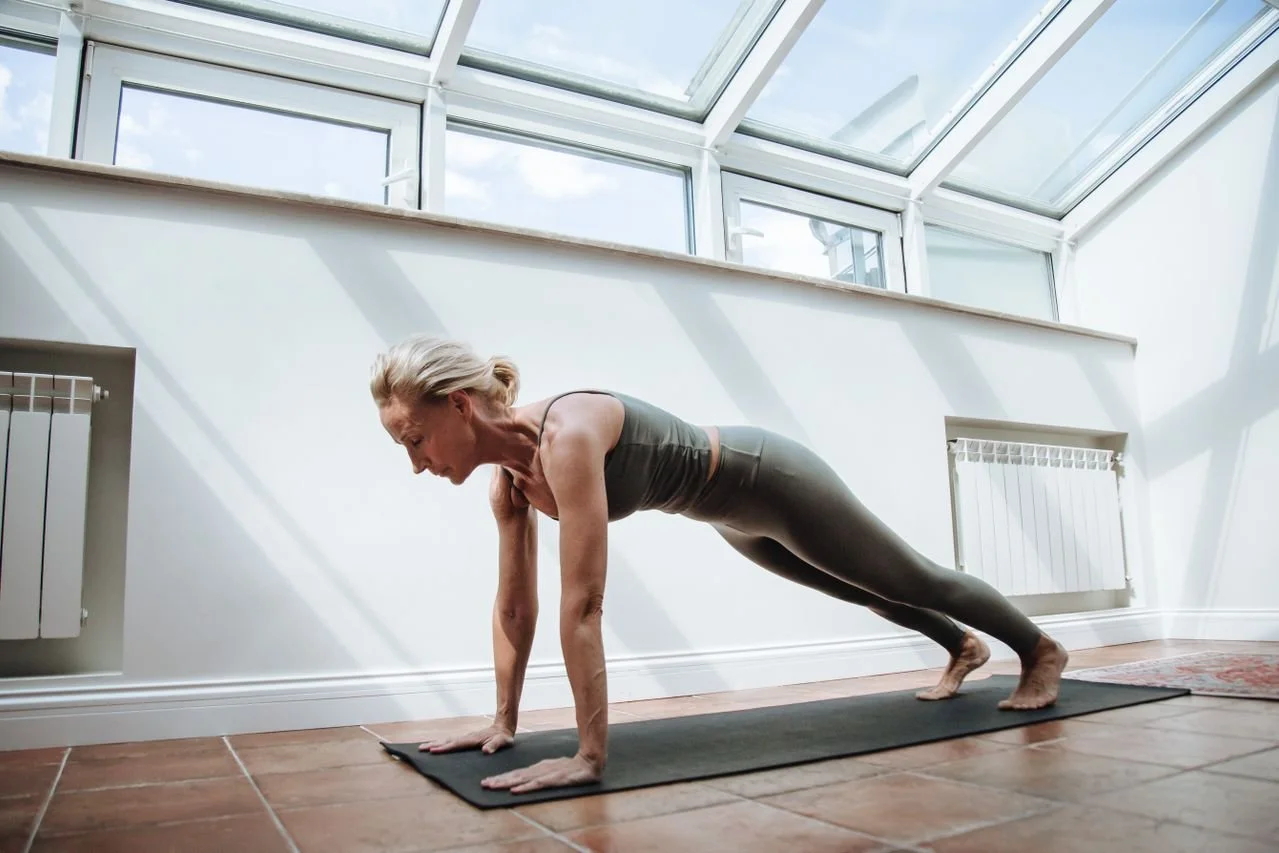
Fitness over 40 / Photo: Ron Lach
The Training Shift After 40
At 40, the body does not suddenly become fragile. It becomes less forgiving of bad accounting. The rushed warm-up, the ego set, the weekend warrior sprint after six days of sitting, the too-heavy deadlift with a tired back, the knee that “usually warms up after ten minutes”—these little debts accumulate. Most adults over 40 do not need easier training. They need better training.
A well-built program should help you become stronger, not simply sweaty. It should improve your ability to climb stairs, hike in the foothills, lift luggage, carry groceries, ski, garden, play with your kids, and sit at a desk without slowly turning into the chair. It should also respect the realities of adult life: prior injuries, inconsistent sleep, stress, travel, demanding work, and the fact that recovery is now part of the program rather than an afterthought.
For adults searching for a personal trainer in LoHi Denver, the goal should be precision: the right exercise, the right dose, the right progression, and the right reason. For anyone comparing personal trainers in Denver, the most important question is not “Will this workout crush me?” It is “Will this plan make me stronger six months from now without stirring up the same old pain?”
Table of Contents
The Training Shift After 40
Strength Comes First, But Not at Any Cost
Mobility Is Not Stretching for the Sake of Stretching
Joint-Friendly Conditioning for Denver Adults
A Practical Weekly Training Structure
Recovery, Soreness, and Progression After 40
Related Articles
Strength Comes First, But Not at Any Cost
Strength training is the backbone of fitness after 40 because muscle acts as a protective buffer. It supports joints, improves physical function, helps maintain metabolic health, and provides the body with greater reserves for aging, injury, and daily life. But strength training should not mean random heavy lifting. A good over-40 program usually includes five major patterns:
Squat pattern: goblet squat, box squat, split squat, leg press
Hip hinge pattern: Romanian deadlift, hip thrust, cable pull-through
Push pattern: incline push-up, dumbbell bench press, landmine press
Pull pattern: cable row, one-arm dumbbell row, lat pulldown
Carry or trunk pattern: farmer carry, suitcase carry, dead bug, Pallof press
The point is not to chase novelty. The point is to train the movements that show up in life. A useful starting dose for many adults over 40 is two to three strength sessions per week. Begin with 2–3 sets of 6–12 repetitions on major exercises, leaving 1–3 repetitions “in reserve” rather than grinding every set to failure. Progress slowly: add a few pounds, one repetition, one set, or a slightly more demanding variation when the movement looks clean and the body feels ready.
The best personal training programs do not treat pain as a personality test. If a shoulder dislikes overhead pressing, use a landmine press, an incline press, a cable press, or a push-up variation. If a knee doesn't like deep squats, adjust the depth, stance, tempo, or the exercise. If the lower back complains during barbell deadlifts, train the hinge with dumbbells, a trap bar, a cable, or a hip thrust. The exercise is not sacred. The adaptation is.
Mobility Is Not Stretching for the Sake of Stretching
Mobility should solve movement problems. It should not become a 40-minute apology for sitting. Many adults over 40 feel tight in the hips, calves, hamstrings, thoracic spine, shoulders, and neck. Stretching may help, but passive stretching alone rarely changes how someone moves under load. The better approach is to combine mobility with strength and control. For example:
If the hips feel stiff, pair 90/90 hip switches with split squats or step-ups.
If the ankles feel restricted, pair calf mobilizations with sled pushes or controlled lunges.
If the upper back feels locked, pair thoracic rotations with rows, carries, and breathing drills.
If the shoulders feel cranky, pair wall slides or banded external rotations with rowing and pressing variations that do not provoke symptoms.
A simple pre-workout mobility sequence for adults over 40 might include:
5 slow nasal breaths in a child’s pose or quadruped position
8 thoracic rotations per side
8 hip flexor rocks per side
8 ankle rocks per side
10 glute bridges
10 band pull-aparts
5 bodyweight squats with a pause
This is not theater. It is a systems check. You are asking the body, “What is available today?” Then the workout responds accordingly.
Joint-Friendly Conditioning for Denver Adults
Denver attracts active people, but activity and conditioning are not identical. A person can hike on Saturday, ski in February, bike to a brewery, and still lack the aerobic base or tissue capacity to recover well. Conditioning after 40 should improve the heart and lungs without turning every session into a joint tax. For many adults, the best options are brisk walking, incline treadmill walking, cycling, rowing, swimming, hiking, sled work, and controlled intervals. Use this hierarchy:
Zone 2 conditioning: 2–4 days per week, 25–45 minutes, conversational pace.
Intervals: 1 day per week, only if joints and recovery are stable.
Recreational activity: hiking, skiing, paddleboarding, tennis, golf, or long walks. Count it, but do not let it replace strength training entirely.
In Colorado’s dry air and elevation, hydration and pacing matter. Adults who move from sea level, return after an extended absence, or restart training after a long break may notice increased breathing effort at first. The solution is not to panic. It is progression. Start with sustainable pacing, build volume gradually, and avoid stacking a hard leg day, interval workout, and steep hike in the same 48-hour window unless your body is prepared for it.
Quick Summary
Adults over 40 need structured strength training, not random hard workouts.
Train the major movement patterns: squat, hinge, push, pull, carry, and trunk control.
Mobility should be paired with strength and movement control.
Conditioning should build capacity without constantly irritating joints.
Two to three weekly strength sessions are a strong starting point for many adults.
Progression should be gradual, measurable, and adjusted around pain, sleep, and recovery.
The best personal training plan helps you feel more capable in real life, not just tired after the workout.
A Practical Weekly Training Structure
Here is a realistic template for an adult over 40 who wants strength, mobility, fat loss support, and longevity without feeling wrecked.
Day 1: Lower Body Strength and Core
Goblet squat or leg press: 3 sets of 8–10
Romanian deadlift: 3 sets of 8
Step-up: 2 sets of 8 per side
Hamstring curl: 2 sets of 10–12
Farmer carry: 3 carries of 30–45 seconds
Dead bug: 2 sets of 6–8 per side
Day 2: Zone 2 Conditioning and Mobility
Brisk walk, bike, rower, or incline treadmill: 30–40 minutes
Hip flexor mobility: 2 sets of 8 per side
Thoracic rotation: 2 sets of 8 per side
Calf mobility: 2 sets of 10 per side
Day 3: Upper Body Strength and Posture
Incline dumbbell press or push-up: 3 sets of 8–10
Cable row: 3 sets of 10
Lat pulldown: 2–3 sets of 8–10
Landmine press or neutral-grip dumbbell press: 2 sets of 8
Face pull: 2 sets of 12–15
Suitcase carry: 2 carries per side
Day 4: Active Recovery
Walk 20–45 minutes
Optional: light yoga, mobility, easy cycling, or hiking on gentle terrain
Day 5: Full-Body Strength and Power
Trap bar deadlift, hip thrust, or cable pull-through: 3 sets of 5–8
Split squat: 2 sets of 8 per side
Chest-supported row: 3 sets of 8–10
Sled push, step-up, or controlled medicine ball throw: 4–6 short rounds
Side plank: 2 sets per side
This is not a punishment schedule. It is a framework. Some people need two lifting days. Some need three. Some should start with machines before free weights. Some need more corrective exercise. Some need less intensity and more consistency. The right program is the one that meets the person in front of you.
Recovery, Soreness, and Progression After 40
Soreness is information, not a trophy. Mild muscle soreness can be normal, especially after a new exercise or a return from time off. Joint pain, sharp pain, swelling, limping, radiating symptoms, or soreness that worsens across sessions is different. Adults over 40 should learn to distinguish muscular effort from irritated tissue. Use these rules:
Increase weekly training volume by small steps, not dramatic leaps.
Keep two easier days between hard lower-body sessions when possible.
Stop sets when the technique changes noticeably.
Sleep is part of the program. Poor sleep lowers tolerance for intensity.
Protein matters. Aim for a protein source at each meal.
Do not add running, plyometrics, heavy lifting, and calorie restriction all at once.
The great mistake after 40 is not ambition. It is impatience. The body can still change dramatically, but it prefers a convincing argument over a shouting match.
Frequently Asked Questions (FAQ)
What type of personal training is best for adults over 40?
The best approach combines progressive strength training, mobility work, balance, conditioning, and recovery. Programs should be individualized around injury history, joint tolerance, strength level, and lifestyle demands.How often should adults over 40 strength train?
Many adults over 40 do well with two to three strength-training sessions per week. The exact frequency depends on recovery, goals, orthopedic history, sleep, and total weekly activity.Is strength training safe after 40?
Yes. Strength training is generally safe and beneficial when exercises are selected carefully, technique is coached, and progression is gradual. Adults with medical conditions or significant pain should consult an appropriate healthcare professional.What exercises should adults over 40 prioritize?
Adults over 40 should prioritize squats or squat variations, hip hinges, rows, presses, carries, step-ups, lunges, core stability, and mobility drills that support better movement mechanics.Can personal training help with mobility after 40?
Yes. Personal training can improve mobility by combining range-of-motion work with strength, balance, and motor control. Mobility work is most effective when it transfers into better movement during real exercises and daily life.How can adults over 40 avoid workout injuries?
Use progressive overload, warm up intelligently, avoid sudden spikes in volume, stop when technique breaks down, recover between hard sessions, and modify exercises around joint pain rather than forcing painful patterns.Is cardio or strength training more important after 40?
Both matter, but strength training should usually be the foundation because it supports muscle, bone, balance, and function. Cardio should improve heart health and endurance without interfering with recovery or irritating joints.What should a Denver fitness plan include for adults over 40?
A Denver fitness plan should include strength training, mobility, conditioning, hiking or recreational preparation, hydration awareness, recovery, and gradual progression for altitude, dry climate, and active weekend demands.
Peer-Reviewed Citations
Radaelli R, Rech A, Molinari T, Markarian AM, Petropoulou M, Granacher U, Hortobágyi T, Lopez P. 2025. Effects of Resistance Training Volume on Physical Function, Lean Body Mass and Lower-Body Muscle Hypertrophy and Strength in Older Adults: A Systematic Review and Network Meta-analysis of 151 Randomised Trials. Sports Medicine.
PMID: 39405023
DOI: 10.1007/s40279-024-02123-z
https://doi.org/10.1007/s40279-024-02123-zLopez P, Rech A, Petropoulou M, Newton RU, Taaffe DR, Galvão DA, Turella DJP, Freitas SR, Radaelli R. 2023. Does High-Velocity Resistance Exercise Elicit Greater Physical Function Benefits Than Traditional Resistance Exercise in Older Adults? A Systematic Review and Network Meta-Analysis of 79 Trials. The Journals of Gerontology: Series A.
PMID: 36378500
DOI: 10.1093/gerona/glac230
https://doi.org/10.1093/gerona/glac230Bloch-Ibenfeldt M, Theil Gates A, Karlog K, Demnitz N, Kjaer M, Boraxbekk CJ. 2024. Heavy resistance training at retirement age induces 4-year lasting beneficial effects in muscle strength: a long-term follow-up of an RCT. BMJ Open Sport and Exercise Medicine.
PMID: 38911477
DOI: 10.1136/bmjsem-2024-001899
https://doi.org/10.1136/bmjsem-2024-001899
ABOUT THE AUTHOR: MICHAEL MOODY, PERSONAL TRAINER
As an author, a personal trainer in Denver, and a podcast host, Michael Moody has helped personal training clients reach new fitness heights and achieve incredible weight-loss transformations since 2005. He also produces the wellness podcast "The Elements of Being" and has been featured on NBC, WGN Radio, and PBS.
Michael offers personal training to Denver residents who want to meet at the 2460 W 26th Ave studio….or in their homes throughout LoHi (80206), LoDo (80202), RiNo (80216), Washington Park (80209), Cherry Creek (80206, 80209, 80243, 80246, 80231), and Highlands (80202, 80211, 80212). Michael also offers personal training sessions in Jefferson Park (80211) and Sloan's Lake (80204, 80212).
If you’re looking for a personal trainer who can curate a sustainable (and adaptable) routine based on your needs and wants, Michael is the experienced practitioner you’ve been looking for. Try personal training for a month…your body will thank you!
Related articles
From the Michael Moody Fitness directory, these are the most relevant internal articles to place at the bottom of this post. The directory includes the existing fast-food review under weight-loss obstacles and several related nutrition, dining-out, grocery, and food-label resources.
Spine-Safe Hip Mobility Exercises for Lower Back and Shoulder Injuries
Master These 6 Beginner Functional Exercises for a Strong Fitness Foundation
The 15 Most Common Mistakes Personal Trainers See in the Gym
What Happens to Your Body When You Abandon Your Fitness Routine: 4 Eye-Opening Changes
How Do I Increase My Activity Levels Outside of My Personal Training Sessions?
Osteoporosis Strength Circuit: Legs, Lats, and Triceps Workout
In Denver, adults over 40 often want fitness that supports a full Colorado life: skiing, hiking, cycling, travel, gardening, parenting, and long workdays spent at a desk. Michael Moody Fitness trains personal training clients in LoHi and across Denver with an emphasis on strength, mobility, corrective exercise, injury prevention, and sustainable conditioning—helping clients build durable bodies for both city life and the mountains west of town.