Summary
Denver’s altitude changes oxygen availability, heart rate response, pacing, and recovery. Learn how training in hypoxia affects endurance and intervals, how acclimatization works, and how to adjust intensity, hydration, and progression so you improve fitness safely.
Why does exercise feel harder at Denver’s altitude?
Exercise feels harder in Denver because the reduced oxygen pressure at higher elevations limits the amount of oxygen available to working muscles. To compensate, the body increases its heart and breathing rates. This physiological response increases perceived exertion and reduces endurance capacity until the body gradually acclimatizes.
Key Topics
Primary: hiking conditioning workouts, hiking training plan Colorado, workouts for hiking
Local intent: hiking conditioning Denver, Colorado hiking prep workouts, LoHi personal trainer hiking
Performance: uphill endurance training, leg strength for hiking, downhill hiking knee pain prevention
Safety: hiking injury prevention, blister prevention hiking training, altitude hiking training
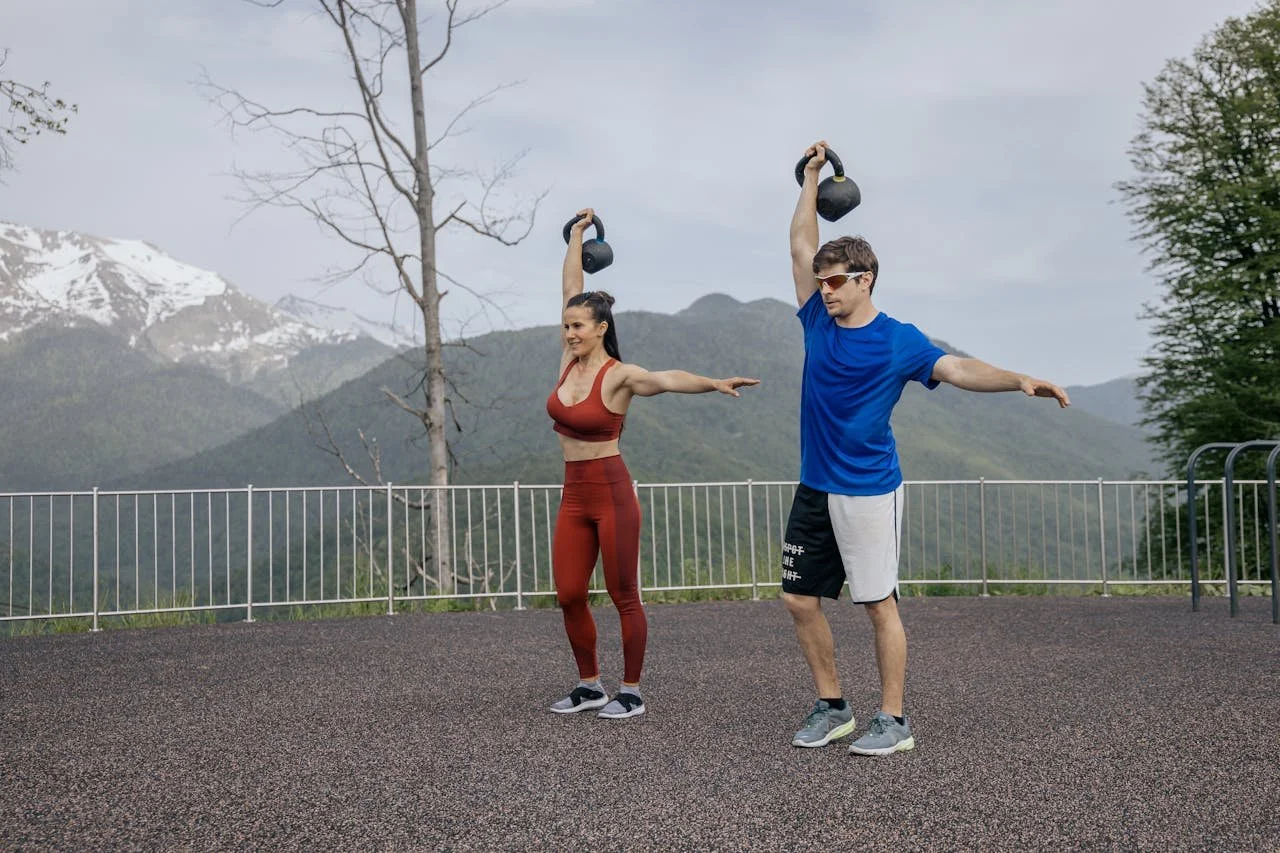
Exercise Altitude / Photo: Anastasia Shuraeva
How Denver’s Altitude Changes Your Workout
Moving to Denver or beginning a new exercise routine in Colorado often comes with an immediate realization: workouts feel harder at altitude. Activities that might feel manageable at sea level—running, cycling, hiking, or high-intensity training—can suddenly leave people breathing heavily and recovering more slowly.
Denver sits at approximately 5,280 feet above sea level, a height where oxygen availability is measurably lower than at sea level. This reduction affects cardiovascular performance, endurance capacity, and perceived exertion during exercise.
For many athletes and recreational exercisers, understanding how altitude affects training is essential for staying consistent and avoiding overtraining or injury. Many individuals who begin structured programs with a personal trainer in Denver discover that adjusting training intensity and recovery strategies makes workouts significantly more effective.
With proper acclimatization and intelligent programming, training at altitude can become a powerful tool for improving cardiovascular fitness and overall resilience.
Table of Contents
What Altitude Does Physiologically
How Reduced Oxygen Changes Heart Rate and Breathing
The Three Biggest Training Mistakes New Denver Athletes Make
Adjusting Endurance Training at Altitude
Strength Training Considerations at Altitude
How to Structure High-Intensity Workouts in Denver
Recovery at Altitude: Sleep, Hydration, and Training Load
Acclimatization Timeline for New Residents
Frequently Asked Questions
Conclusion
Related Articles
Quick Summary: How Altitude Affects Workouts
Training in Denver affects exercise performance in several important ways:
Oxygen availability is lower at higher elevations
Heart rate increases during exercise to compensate
Breathing rate rises during moderate and intense activity
Endurance performance initially decreases
Recovery between intervals may require longer rest
Hydration needs increase due to drier air
Gradual progression is essential during the first weeks of training
What Altitude Does Physiologically
Altitude influences exercise primarily through changes in oxygen availability. At higher elevations, barometric pressure decreases, which reduces the partial pressure of oxygen in the air. Even though the percentage of oxygen remains the same, the body receives less oxygen with each breath. This condition is known as hypoxia. When exercising in hypoxic conditions, the body must compensate through several physiological responses.
Lower Oxygen Pressure and Cardiovascular Response
When oxygen delivery decreases, the body increases both ventilation rate and heart rate. This means:
breathing becomes deeper and faster
heart rate rises more quickly during exercise
perceived exertion increases
Even relatively easy activities may initially feel more difficult. Over time, the body adapts through a process known as acclimatization, which improves the efficiency of oxygen transport.
The Three Biggest Training Mistakes New-to-Denver Athletes Make
When people first begin exercising in Denver, they often underestimate how much altitude affects training. Several common mistakes can slow progress or increase fatigue.
1. Trying to Match Sea-Level Pace
Many runners and cyclists attempt to maintain the same pace they used at lower elevations. However, altitude reduces maximal aerobic capacity (VO₂ max), meaning the body cannot sustain the same intensity without increased fatigue. Adjusting pacing based on perceived effort rather than speed is more effective.
2. Increasing Training Intensity Too Quickly
Because workouts feel harder at altitude, athletes sometimes push themselves excessively during early workouts. This can lead to:
excessive fatigue
prolonged recovery
decreased motivation
A gradual progression during the first few weeks allows the body to adapt more efficiently.
3. Underestimating Hydration Needs
Denver’s dry climate increases fluid loss through respiration and perspiration. Even mild dehydration can impair endurance performance. Maintaining consistent hydration supports both cardiovascular function and recovery.
Adjusting Endurance Training at Altitude
Endurance activities such as running, cycling, and hiking are particularly influenced by altitude. Several strategies can help individuals adapt more comfortably.
Use Perceived Effort Instead of Pace
Because altitude increases heart and breathing rates, maintaining the same pace at sea level often results in excessive fatigue. Instead, athletes should focus on the rating of perceived exertion (RPE). For example:
easy workouts should feel conversational
moderate workouts should feel comfortably challenging
high-intensity intervals should be brief and controlled
This approach allows intensity to match physiological capacity.
Gradually Increase Weekly Volume
A conservative progression during the first several weeks helps the body adjust. Many endurance athletes benefit from limiting increases in weekly training volume to approximately 5–10 percent per week. This gradual progression helps prevent excessive fatigue.
Strength Training at Altitude
While altitude primarily affects aerobic performance, resistance training can also feel more challenging. Strength training sessions that include short rest periods or high training density may feel more demanding due to reduced oxygen availability. Many individuals beginning structured programs with personal training in LoHi Denver find that longer rest intervals between sets improve workout quality.
Key Strength Training Adjustments
Effective strategies include:
slightly longer rest periods between sets
focusing on controlled technique rather than maximal load
reducing total volume during early acclimatization
These adjustments help maintain training quality without overwhelming recovery capacity
High-Intensity Interval Training at Altitude
High-intensity interval training (HIIT) can be particularly challenging at higher elevations. Because oxygen delivery is limited, fatigue develops more rapidly during maximal efforts. However, interval training can still be highly effective when programmed carefully.
Smart HIIT Adjustments
Strategies for interval training at altitude include:
shorter work intervals
slightly longer recovery periods
lower total interval volume
For example, athletes might perform:
4–6 short intervals rather than 8–10
longer rest periods between efforts
This approach allows individuals to maintain high-quality output.
Recovery at Altitude
Recovery plays an especially important role in altitude training. Several factors influence how well the body adapts to altitude stress.
Sleep
Altitude can initially disrupt sleep patterns, particularly for new residents. Maintaining consistent sleep schedules and minimizing late-night training sessions can help support recovery.
Hydration
Because the air in Denver is significantly drier than at sea level, hydration needs increase. Many athletes benefit from increasing daily fluid intake and monitoring hydration during longer workouts.
Training Load Management
Structured training programs balance intensity and recovery. Individuals working with a personal trainer in Denver often follow programs that gradually increase training demand while ensuring adequate recovery. This approach helps prevent excessive fatigue and improves long-term progress.
Acclimatization Timeline
The body gradually adapts to altitude through several physiological changes. These include:
increased red blood cell production
improved oxygen transport
improved muscular efficiency
Most individuals experience noticeable adaptation within the first one to three weeks. However, full adaptation can take longer depending on training intensity and lifestyle factors.
Frequently Asked Questions (FAQ)
Why does my heart rate spike when exercising in Denver?
Heart rate increases at altitude because the body must work harder to deliver oxygen to working muscles.
How long does it take to acclimatize to Denver altitude?
Many individuals begin adapting within one to three weeks, although physiological adjustments may continue for several months.
Should I train harder at altitude to improve fitness faster?
No. Most people benefit from gradually increasing intensity as their body adapts to reduced oxygen availability.
Does altitude affect strength training?
Altitude can reduce work capacity during dense strength training sessions, especially when rest periods are short.
What’s the best way to pace interval workouts in Denver?
Using perceived exertion rather than chasing sea-level pace allows athletes to maintain appropriate training intensity.
Conclusion
Denver’s altitude creates unique physiological challenges that influence endurance, strength, and recovery during exercise.
Lower oxygen availability increases heart rate, breathing rate, and perceived exertion during workouts. However, with proper acclimatization and intelligent training progression, individuals can adapt successfully.
By adjusting pacing, hydration, and recovery strategies, athletes can continue improving fitness while avoiding excessive fatigue.
Many individuals training in Denver find that structured coaching programs—such as working with a personal trainer in Denver or participating in personal training in LoHi Denver—help them adapt to altitude more efficiently while building long-term strength and endurance.
Understanding how altitude affects exercise allows people to train smarter, stay consistent, and enjoy Colorado’s active lifestyle.
Related Articles
Peer-reviewed citations
Westmacott A, Sanal-Hayes NE, McLaughlin M, Mair JL, Hayes LD (2022). High-Intensity Interval Training in Hypoxia Improves Maximal Aerobic Capacity More Than Normoxia: A Systematic Review and Meta-Regression. International Journal of Environmental Research and Public Health.
PMID: 36361141
DOI: 10.3390/ijerph192114261
ABOUT THE AUTHOR: MICHAEL MOODY
As an author, a personal trainer in Denver, and a podcast host, Michael Moody has helped personal training clients reach new fitness heights and achieve incredible weight-loss transformations since 2005. He also produces the wellness podcast "The Elements of Being" and has been featured on NBC, WGN Radio, and PBS. Michael specializes in strength training, injury prevention, and long-term health. He works with clients in LoHi and across Denver to build individualized training programs that improve strength, mobility, and sustainable fitness habits.
Michael offers personal training sessions in the 2460 W 26th Ave studio or in homes throughout LoHi (80206), LoDo (80202), RiNo (80216), Washington Park (80209), Cherry Creek (80206, 80209, 80243, 80246, 80231), and Highlands (80202, 80211, 80212). Michael also offers personal training in Jefferson Park (80211) and Sloan's Lake (80204, 80212).
If you're considering working with a coach, learn more about individualized programs with a personal trainer in Denver, or explore personal training in LoHi Denver today!
Denver’s altitude creates unique challenges for endurance athletes, runners, cyclists, and hikers who regularly train in neighborhoods such as LoHi, Highlands, and Sloan’s Lake. Many local athletes incorporate structured strength-and-conditioning programs to support activities such as mountain biking, trail running, and hiking in the Rocky Mountains. Training programs designed by a personal trainer in Denver often account for altitude-related cardiovascular stress while building the strength and resilience necessary for Colorado’s outdoor environment.