
Personal Trainer Blog
Fitness | Wellness | Diet Self-Improvement

Health and Fitness at your finger tips
Learn fitness, healthy whole food diets, wellness, and other personal training tips/recipes from Denver's weight loss personal trainer.

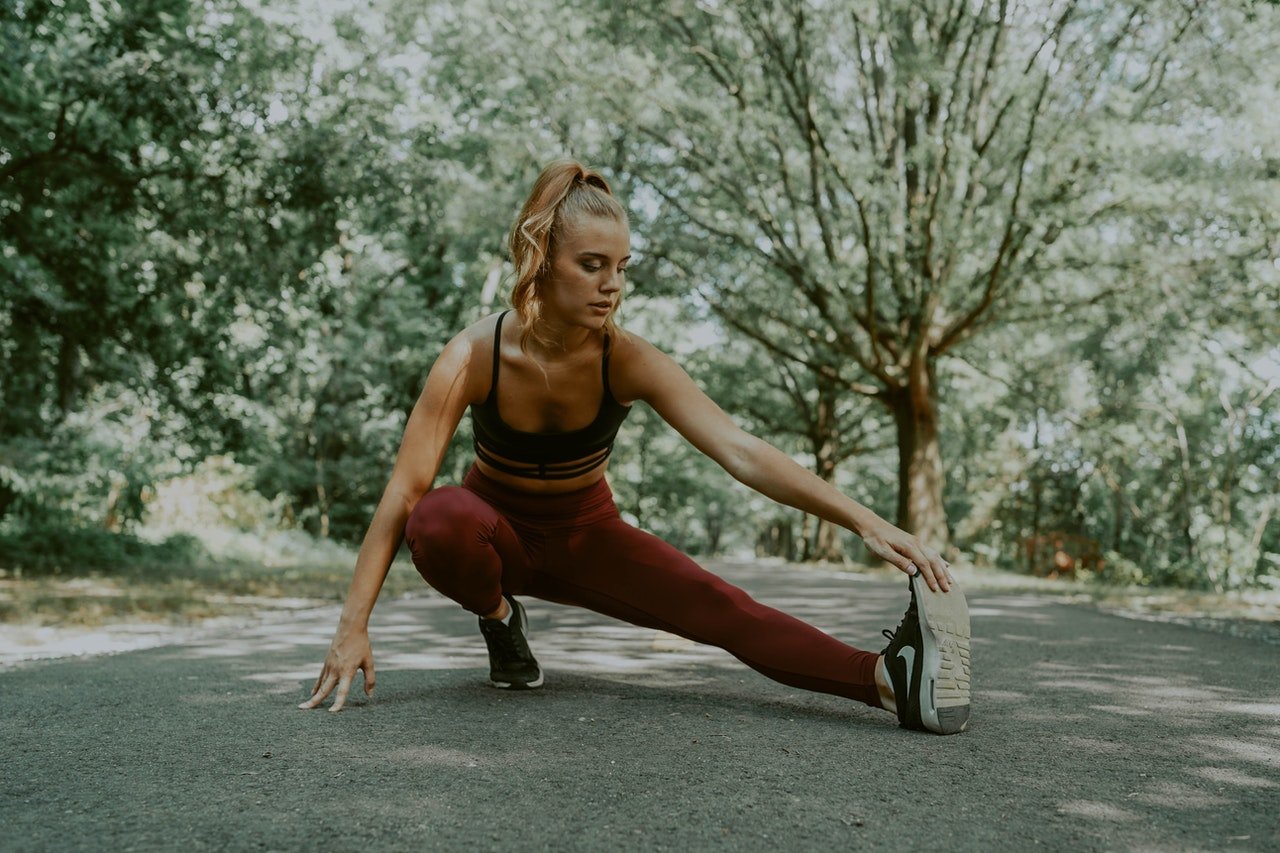
Effective HIIT Legs Workout: High-Intensity Interval Training for Stronger Legs
ABSTRACT
Transform your leg day with this HIIT legs workout program designed to strengthen and tone. Complete a series of high-intensity interval training exercises, including bodyweight squats, kettlebell swings, and goblet squats. Warm up properly and follow the structured circuits for maximum results. Get the full workout routine and tips to enhance your leg training.
KEYWORDS
HIIT legs workout
High-intensity interval training legs
Leg workout routine
HIIT leg exercises
HIIT leg circuit
Effective leg workout
Leg warm-up exercises
Leg strengthening exercises
Leg toning workout
Interval training for legs

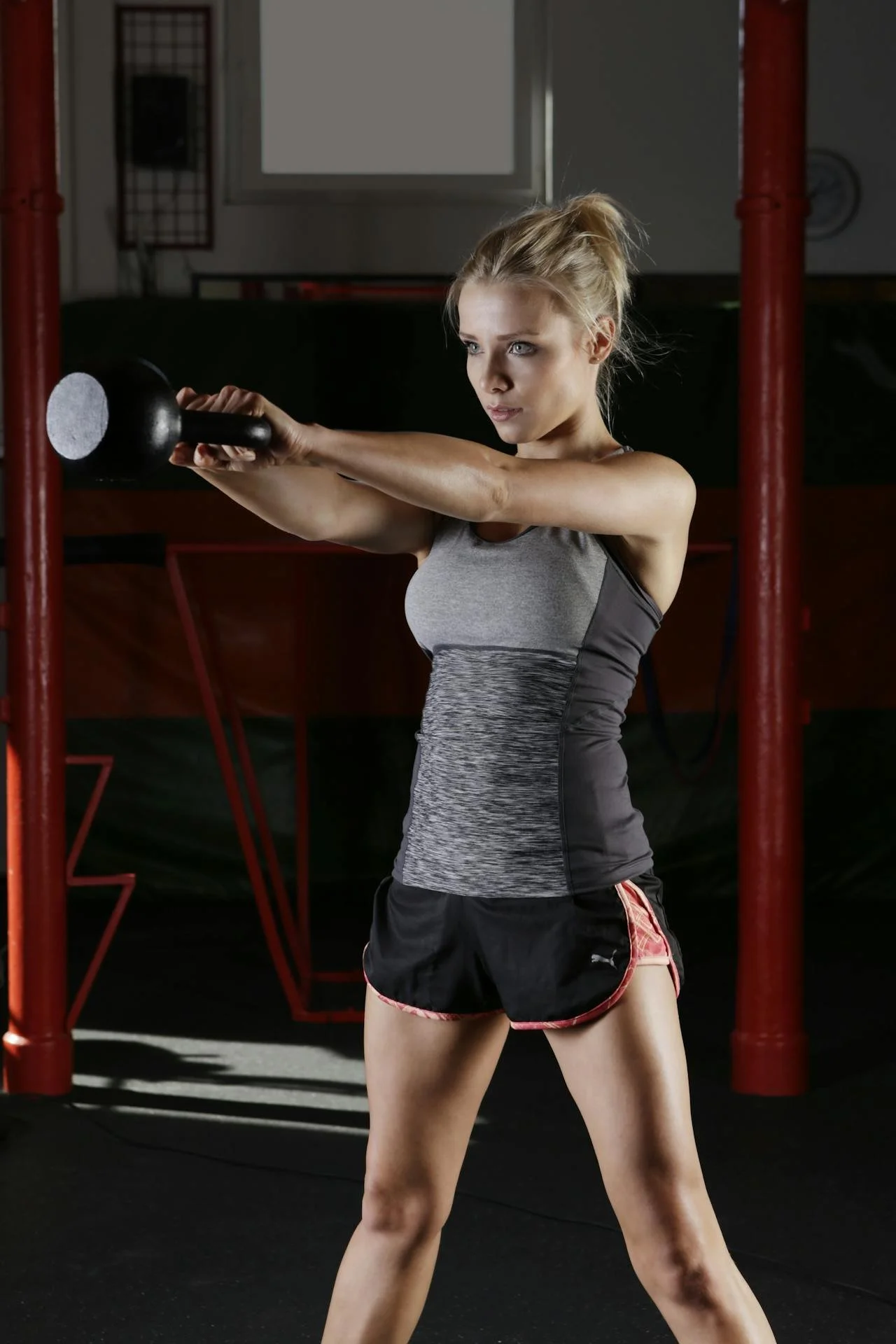
Kettlebell Exercises / Photo: Anastasia Shuraeva
Program Notes
Perform the exercises in this order. Note the descriptions next to each exercise (e.g., hinging hips, etc.). Please substitute as needed. Don’t forget to answer the questions in the “Assessment Section” after your workout.
HIIT Legs Program (High-Intensity Interval Training)
Warmup: Please complete this warmup before moving on to Circuit 1.
1st: Shoulder External Rotation in Neutral Position
2nd: Shoulder External Rotation at 90 Degrees
3rd: Alligators
4th: Hip Stretches (stand if necessary and don’t overstretch the hip flexors; hinge your hips back)
5th: Glute Bridges
6th: Kneeling Thoracic Extension
Circuit 1: Repeat this circuit 3x before moving on to Circuit 2. 30 Seconds per exercise.
1st: Bodyweight squats
2nd: Plyo jumping lunges (alternating split squat jump, hold dumbbells at your side to increase difficulty)
3rd: Mountain climbers off of a bench (20 seconds)
4th: Standard plank
45-second break
Circuit 2: Repeat this circuit 3x before moving on to Circuit 3. 30 Seconds per exercise.
1st: Kettlebell swings (don’t swing the kettlebell above the chest; squeeze the glutes on the swing up)
2nd: Dumbbell Russian deadlifts (RDLs, hinge back while rotating the dumbbells in front of your bent knees, rotate the dumbbells back as you stand and squeeze your glutes)
3rd: High knees (20 seconds, don’t life knees above the hips)
45-second break
Circuit 3: Repeat this circuit 3x. 30 Seconds per exercise.
1st: Goblet squats (hold a kettlebell upside down at your chest while you squat; lower weight if you feel your lower back)
2nd: Alternating step-downs with dumbbells at your side (step down off of a bench, chair, or step
3rd: Plank with feet on a step
45-second break
Assessment Section
No fitness or personal training program is perfect. Let’s reflect and adapt! Answer the following questions:
How would you adapt this training program?
Which exercises would you swap out?
How could you make this fitness program more challenging?
How would you change the order of the exercises?
Would you include more breaks in between the sets?
Would you include a different ratio of exercises instead?
Michael Moody, author and personal trainer in Denver
If you’re looking for a personal trainer who can curate a sustainable (and adaptable) routine based on your needs and wants, Michael is the experienced practitioner you’ve been looking for. Try personal training for a month today…your body will thank you!
ABOUT THE AUTHOR: MICHAEL MOODY, PERSONAL TRAINER
As an author, a personal trainer in Denver, and podcast host, Michael Moody has helped personal training clients achieve new fitness heights and incredible weight loss transformations since 2005. He also produces the wellness podcast "The Elements of Being" and has been featured on NBC, WGN Radio, and PBS.
Michael offers personal training to Denver residents who want to meet at the 2460 W 26th Ave studio….or in their homes throughout LoHi (80206), LoDo (80202), RiNo (80216), Washington Park (80209), Cherry Creek (80206, 80209, 80243, 80246, 80231), and Highlands (80202, 80211, 80212). Michael also offers experiences with a personal trainer in Jefferson Park (80211) and Sloan's Lake (80204, 80212).
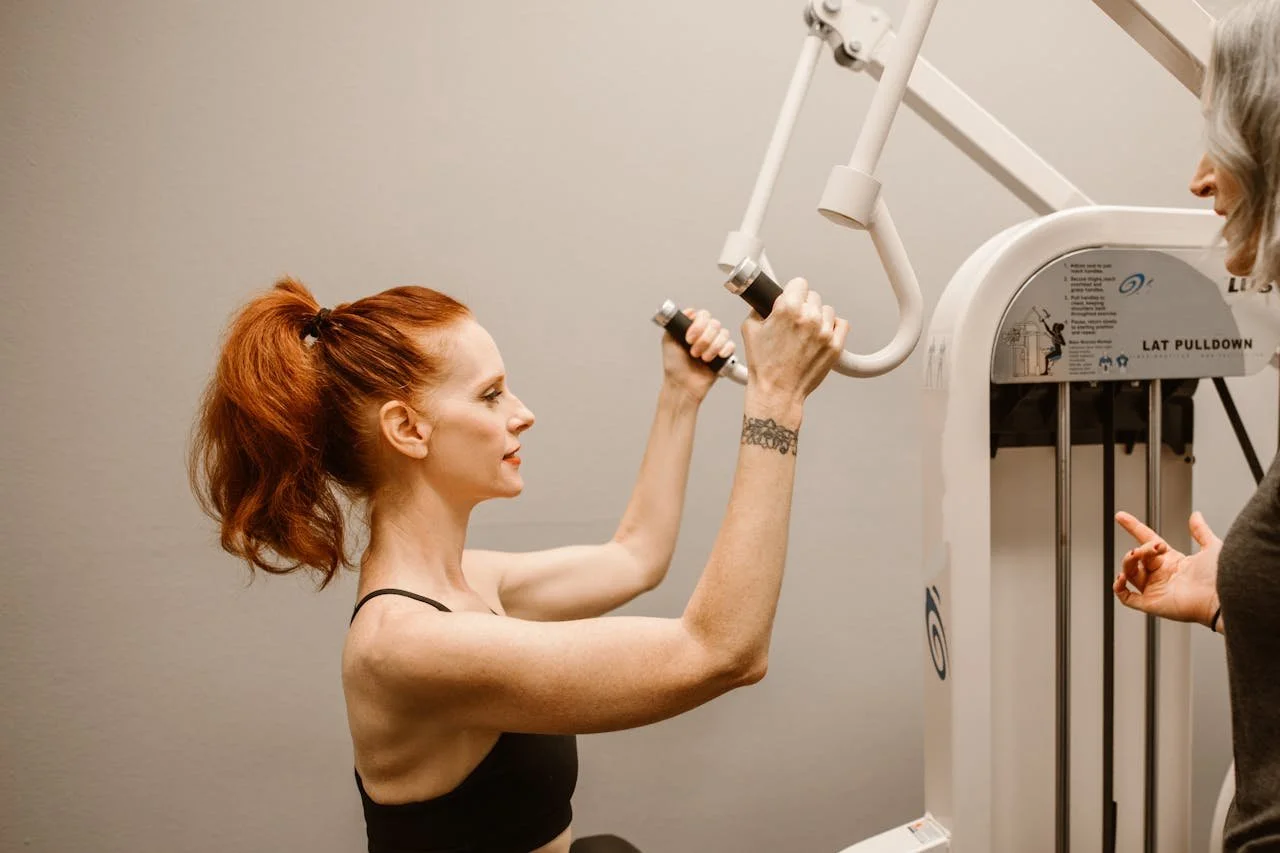
Osteoporosis Strength Workout for Back and Biceps
ABSTRACT
Boost your bone health with our Osteoporosis Strength Workout for Back and Biceps, part of the NASM OPT Model Phase 3 Muscular Development. This workout increases muscle mass, protects bones, and maintains posture. It includes a warm-up and resistance training with dumbbells, cables, and bands. Complete 10 reps per exercise for optimal results! This program is appropriate for women over 50 with osteoporosis, osteoarthritis, and osteopenia.
KEYWORDS
Osteoporosis strength circuit
Back and biceps workout
NASM OPT Model Phase 3
Muscular development exercises
Increase muscle mass osteoporosis
Bone density exercises
Resistance training for osteoporosis
Dumbbell exercises for bone health
Cable machine workout
Functional training for osteoporosis
Warm-up exercises for osteoporosis
Corrective exercise program
Osteoporosis workout plan
High-intensity strength training
Safe osteoporosis exercises
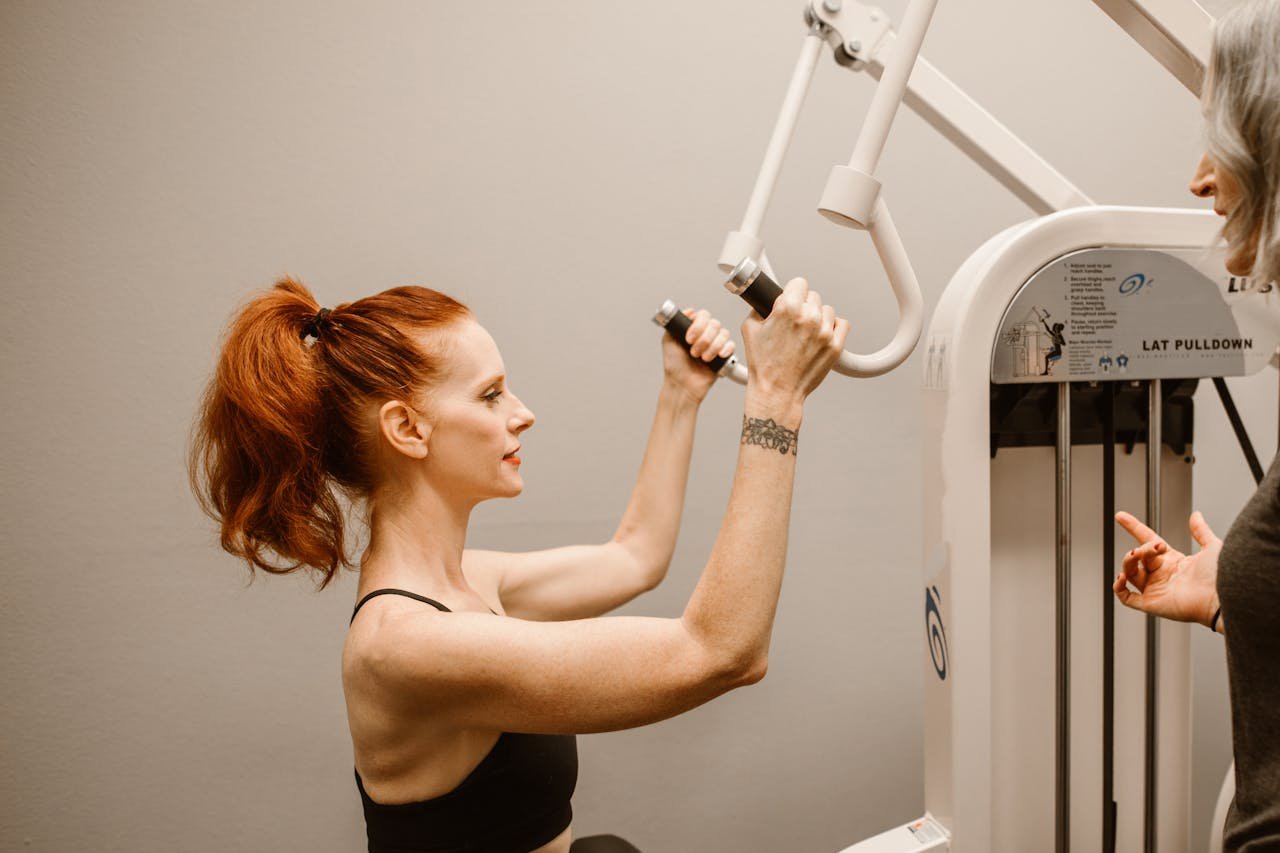
Osteoporosis Strength Workout Back and Biceps / PHOTO:
RDNE Stock Project
OSTEOPOROSIS PROGRAM 2: NASM OPT MODEL PHASE 3 MUSCULAR DEVELOPMENT (4-WEEK PROGRAM)
The intention is to build strength. This program is appropriate for women over 50 with osteoporosis, osteoarthritis, and osteopenia. Adapt the difficulty based on fitness level and condition.
Day 3: Restorative Yoga, Hike, or Cardio of Your Choice
Day 5: Wellen Health or Brick House Bone Program or a Functional/Stability Program (Your Choice)
Osteoporosis PROGRAM 1: STRENGTH CIRCUIT FOR Back and BicepS WORKOUT
NASM OPT Model PHASE 3 MUSCULAR DEVELOPMENT
We must increase muscle mass to protect our bones and maintain proper posture! Perform the exercises in this order. Note the descriptions next to each exercise (e.g., hinging hips, etc.). Please substitute as needed. Don’t forget to complete the “Assessment Section.” 10 reps per exercise.
Program and Injury Notes
By performing Program 1 of Phase 3, it’s assumed that you’ve established your baseline of corrective exercise, foundational training, and stability in prior Phase 1 and 2 programs. Wellen Health offers a wonderful subscription program to begin your first step.
While resistance bands offer an in-home solution and are great for building muscular endurance and stability, dumbbells, cable machines, and other muscle-specific machines will significantly increase your bone density. Resistance band exercises are a functional part of a program, not the whole. No matter the equipment, though, moderate to high-intensity efforts are essential for the proper breakdown and growth of your muscles and bones. Appropriately challenge yourself but safely.
Please refrain from the “No pain, no gain” adage and respect your physical boundary lines. While these exercises will serve your bone density goals, they shouldn’t compromise your body or lead to any compensations, pain, or discomfort. If you feel unstable or discomfort, minimize the range by 25-50% or reduce the load. Still doesn’t feel right? Abandon the exercise and move on to the next.
The Warmup Exercises have been carefully selected to counter the imbalances created by sitting, typing on phones and computers, sleeping on your sides, and more. They don’t account for your individual needs and wants. Feel free to add your physical therapy or favorite warmup exercises to this section, too!
Other Considerations:
Avoid heavily weighted barbell back squats, jumping, or single-leg exercises without assistance. Start with a small range of motion and self-select a range you feel in control of.
Avoid too much extension or flexion of the spine.
As the integrity of the skeleton breaks down with osteopenia or osteoporosis, several postural deviations can appear. Commonly, the spine will begin to curve right or left. This can be observed in the anterior or posterior observation, which can show up as a lateral tilt of the shoulders or a hip hike on one side. Additionally, kyphosis can appear as the skeleton collapses, developing a forward head position. Mindfully avoid any movements that reinforce these deviations.
Dynamic weight-bearing exercise with high force (e.g., jumping or plyometrics) has improved bone mineral density in adult women diagnosed with osteopenia or osteoporosis. Nevertheless, the sheer force of these movements can lead to fractures. Avoid these movements unless you’re under the guidance of a practitioner.
Warmup: Please complete this warmup before moving on to Circuit 1.
1st: Shoulder External Rotation in Neutral Position
2nd: Shoulder External Rotation at 90 Degrees
3rd: Alligators
4th: Hip Stretches (stand if necessary and don’t overstretch the hip flexors; hinge your hips back)
5th: Glute Bridges
6th: Kneeling Thoracic Extension
Circuit 1: Repeat this circuit 3x before moving on to Circuit 2. 10 reps per exercise.
1st: Seated or kneeling band or cable machine lat pulldowns (attach the band at the top of the door or use a cable machine and set the arms above the head)
2nd: Plank with alternating arm extension in front
60-second break
Circuit 2: Repeat this circuit 3x before moving on to Circuit 3. 10 reps per exercise.
1st: 1-arm bent-over dumbbell rows while gripping a counter or kneeling on a bench
2nd: Plank
60-second break
Circuit 3: Repeat this circuit 3x before moving on to Circuit 4. 10 reps per exercise.
1st: Standing dumbbell hammer bicep curl (alternating)
2nd: Cable or band low row (set the cable or attach the band at knee height of the door and pull the cables/bands into the body)
60-second break
Circuit 4: Repeat this circuit 3x. 10 reps per exercise.
1st: Standing dumbbell palms up curl (same time)
2nd: Woodchopper
60-second break
Assessment Section
No fitness or personal training program is perfect. Let’s reflect and adapt! Answer the following questions:
How would you adapt this training program?
Which exercises would you swap out?
How could you make this fitness program more challenging?
How would you change the order of the exercises?
Would you include more breaks in between the sets?
Would you include a different ratio of exercises instead?
Michael Moody, author and personal trainer in Denver
If you’re looking for a personal trainer who can curate a sustainable (and adaptable) routine based on your needs and wants, Michael is the experienced practitioner you’ve been looking for. Try personal training for a month today…your body will thank you!
ABOUT THE AUTHOR: MICHAEL MOODY, PERSONAL TRAINER
As an author, a personal trainer in Denver, and podcast host, Michael Moody has helped personal training clients achieve new fitness heights and incredible weight loss transformations since 2005. He also produces the wellness podcast "The Elements of Being" and has been featured on NBC, WGN Radio, and PBS.
Michael offers personal training to Denver residents who want to meet at the 2460 W 26th Ave studio….or in their homes throughout LoHi (80206), LoDo (80202), RiNo (80216), Washington Park (80209), Cherry Creek (80206, 80209, 80243, 80246, 80231), and Highlands (80202, 80211, 80212). Michael also offers experiences with a personal trainer in Jefferson Park (80211) and Sloan's Lake (80204, 80212).
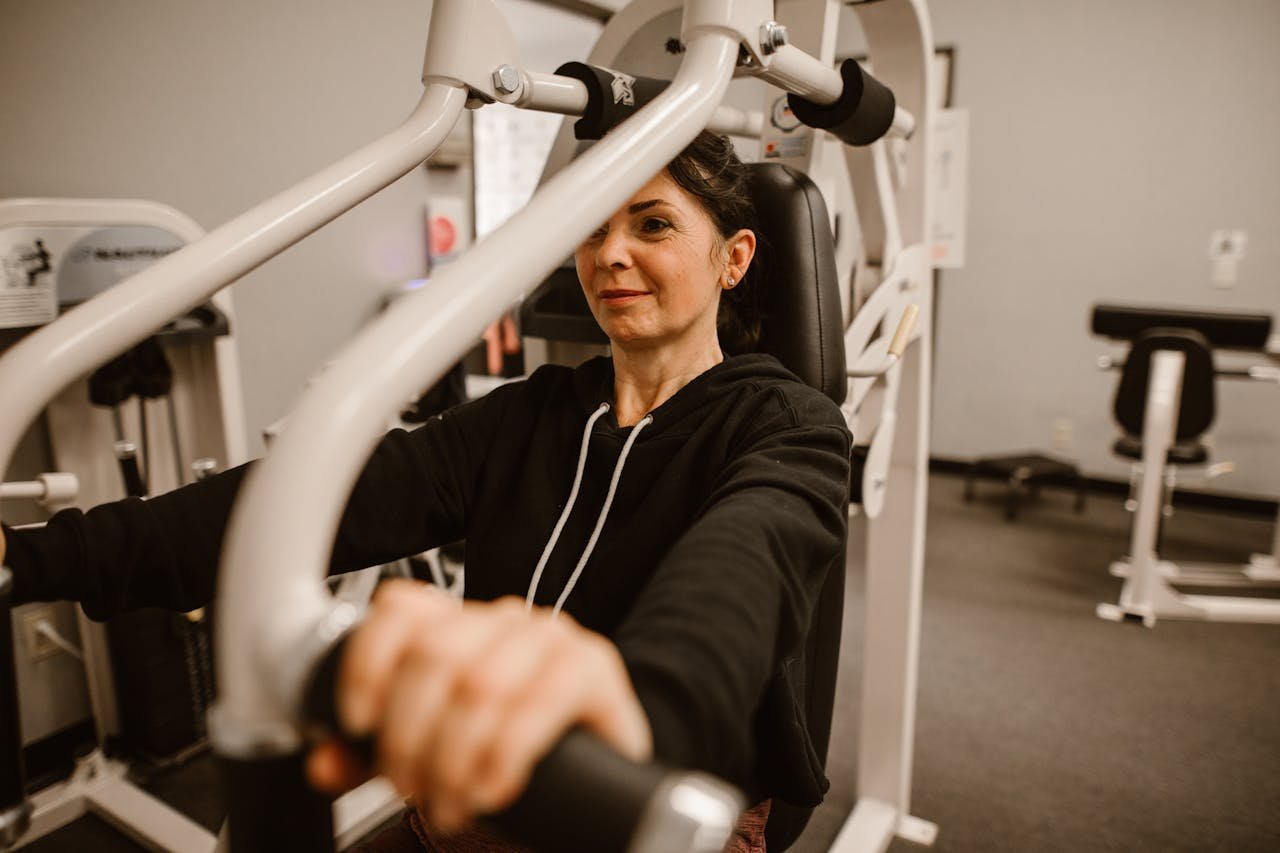
Osteoporosis Strength Workout for Chest and Triceps
ABSTRACT
Discover an effective 4-week strength training program designed for women over 50 with osteoporosis, osteoarthritis, or osteopenia. Utilizing the NASM OPT Model Phase 3, this program helps build muscle mass, protect bones, and improve posture. It is adaptable to various fitness levels and includes strength workouts and functional exercises, ensuring safe and progressive muscular development.
KEYWORDS
Osteoporosis exercise program
NASM OPT Model Phase 3
Muscular development for women over 50
Strength training for osteoporosis
Osteoarthritis and osteopenia workouts
Safe exercises for osteoporosis
Strength program for older women
Resistance training for bone density
Osteoporosis-friendly strength training
Functional fitness for osteoporosis

osteoporosis strength workout chest press / PHOTO:
RDNE Stock project
OSTEOPOROSIS PROGRAM 2: NASM OPT MODEL PHASE 3 MUSCULAR DEVELOPMENT (4-WEEK PROGRAM)
The intention is to build strength. This program is appropriate for women over 50 with osteoporosis, osteoarthritis, and osteopenia. Adapt the difficulty based on fitness level and condition.
Day 3: Restorative Yoga, Hike, or Cardio of Your Choice
Day 5: Wellen Health or Brick House Bone Program or a Functional/Stability Program (Your Choice)
Osteoporosis PROGRAM 1: STRENGTH CIRCUIT FOR Chest AND TRICEPS WORKOUT
NASM OPT Model PHASE 3 MUSCULAR DEVELOPMENT
We must increase muscle mass to protect our bones and maintain proper posture! Perform the exercises in this order. Note the descriptions next to each exercise (e.g., hinging hips, etc.). Please substitute as needed. Don’t forget to complete the “Assessment Section.” 10 reps per exercise.
Program and Injury Notes
By performing Program 1 of Phase 3, it’s assumed that you’ve established your baseline of corrective exercise, foundational training, and stability in a prior Phase 1 and 2 programs. Wellen Health offers a wonderful subscription program to begin your first step.
While resistance bands offer an in-home solution and are great for building muscular endurance and stability, dumbbells, cable machines, and other muscle-specific machines will significantly increase your bone density. Resistance band exercises are a functional part of a program, not the whole. No matter the equipment, though, moderate to high-intensity efforts are essential for the proper breakdown and growth of your muscles and bones. Appropriately challenge yourself but safely.
Please refrain from the “No pain, no gain” adage and respect your physical boundary lines. While these exercises will serve your bone density goals, they shouldn’t compromise your body or lead to any compensations, pain, or discomfort. If you feel unstable or discomfort, minimize the range by 25-50% or reduce the load. Still doesn’t feel right? Abandon the exercise and move on to the next.
The Warmup Exercises have been carefully selected to counter the imbalances created by sitting, typing on phones and computers, sleeping on your sides, and more. They don’t account for your individual needs and wants. Feel free to add your physical therapy or favorite warmup exercises to this section, too!
Other Considerations:
Avoid heavily weighted barbell back squats, jumping, or single-leg exercises without assistance. Start with a small range of motion and self-select a range you feel in control of.
Avoid too much extension or flexion of the spine.
As the integrity of the skeleton breaks down with osteopenia or osteoporosis, several postural deviations can appear. Commonly, the spine will begin to curve right or left. This can be observed in the anterior or posterior observation, which can show up as a lateral tilt of the shoulders or a hip hike on one side. Additionally, kyphosis can appear as the skeleton collapses, developing a forward head position. Mindfully avoid any movements that reinforce these deviations.
Dynamic weight-bearing exercise with high force (e.g., jumping or plyometrics) has improved bone mineral density in adult women diagnosed with osteopenia or osteoporosis. Nevertheless, the sheer force of these movements can lead to fractures. Avoid these movements unless you’re under the guidance of a practitioner.
Warmup: Please complete this warmup before moving on to Circuit 1.
1st: Shoulder External Rotation in Neutral Position
2nd: Shoulder External Rotation at 90 Degrees
3rd: Alligators
4th: Hip Stretches (stand if necessary and don’t overstretch the hip flexors, hinge your hips back)
5th: Glute Bridges
6th: Kneeling Thoracic Extension
Circuit 1: Repeat this circuit 3x before moving on to Circuit 2. 10 reps per exercise.
1st: Dumbbell chest press on the floor/bench or band chest press (attach the band at chest height of the door and press in front of the chest)
2nd: Pushup against the bench or wall
60-second break
Circuit 2: Repeat this circuit 3x before moving on to Circuit 3. 10 reps per exercise.
1st: Dumbbell chest press on an incline bench or band chest press (attach the band at hip height of the door and press upward)
2nd: Plank
60-second break
Circuit 3: Repeat this circuit 3x. 10 reps per exercise.
1st: Dumbbell tricep skull-crushers on the floor or bench (keep the dumbbells close to your hips as you lie back)
2nd: Dumbbell chest flyes on an incline bench/floor or band chest flyes (attach the band at chest height of the door and press in front of the chest)
3rd: Dumbbell kickbacks (use a bench or bed to reduce discomfort in the knees)
60-second break
Assessment Section
No fitness or personal training program is perfect. Let’s reflect and adapt! Answer the following questions:
How would you adapt this training program?
Which exercises would you swap out?
How could you make this fitness program more challenging?
How would you change the order of the exercises?
Would you include more breaks in between the sets?
Would you include a different ratio of exercises instead?
Michael Moody, author and personal trainer in Denver
If you’re looking for a personal trainer who can curate a sustainable (and adaptable) routine based on your needs and wants, Michael is the experienced practitioner you’ve been looking for. Try personal training for a month today…your body will thank you!
ABOUT THE AUTHOR: MICHAEL MOODY, PERSONAL TRAINER
As an author, a personal trainer in Denver, and podcast host, Michael Moody has helped personal training clients achieve new fitness heights and incredible weight loss transformations since 2005. He also produces the wellness podcast "The Elements of Being" and has been featured on NBC, WGN Radio, and PBS.
Michael offers personal training to Denver residents who want to meet at the 2460 W 26th Ave studio….or in their homes throughout LoHi (80206), LoDo (80202), RiNo (80216), Washington Park (80209), Cherry Creek (80206, 80209, 80243, 80246, 80231), and Highlands (80202, 80211, 80212). Michael also offers experiences with a personal trainer in Jefferson Park (80211) and Sloan's Lake (80204, 80212).

4 Life-Changing Quotes from 'Tribe of Mentors' and Their Impact
ABSTRACT
Discover profound insights from Tim Ferriss's book 'Tribe of Mentors' as we delve into four impactful quotes that offer invaluable personal trainer wisdom. Explore the transformative power of living, giving, and forgiving, the importance of diverse perspectives, the value of assessing policies over outcomes, and the need to avoid negativity by taking responsibility for our actions.
KEYWORDS
Tribe of Mentors
Tim Ferriss quotes
Tim Ferriss
Personal growth
Julia Galef wisdom
Empathy and compassion
Avoiding negativity
Mindful living
Personal development insights
Impactful quotes

Tim Ferriss Quotes / Photo: Pixabay
Introduction
While reading Tim Ferriss’ book Tribe of Mentors, I often find many valuable insights to integrate into my life. None have been more valuable than these four quotes.
”LIVE. GIVE. FORGIVE.” – RABBI LORD JONATHAN SACKS
Personal Trainer Wisdom: Live, give, and forgive are three simple words that have steered me away from too much ego, anger, and pain. Extending beyond my “ego” has enhanced my life with thought-provoking experiences, but the intent of “giving” has led to a new purpose and foundation of empathy. Although it’s always a work in progress, forgiveness is equally important and has been an extension of this new empathy (as well as acceptance).
”ONE DISTRACTION I’VE LEARNED TO AVOID IS CONSUMING MEDIA THAT’S JUST TELLING ME THINGS I ALREADY KNOW AND AGREE WITH.” – JULIA GALEF
Personal Trainer Wisdom: A thorough dissection of the information I often seek from the media reveals my tendency towards pundits supporting my perspective. How can I become more enlightened if I don’t identify my tendency to focus on the familiar and examine multiple paths of thought? With a heightened awareness, I know I can identify these trends before I foster my typical narrow perspective. I realize I don’t need to agree with all positions; I should respectfully consider all factual evidence to create a fair judgment (not an unsubstantiated opinion or the typical pundit rhetoric).
”WHEN SOMETHING GOES BADLY, I DON’T AUTOMATICALLY ASSUME I DID SOMETHING WRONG. INSTEAD I ASK MYSELF, “WHAT POLICY WAS I FOLLOWING THAT PRODUCED THIS BAD OUTCOME, AND DO I STILL EXPECT THAT POLICY TO GIVE THE BEST RESULTS OVERALL, OCCASIONAL BAD OUTCOMES NOTWITHSTANDING?” IF YES, THEN CARRY ON!” – JULIA GALEF
Personal Trainer Wisdom: Life is a series of processes that often intertwine with many controlled and uncontrolled factors and exciting coincidences. The results may become surprising outcomes. Despite any result, the process warrants an examination for replication or avoidance. It may help me avoid many false positives.
”THE MOMENT I START ONE OF THESE THREE BEHAVIORS—BLAMING, COMPLAINING, OR GOSSIPING – I BECOME NEGATIVE. IT’S A SIGN OF AVOIDING WHAT I AM RESPONSIBLE FOR: MY LIFE.” – ANIELA GREGOREK
Personal Trainer Wisdom: When I blame, complain, and gossip, I realize I’m negatively spewing rhetoric beyond the essential awareness of a challenge or problem. I may still express disgust or distaste for an identified state of being or result. Anything beyond the initial reaction, though, I require myself to change or avoid it. Blaming, complaining, and gossiping are fruitless forms of disrespectful banter that contribute to a hostile atmosphere (even if it’s directed at something negative itself). Instead, I try to start from a place of compassion and empathy.
ABOUT THE AUTHOR: MICHAEL MOODY, PERSONAL TRAINER
As an author, a personal trainer in Denver, and podcast host, Michael Moody has helped personal training clients achieve new fitness heights and incredible weight loss transformations since 2005. He also produces the wellness podcast "The Elements of Being" and has been featured on NBC, WGN Radio, and PBS.
Michael offers personal training to Denver residents who want to meet at the 2460 W 26th Ave studio….or in their homes throughout LoHi (80206), LoDo (80202), RiNo (80216), Washington Park (80209), Cherry Creek (80206, 80209, 80243, 80246, 80231), and Highlands (80202, 80211, 80212). Michael also offers experiences with a personal trainer in Jefferson Park (80211) and Sloan's Lake (80204, 80212).
If you’re looking for a personal trainer who can curate a sustainable (and adaptable) routine based on your needs and wants, Michael is the experienced practitioner you’ve been looking for. Try personal training for a month…your body will thank you!
PERSONAL TRAINER BLOG


























Expert Fitness Advice from Denver Personal Trainer Michael Moody: Nutrition, Form, Motivation, and Staying in Shape
ABSTRACT
Unlock expert insights from Denver personal trainer Michael Moody as he tackles common health and fitness misconceptions, essential form and technique advice, motivational strategies, and the best advice for staying in shape. Learn how proper nutrition and a strong mental approach are key to achieving your fitness goals.
KEYWORDS
Denver personal trainer
Personal training
Fitness
Nutrition
Motivation
Getting in shape
Healthy lifestyle
Health and fitness questions
Fitness misconceptions
Personal training advice
Exercise form and technique
Staying in shape advice
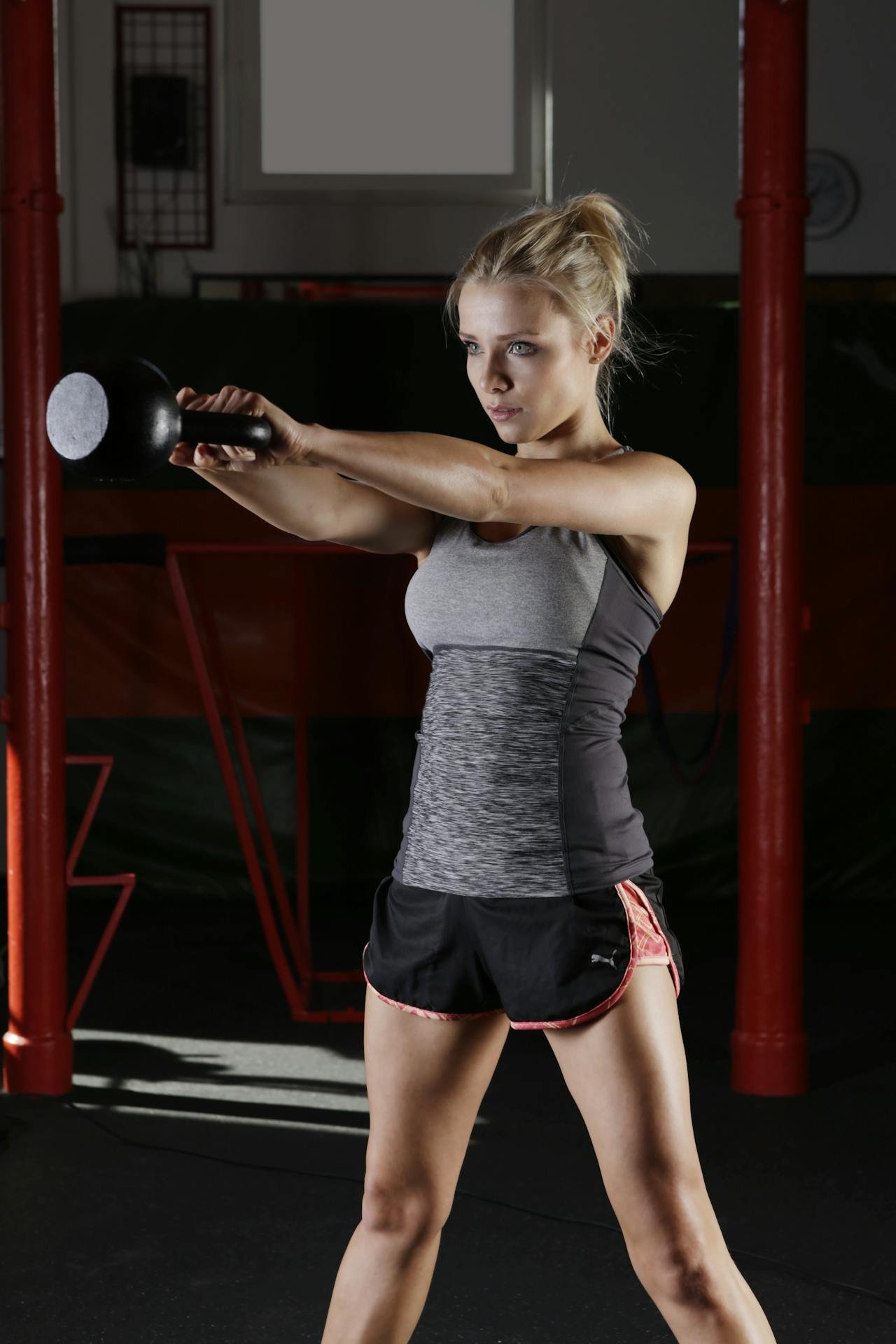
Personal Trainer Advice / Photo: Pixabay
Introduction
Trying to unravel the complicated approach to achieving your best health? Denver personal trainer Michael Moody answers your 4 biggest health and fitness questions.
WHAT ARE SOME OF THE MOST COMMON MISCONCEPTIONS ABOUT GETTING IN SHAPE?
Personal Trainer Wisdom: The most common misconception about getting in shape is the primary importance of fitness. While fitness is pivotal in your strength, flexibility, muscular endurance, and cardio endurance, it still relies heavily on your nutrition. With the proper nutrition for your body type, you will have the energy and building blocks to sculpt the healthy body you want. Any nutritional deficit or inflammation will affect your ability to get in shape, live to 100, or reduce injury.
WHAT SINGLE PIECE OF PERSONAL TRAINING ADVICE DO YOU HAVE REGARDING FORM AND TECHNIQUE?
Personal Trainer Wisdom: With the endless circus act of exercises found online and in magazines, it would take years to point out every little piece of the form you should keep in mind while exercising. While you should study your body's response to different positions and movements, there are basic rules you should keep in mind for whatever you approach:
-Keep your feet hip-width and straight to maximize stability and glute/abdominal activation.
-Keep your shoulders above your hips to maintain a neutral position and reduce pelvic tilting.
-Maintain a neutral spine by periodically checking your lumbar curve (lower back) and cervical spine (neck).
There are certainly exceptions to these rules. Nevertheless, they will generally guide you through a safe workout routine.WHAT IS THE BEST WAY TO GET A PERSONAL TRAINING CLIENT MOTIVATED WHEN THEY FEEL LIKE GIVING UP?
Personal Trainer Wisdom: Considering that each person is different, there isn't a single strategy to motivate a personal training client when they want to give up. While some personal training clients persevere when given a strict structure to follow, others are intimidated and will be less likely to push themselves. Add societal pressures, personality traits, family and work demands, and natural limitations; surprisingly, anyone can sift through these factors and go through them. The best advice is to help your personal training client become a human scientist - to study their physical selves and habits, decision-making process, and problem-solving approach. By utilizing this strategy, you are reducing the ambiguity of the process most simply and identifying the personal training client's strengths and weaknesses for the most efficient approach. The personal training client will feel more control over their situation and can target the undermining reasons for giving up with more confidence.
WHAT IS THE BEST ADVICE YOU’VE LEARNED ABOUT STAYING IN SHAPE?
Personal Trainer Wisdom: After nearly 20 years of personal training and research, I have learned that your mental approach is the steering factor of staying in shape. You will reach your goal, but whether or not you maintain this success is questionable. Who can blame you? Too many distractions and pulls in life, including holidays, work, and family, easily pull you from your new healthy routine. The best advice is to define boundaries based on your needs and wants. Use this set of rules as you approach the unknowns of life. Assuming you'll make perfect daily choices is not reasonable. With reasonable boundaries based on your body and habits (not anyone else's), you'll keep yourself in check and stay in shape.
ABOUT THE AUTHOR: MICHAEL MOODY, PERSONAL TRAINER
As an author, a personal trainer in Denver, and podcast host, Michael Moody has helped personal training clients achieve new fitness heights and incredible weight loss transformations since 2005. He also produces the wellness podcast "The Elements of Being" and has been featured on NBC, WGN Radio, and PBS.
Michael offers personal training to Denver residents who want to meet at the 2460 W 26th Ave studio….or in their homes throughout LoHi (80206), LoDo (80202), RiNo (80216), Washington Park (80209), Cherry Creek (80206, 80209, 80243, 80246, 80231), and Highlands (80202, 80211, 80212). Michael also offers experiences with a personal trainer in Jefferson Park (80211) and Sloan's Lake (80204, 80212).
If you’re looking for a personal trainer who can curate a sustainable (and adaptable) routine based on your needs and wants, Michael is the experienced practitioner you’ve been looking for. Try personal training for a month…your body will thank you!
PERSONAL TRAINER TIPS

Colorado Hikes: Limber Pine Trail to Kruger Rock via Saddle Trailhead
ABSTRACT
Explore the scenic Limber Pine Trail to Kruger Rock in Colorado, starting from the Saddle Trailhead. This moderate 8.55-mile hike, perfect for early May, offers stunning views of Estes Park. Ideal for hikers and bikers, with light to moderate traffic and accessible parking, this trail provides a great alternative to higher altitude hikes still covered in snow.
Keywords
Limber Pine Trail
Kruger Rock hike
Saddle Trailhead
Colorado hikes in May
Estes Park views
Moderate hiking trails in Colorado
Early May hiking Colorado
Hiking trails near Rocky Mountain National Park
Scenic Colorado trails
Dry dirt trails in Colorado
Limber Pine Trail to Kruger Rock via Saddle Trailhead

Hiking Trails in Colorado
Colorado Hikes: Limber Pine Trail to Kruger Rock Via Saddle Trailhead
Time of Year: Beginning of May.
Weather: 37 degrees, mostly cloudy at 9:00 am and 53 degrees, and sunny by 12:30 pm.
Time: 9:14 am - 12:50 pm.
Distance: 8.55 miles total.
Cost: Yes ($10).
Difficulty: Moderate level 3 for altitude (9384 feet), elevation gain (1352 feet), and length (8.55 miles).
Route: Limber Pine Trail to Kruger Rock Trail and back.
Traffic: Light to Moderate, mix of bikers and hikers.
Parking: 70% full by 9:00 am.
Equipment: Hiking boots.
Terrain: Dry dirt trail with a rock scramble at the top (not technical).
Experience: A scenic hike just outside of Rocky Mountain National Park with rewarding views of Estes Park and beyond. While most hikes above 10,000 altitude were still covered with snow and with risk of avalanche, Kruger Rock offered a drier and safer alternative for similar vistas in early May.
Personal Trainer Notes: For those personal training clients looking to build their legs and stamina before the higher peaks in July, this is a great training hike for its length and elevation gain. You also avoid the crowds of Rocky Mountain National Park while capturing some of the same perspectives.

Hiking in Colorado

Mount Machebeuf

Hiking in Rocky Mountain National Park

Hiking Trails in Estes Park
Hikes in Colorado with a view of Estes Park

Kruger Rock Trail
List of Hiking Trails in Colorado
To check out more hiking reviews with pictures, visit “List of Colorado Hikes.” You’ll find options across a spectrum of difficulty, including many trails in the foothills and front range.
ABOUT THE AUTHOR: MICHAEL MOODY, PERSONAL TRAINER
As an author, a personal trainer in Denver, and podcast host, Michael Moody has helped personal training clients achieve new fitness heights and incredible weight loss transformations since 2005. He also produces the wellness podcast "The Elements of Being" and has been featured on NBC, WGN Radio, and PBS.
Michael offers personal training to Denver residents who want to meet at the 2460 W 26th Ave studio….or in their homes throughout LoHi (80206), LoDo (80202), RiNo (80216), Washington Park (80209), Cherry Creek (80206, 80209, 80243, 80246, 80231), and Highlands (80202, 80211, 80212). Michael also offers experiences with a personal trainer in Jefferson Park (80211) and Sloan's Lake (80204, 80212).
If you’re looking for a personal trainer who can curate a sustainable (and adaptable) routine based on your needs and wants, Michael is the experienced practitioner you’ve been looking for. Try personal training for a month…your body will thank you!
Personal Trainer Blog

My 10 Favorite Life-Guiding Quotes from the Stoic, Marcus Aurelius
ABSTRACT
Discover timeless wisdom for living a good life through the teachings of Marcus Aurelius. Dive into ten profound quotes from his Meditations, a foundational work in self-improvement and philosophy. Reflect on these quotes without external commentary, allowing your own interpretations to guide you toward a life of quality thoughts and virtuous actions.
KEYWORDS
Marcus Aurelius quotes
Meditations by Marcus Aurelius
Living a good life philosophy
Self-improvement through philosophy
Ancient wisdom for modern life
Quality of thoughts
Stoic philosophy quotes
Interpreting Marcus Aurelius

Marcus Aurelius’ Meditations / Photo: Penguin Random House
Introduction
Where do you look for the answer to the question, “How do I live a good life?” Naturally, you refer to 165 AD for a perspective that transcends time. To shape my philosophical self, I’ve been reading Marcus Aurelius’ Meditations (one of the earliest self-improvement transcripts). The following ten quotes are taken directly from this great work. While I typically offer commentary on their meaning, they are left to your interpretation (everybody could use a break from a pundit).
List of Marcus Aurelius’ Quotes
“THE HAPPINESS OF YOUR LIFE DEPENDS UPON THE QUALITY OF YOUR THOUGHTS.”
“IF YOU ARE DISTRESSED BY ANYTHING EXTERNAL, THE PAIN IS NOT DUE TO THE THING ITSELF, BUT TO YOUR ESTIMATE OF IT; AND THIS YOU HAVE THE POWER TO REVOKE AT ANY MOMENT.”
“THE BEST REVENGE IS TO BE UNLIKE HIM WHO PERFORMED THE INJURY.”
“IT IS NOT DEATH THAT A MAN SHOULD FEAR, BUT HE SHOULD FEAR NEVER BEGINNING TO LIVE.”
“OUR LIFE IS WHAT OUR THOUGHTS MAKE IT.”
“IF SOMEONE IS ABLE TO SHOW ME THAT WHAT I THINK OR DO IS NOT RIGHT, I WILL HAPPILY CHANGE, FOR I SEEK THE TRUTH, BY WHICH NO ONE WAS EVER TRULY HARMED. IT IS THE PERSON WHO CONTINUES IN HIS SELF-DECEPTION AND IGNORANCE WHO IS HARMED.”
“IF IT IS NOT RIGHT DO NOT DO IT; IF IT IS NOT TRUE DO NOT SAY IT.”
“WHENEVER YOU ARE ABOUT TO FIND FAULT WITH SOMEONE, ASK YOURSELF THE FOLLOWING QUESTION: WHAT FAULT OF MINE MOST NEARLY RESEMBLES THE ONE I AM ABOUT TO CRITICIZE?”
“HOW MUCH MORE GRIEVOUS ARE THE CONSEQUENCES OF ANGER THAN THE CAUSES OF IT.”
“LIVE A GOOD LIFE. IF THERE ARE GODS AND THEY ARE JUST, THEN THEY WILL NOT CARE HOW DEVOUT YOU HAVE BEEN, BUT WILL WELCOME YOU BASED ON THE VIRTUES YOU HAVE LIVED BY. IF THERE ARE GODS, BUT UNJUST, THEN YOU SHOULD NOT WANT TO WORSHIP THEM. IF THERE ARE NO GODS, THEN YOU WILL BE GONE, BUT WILL HAVE LIVED A NOBLE LIFE THAT WILL LIVE ON IN THE MEMORIES OF YOUR LOVED ONES.”

Welcome to “The Elements of Being” podcast, where I dissect and explore the minds and habits of psychologists, filmmakers, writers, and industry icons. We examine the mental and emotional narratives and processes that steer the social stream of consciousness….It is truly a chance to geek out about human behavior's psychology. Each episode is a glimpse into the trends and patterns of human behavior and the underlying influences that navigate us in different directions. Whether we primarily focus on nutrition or the unconscious, guests share insights, thought-provoking lessons, the nuances of creativity, and the elements of being….us.
In the spirit of the 2020 US presidential election, Dr. Jonathan Baron and I discuss moral judgment and individual decision-making in today’s episode. Dr. Baron is the founding editor of the open-access journal Judgment and Decision Making and has been on several other journals' editorial boards. He is a Fellow of the American Association for the Advancement of Science and the Association for Psychological Science, and was the President of the Society for Judgment and Decision Making.
Dr. Baron's work has occurred primarily within the field of judgment and decision-making, a multi-disciplinary area that applies psychology to problems in economics, law, business, and public policy. This field began by contrasting human decision behavior to individual decision-making and judgment theories such as probability theory and expected utility. Baron's research has extended the focus of judgment and decision-making to social problems of resource allocation and ethical decisions. Among the concepts associated with his work are omission bias (the tendency for people to excuse acts of omission more easily than acts of commission) and protected values (principles on which people are unwilling to accept tradeoffs).
In our interview, here’s what we specifically discussed:
The trends of political polarization and conspiracy thinking.
The problems of improving everyday decisions as a result of institutional issues.
Applying general principles of decision analysis.
The evolution of a person’s social standards.
Omission bias in politics.
The cost-benefit analysis of environmental policies.
The expression of moral and moralistic values regarding the political issues of gay marriage and abortion.
The role of empathy in the utilitarian point of view.
The factors that affect moral judgment.




















ABOUT THE AUTHOR: MICHAEL MOODY, PERSONAL TRAINER
As an author, a personal trainer in Denver, and podcast host, Michael Moody has helped personal training clients achieve new fitness heights and incredible weight loss transformations since 2005. He also produces the wellness podcast "The Elements of Being" and has been featured on NBC, WGN Radio, and PBS.
Michael offers personal training to Denver residents who want to meet at the 2460 W 26th Ave studio….or in their homes throughout LoHi (80206), LoDo (80202), RiNo (80216), Washington Park (80209), Cherry Creek (80206, 80209, 80243, 80246, 80231), and Highlands (80202, 80211, 80212). Michael also offers experiences with a personal trainer in Jefferson Park (80211) and Sloan's Lake (80204, 80212).
If you’re looking for a personal trainer who can curate a sustainable (and adaptable) routine based on your needs and wants, Michael is the experienced practitioner you’ve been looking for. Try personal training for a month…your body will thank you!
PERSONAL TRAINER TIPS

Herman Gulch Trail (Winter)
ABSTRACT
Explore the winter wonderland of Herman Gulch Trail in Colorado with this comprehensive guide. Learn about the trail's difficulty, necessary equipment, and breathtaking views. Perfect for adventurous hikers looking to tackle a snowy trail with light traffic and stunning mountain scenery. Discover why this hike is a must-do, despite the challenges.
Keywords
Herman Gulch Trail winter hike
Colorado winter hikes
Herman Gulch Trail difficulty
Snowshoeing Herman Gulch
Colorado hikes in May
Herman Gulch Trail equipment
Best winter hikes Colorado
Herman Gulch Trail avalanche safety
Hiking Herman Gulch Trail in snow

Herman Gulch Trail Colorado Hikes
Colorado Hikes: Herman Gulch Trail (Winter)
Time of Year: End of May.
Weather: 37 degrees and mostly cloudly.
Cover: 85% tree canopy with large exposed sections.
Time: 8:57 am - 12:29 pm.
Distance: 5.61 miles total.
Cost: No.
Bathroom at Trailhead: Yes (always filthy).
Difficulty: Hard level 1 for altitude (11900 feet), elevation gain (1906 feet), and length (5.61 miles). It's not technical but tough with snowshoes.
Route: Herman Gulch Trail out and back.
Traffic: Light.
Parking: 30% full by 9:00 am.
Equipment: Hiking boots, hiking poles, snowshoes (a must), microspikes. Note: I was testing a new pair of Danner boots. Their warmth, waterproof durability, and lightweight character will keep them in my closet!
Terrain: The first quarter is a mix of dry dirt and snowmelt over small rocks. As you travel further on the path, patches of snow require microspikes before you reach the consistent run of snow 2-4 feet deep. Snowshoes are required for most of the hike.
Experience: Herman Gulch Trail has been on my list of trails for nearly three years. Weather conditions and a past injury extended this time. With the intention of completing this popular hike in May, I kept my eye on the avalanche reports from the Colorado Avalanche Information Center and found the right weekend to approach the trail. Although the area was rated low, I approached the snow-packed trail with caution. After nearly completing it, I believe I may have been on that boundary line of true avalanche risk. Before reaching the last open meadow near Herman Lake, I counted five avalanche hazards. Nevertheless, they seemed safe enough to continue forward. That is until I reached that last open meadow. While the risk was low, the combination of a recent snowfall, 2-4 feet of snow cover, and high winds, forced me to stop short of completion by ten minutes. I figured that it wasn’t worth the risk, and I would certainly return to see the lake this summer. By that point, the views were already remarkable! I was flanked by peaks on each side for the entirety of the hike with a snow-capped peak to guide my movement forward. The trip was even more scenic with distant peaks bathing in sun. I’m already counting the days for my next adventure in the gulch!
Personal Trainer Notes: If my personal training clients are up to the challenge, I will most certainly recommend this hike (only May through September/October though). The blend of non-stop views and quick elevation gain makes this trail an awarding accomplishment whether on snowshoes or not. I see why this trail is so popular during the summer months. Plan appropriately and you’ll avoid the crowds and check off an incredible hike!

Herman Gulch Trail

Mount Machebeuf


Snowshoeing Trails

Hiking Trails near Georgetown
ABOUT THE AUTHOR: MICHAEL MOODY, PERSONAL TRAINER
As an author, a personal trainer in Denver, and podcast host, Michael Moody has helped personal training clients achieve new fitness heights and incredible weight loss transformations since 2005. He also produces the wellness podcast "The Elements of Being" and has been featured on NBC, WGN Radio, and PBS.
Michael offers personal training to Denver residents who want to meet at the 2460 W 26th Ave studio….or in their homes throughout LoHi (80206), LoDo (80202), RiNo (80216), Washington Park (80209), Cherry Creek (80206, 80209, 80243, 80246, 80231), and Highlands (80202, 80211, 80212). Michael also offers experiences with a personal trainer in Jefferson Park (80211) and Sloan's Lake (80204, 80212).
If you’re looking for a personal trainer who can curate a sustainable (and adaptable) routine based on your needs and wants, Michael is the experienced practitioner you’ve been looking for. Try personal training for a month…your body will thank you!
Personal Trainer Blog

Transform Your Professional Approach with These Six Principles
ABSTRACT
Discover how to achieve success and satisfaction in your career by adopting six key principles that can redefine your business mindset. Learn to take action, solve interesting problems, balance persistence with the need to abandon, embrace less competitiveness, trust your gut feelings, and practice your values. Implement these strategies today for a more fulfilling professional life.
KEYWORDS
Professional success
Career satisfaction
Business mindset
Personal trainer wisdom
Solve problems
Balance persistence
Trust gut feelings
Professional approach

Sometimes, we need to look outside of ourselves for professional advice. / Photo: Samson Katt
Introduction
While you can easily blame your job or manager for your stressful days, the answer to your success and satisfaction may lie in your professional approach. Incorporate these six principles and redefine your business mindset today.
DON'T SHOULD ALL OVER YOURSELF
Personal Trainer Wisdom: Take action instead. While you SHOULD reflect and carefully assess most situations, you SHOULD only sometimes tell everyone what you SHOULD be doing. Do the statements "I SHOULD go to the gym" or "I SHOULD eat better” show commitment? If you know you SHOULD do it, why don't you do it? Be mindful of the excuses you make for yourself. If you don't start moving forward, you may sink into your mental quicksand.
SOLVE INTERESTING PROBLEMS
Personal Trainer Wisdom: No matter your age, nothing stimulates the mind more than solving an interesting problem. It forces you to examine what you've learned and assess what you didn't. These lessons give you the blueprint to approach the same future problem and help you develop generalizable problem-solving skills to handle unrelated situations. It expands your adaptability and knowledge beyond what you already know and reinforces what you’ve learned.
KNOW WHEN TO PERSIST, KNOW WHEN TO ABANDON
Personal Trainer Wisdom: While I value the ambition to complete a task, I don’t think it should be at any cost. We carry on far too often due to our ego and unwillingness to give up. What if abandoning a project could save you time, effort, and money? While you may have already invested in the effort, it may not be worth the additional loss (especially if it could be better spent elsewhere). On the other hand, there are times when you should persist. No path is perfect, and you will face obstacles. Some challenges require an accessible solution rather than a termination. Fairly evaluate the situation and weigh all your options. Don't forget to ask for educated opinions to expand your perspective.
BECOME LESS COMPETITIVE TO BECOME MORE SUCCESSFUL
Personal Trainer Wisdom: Although competitiveness may drive you to great heights, it may also blind you from pursuing the most appropriate path. Not only can it consume your well-being, but it can also distract you from other important parts of your life worth spending time on. While mastery or being the best can be essential, always be mindful of all your needs at a given moment and fairly value what's truly most significant (no matter what anyone else is doing).
BE AWARE OF YOUR GUT FEELING
Personal Trainer Wisdom: Sometimes, your gut may bark at you when it senses danger or a compromising position. At the same time, it may be signaling something different. Have you ever thought you might be on to something when you're a little afraid...especially in business? It might be an exciting unknown you don't know how to handle but should be willing to learn about. On the other hand, it could be your good sense to switch directions even though you're emotionally invested. Even if you don't know the root of this feeling immediately, it's worth examining.
PRACTICE YOUR VALUES INSTEAD OF JUST PROFESSING THEM
Personal Trainer Wisdom: Modern translation: Lead by example instead of just expressing endless opinions on social media or to your colleagues. Practice what you preach.
ABOUT THE AUTHOR: MICHAEL MOODY, PERSONAL TRAINER
As an author, a personal trainer in Denver, and podcast host, Michael Moody has helped personal training clients achieve new fitness heights and incredible weight loss transformations since 2005. He also produces the wellness podcast "The Elements of Being" and has been featured on NBC, WGN Radio, and PBS.
Michael offers personal training to Denver residents who want to meet at the 2460 W 26th Ave studio….or in their homes throughout LoHi (80206), LoDo (80202), RiNo (80216), Washington Park (80209), Cherry Creek (80206, 80209, 80243, 80246, 80231), and Highlands (80202, 80211, 80212). Michael also offers experiences with a personal trainer in Jefferson Park (80211) and Sloan's Lake (80204, 80212).
If you’re looking for a personal trainer who can curate a sustainable (and adaptable) routine based on your needs and wants, Michael is the experienced practitioner you’ve been looking for. Try personal training for a month…your body will thank you!

EPISODE #10 - EAT FOR LIFE, WEIGHT LOSS, AND AN OPTIMAL IMMUNE SYSTEM WITH BEST SELLING AUTHOR DR. FUHRMAN
On “The Elements of Being” podcast, Michael dissects and explores the minds and habits of psychologists, filmmakers, writers, and industry icons. Essentially, you learn what makes them flip the switch to achieve incredible feats, goals, and milestones…and a chance to geek out over the psychology behind human behavior. In this episode, Michael interviews Dr. Joel Fuhrman, an internationally recognized nutrition and natural healing expert and author of seven New York Times bestsellers, including his most recent book, Eat for Life. His other bestsellers include Eat to Live and The End of Dieting (which I give to all my clients).
Read more and listen here…..You can also listen to all episodes on Apple, Spotify, Overcast, Castbox, Stitcher, or your favorite podcast platform!

Osteoporosis Functional Total Body Circuit Program
ABSTRACT
Discover an effective Osteoporosis Program designed to enhance bone density and muscular endurance while maintaining proper posture. With detailed exercises and injury precautions, increase muscle mass safely. Warm up with targeted stretches, then proceed through two circuits, each aimed at building strength and stability. Find out how to adapt exercises to your comfort level and avoid common postural deviations. Start your journey towards stronger bones and better health today! This program is appropriate for women over 50 with osteoporosis, osteoarthritis, and osteopenia.
KEYWORDS
Osteoporosis program
Functional total body circuit
NASM OPT model
Phase 2 strength endurance
Increase muscle mass
Bone density exercises
Proper posture
Resistance band exercises
Muscular endurance
Stability training
Moderate to high-intensity exercises
Injury prevention
Warm-up routines
Postural deviations
Dynamic weight-bearing exercise
Osteopenia management
Corrective exercises
Foundational training
Bone health
Exercise safety

Senior Fitness Osteoporosis / PHOTO:
cottonbro studio
Osteoporosis Program 1: NASM OPT Model Phase 2 Strength Endurance (4-Week Program)
The intention is to build stability, muscular endurance, and strength. This program is appropriate for women over 50 with osteoporosis, osteoarthritis, and osteopenia. Adapt the difficulty based on fitness level and condition.
Day 3: Restorative Yoga, Hike, or Cardio of Your Choice
Day 5: Wellen Health or Brick House Bone Program or a Functional/Stability Program (Your Choice)
Osteoporosis PROGRAM 1: Functional Total Body Circuit
NASM OPT Model Phase 2 Strength Endurance
We must increase muscle mass to protect our bones and maintain proper posture! Perform the exercises in this order. Note the descriptions next to each exercise (e.g., hinging hips, etc.). Please substitute as needed. Don’t forget to complete the “Assessment Section.” 12 reps per exercise.
Program and Injury Notes
By performing Program 1 of Phase 2, it’s assumed that you’ve established your baseline of corrective exercise, foundational training, and stability in a prior Phase 1 program. Wellen Health offers a wonderful subscription program to begin your first step.
While resistance bands offer an in-home solution and are great for building muscular endurance and stability, dumbbells, cable machines, and other muscle-specific machines will significantly increase your bone density. Resistance band exercises are a functional part of a program, not the whole. No matter the equipment, though, moderate to high-intensity efforts are essential for the proper breakdown and growth of your muscles and bones. Appropriately challenge yourself but safely.
Please refrain from the “No pain, no gain” adage and respect your physical boundary lines. While these exercises will serve your bone density goals, they shouldn’t compromise your body or lead to any compensations, pain, or discomfort. If you feel unstable or discomfort, minimize the range by 25-50% or reduce the load. Still doesn’t feel right? Abandon the exercise and move on to the next.
The Warmup Exercises have been carefully selected to counter the imbalances created by sitting, typing on phones and computers, sleeping on your sides, and more. They don’t account for your individual needs and wants. Feel free to add your physical therapy or favorite warmup exercises to this section, too!
Other Considerations:
Avoid heavily weighted barbell back squats, jumping, or single-leg exercises without assistance. Start with a small range of motion and self-select a range you feel in control of.
Avoid too much extension or flexion of the spine.
As the integrity of the skeleton breaks down with osteopenia or osteoporosis, several postural deviations can appear. Commonly, the spine will begin to curve right or left. This can be observed in the anterior or posterior observation, which can show up as a lateral tilt of the shoulders or a hip hike on one side. Additionally, kyphosis can appear as the skeleton collapses, developing a forward head position. Mindfully avoid any movements that reinforce these deviations.
Dynamic weight-bearing exercise with high force (e.g., jumping or plyometrics) has improved bone mineral density in adult women diagnosed with osteopenia or osteoporosis. Nevertheless, the sheer force of these movements can lead to fractures. Avoid these movements unless you’re under the guidance of a practitioner.
Warmup: Please complete this warmup before moving on to Circuit 1.
1st: Shoulder External Rotation in Neutral Position
2nd: Shoulder External Rotation at 90 Degrees
3rd: Alligators
4th: Hip Stretches (stand if necessary and don’t overstretch the hip flexors, hinge your hips back)
5th: Glute Bridges
6th: Kneeling Thoracic Extension
Circuit 1: Complete this circuit 2X Before Moving on to Circuit 2. 12 reps per exercise.
1st: Lateral step out and squat (without the band around the legs)
2nd: Bird dog
3rd: Assisted single-leg squat (start at 50% of your range and increase based on your comfort)
4th: Standing pallof press (don’t overextend and minimize resistance if you feel your back)
5th: Lateral lunge with bow and arrow row
60-second break
Circuit 2: Complete this circuit 2X. 12 reps per exercise.
1st: Single arm bow and arrow with a cable or band, or TRX row
2nd: Stationary marches (20-30 seconds, don’t lean to either side)
3rd: Step-ups with dumbbells (any variation): Maintain your right foot on the step for 10-12 reps and then switch.
4th: TRX push-up, or pushup against a counter
5th: Squats with dumbbells at your side (keep head forward; hinge back towards the wall; and tap; arms are a dead-hang from the shoulders)
60-second break
Assessment Section
No fitness or personal training program is perfect. Let’s reflect and adapt! Answer the following questions:
How would you adapt this training program?
Which exercises would you swap out?
How could you make this fitness program more challenging?
How would you change the order of the exercises?
Would you include more breaks in between the sets?
Would you include a different ratio of exercises instead?
Michael Moody, author and personal trainer in Denver
If you’re looking for a personal trainer who can curate a sustainable (and adaptable) routine based on your needs and wants, Michael is the experienced practitioner you’ve been looking for. Try personal training for a month today…your body will thank you!
ABOUT THE AUTHOR: MICHAEL MOODY, PERSONAL TRAINER
As an author, a personal trainer in Denver, and podcast host, Michael Moody has helped personal training clients achieve new fitness heights and incredible weight loss transformations since 2005. He also produces the wellness podcast "The Elements of Being" and has been featured on NBC, WGN Radio, and PBS.
Michael offers personal training to Denver residents who want to meet at the 2460 W 26th Ave studio….or in their homes throughout LoHi (80206), LoDo (80202), RiNo (80216), Washington Park (80209), Cherry Creek (80206, 80209, 80243, 80246, 80231), and Highlands (80202, 80211, 80212). Michael also offers experiences with a personal trainer in Jefferson Park (80211) and Sloan's Lake (80204, 80212).
Osteoporosis Strength Circuit: Legs, Lats, and Triceps Workout
ABSTRACT
Enhance bone density and muscular endurance with this Phase 2 NASM OPT Model program focusing on legs, lats, and triceps. Follow a structured circuit with warm-up and assessment sections, emphasizing safety and customization. Adapt the program, swap exercises, and challenge yourself while respecting physical limits. This program is appropriate for women over 50 with osteoporosis, osteoarthritis, and osteopenia.
KEYWORDS
Osteoporosis program
NASM OPT Model
Strength endurance
Bone density
Osteoporosis leg workout
Osteoporosis lat workout
Osteoporosis triceps workout
Osteoporosis resistance training
Osteoporosis warm-up exercises
Injury prevention

Osteoporosis Lat Pulldown / PHOTO:
RDNE Stock project
Osteoporosis Program 1: NASM OPT Model Phase 2 Strength Endurance (4-Week Program)
The intention is to build stability, muscular endurance, and strength. This program is appropriate for women over 50 with osteoporosis, osteoarthritis, and osteopenia. Adapt the difficulty based on fitness level and condition.
Day 3: Restorative Yoga, Hike, or Cardio of Your Choice
Day 5: Wellen Health or Brick House Bone Program or a Functional/Stability Program (Your Choice)
Osteoporosis PROGRAM 1: STRENGTH CIRCUIT FOR LEGS, LATS, AND TRICEPS WORKOUT
NASM OPT Model Phase 2 Strength Endurance
We must increase muscle mass to protect our bones and maintain proper posture! Perform the exercises in this order. Note the descriptions next to each exercise (e.g., hinging hips, etc.). Please substitute as needed. Don’t forget to complete the “Assessment Section.” 12 reps per exercise.
Program and Injury Notes
By performing Program 1 of Phase 2, it’s assumed that you’ve established your baseline of corrective exercise, foundational training, and stability in a prior Phase 1 program. Wellen Health offers a wonderful subscription program to begin your first step.
While resistance bands offer an in-home solution and are great for building muscular endurance and stability, dumbbells, cable machines, and other muscle-specific machines will significantly increase your bone density. Resistance band exercises are a functional part of a program, not the whole. No matter the equipment, though, moderate to high-intensity efforts are essential for the proper breakdown and growth of your muscles and bones. Appropriately challenge yourself but safely.
Please refrain from the “No pain, no gain” adage and respect your physical boundary lines. While these exercises will serve your bone density goals, they shouldn’t compromise your body or lead to any compensations, pain, or discomfort. If you feel unstable or discomfort, minimize the range by 25-50% or reduce the load. Still doesn’t feel right? Abandon the exercise and move on to the next.
The Warmup Exercises have been carefully selected to counter the imbalances created by sitting, typing on phones and computers, sleeping on your sides, and more. They don’t account for your individual needs and wants. Feel free to add your physical therapy or favorite warmup exercises to this section, too!
Other Considerations:
Avoid heavily weighted barbell back squats, jumping, or single-leg exercises without assistance. Start with a small range of motion and self-select a range you feel in control of.
Avoid too much extension or flexion of the spine.
As the integrity of the skeleton breaks down with osteopenia or osteoporosis, several postural deviations can appear. Commonly, the spine will begin to curve right or left. This can be observed in the anterior or posterior observation, which can show up as a lateral tilt of the shoulders or a hip hike on one side. Additionally, kyphosis can appear as the skeleton collapses, developing a forward head position. Mindfully avoid any movements that reinforce these deviations.
Dynamic weight-bearing exercise with high force (e.g., jumping or plyometrics) has improved bone mineral density in adult women diagnosed with osteopenia or osteoporosis. Nevertheless, the sheer force of these movements can lead to fractures. Avoid these movements unless you’re under the guidance of a practitioner.
Warmup: Please complete this warmup before moving on to Circuit 1.
1st: Shoulder External Rotation in Neutral Position
2nd: Shoulder External Rotation at 90 Degrees
3rd: Alligators
4th: Hip Stretches (stand if necessary and don’t overstretch the hip flexors, hinge your hips back)
5th: Glute Bridges
6th: Kneeling Thoracic Extension
Circuit 1: Repeat this circuit 2x before moving on to Circuit 2. 12 reps per exercise.
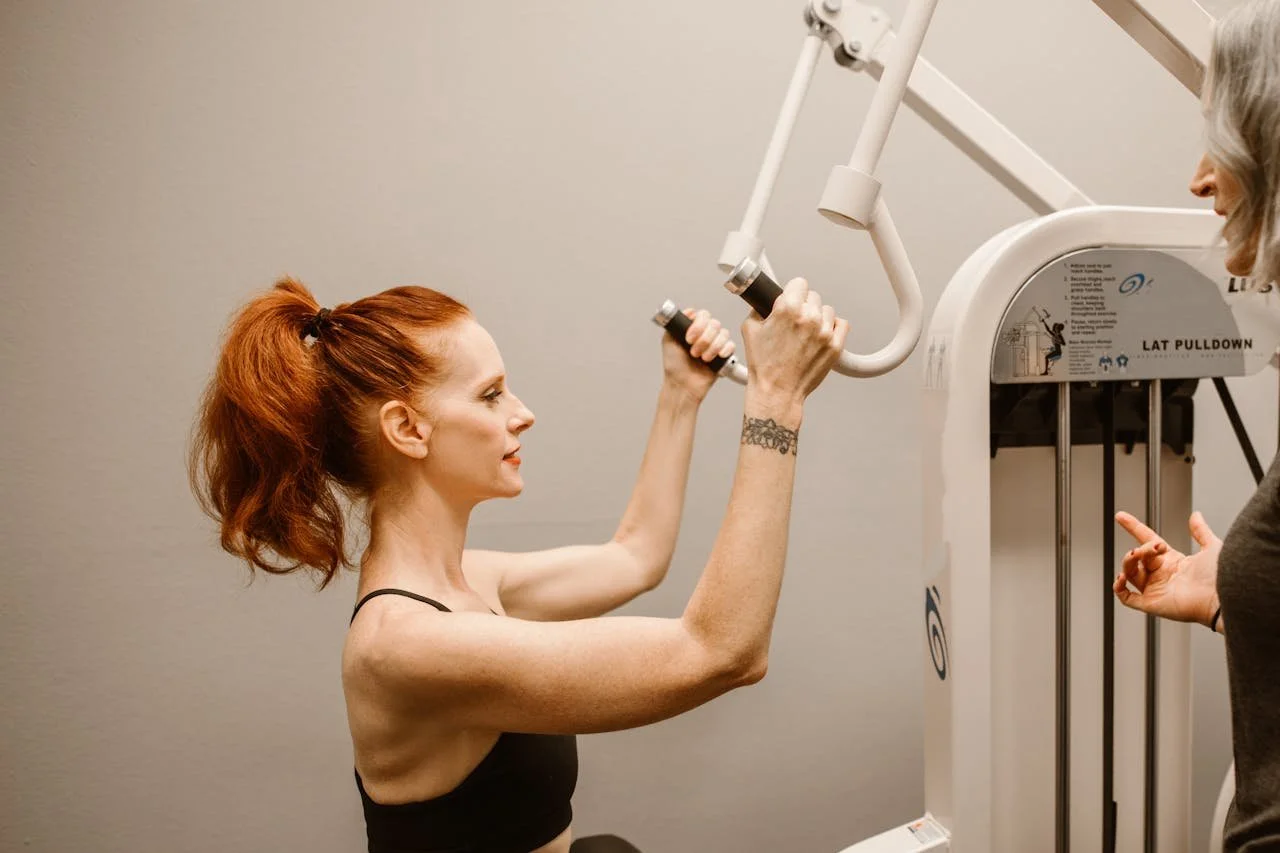
1st: Seated or kneeling band or cable machine lat pulldowns (attach the band at the top of the door or use a cable machine and set the arms above the head)
2nd: Assisted Reverse Lunge (reduce range by 25% if you feel your knees)
3rd: Dumbbell kickbacks (use a bench or bed to reduce discomfort in the knees)
4th: Plank (plank on a bench or bed if you feel your lower back, keep your hips up)
60-second break
Circuit 2: Repeat this circuit 2x before moving on to Circuit 3. 12 reps per exercise.
1st: Walking lunge with dumbbells (reduce range by 25% if you feel your knees)
2nd: Standing band or cable wide row (attach the band in front of the chest on the door or use a cable machine and set the arms at chest height)
3rd: Close-grip dumbbell chest press on the floor or bench (keep the dumbbells close to your hips as you lie back)
4th: Plank on a bed or bench with alternating arm extensions (keep your hips up)
60-second break
Circuit 3: Complete this circuit 2X. 12 reps per exercise.
1st: Squat while holding a dumbbell between the legs (adapt this video by removing the risers and only squat with your feet on the ground….don’t risk a fall)
2nd: Dumbbell tricep skull-crushers on the floor or bench (keep the dumbbells close to your hips as you lie back)
3rd: Step-ups with dumbbells (any variation): Maintain your right foot on the step for 10-12 reps and then switch.
60-second break
Assessment Section
No fitness or personal training program is perfect. Let’s reflect and adapt! Answer the following questions:
How would you adapt this training program?
Which exercises would you swap out?
How could you make this fitness program more challenging?
How would you change the order of the exercises?
Would you include more breaks in between the sets?
Would you include a different ratio of exercises instead?
Michael Moody, author and personal trainer in Denver
If you’re looking for a personal trainer who can curate a sustainable (and adaptable) routine based on your needs and wants, Michael is the experienced practitioner you’ve been looking for. Try personal training for a month today…your body will thank you!
ABOUT THE AUTHOR: MICHAEL MOODY, PERSONAL TRAINER
As an author, a personal trainer in Denver, and podcast host, Michael Moody has helped personal training clients achieve new fitness heights and incredible weight loss transformations since 2005. He also produces the wellness podcast "The Elements of Being" and has been featured on NBC, WGN Radio, and PBS.
Michael offers personal training to Denver residents who want to meet at the 2460 W 26th Ave studio….or in their homes throughout LoHi (80206), LoDo (80202), RiNo (80216), Washington Park (80209), Cherry Creek (80206, 80209, 80243, 80246, 80231), and Highlands (80202, 80211, 80212). Michael also offers experiences with a personal trainer in Jefferson Park (80211) and Sloan's Lake (80204, 80212).
Introduction to Effective Fitness Training for Osteoporosis, Osteopenia, and Osteoarthritis
ABSTRACT
Discover the essential principles of fitness training for osteoporosis, osteopenia, and osteoarthritis, focusing on proper movement patterns, posture alignment, stability, and strength. Learn how to build a solid foundation for long-term health, bone density, and injury prevention with corrective exercises and progressive training phases. This comprehensive guide will help you achieve your fitness goals safely and effectively and minimize the adverse effects of these debilitating conditions. These programs are appropriate for women over 50 with osteoporosis, osteoarthritis, and osteopenia.
KEYWORDS
Fitness training principles
Osteoporosis program
Osteopenia program
Osteoarthritis program
Proper movement patterns
Posture alignment
Stability exercise program
Bone density improvement
Corrective exercise guide
Functional movement training
NASM OPT Model
Fitness foundation building
Injury prevention exercises
Osteopenia Strength Program / Photo: Marcus Aurelius
Part 1: Introduction
Your awareness of the physical self is the first and essential step in reaching any goal. While you'll find millions of programs online, the principles remain the same: Establish the appropriate range of motion for functional movement, reinforce proper posture and alignment of the spine, and limit compensations. These principles require active participation and careful inspection of your movement patterns (and a mirror). They are the baseline of any fitness effort necessary for building bone density and long-term health without compromise or injury.
At the beginning of any program, corrective exercise and stabilization through a functional range of motion are the building blocks for managing a load on the body. Reinforcing proper technique, rewiring faulty movement patterns, and eliminating compromising postural positions are also tenants of this approach (phases 1 and 2 of the OPT Model described below). A global approach to muscle activation through corrective exercise and total body programs is essential while carefully introducing strength exercises.
As your stability, strength, and confidence increase, you can elevate the intensity of your sessions, including adding moderate to high-intensity specific strength programming to support the growth of bone density. On the spectrum of fitness programming, you’ll see the graduation from a total body approach to isolated exercises focused on particular muscle groups. While you have not yet trained to approach the load and intensity of phase 3 in the OPT Model below, moving appropriately through the first two phases of your program will lead to the eventual intentional breakdown of muscle required to build a more robust muscular system.
In the third phase, you'll transition to an isolated muscle program to advance this intention. Always keep in mind that building muscle is essential to protect your bones. Strength exercise programs will help as much as hurt your progress without proper mindfulness, though. It's necessary to reassess your approach weekly, test your range of motion, maintain a suitable foundation of stability, identify and appropriately manage any pain or dysfunction, and pivot between a strength and muscular endurance approach. You'll sometimes need to step back to restore strength, range of motion, and/or function while occasionally abandoning or adapting a program to achieve other goals, like cardiovascular function. Visit How to Create a Weekly Fitness Plan for several examples of strength, muscular endurance, and cardio endurance weekly plans.
Please keep the following in mind while moving forward on your path. There is a gym myth that cardiorespiratory exercise for women should focus on lower-intensity aerobic exercise for fat burning and avoid high-intensity exercise, which could increase lean muscle mass. Yes, muscles will metabolize fat for fuel at lower levels of exercise intensity; however, high-intensity exercise allows more net calories to be expended while stimulating the production of the anabolic hormones that support muscle growth. Whether a biological man or woman, you'll undoubtedly benefit from high-intensity exercise and strength training. It's a requirement for a functional life as we age. This is especially true for women experiencing a change in hormone levels, typically after age 40. During aging, you can lose up to ten pounds of muscle mass per decade.
Before I share my specific recommendations, I recommend reviewing the principles of the NASM OPT Model that I’ve alluded to above. While the national guidelines recommend that adults achieve between 150 and 300 minutes per week of moderate-intensity exercise and 75 to 150 minutes per week of vigorous-intensity activity, it's essential to understand the foundation of training before engaging in such a serious effort.
Osteoarthritis Strength Program / Photo: Los Muertos Crew
Part 2: About the NASM OPT Model
The NASM OPT Model (Optimum Performance Training Model) is a comprehensive fitness training system created by Dr. Mike Clark, grounded in extensive scientific research and principles. This versatile model guides users through five distinct, adaptable, and repeatable training phases across three levels, making it suitable for a variety of fitness goals. Each phase incorporates corrective exercise warm-up protocols to enhance effectiveness. However, it is important to note that not all phases are suitable for every condition, particularly osteoporosis, osteopenia, and osteoarthritis.
Level 1: Stabilization Level of Training
Phase 1: Stabilization Endurance
Level 2: Strength Level of Training
Phase 2: Strength Endurance
Phase 3: Muscular Development/Hypertrophy
Phase 4: Maximal Strength
Level 3: Power Level of Training
Phase 5: Power
Summary of the Levels
The Warmup for Every Level: Corrective Exercise Training
Corrective exercise is a specialized training protocol designed to optimize movement. Leveraging knowledge of anatomy, biomechanics, and kinesiology helps identify and correct muscle imbalances and dysfunctional joint movements, improving movement quality throughout each phase of the OPT model. Incorporating corrective exercise into the warm-up addresses muscle imbalances identified during assessments, enhancing mobility, improving posture, reducing injury risk, and promoting optimal muscle function. For more details, refer to the guide on NASM’s Corrective Exercise Continuum.
Level 1: Stabilization Level of Training
In the stabilization level of the OPT model, the primary goals are to develop proper movement patterns and enhance the kinetic chain's mobility and stability. This phase typically lasts 2 to 6 weeks, depending on your experience, abilities, adherence, and goals. When creating programs, remember that stability is the foundation of strength. It is crucial for building a solid base for any fitness goal. Phase 1, Stabilization Endurance Training, also focuses on mastering healthy movement patterns in foundational movements (squat, push, pull, press, hip hinge, and multiplanar). Overall, this phase aims to improve posture by correcting muscle imbalances and strengthening the core, enhancing balance and muscular control, and preventing injury by preparing muscles, joints, and connective tissues for more complex movements.
The Stabilization Level of Training emphasizes the following:
Developing proper movement patterns: squat, push, pull, press, hip hinge, and multiplanar movement
Acquiring basic exercise skills and proper use of exercise machines, free weights, and cardio equipment
Correcting muscle imbalances
Improving activation of the core musculature and stabilization of the spine and pelvis
Enhancing balance, coordination, and postural control during physical activity, exercise, and sport
Preventing tissue overload by preparing muscles, tendons, ligaments, and joints for the upcoming imposed demands of training
Improving cardiorespiratory and muscular endurance
Promoting your confidence and adherence to exercise
Exercise Selection
Exercises should be selected from the foundational movement patterns (squat, push, pull, press, hip hinge, and multiplanar) and adapted as needed to your physical abilities. Typically, programs in phase 1 will challenge your stability within a total-body circuit of varied dynamic movements that recruit multiple muscles simultaneously. Expect 1-2 sets of each muscle group while performing 12-20 repetitions of each exercise.
Level 2: Strength Level of Training
The OPT model's strength level includes three phases, each focusing on a different type of strength: Strength Endurance Training (Phase 2), Muscular Development Training (Phase 3), and Maximal Strength Training (Phase 4). This level is crucial for women aiming to increase lean mass, improve athletic performance, or enhance bone mineral density. Like the stabilization level, the strength level also helps reduce body fat. Each phase may last 2 to 6 weeks, depending on individual adaptation.
The strength level of the OPT model enhances the body's ability to maintain stability under increasing workloads, with each phase targeting a specific type of strength. Phase 2, Strength Endurance Training, employs a superset technique to boost volume while improving stability, endurance, strength, and hypertrophy. Phase 3, Muscular Development Training, focuses on maximizing muscle growth and size through high-volume workouts, which is ideal for altering body composition by reducing body fat while preserving lean muscle mass. Phase 4, Maximal Strength Training, increases the load on body tissues to recruit more motor units and optimize overall strength.
The Strength Level of Training emphasizes the following:
Increasing the ability of the core musculature to stabilize the pelvis and spine under heavier loads, through greater ranges of motion
Increasing the load-bearing capabilities of muscles, tendons, ligaments, and joints
Increasing the volume of training
Increasing metabolic demand by taxing the phosphocreatine (ATP-PC) and glycolytic energy systems to induce cellular changes in muscle
Increasing recruitment of more motor units to overcome an external load (maximal strength)
Exercise Selection
In the strength level of training, exercises should be selected based on your ability to perform movement safely, enhance muscular development, and increase motor unit recruitment.
Exercises in Phase 2 Strength Endurance Training pair a strength-focused exercise (i.e., a dumbbell bench press to highlight the pectoral muscles) with a stability-focused exercise for the same body part (i.e., a push-up). You may also target a few body parts within a single session. Typically, programs in phase 2 will begin to challenge your strength within supersets or circuits that target individual muscles. Expect 6-8 sets of each muscle group while performing 12-15 repetitions of each exercise. 1-3 days of recovery may be necessary before targeting the same muscle again.
Exercises in Phase 3 Muscular Development Training aim to improve muscle size; workouts in this phase may focus on a single body part or a few body parts, depending on how frequently you choose to strength train weekly. Typically, programs in phase 3 will challenge your strength by targeting only 1-2 muscles per session. Expect 10-20 sets of each muscle group while performing 8-12 repetitions of each exercise. More recovery will be needed (2-6 days) before targeting the same muscle again.
Exercises in Phase 4 Maximal Strength Training are more advanced than prior phases and aim to enhance strength and rate of force production. It is not always appropriate for anyone concerned about osteoporosis, osteopenia, and osteoarthritis.
Level 3: Power Level of Training (Advanced)
The power level of the OPT model consists of a single phase: Phase 5, Power Training. This phase builds on the foundation established in the stabilization and strength levels to prepare the body for sports and performance activities. Depending on the competition schedule, one might cycle through this phase for 2 to 6 weeks. Training at the power level enhances the rate of force production, thereby improving both everyday activities and athletic performance.
The Power Level of Training emphasizes the following:
High force and velocity to increase power
Exercises that mimic sport-specific movements
Supersetting strength- and power-based exercises
Exercise Selection
All exercises selected in the power level should mimic the movements required for the athlete in a sport or competition environment, along with your physical capabilities. It is not always appropriate for anyone concerned about osteoporosis, osteopenia, and osteoarthritis.
Senior Fitness Programs / Photo: Yan Krukau
Part 3: Fitness Program for Osteoporosis, Osteopenia, and Osteoarthritis
I’ve included a specific program to test below. Before reviewing your program, please read the considerations in the next section.
Considerations for Osteoporosis, Osteopenia, and Osteoarthritis
Osteoporosis is a chronic disease predominantly affecting women, with one in three women at risk. Postmenopausal women are particularly vulnerable, accounting for 25 to 30% of all cases. Osteoporosis weakens bone structure, making it more porous and prone to fractures, significantly impacting bone health and quality of life. The precursor to osteoporosis, osteopenia, is characterized by declining bone mineral density. Although osteopenia indicates lower bone mass, it doesn't always require medical intervention or necessarily lead to osteoporosis. Early detection of osteopenia offers an excellent opportunity for preventive measures, such as weight-bearing exercises and a healthy diet, to improve bone mineral density.
Hormonal fluctuations during menopause can disrupt the neuromuscular system, affecting muscles, tendons, and ligaments and exacerbating age-related conditions like sarcopenia and osteoporosis. According to Khadilkar (2019), women more than five years post-menopause are at higher risk for musculoskeletal disorders.
Resistance training and weight-bearing activities are two of the most effective exercises for bone health, helping preserve bone mass. Resistance training increases muscle mass and strength and contributes to bone preservation while weight-bearing or high-impact activities enhance bone mineral density. Both exercise modalities can reverse approximately 1% of yearly bone loss in pre- and postmenopausal women.
Women with osteoporosis, osteopenia, and osteoarthritis should avoid movements that load the spine, such as toe touches and sit-ups, as well as self-myofascial foam rolling, depending on the severity of their condition. While the intensity, load, and force of Phase 4 (Maximal Strength Training) and Phase 5 (Power Training) in the NASM OPT Model benefit many, they are not recommended for individuals with concerns about bone density. Instead, focusing on stability and strength exercises within the first three phases will provide a safer and more effective approach.
Other Considerations:
Avoid a heavily weighted barbell back squat, jumping, or single-leg exercises without assistance.
Avoid too much extension or flexion of the spine.
Start with a small range of motion and self-select a range you feel in control.
As the integrity of the skeleton breaks down with osteopenia or osteoporosis, several postural deviations can appear. Commonly, the spine will begin to curve right or left. This can be observed in the anterior or posterior observation, which can show up as a lateral tilt of the shoulders or a hip hike on one side. Additionally, kyphosis can appear as the skeleton collapses, developing a forward head position. Mindfully avoid any movements that reinforce these deviations.
Dynamic weight-bearing exercise with high force (e.g., jumping or plyometrics) has improved bone mineral density in adult women diagnosed with osteopenia or osteoporosis. Nevertheless, the sheer force of these movements can lead to fractures. Avoid these movements unless you’re under the guidance of a practitioner.
Specific Program for Osteoporosis, Osteopenia, and Osteoarthritis
Here are your next two programs. Once you complete Program 2, you may restart Program 1 again. Please complete the corrective exercises and the core exercises in each session. If you feel discomfort, shorten your range of motion or lower the weight. If it persists, discontinue and move on to the next exercise.
Program and Injury Notes
By performing Program 1 of Phase 2, it’s assumed that you’ve established your baseline of corrective exercise, foundational training, and stability in a prior Phase 1 program. Wellen Health offers a wonderful subscription program to begin your first step.
Please refrain from the “No pain, no gain” adage and respect your physical boundary lines. While these exercises will serve your bone density goals, they shouldn’t compromise your body or lead to any compensations, pain, or discomfort. If you feel unstable or discomfort, minimize the range by 25-50% or reduce the load. Still doesn’t feel right? Abandon the exercise and move on to the next.
While resistance bands offer an in-home solution and are great for building muscular endurance and stability, using dumbbells, cable machines, and other muscle-specific machines will lead to more significant growth in your bone density. Resistance band exercises are a functional part of a program, not the whole. No matter the equipment, though, moderate to high-intensity efforts are essential for the proper breakdown and growth of your muscles and bones. Appropriately challenge yourself but safely.
The Warmup Exercises have been carefully selected to counter the imbalances created by sitting, typing on phones and computers, sleeping on your sides, and more. They don’t account for your individual needs and wants. Feel free to add your physical therapy or favorite warmup exercises to this section, too!
Osteoporosis Program 1: NASM OPT Model Phase 2 Strength Endurance (4-Week Program)
The intention is to build stability, muscular endurance, and strength. This program is appropriate for women over 50 with osteoporosis, osteoarthritis, and osteopenia. Adapt the difficulty based on fitness level and condition.
Day 3: Restorative Yoga, Hike, or Cardio of Your Choice
Day 5: Wellen Health or Brick House Bone Program or a Functional/Stability Program (Your Choice)
Osteoporosis Program 2: NASM OPT Model Phase 3 Muscular Development (4-Week Program)
The intention is to build strength. This program is appropriate for women over 50 with osteoporosis, osteoarthritis, and osteopenia. Adapt the difficulty based on fitness level and condition.
Day 3: Restorative Yoga, Hike, or Cardio of Your Choice
Day 5: Wellen Health Program or a Functional/Stability Program (Your Choice)
Other Notes Regarding This Program:
Return to Program 1 after you complete Program 2.
Sample monthly plan:
June: Program 1
July: Program 2
August: Program 1
September: Program 2
October: Reassess and adapt programs.
Also, substitute any of the days above with classes offered by the following services:
Subscription: Peloton App
Subscription: Apple Fitness Plus App
Subscription: Wellen Health
Videos: Restorative Yoga 1 or Restorative Yoga 2
Source: NASM Educational Resources
ABOUT THE AUTHOR: MICHAEL MOODY, PERSONAL TRAINER
As an author, a personal trainer in Denver, and podcast host, Michael Moody has helped personal training clients achieve new fitness heights and incredible weight loss transformations since 2005. He also produces the wellness podcast "The Elements of Being" and has been featured on NBC, WGN Radio, and PBS.
Michael offers personal training to Denver residents who want to meet at the 2460 W 26th Ave studio….or in their homes throughout LoHi (80206), LoDo (80202), RiNo (80216), Washington Park (80209), Cherry Creek (80206, 80209, 80243, 80246, 80231), and Highlands (80202, 80211, 80212). Michael also offers experiences with a personal trainer in Jefferson Park (80211) and Sloan's Lake (80204, 80212).
If you’re looking for a personal trainer who can curate a sustainable (and adaptable) routine based on your needs and wants, Michael is the experienced practitioner you’ve been looking for. Try personal training for a month…your body will thank you!

EPISODE #10 - EAT FOR LIFE, WEIGHT LOSS, AND AN OPTIMAL IMMUNE SYSTEM WITH BEST SELLING AUTHOR DR. FUHRMAN
On “The Elements of Being” podcast, Michael dissects and explores the minds and habits of psychologists, filmmakers, writers, and industry icons. Essentially, you learn what makes them flip the switch to achieve incredible feats, goals, and milestones…and a chance to geek out over the psychology behind human behavior. In this episode, Michael interviews Dr. Joel Fuhrman, an internationally recognized nutrition and natural healing expert and author of seven New York Times bestsellers, including his most recent book, Eat for Life. His other bestsellers include Eat to Live and The End of Dieting (which I give to all my clients).
Read more and listen here…..You can also listen to all episodes on Apple, Spotify, Overcast, Castbox, Stitcher, or your favorite podcast platform!
Osteoporosis Strength Circuit: Chest, Traps, and Biceps Workout
ABSTRACT
Boost muscle mass to protect your bones and maintain posture with this Osteoporosis Strength Circuit for your chest, traps, and biceps. Follow the detailed exercises and warm-up routines, and remember to complete the assessment section. Perform 12 reps per exercise to enhance your bone density effectively. This program is appropriate for women ages 50 and up with osteoporosis, osteoarthritis, and osteopenia.
KEYWORDS
Osteoporosis strength circuit
Muscle mass for bone protection
Chest workout
Biceps workout
Osteoporosis workout routine
Strength exercises for osteoporosis
Bone health exercises
Posture maintenance workout
Exercise circuit for osteoporosis
Bone protection workout
Osteoporosis fitness program

Osteoporosis PROGRAM 1: STRENGTH CIRCUIT FOR CHEST, TRAPS, AND BICEPS / PHOTO: Kampus Production
OSTEOPOROSIS PROGRAM 1: NASM OPT MODEL PHASE 2 STRENGTH ENDURANCE (4-WEEK PROGRAM)
The intention is to build stability, muscular endurance, and strength. This program is appropriate for women over 50 with osteoporosis, osteoarthritis, and osteopenia. Adapt the difficulty based on fitness level and condition.
Day 3: Restorative Yoga, Hike, or Cardio of Your Choice
Day 5: Wellen Health or Brick House Bone Program or a Functional/Stability Program (Your Choice)
Osteoporosis PROGRAM 1: STRENGTH CIRCUIT FOR CHEST, TRAPS, AND BICEPS
NASM OPT Model Phase 2 Strength Endurance
We must increase muscle mass to protect our bones and maintain proper posture! Perform the exercises in this order. Note the descriptions next to each exercise (e.g., hinging hips, etc.). Please substitute as needed. Don’t forget to complete the “Assessment Section.”
PROGRAM AND INJURY NOTES
By performing Program 1 of Phase 2, it’s assumed that you’ve established your baseline of corrective exercise, foundational training, and stability in a prior Phase 1 program. Wellen Health offers a wonderful subscription program to begin your first step.
While resistance bands offer an in-home solution and are great for building muscular endurance and stability, dumbbells, cable machines, and other muscle-specific machines will significantly increase bone density. Resistance band exercises are a functional part of a program, not the whole. No matter the equipment, though, moderate to high-intensity efforts are essential for the proper breakdown and growth of your muscles and bones. Appropriately challenge yourself but safely.
Please refrain from the “No pain, no gain” adage and respect your physical boundary lines. While these exercises will serve your bone density goals, they shouldn’t compromise your body or lead to any compensations, pain, or discomfort. If you feel unstable or discomfort, minimize the range by 25-50% or reduce the load. Still doesn’t feel right? Abandon the exercise and move on to the next.
The Warmup Exercises have been carefully selected to counter the imbalances created by sitting, typing on phones and computers, sleeping on your sides, and more. They don’t account for your individual needs and wants. Feel free to add your physical therapy or favorite warmup exercises to this section, too!
Other Considerations:
Avoid heavily weighted barbell back squats, jumping, or single-leg exercises without assistance. Start with a small range of motion and self-select a range you feel in control of.
Avoid too much extension or flexion of the spine.
As the integrity of the skeleton breaks down with osteopenia or osteoporosis, several postural deviations can appear. Commonly, the spine will begin to curve right or left. This can be observed in the anterior or posterior observation, which can show up as a lateral tilt of the shoulders or a hip hike on one side. Additionally, kyphosis can appear as the skeleton collapses, developing a forward head position. Mindfully avoid any movements that reinforce these deviations.
Dynamic weight-bearing exercise with high force (e.g., jumping or plyometrics) has improved bone mineral density in adult women diagnosed with osteopenia or osteoporosis. Nevertheless, the sheer force of these movements can lead to fractures. Avoid these movements unless you’re under the guidance of a practitioner.
Warmup: Please complete this warmup before moving on to Circuit 1.
3rd: Alligators
4th: Hip Stretches (stand if necessary and don’t overstretch the hip flexors, hinge your hips back)
5th: Glute Bridges
Circuit: REPEAT THIS CIRCUIT 2X BEFORE MOVING ON to CIRCUIT 2. 12 reps per exercise.
1st: Dumbbell chest press on the floor or bench (keep the dumbbells close to your hips as you lie back)
2nd: Band chest press (attach band at the doorknob height)
3rd: 1-arm bent-over dumbbell rows while gripping a counter or bench
4th: Alternating step-down with dumbbells: Start atop the step and alternate your step-off.
5th: Standing dumbbell palms up curl (same time)
60-second break
Circuit 2: Repeat this circuit 2X. 12 reps per exercise.
1st: Dumbbell chest press on an incline bench (keep the dumbbells close to your hips as you lie back) or incline band chest press (attach band at the bottom of the door and press arms forward and up)
2nd: Pushups against the wall (with or without a stability ball, stand on the balls of your feet)
3rd: 2-arm seated band or cable rows (attach the band in front of the chest on the door or use a cable machine and set the arms at chest height)
4th: Seated dumbbell palms up curl (alternate your arms)
5th: Plank on a bed or bench with alternating arm extensions in front of your body (keep your hips up)
60-second break
Assessment Section
No fitness or personal training program is perfect. Let’s reflect and adapt! Answer the following questions:
How would you adapt this training program?
Which exercises would you swap out?
How could you make this fitness program more challenging?
How would you change the order of the exercises?
Would you include more breaks in between the sets?
Would you include a different ratio of exercises instead?
Michael Moody, author and personal trainer in Denver
If you’re looking for a personal trainer who can curate a sustainable (and adaptable) routine based on your needs and wants, Michael is the experienced practitioner you’ve been looking for. Try personal training for a month today…your body will thank you!
ABOUT THE AUTHOR: MICHAEL MOODY, PERSONAL TRAINER
As an author, a personal trainer in Denver, and podcast host, Michael Moody has helped personal training clients achieve new fitness heights and incredible weight loss transformations since 2005. He also produces the wellness podcast "The Elements of Being" and has been featured on NBC, WGN Radio, and PBS.
Michael offers personal training to Denver residents who want to meet at the 2460 W 26th Ave studio….or in their homes throughout LoHi (80206), LoDo (80202), RiNo (80216), Washington Park (80209), Cherry Creek (80206, 80209, 80243, 80246, 80231), and Highlands (80202, 80211, 80212). Michael also offers experiences with a personal trainer in Jefferson Park (80211) and Sloan's Lake (80204, 80212).

Personal Trainer Wisdom: Master Productivity with Prioritization and Focus
ABSTRACT
Boost your productivity with these expert tips from a personal trainer! Learn how to prioritize tasks, avoid unnecessary stress, set boundaries with social media, simplify your life, and streamline your daily processes for maximum efficiency.
KEYWORDS
Productivity tips
Personal trainer advice
Task prioritization
Reduce stress
Increase focus
Social media boundaries
Simplify life
Streamline processes
Efficiency hacks
Time management strategies

Stress Management / Photo: energepic.com
Introduction
Pretend it’s a typical Wednesday, and the end of the week is quickly approaching. Some of you are eagerly eyeing the weekend. For the rest, your head is probably ready to spin off, trying to complete your endless list of random personal and professional responsibilities. While I’d love to discuss the anxiety and frustration you’re going through with a mile-long monologue, you need a game plan instead. Here’s my no-nonsense approach to handling stress and achieving your list today.
ORGANIZE YOUR LIST BASED ON PRIORITY
Personal Trainer Wisdom: Before diving into your list's nitty gritty, you need to prioritize! If you’re like me, you justify cleaning your desk, answering 48 non-important emails, and brushing your teeth (again) to avoid what you need to do. Half the time, the root of my anxiety stems from an unconscious shout (reminder) about the tasks I need to tackle. Are you listening to yourself??? Quit wasting time. Tackle the most time-sensitive, essential projects first.DON’T ADD FUEL TO THE FIRE
Personal Trainer Wisdom: Would you ever add fuel to a blazing campfire? Hopefully not…That fire is already blazing. Then, why would you drink more coffee or black tea when you’re already stressed and anxious? You’re just heightening an unstable state and increasing your chances of less focus and productivity. Your creative ability could also end up stunted (while you fly across the room). Create the mindset and physical comfort to check off your list patiently but aggressively. Save the caffeine for a time when you need it.READ YOUR RANDOM TEXT MESSAGES, SOCIAL MEDIA STREAMS, AND PERSONAL EMAILS FOR 3 MINUTES AT THE TOP OF EACH HOUR (AND NO OTHER TIME)
Personal Trainer Wisdom: Honestly, I’m already assuming you’re addicted to your habit of checking text messages, social media, and personal emails. Please don’t deny it. You may be reading this article from your phone now (I’m not judging). Have you calculated the number of minutes you spend on these distractions? I think it’s time. Starting now, record the time you spend in the next 24 hours. The tally will probably shock you. Although I don’t expect you to stop these indulgences, I think it’s time to set boundaries. You don’t have time to check Facebook every 15 minutes while trying to finish a PowerPoint presentation. You’re splitting your attention each time and siphoning off your creative juices with witty comments and emojis on random social media posts (unimportant). When you return to work, you must review and refocus (such a time waster). Set an alarm on your phone and then jump into your project thoroughly. Give into your addiction when you’ve completed your homework like a good boy or girl, or at least wait until the end of the hour.RETURN TO SIMPLE
Personal Trainer Wisdom: What should you do when life is complicated and stressful? Simplify. Always simplify. It should be your first response. Are you taking on responsibilities that a colleague can manage? Please pass them on. Are you scheduling unnecessary meetings while you have other pressing projects overhead? Reschedule them for next week. Remove the unnecessary and complicated and narrow your focus (a recurring theme here).REWRITE YOUR PROCESS(ES)
Personal Trainer Wisdom: More often than not, most anxiety results from inefficiency in one of your personal and professional processes. When dealing with the less important stuff, create a mindless, predictable routine to minimize decision fatigue. I wake up, eat, and go to bed simultaneously each day. What daily requirements need more routine in your life? You want to minimize chaos in your life. Please take care of these little processes, too.
Photo Credit:
Gentisrecruitment.com - Is your head in the papers this week? Do you think you should change your approach before looking for a new job?
ABOUT THE AUTHOR: MICHAEL MOODY, PERSONAL TRAINER
As an author, a personal trainer in Denver, and podcast host, Michael Moody has helped personal training clients achieve new fitness heights and incredible weight loss transformations since 2005. He also produces the wellness podcast "The Elements of Being" and has been featured on NBC, WGN Radio, and PBS.
Michael offers personal training to Denver residents who want to meet at the 2460 W 26th Ave studio….or in their homes throughout LoHi (80206), LoDo (80202), RiNo (80216), Washington Park (80209), Cherry Creek (80206, 80209, 80243, 80246, 80231), and Highlands (80202, 80211, 80212). Michael also offers experiences with a personal trainer in Jefferson Park (80211) and Sloan's Lake (80204, 80212).
If you’re looking for a personal trainer who can curate a sustainable (and adaptable) routine based on your needs and wants, Michael is the experienced practitioner you’ve been looking for. Try personal training for a month…your body will thank you!
EPISODE #10 - EAT FOR LIFE, WEIGHT LOSS, AND AN OPTIMAL IMMUNE SYSTEM WITH BEST SELLING AUTHOR DR. FUHRMAN
On “The Elements of Being” podcast, Michael dissects and explores the minds and habits of psychologists, filmmakers, writers, and industry icons. Essentially, you learn what makes them flip the switch to achieve incredible feats, goals, and milestones…and a chance to geek out over the psychology behind human behavior. In this episode, Michael interviews Dr. Joel Fuhrman, an internationally recognized nutrition and natural healing expert and author of seven New York Times bestsellers, including his most recent book, Eat for Life. His other bestsellers include Eat to Live and The End of Dieting (which I give to all my clients).
Read more and listen here…..You can also listen to all episodes on Apple, Spotify, Overcast, Castbox, Stitcher, or your favorite podcast platform!
Three Essential Tools for Enhancing Romantic Relationships: Insights from a Personal Trainer
ABSTRACT
Enhance your romantic relationship with three powerful tools: understanding love languages, creating a life story map, and the simplicity of a hug. Guided by personal trainer wisdom, discover how these methods can improve communication, deepen connections, and foster emotional intimacy.
Keywords
romantic relationship tips
improve relationship communication
understanding love languages
personal trainer relationship advice
life story map for couples
emotional intimacy tools
enhancing romantic connections
relationship improvement strategies
couple communication tips
benefits of physical touch in relationships

Relationship Advice / Photo: Jasmin Wedding Photography
Introduction
Optimal health extends beyond your time in a personal trainer’s studio. If you spend extra effort on your relationships, you might be surprised how your overall well-being is improved. Whether your romantic relationship is sound or a struggle, here are three tools to dramatically change that dynamic today.
THE 5 LOVE LANGUAGES PERSONAL PROFILE FOR COUPLES
Personal Trainer Wisdom: Although you can ambitiously read a book of the same name, I highly recommend taking this free quiz online at 5lovelanguages.com. It will help you identify the love languages (words of affirmation, quality time, receiving gifts, acts of service, and physical touch) that you value the most. Why is this important? If your partner values “acts of service” the most (like making dinner together), it may not matter how many bunches of flowers you buy him or her. Although you value “receiving gifts” the most, it doesn’t mean your partner will too. How often have you heard someone say (or said yourself), “It doesn’t matter what I do. He never appreciates it.” I ask you: Do you know what he appreciates or values the most? Perhaps all your partner wants is “physical touch”…a hug to show your continued interest in him. You can see how easily this lack of communication or awareness can compound into many nonsense arguments.
I think it would be best for you and your partner to take this quiz individually and then discuss your scores. Although you’re not instructed to break down each of your answers, I highly suggest you do this. The two of you may share the same answer but may have a completely different mindset approaching the scenario. Essentially, take the guesswork out of the relationship and learn how your partner approaches a scenario and what he or she values the most.MY LIFE STORY: A VISUAL MAP
Personal Trainer Wisdom: The ‘My Life Story Map’ left a lasting impression on my wife and me before our wedding last year. It helped us recognize the defining moments in our past and understand how they have shaped us. Although we utilized the ‘A Visual Map for Reflecting on My Past’ diagram by Sibyl Towner and Sharon Swing, you can create your own. You and your partner will draw and write a life timeline on separate pieces of paper. At the top and middle of your page, draw a horizontal (parallel) line. On the top line, write the years of your life that correlate with the critical events you describe on the middle line. The middle line should reflect events, people, places, vocations, avocations, and more. You can record these events above or below this middle line depending on whether the event is perceived as a positive event (above) or an adverse event (below). As you determine the most noteworthy events, ask yourself: Which events elicit the most significant emotional response? Which events were most responsible for your personal and professional approach today? Which events specifically affected your relationships with others today? When did you feel the most insecure and weak or secure and robust? What were the most significant turning points or decisions that affected your life?
You may undoubtedly be able to personalize this timeline however you see fit. Honesty is most important (with yourself and your partner). Could you look at how these life occurrences affected you and write that down? For example, my parents’ divorce had a profound effect on my life. Unfortunately, it shaped a negative perspective on relationships for a long time (conflict management, displays of affection, etc). At the same time, while moving after my parents’ divorce was a great challenge at the age of 12, I became more adaptable to many different environments. I became more curious. Think about these long-term effects on my life! I now love travel and feel comfortable exploring and interacting with the unknown world. What events in your life have shaped you? Not only is this a great way to see a timeline of your life on paper, but it is also an opportunity to see what has influenced how you behave, perceive, or generally approach the world. Take this time to learn about yourself while helping your partner understand you.A HUG
Personal Trainer Wisdom: The root of all life is interaction…and nothing is easier or cheaper than a hug! Even if you don’t have the right words, a simple hug can express how you feel. It also shows your vulnerability to your partner and physically connects you to him or her.
Photo Credit:
The wonderful and talented Elizabeth Nord (Photography)–My wife, Sammy, and I still remind ourselves of our promises on our wedding day (and you should always, too). A solid foundation always requires honesty, communication, and self-awareness.

Romantic Gay Relationship / Photo: Ketut Subiyanto
ABOUT THE AUTHOR: MICHAEL MOODY, PERSONAL TRAINER
As an author, a personal trainer in Denver, and podcast host, Michael Moody has helped personal training clients achieve new fitness heights and incredible weight loss transformations since 2005. He also produces the wellness podcast "The Elements of Being" and has been featured on NBC, WGN Radio, and PBS.
Michael offers personal training to Denver residents who want to meet at the 2460 W 26th Ave studio….or in their homes throughout LoHi (80206), LoDo (80202), RiNo (80216), Washington Park (80209), Cherry Creek (80206, 80209, 80243, 80246, 80231), and Highlands (80202, 80211, 80212). Michael also offers experiences with a personal trainer in Jefferson Park (80211) and Sloan's Lake (80204, 80212).
If you’re looking for a personal trainer who can curate a sustainable (and adaptable) routine based on your needs and wants, Michael is the experienced practitioner you’ve been looking for. Try personal training for a month…your body will thank you!

EPISODE #10 - EAT FOR LIFE, WEIGHT LOSS, AND AN OPTIMAL IMMUNE SYSTEM WITH BEST SELLING AUTHOR DR. FUHRMAN
On “The Elements of Being” podcast, Michael dissects and explores the minds and habits of psychologists, filmmakers, writers, and industry icons. Essentially, you learn what makes them flip the switch to achieve incredible feats, goals, and milestones…and a chance to geek out over the psychology behind human behavior. In this episode, Michael interviews Dr. Joel Fuhrman, an internationally recognized nutrition and natural healing expert and author of seven New York Times bestsellers, including his most recent book, Eat for Life. His other bestsellers include Eat to Live and The End of Dieting (which I give to all my clients).
Read more and listen here…..You can also listen to all episodes on Apple, Spotify, Overcast, Castbox, Stitcher, or your favorite podcast platform!

Brainard Lake Loop Via South St. vrain Trail (Winter)
ABSTRACT
Embark on a stunning winter snowshoeing journey with our comprehensive guide to the Brainard Lake Loop via South St. Vrain Trail. Discover the essentials of this moderately challenging trail, including tips on equipment, terrain details, and what to expect during your snowy trek through Colorado's breathtaking landscapes in late April. Perfect for enthusiasts seeking a blend of beauty and physical challenge.
Keywords
Brainard Lake snowshoeing
South St. Vrain Trail winter hike
Colorado winter hikes
Snowshoe trails Colorado
Winter hiking Brainard Lake
Moderate snowshoe trails
Winter hiking gear
Snowy path hiking
High altitude hikes Colorado
Snowshoeing guide Colorado

Brainard Lake is about 75 minutes from my personal training studio in Denver.
Colorado Hikes: Brainard Lake Loop Via South St. vrain Trail (Winter)
Time of Year: End of April.
Weather: 28 degrees and partly sunny.
Cover: 80% tree canopy with several exposed sections.
Time: 9:43 am - 2:11 pm.
Distance: 7.71 miles total.
Cost: No reservations are needed, but the service road gate is closed until the snow melts. Add an extra 2-2.5 miles to Brainard Lake.
Bathroom at Trailhead: Yes.
Difficulty: Moderate level 3 for altitude (10400 feet), elevation gain (853 feet), and length (7.71 miles). Not technical but tough with snowshoes.
Route: Brainard Lake Recreation Area lower lot to Brainard Lake Road to Mitchell Lake Road to Mitchell Lake Trailhead Connector Trail to Brainard Lake Road to CMC Brainard Snowshoe Trail To Brainard Lake Cutoff Trail to Waldrop Trail to South St. Vrain Trail to Sourdough Trail to Waldrop Trail to Brainard Lake Recreation Area lower lot. The route is actually easier to follow with AllTrails than my route description reflects.
Traffic: Light.
Parking: 70% full by 9:45 am.
Equipment: Hiking boots, hiking poles, snowshoes (a must).
Terrain: A snowy path (wet snow).
Experience: This was my first “real” attempt at snowshoeing. I wanted to set my baseline on a trail with minimal elevation gain. Undoubtedly, this is a popular snowshoeing and cross-country skiing area with no surprise. With a recent dump of snow, most of the trails were 2-5 feet deep. Since the service road to the lake was closed, I trekked an extra 2.5 miles to Brainard Lake. The snow-capped trees and glimmer of the sun offered a scenic winter walk up and around the lake until I reached the less-visited South St. Vrain Trail on my way back. I intended to go to Lake Isabelle, but the lack of tracks steered me towards busier paths. The wet snow created more work than expected and was well worth it!
Personal Trainer Notes: I know that most of my personal training clients wouldn’t be interested in the slug of snowshoeing in wet snow, but it’s worth the workout. Most certainly a different challenge from the typical walk in the woods and an opportunity to explore winter trails without post-holing.

The Brainard Lake Loop is approachable for personal training clients of any endurance level. Snowshoeing adds another level of difficulty, though!

A little snow-pack for a beautiful snowshoe adventure around Brainard Lake in Colorado.

Brainard Lake Loop Via South St. Vrain Trail

Brainard Lake

Best Nederland Hikes
List of Hiking Trails in Colorado
To check out more hiking reviews with pictures, visit “List of Colorado Hikes.” You’ll find options across a spectrum of difficulty, including many trails in the foothills and front range.
My final climb of the Decalibron was Mount Democrat, a Colorado 14er.
ABOUT THE AUTHOR: MICHAEL MOODY, PERSONAL TRAINER
As an author, a personal trainer in Denver, and podcast host, Michael Moody has helped personal training clients achieve new fitness heights and incredible weight loss transformations since 2005. He also produces the wellness podcast "The Elements of Being" and has been featured on NBC, WGN Radio, and PBS.
Michael offers personal training to Denver residents who want to meet at the 2460 W 26th Ave studio….or in their homes throughout LoHi (80206), LoDo (80202), RiNo (80216), Washington Park (80209), Cherry Creek (80206, 80209, 80243, 80246, 80231), and Highlands (80202, 80211, 80212). Michael also offers experiences with a personal trainer in Jefferson Park (80211) and Sloan's Lake (80204, 80212).
If you’re looking for a personal trainer who can curate a sustainable (and adaptable) routine based on your needs and wants, Michael is the experienced practitioner you’ve been looking for. Try personal training for a month…your body will thank you!
Personal Trainer Blog

Overcoming Mental Barriers to Achieve Health and Fitness Goals: Insights from a Personal Trainer
Abstract
Discover how overcoming self-limiting beliefs, establishing routines, differentiating between wants and needs, and accepting necessary changes can propel your health and fitness journey. This article delves into the personal insights from a seasoned personal trainer with over 20,000 hours of experience, providing practical advice on creating sustainable lifestyle changes for long-term well-being.
Keywords
Health and fitness goals
Overcoming self-limiting beliefs
Establishing routines for health
Difference between wants and needs
Accepting change for health
Personal trainer insights
Sustainable lifestyle changes
Mental barriers to fitness
Creating healthy habits
Personal health improvement strategies

Mental Health Denver / Photo: M Venter
Introduction
Need help to achieve your health and fitness goals? You may find the most significant obstacle within yourself….and here’s what it might be:
USING THE PHRASES “I CAN’T,” “I WON’T,” OR “I DON’T.”
Personal Trainer Wisdom: After nearly two decades of personal training and over 20,000 hours of one-on-one sessions, this factor determines one’s sustainable success more than any other (and it makes sense). Consider the language: The very nature of these phrases is negative and self-limiting. Is one truly open to the change he needs to make, or is he only willing to do something as long as it doesn’t compromise his wants? “I won’t cook.” “I can’t possibly make this change.” “I don’t work out.” Hard-line phrases that express unwillingness to determine and consider what one must do to reach success. Even though verbal resistance may sit at the tip of the tongue, the alternative phrases, “How can I make this work?” or “Let’s examine the possible solutions,” are positive options that might open new doors to one’s well-being.
I HAVEN’T ESTABLISHED A ROUTINE.
Personal Trainer Wisdom: Long-term sustainable change relies on a foundation of routine and habit. While a quick fix to lose 30 lbs in 3 months is enticing, it will soon be part of a never-ending life cycle. Most fasts, pills, and detoxes serve an impulsive need and rarely establish the structure needed to maintain weight loss. The most vigorous habit has been reinforced daily for 30 days. It has become part of a new normal, sometimes operating on autopilot. The further the habit is from a day-to-day routine, the longer it needs reinforcement (45-60 days). Lack of this focus will lead to short-term change and a return to the prior normal, leading to poor health.
LACK OF DISTINCTION BETWEEN “WANTS” AND “NEEDS”.
Personal Trainer Wisdom: The grammar school curriculum needs to include the necessary lessons on the physical, mental, and emotional selves. Children (and adults) are left to haphazard self-discovery and assessment and often misguided mentors. Essentially, students are never taught how to recognize their actual needs and are left to figure it out independently over a lifetime. The barrage of mixed messages makes seeking optimal personal health confusing and frustrating. However, this might change with the simple question, “Why do I feel this way?” It is the first step of awareness - Examining the underlying influence on behavior and its physical manifestation. With guided investigation and testing, actual needs can be identified while no longer depending on haphazard guesses related to wants.
UNWILLING TO ACCEPT WHAT NEEDS TO BE CHANGED AND THE NECESSARY STEPS TO CHANGE IT.
Personal Trainer Wisdom: Although awareness is an essential first step in change, acceptance is necessary before adaptation occurs. Is one willing to accept a current state of being (healthy or not, it is what it is) and the needed approach to redefine health? Surprisingly, acceptance is the roadblock for most. Accepting a current state and the necessary path is necessary for doubt, frustration, and insecurities to unravel the new efforts. It may emotionally steer the adaptive process in the wrong direction and stunt it.
Photo Credit:
brobible .com–Is the answer to change sitting in front or inside of you?
ABOUT THE AUTHOR: MICHAEL MOODY, PERSONAL TRAINER
As an author, a personal trainer in Denver, and podcast host, Michael Moody has helped personal training clients achieve new fitness heights and incredible weight loss transformations since 2005. He also produces the wellness podcast "The Elements of Being" and has been featured on NBC, WGN Radio, and PBS.
Michael offers personal training to Denver residents who want to meet at the 2460 W 26th Ave studio….or in their homes throughout LoHi (80206), LoDo (80202), RiNo (80216), Washington Park (80209), Cherry Creek (80206, 80209, 80243, 80246, 80231), and Highlands (80202, 80211, 80212). Michael also offers experiences with a personal trainer in Jefferson Park (80211) and Sloan's Lake (80204, 80212).
If you’re looking for a personal trainer who can curate a sustainable (and adaptable) routine based on your needs and wants, Michael is the experienced practitioner you’ve been looking for. Try personal training for a month…your body will thank you!
PERSONAL TRAINER BLOG
Book Recommendation - How to Know a Person: The Art of Seeing Others Deeply and Being Deeply Seen
ABSTRACT
Discover the profound insights of a professional who balances personal struggles with professional achievements in the revealing article. It delves into the journey of self-awareness and reflection, highlighting the importance of empathy in both personal and professional interactions. Learn how embracing curiosity and understanding others can transform everyday experiences and contribute to a more empathetic world.
Keywords
Self-awareness in professional development
Importance of empathy
Balancing personal and professional life
Reflective learning process
Curiosity and personal growth
Empathy in daily interactions
Understanding complex issues
Benefits of knowing others deeply

David Brooks: How to Know a Person
Introduction
There are very few books that wholly reflect my intention during my training sessions while simultaneously reflecting on my struggles. Too often, I'm overwhelmed by my ego or whatever reason....sacrificing valuable opportunities to learn more about a person's story. Professionally, I've refined the opposite. I lean into my curiosity when hosting my podcast, meeting clients during sessions, and planning ceremonies with couples. I marvel at how that's lost when I sometimes return to my personal life. An unconscious stream for survival too frequently saturates me, and the unrelenting need to combat injustice is constantly pervasive and, quite frankly, unexplainable. Nothing in my timeline begs such an abrasive energy.
My lifetime of roadblocks and milestones is no different from the norm, and one might say that it's relatively free of the trauma that plagues the lives of others. But it's there, and awareness and reflection have helped rewire a different type of thinking (or at least, is helping). Undoubtedly, it has affected many interactions, especially when discussing politics. Perhaps you might feel the same at times. It's a growing flame inside that overtakes your spirit and most likely compromises objective and empathetic comprehension of the complexity of the issues that present themselves through social media, kitchen table conversations with family, and other flows of information we intersect with daily. I believe you might find the peace I've been seeking and found. I've listened to this audiobook twice consecutively and just ordered the book. I intend to wire the art of seeing others deeply and being deeply seen. I beg you to do the same and lean into your curiosity of others. Are you already doing it? Great. Share the good word. Although I argue, we all must be reminded to learn about people (and how to approach various scenarios and personalities appropriately). We're not perfect, after all! It may help you redefine your interactions and find empathy and sympathy missing in daily interactions, personally and professionally. It may just help us bring the global boil to a simmer as we live our lives collectively among the differences.
Resources
ABOUT THE AUTHOR: MICHAEL MOODY, PERSONAL TRAINER
As an author, a personal trainer in Denver, and podcast host, Michael Moody has helped personal training clients achieve new fitness heights and incredible weight loss transformations since 2005. He also produces the wellness podcast "The Elements of Being" and has been featured on NBC, WGN Radio, and PBS.
Michael offers personal training to Denver residents who want to meet at the 2460 W 26th Ave studio….or in their homes throughout LoHi (80206), LoDo (80202), RiNo (80216), Washington Park (80209), Cherry Creek (80206, 80209, 80243, 80246, 80231), and Highlands (80202, 80211, 80212). Michael also offers experiences with a personal trainer in Jefferson Park (80211) and Sloan's Lake (80204, 80212).
If you’re looking for a personal trainer who can curate a sustainable (and adaptable) routine based on your needs and wants, Michael is the experienced practitioner you’ve been looking for. Try personal training for a month…your body will thank you!
PERSONAL TRAINER BLOG

5 Essential Tips for Building a Lasting and Healthy Relationship: Minimizing Stress and Maximizing Focus
ABSTRACT
Discover essential strategies for nurturing a healthy, enduring relationship and minimizing stress through the wisdom of "9 Ways to Ensure Your Relationship Is Built to Last." Learn how presence, positive acknowledgment, respect, curiosity, and avoiding the need to be right can transform your romantic relationship and enhance overall well-being.
KEYWORDS
Relationship Building Tips
Minimizing Stress in Relationships
Healthy Relationship Advice
Romantic Relationship Improvement
Enhancing Relationship Focus
Personal Training and Relationships
Lasting Relationship Strategies
Communication in Relationships
Introduction
Stress may be the biggest obstacle to your best health. Surprisingly, the root of change may need to start with your romantic relationship at home. Here are the top tips from the Livestrong article "9 Ways to Ensure Your Relationship Is Built to Last” to minimize your stress at home and maximize your focus in the personal training studio.
The List of Ways to Ensure Your Relationship is Built to Last
1. BE PRESENT
The best way to connect with those you love is by being present -- over and over and over again -- says wellness counselor Anne Parker. “Being present means fully engaging in what is being shared between you in that moment, truly paying attention to the thoughts, feelings, and actions you’re experiencing together.” Keep the television off as the two of you share dinner. Switch off your tablet or smartphone in the evening so you can fully participate with your partner -- listening, sharing, and experiencing the time you spend together. Parker adds that while this may sound obvious and straightforward, think about how often we get distracted from truly paying attention. “Without an engaged presence,” she says, “relationships quickly wither.”
Personal Trainer Wisdom: All relationships benefit from genuine, respectful interactions. To adequately do this, you must be present without a doubt. With the neverending distractions and demands from your professional and personal lives, you should question what you currently offer to your partner. Are you carving out time to interact with him or her? No matter the length of time, are you entirely focused on your partner when you spend time together? I’m admittingly often lured by my phone…we can always justify checking emails for work, right? To minimize this habit, I’ve begun placing my phone to the side as soon as I walk in the door after work and flipping it over (with the sound off). Sammy and I usually hug as soon as we return home, and then we discuss our day before the television is ever turned on (not an emoji hug). Although I’m not perfect, these little efforts add up. With my son Preston joining the family, a refocus couldn’t be more critical. How can you be more present?
2. ACKNOWLEDGE THE POSITIVE
While we might have fallen in love with our partners because of their positive traits and qualities, everyday stresses and anxieties can make it far too easy to focus only on the negative. “Make sure you acknowledge what’s working,” says wellness counselor Anne Parker, “and give credit for the things that go well even amid conflict.” Try to see that for every negative feeling or interaction between the two of you, there are five positive ones. According to relationship researcher and author John Gottman, this five-to-one ratio is typical of stable and happy couples. So instead of focusing on how you wish your partner were different, Parker says, “Stay in touch with what you love about that person.”
Personal Trainer Wisdom: You need to continue to celebrate the best of each other and the love you share. All people (including me : )) love acknowledgment of the beautiful things they do or the incredible energy they share in the world. You can’t say enough. In a lifetime of imperfections, it is up to you to praise the best of what’s in between…especially of what you identify in your partner.
3. NURTURE RESPECT
“Respecting each other means remembering that you are two different people, with different perspectives, histories, and ways of being,” says wellness counselor Anne Parker. In a paper published in 2000 in the American Journal of Psychotherapy concerning romantic love and its barriers, the idea of respect is equated to each person taking their partner seriously as a person. The article theorizes that to love another in the fullest sense, it is vital to understand and appreciate that your partner, like you, is “the conscious center of her world, a fellow maker of choices, an entitled holder of rights, values and life goals and an experiencer of joys and sufferings.” Parker says that honoring those differences is just as important as valuing the similarities. “We all want to be respected for who we are and what makes us unique.”
Personal Trainer Wisdom: This quote is worth repeating: Your partner, like you, is “the conscious center of her world, a fellow maker of choices, an entitled holder of rights, values and life goals and an experiencer of joys and sufferings.” Do you keep this in mind while interacting with your partner? What assumptions do you make about him or her? Are you reacting instead of considering your partner's history and the root of his or her perspective? You are entitled to your opinion.
Regarding your partner, though, you should take the time to learn “why, what, when, who, how, and where” before passing judgment or making an assumption. Respect is best shown through your willingness to build effective communication. Ask the right questions and give your partner the benefit of the doubt.
4. BE CURIOUS
People want to feel that their significant other is interested in them and cares about what is important to them. Cultivate curiosity and interest in your partner. Don’t presume you already know his answers, motives, thoughts, and experiences. Making such a presumption distances you from who your partner truly is, denies him the opportunity for expression, and diminishes intimacy. “Make sure that you regularly create focused time just to talk, ask questions, and share the thoughts and feelings of everyday experiences,” says wellness counselor Anne Parker. Curiosity breeds discovery, she explains, “and ongoing discovery about each other keeps the relationship vital and interesting.”
Personal Trainer Wisdom: Over time, your wisdom has evolved due to your experiences. You most likely have changed in several ways, and it’s not fair to think that your partner has been static for the same time. Be curious. Explore how your partner experiences the world each day…you may be surprised to hear how he or she now interprets a situation or handles a challenge differently a second time. It’s an excellent opportunity to connect at different emotional and mental levels and opens the doors for additional communication and trust.
5. DON’T GET ATTACHED TO BEING RIGHT
When disagreements occur between you and your partner, don’t commit yourself so fully to the idea that you’re the one who’s right that you lose sight of what’s essential. “Getting attached to being right just creates barriers to resolution and productive action,” says wellness counselor Anne Parker. She says most of the time, it doesn’t matter who’s right. “How you connect, listen, discuss, and create the most productive result matters.”
Personal Trainer Wisdom: You should celebrate the best of life together and seek the best and most reasonable solution possible (together) when confronted with a challenge. There is, and never will be, any value in establishing who’s right or wrong…it doesn’t matter if that’s your focus; shame on you. A relationship isn’t a game or a battle. You need to rethink your approach. Even if you’re not at fault, you add fuel to the fire with this attitude. Sorry, drama queens and kings, I'm talking to you.
Photo Credit:
Elizabethnord.com–Does a real change start with your approach to your relationship?
ABOUT THE AUTHOR: MICHAEL MOODY, PERSONAL TRAINER
As an author, a personal trainer in Denver, and podcast host, Michael Moody has helped personal training clients achieve new fitness heights and incredible weight loss transformations since 2005. He also produces the wellness podcast "The Elements of Being" and has been featured on NBC, WGN Radio, and PBS.
Michael offers personal training to Denver residents who want to meet at the 2460 W 26th Ave studio….or in their homes throughout LoHi (80206), LoDo (80202), RiNo (80216), Washington Park (80209), Cherry Creek (80206, 80209, 80243, 80246, 80231), and Highlands (80202, 80211, 80212). Michael also offers experiences with a personal trainer in Jefferson Park (80211) and Sloan's Lake (80204, 80212).
If you’re looking for a personal trainer who can curate a sustainable (and adaptable) routine based on your needs and wants, Michael is the experienced practitioner you’ve been looking for. Try personal training for a month…your body will thank you!

EPISODE #10 - EAT FOR LIFE, WEIGHT LOSS, AND AN OPTIMAL IMMUNE SYSTEM WITH BEST SELLING AUTHOR DR. FUHRMAN
On “The Elements of Being” podcast, Michael dissects and explores the minds and habits of psychologists, filmmakers, writers, and industry icons. Essentially, you learn what makes them flip the switch to achieve incredible feats, goals, and milestones…and a chance to geek out over the psychology behind human behavior. In this episode, Michael interviews Dr. Joel Fuhrman, an internationally recognized nutrition and natural healing expert and author of seven New York Times bestsellers, including his most recent book, Eat for Life. His other bestsellers include Eat to Live and The End of Dieting (which I give to all my clients).
Read more and listen here…..You can also listen to all episodes on Apple, Spotify, Overcast, Castbox, Stitcher, or your favorite podcast platform!

Explore Mount Sanitas, East Ridge, and Sanitas Valley Loop: A Colorado Hiking Gem
ABSTRACT
Discover the allure of Mount Sanitas, East Ridge, and Sanitas Valley Loop in Colorado with its stunning vistas and moderate-level hiking experience. Journey through rocky paths amidst Boulder's neighborhood, bask in panoramic views, and embrace the challenge under the mid-June sun. Explore this popular trail, perfect for all levels, and discover why it remains a favorite among locals and visitors alike.
Keywords
Colorado hikes
Mount Sanitas
East Ridge Trail
Sanitas Valley Loop
Boulder trails
Moderate-level hiking
Hikes with panoramic views
Outdoor adventure

The Mount Sanitas Trail is only about 35 minutes from my personal training studio in Denver.
Colorado Hikes: Mount Sanitas, East Ridge, and Sanitas Valley Loop
Time of Year: Mid-June.
Weather: 63 degrees and sunny.
Cover: Full exposure.
Time: 8:47 am - 10:33 am.
Distance: 3.62 miles total.
Cost: None.
Bathroom at Trailhead: 1 block down west at the next trailhead.
Difficulty: Moderate level 3 for altitude (6811 feet), elevation gain (1286 feet), and length (3.62 miles). Not technical.
Route: Mount Sanitas Trail to East Ridge Trail to Sanitas Valley Trail
Traffic: Heavy (a very popular trail).
Parking: 100% full by 8:45 am. Found parking on a residential street nearby.
Equipment: Hiking boots, hiking poles.
Terrain: A dry, rocky path.
Experience: In 2011, Mount Sanitas was the first peak I ever climbed in Colorado. Over ten years later, it continues to impress. Nestled in a Boulder neighborhood, you quickly ascend on a rocky path above the city. You can easily steer off the trail for rest or a snack while indulging in one of the many vistas. Considering the total elevation gain, expect to work and sweat under the summer Colorado sun. While you’ll undoubtedly walk among swarms of Boulder residents and out-of-towners, a little crowd is worth the perfect combination of proximity to Denver, challenge, and views of the high plains.
Personal Trainer Notes: This trail is a favorite among my personal training clients and Boulder residents. Expect to encounter hikers of all levels, including kids. The rocky terrain provides an interesting trek, and the elevation gain increases quickly within the short mileage.

Sanitas Valley Loop is approachable for personal training clients of any endurance level.

Boulder Hikes

Mount Sanitas, East Ridge, and Sanitas Valley Loop

Mount Sanitas, East Ridge, Sanitas Valley Loop

Best Boulder Hikes
List of Hiking Trails in Colorado
To check out more hiking reviews with pictures, visit “List of Colorado Hikes.” You’ll find options across a spectrum of difficulty, including many trails in the foothills and front range.
My final climb of the Decalibron was Mount Democrat, a Colorado 14er.
ABOUT THE AUTHOR: MICHAEL MOODY, PERSONAL TRAINER
As an author, a personal trainer in Denver, and podcast host, Michael Moody has helped personal training clients achieve new fitness heights and incredible weight loss transformations since 2005. He also produces the wellness podcast "The Elements of Being" and has been featured on NBC, WGN Radio, and PBS.
Michael offers personal training to Denver residents who want to meet at the 2460 W 26th Ave studio….or in their homes throughout LoHi (80206), LoDo (80202), RiNo (80216), Washington Park (80209), Cherry Creek (80206, 80209, 80243, 80246, 80231), and Highlands (80202, 80211, 80212). Michael also offers experiences with a personal trainer in Jefferson Park (80211) and Sloan's Lake (80204, 80212).
If you’re looking for a personal trainer who can curate a sustainable (and adaptable) routine based on your needs and wants, Michael is the experienced practitioner you’ve been looking for. Try personal training for a month…your body will thank you!