

Personal Trainer Blog
Fitness | Wellness | Diet Self-Improvement

Health and Fitness at your finger tips
Learn fitness, healthy whole food diets, wellness, and other personal training tips/recipes from Denver's weight loss personal trainer.

The Best Fish Nachos for Weight Loss!
I'm always looking for quick and easy weight loss recipes for personal training clients. My general rule is that it shouldn't take more than 15 minutes (after all, you need the extra time for your sessions with a personal trainer!). Here is my recent simple creation. Give it a try!!!
Ingredients:
-3/4 lb of wild Mahi (Trader Joes) (or a protein substitute if desired)
-4 dashes of cajun seasoning
-3/4 cup of your favorite salsa (no additives, preservatives, or high fructose corn syrup)
-2 cups of Frontera Thin and Crispy Corn Tortilla Chips
-1 can of organic black beans (drained and rinsed)
-2 cups of spinach (cut julienne style)
-1 lime (cut into wedges)
-1 tablespoon of extra virgin olive oil
Cut the wild mahi filets into thin 1 inch strips, toss in cajun seasoning, and saute in a preheated pan of olive oil (medium heat) for 3 minutes on each side. Squeeze 2 wedges of lime over the fish.
While the fish is cooking, spread the chips evenly on a plate with a bed of spinach on top. Then, heat the drained beans with a 1/4 cup of salsa and spread evenly on the spinach.
Finally, place the fish strips on top of the spinach before topping with the remaining salsa. Squeeze a couple of lime wedges over the dish for a citrus kick.
DENVER PERSONAL TRAINING STUDIO
Michael offers personal training to Denver residents who want to meet at the 2460 W 26th Ave studio….or in their homes throughout LoHi (80206), LoDo (80202), RiNo (80216), Washington Park (80209), Cherry Creek (80206, 80209, 80243, 80246, 80231), Highlands (80202, 80211, 80212), and Capitol Hill (80203, 80218). Michael also offers experiences with a personal trainer in Cheesman Park (80218, 80206), Jefferson Park (80211), and Sloan's Lake (80204, 80212).

The Underlying Influence on Your Weight Loss Failures
Fear is a very powerful influence, and you should question how it affects your approach to weight loss or personal training in Denver. How many times have you avoided a session with a personal trainer? Have you ever backed out of a weight loss plan? Have you ever taken a different path to avoid another personal training client at the gym? What were your reasons? Fear of failure? Fear of commitment? Fear of judgement?
Although fear can lead you to avoidance, is it always a bad thing? No. Fear can protect you from potentially harmful situations. The mind automatically triggers its efficient response system when it recognizes a learned threat. This system of fear has grown inside of you based on past experiences or what you’ve learned.
If an experience or something else has built a strong enough association, the mind will make it tough to forget and will consequently hide it in our subconscious like a protective mechanism. It usually takes repeated experiences before you internally say to yourself, “Maybe I shouldn’t drive erratically because I will hit another car,” or, “Maybe I shouldn’t work 10 hours per day in a stressful job because I’m at risk for a heart attack.” Either way, it can help you avoid destructive or stressful situations. This inner voice is quite essential when we need a wake-up call from life’s distractions.
We need to remember that our minds thrive on reinforcement and don’t always effectively decipher between good and bad or rational and irrational. The fear of flying is a common example, and one which I can relate to.
Rocking back and forth by the open door of the plane, I looked down 13,000 feet on a still landscape of cornfields and a distant Lake Michigan. Three seconds later my tandem partner pushed me out, and we free-fell 5,000 feet before my parachute popped open. That was the first and only time I ever skydived.
Funny enough, I wasn’t scared while crouching on the edge of the doorway. The experience was surreal; however, I didn’t feel that way 30 seconds earlier.
Most people have a fear of heights, and I can’t blame them. The higher we travel, the less likely we’ll survive in the case of an accident. This fear is a survival instinct.
On that day, though, the height didn’t scare me (or the fear of dropping 13,000 feet with a parachute, which is safe, but still crazy). Above all, the plane ride scared me the most.
The plane was a ten-person, single-engine plane. As it rose up into the sky, you heard the engine roar through the cabin as the wind knocked the plane back and forth like a pinball. I looked down at my new altimeter wristwatch and saw the steady climb in elevation. I had never been more nervous in my life. At the same time, I couldn’t wait to jump.
Why was I more scared of the plane than the actual jump? If you think about it, being in a closed cabin seems safer and more controlled than a free-fall with plastic strapped to your back.
That thought never crossed my mind, though. I couldn’t stop thinking about all the small planes I had seen on the news, including the plane carrying JFK Jr. that had crashed and killed everyone on board. I had a constant newsreel showing me these horrible images and bylines of those fatal crashes playing in my head.
My fear is an excellent tool for survival —when it’s rational. I finally understood why many people fear flying. Despite this fear, though, I still flew up and jumped after debating whether or not I should. I finally realized that it wasn’t rational to fear flying on that day. The weather conditions were sunny and warm, and the airline had a perfect flight history. It’s hard to believe that fear almost steered me from an unbelievable experience.
It truly is a problem when irrational fears overtake our being. Despite our efforts at times to repress or erase them, they tend to scratch and claw their way out like a cat trapped in a bag. They pop up in our minds as thoughtful, rational monologues that appear in our best interests, but are actually self-sabotaging pushes to maintain our current culture, like a familiar job or relationship, even though it causes us stress or leads to weight gain.
It doesn’t seem to make sense. Why would we allow these things to ruminate within us? Why would we allow them to take over our being when we’re not paying attention?
For you, it may manifest itself in an underlying voice telling you “Don’t do this!” Despite your best efforts to eliminate the message, it continues to torment you as an unfiltered guided voice; much like it did to me as I was preparing to board that small plane.
We carve our experiences and our interactions into a writeable disc that plays the background music to our life. Unfortunately—and fortunately—fears are written on the disc along the way, too. They make a deeper groove, and it takes more repetitions to change them.
You need to face your fears by defining their influence on your perspective and behavior, and by repeatedly reinforcing a positive message. Don’t feel the pressure to figure out the root of every fear. It may take more work than you’re willing to handle.
It’s time to redefine the legacy of fear within you.
Reflection Section:
1.) Awareness: Name three fears that steer your behavior (e.g., avoidance, projection, isolation, etc.). Where have these fears stemmed from and what evidence do you have to justify listening to these fears?
2.) Acceptance: Are you prepared to face these fears again with a new self-confidence? If not, what positive message can you repeatedly reinforce? How will you carry this out?
3.) Adaptation: Which fears are unjustified and how will you no longer allow them to change your approach? What positive messages can you reinforce repeatedly to convince yourself that these fears aren’t rational?
DENVER PERSONAL TRAINING STUDIO
Michael offers personal training to Denver residents who want to meet at the 2460 W 26th Ave studio….or in their homes throughout LoHi (80206), LoDo (80202), RiNo (80216), Washington Park (80209), Cherry Creek (80206, 80209, 80243, 80246, 80231), Highlands (80202, 80211, 80212), and Capitol Hill (80203, 80218). Michael also offers experiences with a personal trainer in Cheesman Park (80218, 80206), Jefferson Park (80211), and Sloan's Lake (80204, 80212).

Determine Your Boundaries to Achieve Weight Loss
I think it’s symbolic of our true human nature to want to push our boundaries. We have a knack for pushing the limits.
It’s the kid inside of us that still touches the oven after our mother tells us not to turn the knob. It’s the “let’s see if we can get away with a little more” syndrome. With this in mind, we occasionally need to protect ourselves from, well, ourselves, and define the most appropriate boundaries.
When redefining yourself, it’s very easy to tell you to live a perfect life, and then you’ll achieve ultimate happiness. You’ll be safer if you drive the speed limit all the time. You’d reach your ideal weight if you eat just a little bit less than you normally do. Unfortunately, we have too many distractions in life and also enjoy the freedom of doing what we want.
Instead of the all or nothing approach, I employ the following analogy as a way a life. I found through trial and error that I don’t receive tickets when I drive no more than nine miles per hour over the speed limit. How fast can I drive without getting a ticket? Nine seems to be the answer for where I live.
Once I hit ten, though, it’s a different story. Many police officers consider speeds of ten miles per hour or more over the speed limit more dangerous, and you are more likely to receive a ticket. There is a legitimate reason for this assumption. The state has determined the speed limit for a particular road as the most ideal based on the conditions. As you speed further from this number, the likelihood of an accident increases. For this reason, the court system assigns higher penalties for this class of ticket.
I’m taking a risk by acting beyond these limits, but I’m also mindful of an appropriate boundary. I refer to this behavior as "living in the gray." You may say, “But I don’t want live by any boundaries or a rule system!” Although many books will sell the idea of life without rules, it isn’t possible. All of us need boundaries or a rule system. Without them, we would probably harm ourselves or others.
Besides, you already live by a set of boundaries and rules. Now you only need to redefine them. Would you eat a piece of candy lying on the wet alley pavement? Let’s assume you and everyone else wouldn’t. You have established this rule about food as a safety precaution.
The behavior of my weight loss clients is another example. Their weight always tends to fluctuate between the same high and low numbers. It’s as if they retreat to their old habits once they reach a particular weight loss low. We learn that these figures are their tramlines, or boundaries, for their weight. Unconsciously, my personal training clients in Denver modify their behavior when they reach a specific high or low number, for better or worse. These boundaries mark their patterns of behavior, and the tramlines must be redefined in order to achieve a healthy weight range.
What is your rule system? Is it good for you? Are you a healthier person physically, mentally, and emotionally for it? If your system and behaviors aren’t in line with what you need, there’s a chance you’re causing yourself stress. It should be in line with your homeostasis —your philosophical, efficient state of being. It’s whatever you do for your mind and body that makes it work best. If you don’t know what this perfect state of being is for you, then you’re living a life of chance, pushing random boundaries. Any choice you make is a risk.
Up to this point, I hope you have been learning about YOU. Now, you must stop choosing boundaries that work for someone else and begin determining what works for your own body and mind. It doesn’t matter if it works for someone else. It doesn’t mean it will work for you.
When you know yourself well enough, you deserve the occasional slack to live a life outside the strict daily regimen. Disregard the teachings of many popular philosophers, pundits, and anyone else who has thrown their opinion at you. They may tell you to live this way or that way. But no matter what they say, you need to determine your boundaries based on what you discover about YOU. There isn’t a perfect way to live, after all.
I greatly encourage you to “live in the gray” a little bit. It will lead to valuable lessons about your spirit. Never forget, though, that you need to base your new boundaries on your needs instead of your wants. Test your limits but keep your true self in mind. You’ll be thankful when you KNOW why your weight increased while meeting with a personal trainer, why your spouse is upset with you, or why you received a speeding ticket.
DENVER PERSONAL TRAINING STUDIO
Michael offers personal training to Denver residents who want to meet at the 2460 W 26th Ave studio….or in their homes throughout LoHi (80206), LoDo (80202), RiNo (80216), Washington Park (80209), Cherry Creek (80206, 80209, 80243, 80246, 80231), Highlands (80202, 80211, 80212), and Capitol Hill (80203, 80218). Michael also offers experiences with a personal trainer in Cheesman Park (80218, 80206), Jefferson Park (80211), and Sloan's Lake (80204, 80212).
Do This Every Day, and You May Lose 20 Pounds in 6 Months
When's the last time you weighed yourself? If you can’t remember or you don’t even own a scale, read on to find out how weighing in may help you peel off pounds.
According to a first-of-its-kind study published in the Journal of the Academy of Nutrition and Dietetics, researchers from Duke University Obesity Prevention Program and the University of North Carolina–Chapel Hill reported that those who weighed themselves daily lost about three times as much weight and body fat, compared to those who were less diligent about stepping on the scale.
The six-month study included 47 overweight men and women who were randomly assigned to the “intervention” group, which included the use of electronic scales that were networked to the researchers' computer network. All 47 subjects were instructed to weigh in daily and were given some basic advice about healthy eating and exercise behaviors to promote steady weight loss (i.e., increase water consumption, walk more, eat fewer snacks, enjoy more fruits/veggies). Using objective data from the subjects' e-scales, the researchers could objectively track the frequency of weigh-ins as well as the subjects’ weights.
Results? Compliance to frequent weigh-ins was very high, with 75 percent of the subjects weighed in at least six days a week. Those who weighed in daily (51 percent of all subjects) lost an average of 20 pounds, compared to an average of 7 pounds lost among those who weighed themselves an average of five days per week. Subjects who weighed themselves daily were also more likely to report following through on recommended diet and lifestyle behaviors.
According to one of the study’s authors, Dr. Deborah Tate, director of the Weight Research Program at the University of North Carolina–Chapel Hill, “Daily weighing helps with self-regulation and directly linking eating and activity behaviors with weight. You can quickly see very small daily changes in weight of 0.1 or 0.2 lbs. that tell you whether your current eating and activity are enough to help you lose weight or if you need to do more.” This study adds to previous studies that also reported that those who weigh themselves more frequently lose more weight and are less likely to gain weight over time.
However, many dietitians don’t recommend frequent weigh-ins for fear that their weight loss clients will be discouraged if the number increases or obsessed with the scale. However, according to Tate: “We conducted two other studies – both included overweight and obese adults without eating disorders – and both studies showed that beginning to weigh daily was not harmful in terms of eating disorder or depressive symptoms.”
Other dietitians are against traditional scales because they can’t account for body composition. “I don't recommend using the scale at all,” says registered dietitian Stephanie Mull of the George Washington University Weight Management and Human Performance Lab in Ashburn, Virginia. “We have many clients who see little changes in overall weight, but have significant reductions in body fat. That is why we use dual-energy X-ray absorptiometry or InBody assessment to accurately measure fat and lean tissue of our clients."
Bottom line: If you like setting goals and can use the number on the scale as objective data (without judging or attaching negative emotions to the number), I recommend trying frequent weigh-ins. If you're in the market for a new scale, consider a scale with bioelectric impedance so you can see changes in percent body fat. Other ways to help determine if you’re losing body fat is to measure your waist circumference every three weeks; if you’re losing inches from your waistline, you’re reducing body fat. You may just be surprised to find out how this simple daily habit can help improve your diet and your success during personal training sessions.
DENVER PERSONAL TRAINING STUDIO
Michael offers personal training to Denver residents who want to meet at the 2460 W 26th Ave studio….or in their homes throughout LoHi (80206), LoDo (80202), RiNo (80216), Washington Park (80209), Cherry Creek (80206, 80209, 80243, 80246, 80231), Highlands (80202, 80211, 80212), and Capitol Hill (80203, 80218). Michael also offers experiences with a personal trainer in Cheesman Park (80218, 80206), Jefferson Park (80211), and Sloan's Lake (80204, 80212).

10 Reasons You Should Never, Ever Wear Flip-Flops
It's summer! What are you going to wear on your feet? Hopefully not flip-flops. Check out this recent article from Cosmopolitan magazine before your next session with a personal trainer and discover the blistering effects of your favorite pair of sandals.
**********
As the weather warms up, it's hard to resist the urge to break out the truest sign of summer: flip-flops. But most experts are horrified by the idea. Here's why you should reserve your flip-flops for the beach, pool, spa, and shared showers — and keep your feet out of them, otherwise, according to Dr. Jackie Sutera, DPM, a podiatrist and spokesperson for the American Podiatric Medical Association.
1. THEY EXPOSE YOUR FEET TO BACTERIA, VIRAL, AND FUNGAL INFECTIONS.
Any time your feet get particularly filthy (i.e., any time you wear your flip-flops in public), they're likely covered in some nasty things likes Staphylococcus, a bacteria that can irritate the skin on your foot in the best case or lead to amputation in the worst-case scenarios. (It depends on whether you have open wounds, like microwounds from exfoliation during a recent pedicure, or actual cuts, and your state of health when you pick up the bacteria.) Athlete's foot, an itchy fungal infection that's highly contagious, is spread by contact with something that's contaminated. When you wander around nearly barefoot, you're screwed if this fungus crosses your path. And the same goes for the virus that causes warts, human papillomavirus (HPV).
2. THEY SLOW YOU DOWN.
An Auburn University study found that flip-flop wearers take smaller steps than people who wear sneakers.
3. THEY MAKE YOU EXTRA CLUMSY.
Those short strides you take when you wear flip-flops? They increase your risk of tripping (or being trampled in a crowd).
4. THEY DESTROY YOUR HEELS.
Because your heels hit the ground with more force when there's nothing but a measly piece of foam separating your foot from the ground, walking in flip-flops accentuates the heel-strike impact, which could end up causing pain — especially if you stand or walk in them for extended periods of time.
5. THEY CAN CAUSE TERRIBLE BLISTERS.
When a thin strap is the only thing that holds your shoe on, that strap rubs up against your skin every time you take a step. This can cause irritation and blisters. When blisters pop, you're left with an open wound that makes you more vulnerable to the pathogens you pick up anytime your foot is exposed.
6. THEY CAN PERMANENTLY DAMAGE YOUR TOES.
Ever hear of hammertoe? It's when the knuckles of your toes bend. When you wear flip-flops, your toes need to work extra hard to keep the shoe on your foot, which can cause hammertoe over time. If you want to avoid stiffness, pain, and potentially, surgery, you'll stick with strappier sandals (ideally, a pair with a thick strap at the midfoot, and one that goes behind your ankle). Think Birkenstocks and Tevas, which — just your luck! — happen to be trendier than flip-flops. Most important, it will affect your performance during your session with a personal trainer.
7. THEY MESS WITH YOUR POSTURE.
Any super-flat shoe that doesn't bend like your foot does when you walk barefoot alters your biomechanics and affects posture.
8. THEY CAN CAUSE SHOOTING PAINS.
People with flat feet need arch support to keep their knees, hips, and back aligned. In a flat shoe, there's none of that, so your joints have to compensate. This can cause overuse injuries all the way up the body, including Achilles tendonitis (injury to the tendon that connects the calf muscle to the heel bone), heel pain, and pinched nerves in the back. Not surprising, most personal training clients come in with one injury or another. Does your injury stem from flip-flops?
9. THEY CAN EXACERBATE BUNIONS.
Because your toes have to work so hard to keep flip-flops on your feet, over-gripping can aggravate people with unsightly and painful bunions, a bump at the big toe joint. Not good.
10. THEY COULD BE MADE OF TOXIC MATERIALS.
Plastic straps may be made of latex, which many people are allergic to, or plastic that contains BPA, a toxin linked to various cancers. Do you really want your toes to get all up in that? Opt for sandals with fabric or leather straps, because natural materials tend to be safer. Still feel like such a flip-flop day? (Didn't think so.)
DENVER PERSONAL TRAINING STUDIO
Michael offers personal training to Denver residents who want to meet at the 2460 W 26th Ave studio….or in their homes throughout LoHi (80206), LoDo (80202), RiNo (80216), Washington Park (80209), Cherry Creek (80206, 80209, 80243, 80246, 80231), Highlands (80202, 80211, 80212), and Capitol Hill (80203, 80218). Michael also offers experiences with a personal trainer in Cheesman Park (80218, 80206), Jefferson Park (80211), and Sloan's Lake (80204, 80212).

5 Things You Should Never Do Before You Work Out
My personal training clients are always looking for ways to make their sessions with a personal trainer more efficient. Here is a recent article from MSN.com that should be followed by them and anyone active in the personal training studio.
********
Craft a killer playlist. Get dressed in your workout best. Perform a light warm-up. You know what to do to get ready for an awesome workout. But there are some things you should never—and we mean never, ever—do before a workout. Like these five workout-wrecking mistakes:
1. DRINK JUST ONE GLASS OF WINE AT HAPPY HOUR
“Any amount of alcohol before working out is too much,” says certified strength and conditioning specialist Mike Donavanik. “Depending on the tolerance level one may have, it may affect some more than others—but either way, you’re looking at possible drowsiness, dehydration, narrowing of your blood vessels, impaired motor function, and a number of other side effects, which just aren’t conducive to working out.” What’s more, drinking even one glass of alcohol can lower your blood-sugar levels, which can lead to everything from shakiness and weakness to flat-out injury, says Georgie Fear, R.D., author of Lean Habits for Lifelong Weight Loss.
2. CHUG MORE THAN A FEW CUPS OF WATER
It’s an hour before your workout, and you just realized you’ve drunk shockingly little so far that day, so you down a bunch of water. We’ve all done it. But if you drink too much, it could backfire. Your kidneys can process close to a liter of water an hour, so if you drink more than that, you could put yourself at risk of a rare but serious condition called hyponatremia, in which the blood becomes diluted and the concentration of sodium ions drops too low, says Fear. Symptoms include a loss of energy, muscle weakness, and cramps, none of which make for a good workout. On the more dangerous end of things, it can cause seizures and coma.
Luckily, it’s unlikely that you’re going to down a two-liter bottle of water before your workout, but Donavanik recommends capping your intake even lower: at to two to three cups of water two to three hours before exercise—for your stomach’s sake. “If you have a stomach full of water and you’re doing intense exercise like sprints, jumps, and inversions, you feel that water moving around in your stomach—and it’s super unpleasant,” he says. “It can also cause you to cramp, feel nauseated, and possibly throw up.”
3. HIT UP THE INDIAN FOOD BUFFET
“Eating a big, spicy meal is a no-no if you don't want reflux or heartburn during your workout,” says Fear. It doesn't sound pretty: “Combined with jostling around, a full stomach increases the risk of acidic stomach contents contacting and irritating the inside of the esophagus and giving you that familiar heartburn sensation,” she says. “Reflux can torpedo your workout by making it less comfortable to work at your full intensity, giving you a sour taste in your mouth or even causing you enough pain to pack it in early.”
Plus, even if you somehow sidestep heartburn (lucky you), you still may have cramping and reduced exercise function to deal with. “If you start to work out while your body is still digesting food, the body now has to also shunt blood into the muscles being worked,” says Donavanik. “So now you aren’t getting enough blood supply to your stomach to help properly digest your food, and you aren’t getting an adequate blood supply to your muscles.” If you’re planning an intense workout, avoid meat, eggs, corn, and anything else that’s hard for your stomach to break down within a couple hours of hitting the gym. Stick with lighter foods, like fruit and carbs, within a couple hours of your workout, he says. Bonus: Since they are easily digestible, your body will actually be able to use them to help you power your workout.
4. HAVE CRAZY, WILD SEX
“If two people are really going at it, sex can be detrimental pre-workout because you’re expending a lot of energy," says Donavanik. "Not just that, but during sex, oxytocin is released, which kind of mellows you out and gives you those feel-good vibes. So if you’re planning a hardcore bootcamp workout, skip the pre-workout sex.”
5. TRY TO TOUCH YOUR TOES
Static stretching (think: bend and hold) before a workout is a no-go. “When you work out, your muscles need to contract as intensely and forcefully as possible,” says Donavanik. “So when you put them in a stretched state beforehand, you limit their ability to do their job efficiently. It’s like you're taking away their tools for success.” For instance, in one study published in the Journal of Strength and Conditioning Research, exercisers who static stretched before performing a squat reduced their strength by 8.36 percent and lower-body stability by 22.68 percent, compared to those who performed dynamic stretches before getting their squat on.
DENVER PERSONAL TRAINING STUDIO
Michael offers personal training to Denver residents who want to meet at the 2460 W 26th Ave studio….or in their homes throughout LoHi (80206), LoDo (80202), RiNo (80216), Washington Park (80209), Cherry Creek (80206, 80209, 80243, 80246, 80231), Highlands (80202, 80211, 80212), and Capitol Hill (80203, 80218). Michael also offers experiences with a personal trainer in Cheesman Park (80218, 80206), Jefferson Park (80211), and Sloan's Lake (80204, 80212).
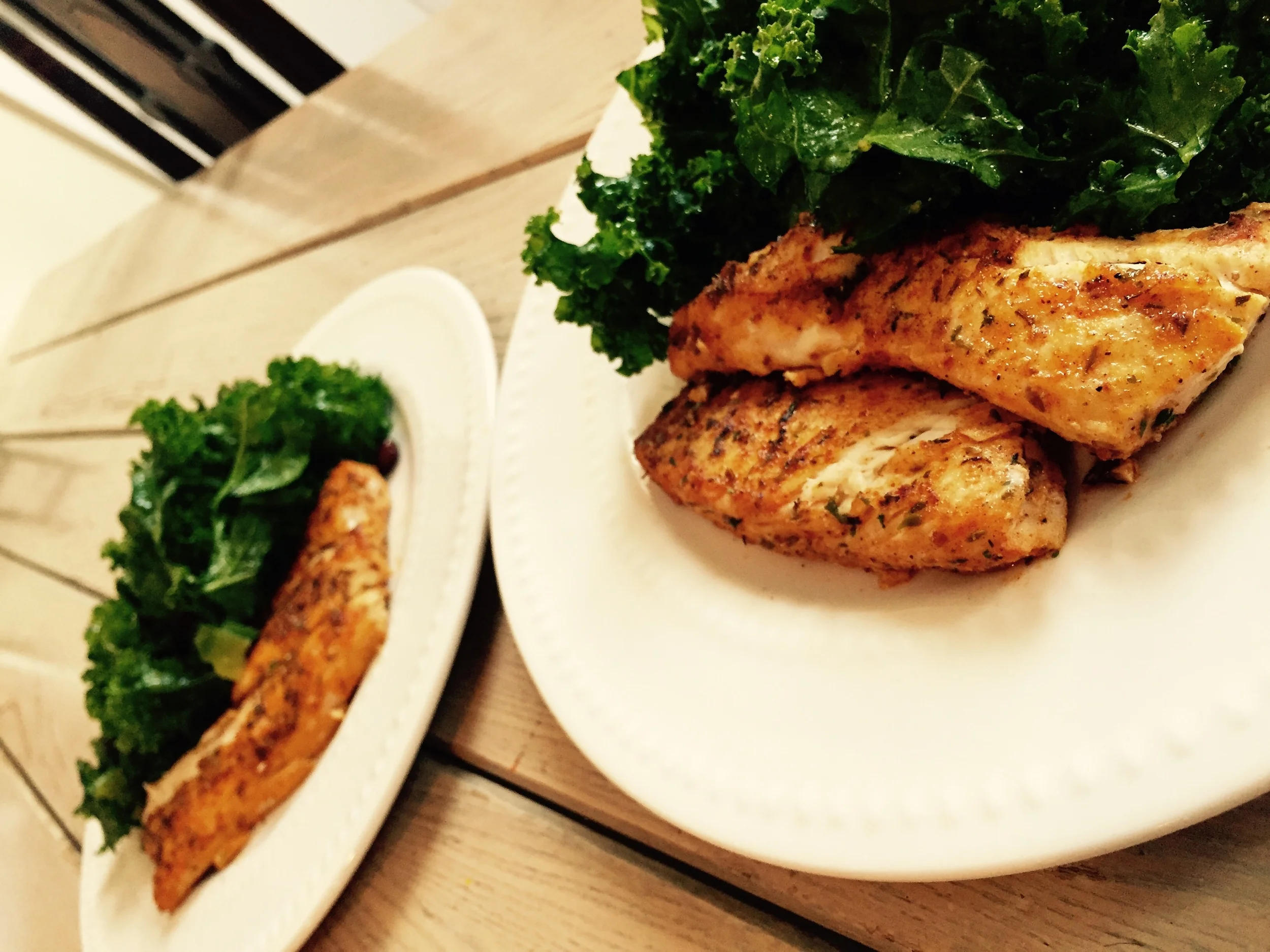
Weight Loss Recipe: Blackened Mahi with a Southwestern Kale Salad
As a personal trainer, I will always push you to eat healthy meals. I want you to enjoy what you are eating, too. A weight loss misconception is that every meal must be salad. You might be surprised when you learn that many easy, healthy recipes actually can be more interesting and taste great.
On Sunday, Sammy found these two great recipes and made our lunch a midday treat. It achieved my personal training nutrition focus (veggies, fish, and beans) and tasted great! Give it a try!
SOUTHWESTERN KALE SALAD
3 tablespoons fresh lime juice
4 tablespoons extra virgin olive oil canola oil
1 tablespoon honey
1 teaspoon ancho chili powder
1/2 teaspoon ground cumin
1 garlic clove, minced
1 jalapeño, seeded and finely diced
3 ears of corn, kernels removed from cob
1 green bell pepper, small dice
1/4 cup red onion, small dice
Kosher salt
Freshly ground pepper
2 bunches of kale, rinsed and dried, ribs and stems removed, leaves thinly sliced crosswise
One 15-ounce can of black beans, rinsed and drained
1. Whisk together the lime juice, three tablespoons canola oil, honey, chili powder, cumin, garlic and jalapeño. Season with salt and pepper and set aside.
2. In a large sauté pan, heat one tablespoon of the oil over moderate heat. Add the corn, red bell pepper and onion and sauté for two minutes. Season with salt and pepper, remove from the heat, and set aside.
3. In a large bowl, toss the kale with the vinaigrette, cooked vegetables and black beans and serve.
****Courtesy of FoodandWine.com
BLACKENED CAJUN MAHI
Spice Rub
1 teaspoon dried parsley
1 teaspoon dried oregano
1 teaspoon dried thyme
1 teaspoon smoked paprika
½ teaspoon cayenne pepper
½ teaspoon onion powder
½ teaspoon garlic powder
½ teaspoon salt
½ teaspoon pepper
Mahi Mahi
(2) 6-oz wild caught Mahi Mahi** filets, thawed and patted dry 1 tablespoon coconut oil
1. Make the spice rub by combining all the dried spices on a plate and stirring with a fork to combine.
2. Heat a medium size skillet over medium high heat. While it is heating up, dredge the fish filets in the spice rub and coat evenly. When the pan is warm, add the coconut oil, and cook the spice rubbed fish until cooked thru. Cooking time will depending on the thickness of your fish. Typically about 3 to 4 minutes per side. Serve warm.
****Courtesy of TasteLovely.com
DENVER PERSONAL TRAINING STUDIO
Michael offers personal training to Denver residents who want to meet at the 2460 W 26th Ave studio….or in their homes throughout LoHi (80206), LoDo (80202), RiNo (80216), Washington Park (80209), Cherry Creek (80206, 80209, 80243, 80246, 80231), Highlands (80202, 80211, 80212), and Capitol Hill (80203, 80218). Michael also offers experiences with a personal trainer in Cheesman Park (80218, 80206), Jefferson Park (80211), and Sloan's Lake (80204, 80212).

36 Ways to Fulfill Your Protein Needs While Losing Weight
Over the last 15 years as a personal trainer, my personal training clients have been searching for other ways to integrate protein into their weight loss diets without adding more animal products.
Here is a list of non-animal proteins that you should include in your diet to help you reach your weight loss and personal training goals. I've also included several combinations to find the nutritional balance you're looking for.
Legumes:
Beans (Black, Broad, Kidney, Lima, Mung, Navy, Pea, and Soy)
Black-eyed peas (Cow-peas)
Chickpeas (Garbanzos)
Lentils
Peanuts
Peas
Seeds:
Pumpkin
Seed sprouts (Alfalfa seed, Lentils, Mung beans, Peas, and Soybeans)
Sesame
Squash
Sunflower
Nuts:
Almonds
Brazil nuts
Cashews
Coconut
Filberts (Hazelnuts)
Macadamia
Peanuts
Pecans
Pine nuts
Pistachio
Walnuts
More plant-based foods to consider:
Quinoa
Buckwheat
Hempseed
Chia
Spirulina (with nuts)
Combination sample 1 for a meal: Nuts and seeds plus legumes
-Roasted nuts, seeds and peanuts
-Lentils and almonds (Lentil soup with a serving of almonds on the side)
-Bean curd with sesame seeds
-Hummus (chickpea and sesame paste)
-Bean soup with sesame meal
-Trail mix with toasted soybeans and pumpkin seeds
Combination sample 2 for a meal: Corn plus legumes
-Pinto beans in a corn tortilla
-Tortillas with refried beans
-Roasted corn and butternut squash
DENVER PERSONAL TRAINING STUDIO
Michael offers personal training to Denver residents who want to meet at the 2460 W 26th Ave studio….or in their homes throughout LoHi (80206), LoDo (80202), RiNo (80216), Washington Park (80209), Cherry Creek (80206, 80209, 80243, 80246, 80231), Highlands (80202, 80211, 80212), and Capitol Hill (80203, 80218). Michael also offers experiences with a personal trainer in Cheesman Park (80218, 80206), Jefferson Park (80211), and Sloan's Lake (80204, 80212).

Q&A: What’s the biggest change you’ve made in your personal training business?
In 2005, I began my personal training company to rule the fitness world (or at least Chicago). I wanted a 10,000-square-foot personal trainers' studio and a handful of fitness instructors working for me. The name of that project was Revival Fitness Personal Training, built to bring the success and happiness I've always desired.
Little did I know that the root of my desire could be achieved in far simpler measures. I needed to change my personal training business plan.
I pursued this career as a personal trainer in Chicago because of my interest in human behavior, the physical body, and the necessary steps to help people achieve their best selves. As I expanded my business, my focus quickly shifted to managing a staff of personal trainers, assistants, and interns. While they were unbelievable employees, my time was dedicated to administrative tasks, marketing, and troubleshooting. I found myself dissatisfied with this business path. I was juggling a workload that caused me quite a bit of stress and drove me further from my purpose: Helping people understand themselves and others.
Most pundits will tell you a business is unsuccessful if it isn't growing exponentially. What if this growth compromises your initial philosophy? Why expand a garden if it already grows enough fruit? Although I invested a lot of money in my original path, there wasn't anything more satisfying than when I adapted my plan to reflect what it was originally based on: My interaction with personal training clients.
With this being said, I am no longer worried about expanding the size of my company. Instead, I am focused on the needs of my clients again. I meet with them weekly without the distraction of managing other people (besides myself).
While there are limitations in growth as a one-person company, I can never trade the fulfillment I feel daily in this new plan. Although I will always encourage people to pursue their dreams, I will also encourage them to constantly check in with themselves and their path to determine if they're truly carving out the most ideal life.
DENVER PERSONAL TRAINING STUDIO
Michael offers personal training to Denver residents who want to meet at the 2460 W 26th Ave studio….or in their homes throughout LoHi (80206), LoDo (80202), RiNo (80216), Washington Park (80209), Cherry Creek (80206, 80209, 80243, 80246, 80231), Highlands (80202, 80211, 80212), and Capitol Hill (80203, 80218). Michael also offers experiences with a personal trainer in Cheesman Park (80218, 80206), Jefferson Park (80211), and Sloan's Lake (80204, 80212).
Personal Trainer Wisdom: 1 Fitness Myth Unraveled
I've been personal training over the last 10 years and I'd like to say that I've seen it all...but I know that this isn't true. Because of Women's Health, Self, and other fitness magazines, I'm continually entertained each day in my personal trainer's studio. I don't blame the clients or members for their crazy approaches, though. I blame mixed messages, misguided personal trainers, and unscientific advice from the media and the rest of the internet world.
If you're lucky you have an experienced Chicago personal trainer to guide you through your transformation process. If you don't, you may want to read the truth beyond the following myth:
No pain no gain.
This motto was perfect in the 1980's. The world was too busy watching Knight Rider and Miami Vice to focus on what their bodies really need. You didn't get a great workout unless you couldn't walk or sit for several days.
Now it's 2015 and obesity has increased threefold since the 1970's and every personal training client goes to the gym dealing with one injury or another. Why? We've been taught to push our boundaries and feel the pain so that you know the muscle was worked!
Your muscle was certiainly worked. In fact, it was torn and your muscle will shorten to repair itself as a result. As a defense, you will experience inflammation in that area too. Have you ever noticed a body builder who can't touch the middle of his back (how does he shower???)? Sure he has incredible muscle definition. On the other hand, his body is a big rubber band ready to snap.
While microtears are important for muscle growth and definition, too much can lead to inflammation, scar tissue, reduced flexibility, or a serious long term injury. Yes, you should challenge the muscle during your fitness sessions....but within your comfort zone. You want to break down the muscle so that it rebuilds itself stronger.
If you notice any pain, discomfort, or limited range of motion, though, you should discontinue the movements and focus on other areas. Your body is telling you that it had enough and it needs to repair. The longer the repair period, the greater risk of injury in its most weakened state. Let's keep it short and sweet.
Contrary to what most so-called experts and Chicago personal trainers say, you don't need to be sore the next day (and now you know why). Start changing your mental approach to fitness today.

Are You Unhappy at Work? You'll Want to Read This...
People inherently want to contribute to something greater —not just quarterly goals. You want to know that your efforts in the office will help the company grow and create innovative products. You want to know that you are a piece of something bigger —an idea. You’re unhappy, and you feel like a pawn on someone else's board, with no feeling of satisfaction in your daily role.
If this is true, are you ready to adapt however and wherever needed and accept the consequences? Are you prepared to take control over your happiness at work?
Take the time to consider your role. You’re subject to the quarterly goals and billable hours that your managers demand of you. You feel the need to meet their bottom line, otherwise your job is in jeopardy.
Eventually, your passion for the content and type of your work disappears. You feel disassociated with your professional life. Before you know it, this unhappiness and lack of fulfillment carries over to your personal life. You react to loved ones with anger or isolation while dealing with work pressures. You dread the repetition of an unchangeable life each morning.
Can you release your emotional investment in this job for happiness elsewhere? Will you sacrifice many years of law school or graduate school and loans for a more gratifying job or position? Will you accept a job that pays less? Will you sacrifice possessions for pure happiness?
Most of you will say no and stay in your current job. Is this driven by the fears or insecurities that we discussed earlier? Possibly. But you may have other reasons: you don’t want to sacrifice your income for possessions that you love, or you must take care of your family.
Have you ever looked at other options? Have you ever stepped out of your boundaries and pursued something out of the familiar? Have you ever taken a chance?
Let’s accept that finding a new job or starting a new career is difficult. Can you find new satisfaction with the work instead? If you are a manager, you may be able to restructure your department to create a more positive and fulfilling atmosphere. In fact, you may have the power to redefine your position in a way that keeps you productive while keeping you in line with the responsibilities you enjoy the most.
If you’re not a manager, you probably can't change the company structure around you —only yourself. The first step is realizing this and reexamining your current position. You may realize that the traditional business culture and mindset is the cause of your unhappiness.
For example, your managers may be steering you away from creative or extraordinary thinking, enticing you with bonuses and other carrot-and-stick rewards in order to meet the bottom line goals. As a result, you lose focus on the "now" while trying to meet the demands of someone else. You also lose focus on your own needs while you fulfill your manager's requirements. It's a pattern of living that you might accept despite your unhappiness.
It’s not your fault. Our education system is partly responsible for these patterns. Teachers valued end results over effort and creativity. They constantly pushed you toward a particular goal without the opportunity for individuality and ownership. Your teachers encouraged "standardized thinking": a single/non-creative thought process fostered and structured by someone else.
If you can’t leave your job, how will you change this? How will you take control over your position and reshape it in a way that brings fulfillment to you? Should you reevaluate your role in the company? Is it time to change or redefine your position so that it fosters autonomy? Is it time to request a position that values your creativity and judgment? At what point do you take responsibility for your contributions to work?
I followed this advice for several years while dancing through jobs as a restaurant server, cook, and teacher. Redefining your job status isn’t easy. I was constantly redefining my position in someone else’s company, and I never felt fulfilled. I was meeting someone else’s quota and knew I could’ve done more in that position. Ironically, when I asked to “do more”, managers always encouraged me to step back. They wanted to maintain the “status quo.”
I aggressively pursued careers related to my degrees (psychology, sociology, and social science secondary education), but I felt like something was missing. I shook up the pieces of my life again and finally found the combination that worked for me at the age of 26 (while most of my friends started their careers around 21/22). I was eager and ambitious to find and shape the best life for me. I could’ve settled for the positions related to my degrees, but I didn’t. I wanted something better and wouldn’t give up fighting for it.
I began a business during my last three months of waiting tables and substitute teaching. By the end of that period, my personal training business was my only focus. Over nine years later, I still own my business and feel fortunate to have had the UNBELIEVABLE support of my personal training clients. They gave me the option to have the perfect job for me, and I’m forever indebted.
Although my job wouldn’t exist without their support, I couldn’t have done this unless I BELIEVED I could do it and made the decision to take control over my situation and make it happen.
I’m not asking you to quit your job and start a business. It isn’t for everyone. I’m asking you to take the pieces in your hand (life) and shake them up. If you fail in your first pursuit, shake again and again and again until you find your it. I want you to want something better, and never give up fighting for it. Take control over your career now and shape your position into a fulfilling one.
Reflection Section:
1.) Awareness: Do you feel a sense of fulfillment in your professional role? What contributes to this feeling and do you believe that you have the control to change it? Why or why not?
2.) Acceptance: Are you willing to accept that your professional life isn’t perfect right now, but that you have the power to modify the situation or change your perspective?
3.) Adaptation: What new strategies can you possibly utilize to take control over your professional life? How can you shape a fulfilling professional position?
The Secret to Losing Weight
(excerpt from my self-improvement book Redefine Yourself: The Simple Guide to Happiness)
If you want change to stick, it needs to become a habit. Especially when it comes to weight loss.
Habits are highly ingrained, learned behaviors. They are your subconscious' autopilot reaction. In a Duke University study, researchers found that 40% of our daily actions are habits. Your brain loves to multitask and will do everything in its power to build an association (consciously or otherwise). It wants to run on autopilot so that it can do the million other things it needs to do.
More times than not, your subconscious puts your keys in the same place and help you drive your proverbial car in the constant rush of your life. Habits are essentially the underlying force of your routines and take very little effort to carryout. They maintain the order in your life!
What if they are destructive, though? What if you recognize these bad habits and try to change them, but repeatedly fail? What if you want to lose weight but still grab a snack before bed like you normally do?
I wish we could just start a new routine and call it quits on the bad habit. Since the brain depends on repeated occurrences—or the value of the routines and rewards—a process must take place before this change occurs. The brain needs to know that a new habit is equally or more important.
A habit is a mental sequence that must be triggered to start. The brain must recognize a cue—an environmental signal for action based on repeated occurrences. It doesn’t want to waste its time on routines that won’t lead to rewards. It builds an association between a cue and helps develop a routine in hopes of a predictable reward.
If carried out repeatedly, the strength of a bad habit is probably too powerful to be extinguished quickly. You may figure out the cue to this habit and still succumb to the same destructive habit. It takes practice and your brain must be taught a new connection between the cue, the routine, and the reward. The mind doesn’t want to lose its prized reward, and it will keep leading you back to what it knows best —your habit!
How do you change something so ingrained that it happens subconsciously, and that will try to undermine your individual efforts to alter it?
The answer lies in the cue and reward. Most people try to erase the whole formula and completely remove themselves from the habit (and not just the bad routine).
Unfortunately, the reward and cue are too ingrained in us to simply extinguish instantly. Even if we try to escape it, there may always be something in our environment that triggers our routine. After all, we want our reward!
In the book The Power of Habit, the author Charles Duhigg wonderfully illustrates our need to trick ourselves into new habits. Remember metacognition? We need to think about our thinking to keep ourselves in check. When we change our habits, we must become the Wizard of OZ and unnoticeably make minor modifications behind our unconscious “back."
We need to insert a new routine, keep the old cue, and deliver the old reward.
For example:
You lose your focus at work every day at 3 p.m. You usually have stared at your computer screen for the last two hours and the words are starting to look like alphabet soup.
At that point, you get up and walk to the office kitchen where you indulge in the morning’s leftover donuts (even though you’re not hungry). You’ve done this for two years, and now you’re ten pounds heavier. In the wake of New Year’s Eve, you are ready to shake off the weight. Despite your best efforts, your 3 p.m. walk to the kitchen doesn’t change.
In this example, you need to break down the formula for your donut-to-mouth habit:
3 p.m. + Go to the kitchen and grab the donut that will make you overweight = Break from work
(Cue) + (Routine) = (Reward)
Take notice that the real reward is the break from work, not stuffing yourself because you’re hungry (since you just ate lunch two hours ago).
In our example, we need to change the routine of going to the kitchen as our first step. You can decide to work through your 3 p.m. break, but you and I both know that you would stare at the clock for an hour thinking about that donut.
Keep your break. Instead of eating, though, visit a colleague and discuss the latest episode of your favorite show or that football game. Sit in another part of the office and read a magazine. Do whatever you want—besides eating—to give yourself the real reward: a break from your tedious work.
Repeat this sequence until you don’t notice anymore. At first, it will be a fight with your subconscious to go the kitchen. You must resist. Remind yourself that you’re not hungry and that you just want a break. Find something else to do.
Although the results may vary, don’t be discouraged. Your self-talk will override your old, bad habits eventually. As you unravel these habits, you will create new ones by introducing new approaches to life.
Reflection Section: Answer these questions to begin your journey!
1.) Awareness: Describe a habit you want to change. How does this habit affect you? What are the benefits of changing this habit? What are the obstacles to changing this habit?
2.) Acceptance: Can you accept that you’re not perfect and that it will take time, effort, and patience to change this habit?
3.) Adaptation: How will you change the present routine to achieve your goal? Break down your habit into the following parts (use the donut example as a reference).
· Cue:
· Routine:
· Reward:
******Check out my new self-improvement book Redefine Yourself: The Simple Guide to Happiness on Amazon!!!!!!
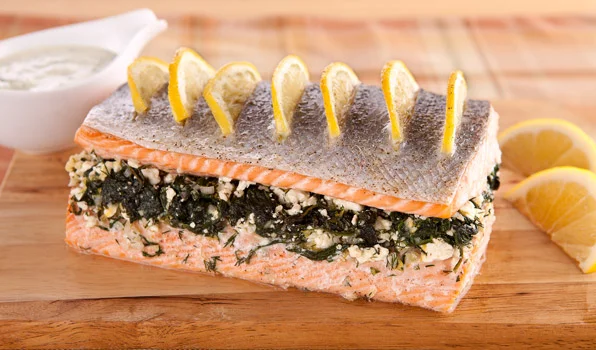
The Best Spinach Stuffed Salmon Weight Loss Recipe Ever!
Three months ago I received the tastiest birthday gift from my Greek personal training client, Renna: Spinach Stuffed Salmon! This is, by far, the best salmon dish I've ever tried, and I think you'll enjoy it too! Try this weight loss recipe and let me know what you think!
Ingredients:
- 2 pieces of Wild Alaskan Salmon with the skin (No farm-raised or Atlantic Salmon please/Skin is necessary to retain moisture)
- 1 bunch of chopped spinach
- 1 bunch of finely chopped dill
- 3 green onions finely chopped
- 1 tbsp of crumbled feta cheese (less calories and fat if you leave this off)
- 1 whole lemon
- salt
- pepper
- oregano
- olive oil
The Process:
1. Preheat the oven at 365 degrees and mix the spinach, dill, onions, and feta cheese in a bowl.
2. Pour a little oil on a pyrex pan and place 1 piece of salmon on it (add salt and olive oil to taste).
3. Place the spinach mixture onto the salmon and add the second piece on top like a sandwich (Layers: salmon/spinach mixture/salmon).
4. Tie the stuffed salmon with string on both ends and brush olive oil, oregano, and lemon juice on top.
5. Bake covered for 30 minutes and uncovered for 15 minutes. Check with a fork (To make sure you're not overcooking it!).
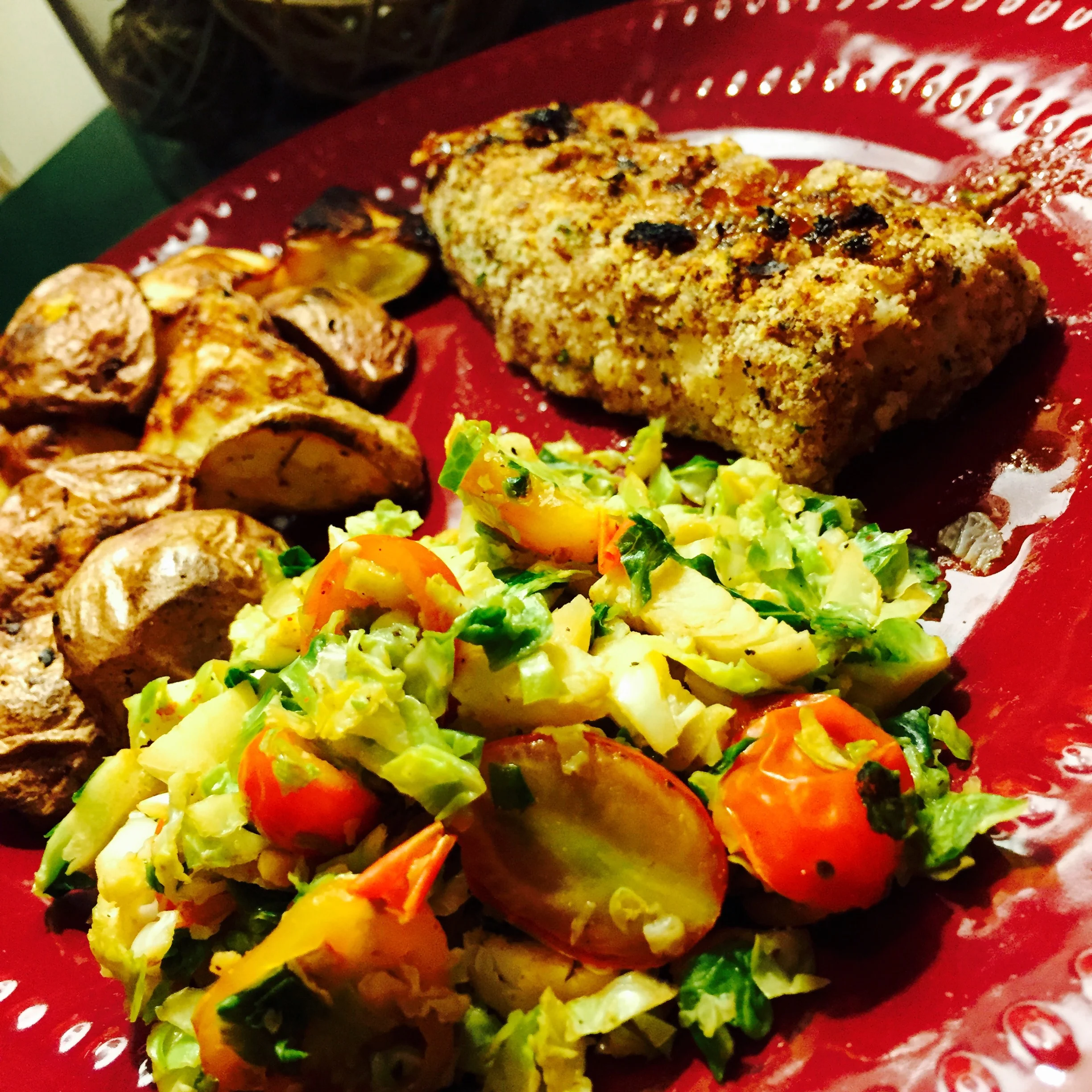
Weight Loss Recipe: Almond Crusted Mahi with Brussels Sprouts and Roasted Garlic Potatoes
I can never eat enough fish, and Trader Joes makes it easy for me! On Sunday, Sammy and I made almond crusted mahi with brussels sprouts and roasted garlic potatoes, and you should too! Check out the simple weight loss recipe below...your Chicago personal trainer will approve!
******
Preheat the oven at 450 degrees and toss a 1/2 lb of quartered red potatoes in a ziploc bag with 1/2 teaspoon of extra virgin olive oil, 1/2 teaspoon of minced garlic (from jar), and salt and pepper (to taste). Place the potato wedges on an oiled pan and heat them in the oven for 40 minutes. Flip the potatoes every 10 minutes.
Meanwhile, warm a 1/4 teaspoon of minced garlic in 1 tablespoon of extra virgin olive oil in a saute pan. Then, add a layer of pre-chopped brussels sprouts and halved grape tomatoes. Season with salt and pepper and cook over medium heat. Stir frequently until you reach a desired char.
During the last 10 minutes on the potatoes timer, slice 1 lb of thawed mahi (found in the Trader Joes frozen section) into 1 inch strips and toss (1 at a time) into a ziploc bag with 1 cup of almond flour and a blend of salt, pepper, and garlic powder. Place the strips on an oiled pan and cook them in the broiler (low heat) until the internal temperature reaches 170 (5-7 minutes).

The Secret to Losing Nearly 27 lbs!
What's the secret to losing nearly 27 lbs? It's definitely not eating ice cream all the time (at least my personal training client, Tim, will tell you this). About 5 1/2 months ago, he began the arduous journey to transform his life. Since then, Tim has lost 26.7 lbs and 6.1% body fat, and looks completely different! What's his secret? I'd love to tell you that it was primarily Tim's efforts in the gym personal training...but I would be lying.
While fitness helps burn some calories and sculpts your body, the weight loss key is nutrition. Tim's dietary regiment was simple, consistent and effective. He typically ate at the same time each day and indulged in the same foods as well. While Tim occasionally cheated, he always returned to the foundation of his program: limited to no grains, dairy, alcohol, refined sugars, red meat, and processed foods. Translation: 70% of Tim's diet composed of vegetables, fruits, and other nutritionally dense foods (sorry Atkins lovers). He also maintained his caloric amounts between 1300-1700 daily.
Don't believe Tim's success was mostly diet? Between January 9th and March 3rd, he lost 5.9 lbs and 1.7% body fat and rarely made it to the gym. In fact, Tim describes this period as the most challenging and stressful time of his life. His nutritional regiment was the only thing consistent during his 13 hour workdays/weekends.
I'm proud to say that Tim has fully achieved his weight loss goal (177-180) and is now focused on losing another 1-2% body fat. Take a look at his trends below! What do you notice?


Interesting chart about Tim's body fat loss trends....
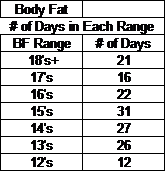
Based on this data, Tim typically stayed in the same body fat range for nearly 3 weeks before jumping to the next percent. His body adapted in a sustainable way for long term results.
Overall Assessment
As you might have noticed on Tim's charts, his weight and body fat fluctuated occasionally since October 5th. While this is true, the overall pattern trended downward. Life isn't perfect and Tim's diet wasn't always perfect either. While he periodically cheated in his diet, he always returned to his consistent regiment.
Now it's your turn. Experiment and determine your sensitivity to the foods mentioned above. Find the right nutritional combination for your body and start tracking.


Top 15 Travel Tips That You Need to Know
Travel tips from a personal trainer in Chicago? You bet! I've personal trained clients from all over the world for nearly ten years, and I've learned quite a bit. Keep in mind these tips for a trip of a lifetime!
1.) Offline city guides for your phone: Download the free Tripadvisor and Ulmon phone apps for offline GPS with city maps from across the world. Both apps provide reliable reviews for restaurants, too.
2.) Cheaper roundtrip flights based on seasons: Book flights a week before your destination’s typical tourist season. If you’re willing to settle for a 3-5 degree temperature difference, you can save as much as 40% on airfare and lodging expenses by booking your trip a week earlier than the start of the tourist season. Recently, I booked a trip to Ireland for $500 roundtrip on April 30th. The same flight was $900 seven days later!
First, you’ll want to investigate the monthly weather and events in the destinations you choose. Next, visit https://www.google.com/flights/ to select your estimated arrival and departure dates. Once you reach a list of prices for a roundtrip ticket, click on your departing city date again. You’ll find a calendar with a lowest fare price on each date for the next 6-9 months. Choose the appropriate date and price for travel and examine the new list of roundtrip flights. Continue this process until you find the flight plan most ideal for you.
3.) Cheaper roundtrip flights based on proximity: While we wanted to visit Ireland, the focus of our trip was Spain. The airfare to Barcelona was $1300 on April 30th. We chose to purchase $500 roundtrip tickets to Ireland and booked another flight to Barcelona for the following day. The total cost for a roundtrip ticket to Spain from Dublin? $320 (taxes and baggage fees included). Overall, our total cost for the airfare was $820! We saved nearly $500 and will visit two countries in one trip! Learn the most efficient way to do this by reading the recent Huffington Post article 6 Google Flights Tricks That Are Better Than Any Travel Agent - http://www.huffingtonpost.com/2015/03/05/google-flights-ticks-better-travel-agent_n_6783692.html. You’ll need to read their other Google Flights tips too!
4.) Discount lodging: Book your next stay at an airbnb.com apartment instead of a hotel. On average, you can save up to 50% by renting an apartment instead. Choose an apartment with at least seven reviews in a neighborhood you desire for a complete cultural experience. You should ask yourself the following questions when you book an apartment based on the reviews:
*Does a reviewer mention that the location is central or close to any landmarks? If not, it probably isn’t. Determine the area that’s best for you based on travel time and access to public transportation.
*Does a reviewer mention street or neighbor noise? Even if only one person says it, you’ll probably need earplugs.
*Does more than one reviewer mention dirtiness? Most renters will treat the apartments like their homes (which could mean a number of things). If more than one person mentions that the apartment was unkempt when they arrived, you should probably question whether or not the owner truly cleans it (despite the fee).
One last thing...do you want a $25 credit towards your next booking on airbnb.com? Go to www.airbnb.com/c/mmoody17?s=8 and signup today.
5.) Credit cards with no foreign transaction fees: Typically, you’re charged a 3% foreign transaction fee on your international credit card purchases. Avoid this by using one of the following credit cards:
- Chase Sapphire Preferred Card
- BankAmericard Travel Rewards Credit Card
- Discover It
- Capital One Spark Miles Select for Business
- Capital One Quicksilver Cash Rewards Credit Card
6.) Basic international plans for your cell phone: At one time in the world, pay phones were scattered throughout cities. Now, you’re reliant on your cell phone. If you’re like most travelers, you may decide against an international plan and rely on wireless internet access in random cafes. Through experience, finding this access isn’t as easy as it sounds. In the United States, you’ll find internet access in most coffee shops. In Europe, you’re lucky if you find the same access. Once you do, it isn’t always free either. With this being said, save yourself the stress and purchase the most basic international plan from your phone carrier. Although the minutes and data package won’t offer you much, it will be useful when you can’t find your travel partner or wireless internet access.
7.) European Union Value-Added Tax: Did you know that you can get a 15-25% refund when your international purchase is above a particular amount? Check out Rick Steves article How to Claim VAT Refunds to find out how (https://www.ricksteves.com/travel-tips/money/vat-refunds).
8.) Free international phone calls and text messages: Download the Whatsapp and Viber phone apps for free international phone calls and text messages. Only two requirements:
- You need wireless internet access.
- The person you are texting or calling must have the same phone app.
9.) Schedule a food or bike tour for your first day in a city: What’s the best way to capture a glimpse of the major sites or culture of your destination? Schedule a food or bike tour. During these four-hour tours, you’ll get a great taste of the city (pun intended). Sammy and I can’t say enough about our bike tours in Paris and Rome. Not only did we see the major sites, but we traveled down interesting streets that we most likely would’ve avoided. At the closing of each tour, we reviewed our stops and chose the sites we wanted to revisit for an extended stay. This is an excellent way to help you decide on how to spend the remainder of your trip. Visit www.tripadvisor.com for tour reviews in your destination city.
10.) Renew your passport six months before the expiration date: Have you seen the lines at the post office lately? If you have, you probably know that those people are submitting their passport applications. Most likely, they need their passport as soon as possible. While you can expedite the application process of your passport, the post office doesn’t guarantee it’ll arrive before your departure date. Save the time and stress by renewing your passport six months before its expiration date. You won’t need to spend the extra $60 to expedite the passport, and you can choose a day and time to visit the post office without lines. By the way, the best time to visit the post office is thirty minutes after they open and between two and four o’clock.
11.) Use the name on your state issued id or passport when booking your airfare: You’ll need an exact name match on your airline tickets and state issued id or passport at the airport. Nicknames aren’t accepted (i.e. Sammy instead of Samantha). If rejected at the gate, it may cost you up to $200 to change the name on the airline ticket.
12.) Sign-up for airline newsletters: Airlines offer multiple one-day specials throughout the month that you can’t pass up. Frontier Airlines is notorious for their $29 one-way flight specials. If you have flexible travel plans, you can take advantage of cheap flights. Sign-up for the following airline newsletters:
- Frontier Airlines
- Southwest Airlines
- Virgin Airlines
- Spirit Airlines
- Norwegian Air
- Lufthansa
- British Airways
- Virgin Airlines
13.) Book tours ahead of time: You should allow enough freedom in your travel plans to explore your destination. Embrace the unknowns and indulge in the local culture. If you wish to see the most popular tourist sites, though, book your tours ahead of time. You’ll avoid waiting 1-2 hours in line by purchasing in advance. Visit the websites of the museums and historic sites you want to see 2-4 weeks before your arrival and choose the time and day that’s best for you. It’s worth it!
14.) Avoid many of the international ATM fees: Considering that most businesses accept credit cards, a traveler doesn’t need to carry a lot of cash. Nevertheless, it may still be necessary, and you’ll most likely need an ATM. Typically, your bank will charge you a $2-5 ATM fee plus 1-3% foreign transaction fee. How do you avoid this? Check out http://www.schwab.com/public/schwab/banking_lending/checking_account. They offer a high yield checking account with no ATM or foreign transaction fees and up to 6 monthly withdraws.
15.) Choose your airline seats wisely: Do you always book your seat next to a continuously flushing toilet on your international flights? Visit http://www.seatguru.com/ and choose your seats based on proximately to the bathrooms. Also, avoid sitting in the last row (the seats don’t recline).
******Check out my new self-improvement book Redefine Yourself: The Simple Guide to Happiness on Amazon!!!!!!
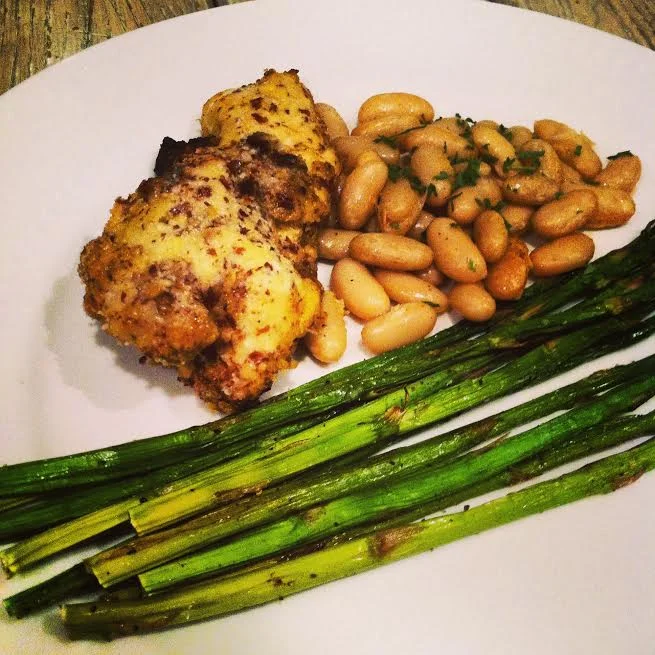
Weight Loss Quick Supper: Cajun Almond Crusted Chicken with Asparagus and White Beans
No time for dinner? Make this simple, yummy weight loss recipe in less than 20 minutes (personal trainer approved!). Preheat the broiler on low and toss 2 lbs of chicken breast (sliced into strips) in a ziploc bag with 1/4 teaspoon of extra virgin olive oil, 1/4 teaspoon of cajun seasoning, and a 1/2 cup of almond flour. Place the chicken strips on a thinly oil baking sheet and into the broiler until the internal temperature of the chicken reaches 175 degrees (check frequently).
Meanwhile, warm 1 tablespoon of extra virgin olive oil in saute pan and add a layer of asparagus. Season with salt, pepper, and garlic powder and cook over medium heat. Flip the asparagus frequently until you reach a desired char.
Finally, drain and rinse a can of white beans. While warming the beans on low heat, add 1/4 teaspoon of extra virgin olive oil and season lightly with black pepper and cajun seasoning. Cook for 5 minutes while stirring frequently.
******Check out my new self-improvement book Redefine Yourself: The Simple Guide to Happiness on Amazon!!!!!!
Self-improvement book by Chicago personal trainer Michael Moody

You Won't Believe What's in These Girl Scout Cookies!
Tis' the season for dirty snow, frigid temperatures, and a blizzard of girl scout cookies! While you secretly stash your coveted treats, you should know what these bits of sweet goodness really have in store in for you. I've captured the three worst cookies from The Best and Worst Girl Scout Cookies article on Eatingwell.com. Check out the full article to figure out how much sugar, calories, and saturated fat you'll need to burn off while meeting with your Chicago personal trainer. My recommendation: Eat one serving and run away.

Cookies your personal trainer in Chicago will tell you to run away from.
Samoas
Serving size = 2 cookies
Nutrition Information per serving: 140 calories (70 calories per cookie), 7 g total fat, 5 g saturated fat, 0 g trans fat, 55 mg sodium, 19 g total carbohydrate, 1 g fiber, 10 g sugars, 1 g protein.
****My absolute favorite cookie. I can't buy these cookies because the box requires me to eat them in one sitting. Evil. Pure evil.

This cookie will tag pounds on you when consumed in large amounts.
Tagalongs
Serving size = 2 cookies
Nutrition Information per serving: 140 calories (70 calories per cookie), 9 g total fat, 5 g saturated fat, 0 g trans fat, 95 mg sodium, 13 g total carbohydrate, <1 g fiber, 7 g sugars, 1 g protein. Though these cookies are labeled as delivering 0 grams of trans fat, the ingredient list contains partially hydrogenated oil.
*****Sorry, peanut butter doesn't make this delicious cookie healthy for you.

Nice try. Thin Mints don't lose any saturated fat when frozen.
Thin Mints
Serving size = 4 cookies
Nutrition Information per serving: 160 calories (40 calories per cookie), 8 g total fat, 5 g saturated fat, 0 g trans fat, 120 mg sodium, 22 g total carbohydrate, <1 g fiber, 10 g sugars, 1 g protein. The Thin Mints ingredient list includes partially hydrogenated oil, despite being labeled as containing 0 grams of trans fat per serving.
******Check out my new book Redefine Yourself: The Simple Guide to Happiness on Amazon and other online booksellers March 2nd!!!!!!
Self-improvement book by a personal trainer in Chicago

Weight Loss Dinner: Chicken Shawarma with Spinach and Veggie Slaw
After two and a half years of dating, I finally realized that I'm the sous chef in the kitchen. Here is last night's tasty Mediterranean-influenced weight loss dinner from Chef Sammy-my personal trainer in the kitchen! Remember to add your baby spinach and favorite hummus to the plate.
Ingredients for Chicken:
1 lb boneless skinless chicken breasts (2 large breasts)
1 lb boneless skinless chicken thighs (4 large thighs)
6 tbsp extra virgin olive oil, divided
2 tsp cumin
2 tsp paprika
1 tsp allspice
3/4 tsp turmeric
1/4 tsp garlic powder
1/4 tsp cinnamon
Pinch of cayenne
Salt and black pepper
Nonstick cooking oil spray
Directions for Chicken:
-Slice the chicken breasts into 5-6 pieces each and the thighs into 3-4 pieces each. Place them in a marinating dish or large plastic zipper bag.
-In a small bowl, whisk together 1/4 cup olive oil, the spices, 3/4 tsp salt and 1/4 tsp black pepper (if you're salt sensitive, use 1/2 tsp of salt).
-Pour the spice marinade over the chicken pieces. Stir with a spoon till all the chicken pieces are evenly coated in the marinade. Cover the marinating dish with plastic wrap, or close the zipper bag.
-Place chicken in the refrigerator and let it marinate at least 1 hour, up to overnight.
-Preheat oven to 400 degrees F. Line a baking sheet with foil. Spray the foil with nonstick cooking oil. Place the chicken pieces on the sheet, evenly spaced.
-Place the chicken in the oven. Let it roast for about 15 minutes till cooked through, turning the chicken pieces once with tongs halfway through cooking.
-Take chicken out of the oven and let it cool slightly. Use a sharp knife to slice the meat into small, thin shawarma-like pieces. Heat 1 tbsp of oil in a skillet on the stovetop over medium.
-Pour half of the chicken into the skillet and saute for 3-4 minutes till the smallest pieces of chicken turn brown and crisp. Season with additional salt and pepper to taste, if desired.
-Remove the cooked chicken from the skillet. Heat another 1 tbsp of oil and saute the remaining chicken in the same way. Serve warm.
Chicken recipe courtesy of http://toriavey.com/toris-kitchen/2012/08/chicken-shawarma/
Directions for Veggie Slaw:
-Toss a package of broccoli slaw, 12 quartered cherry tomatoes, 4 tbsp of pine nuts, 1 tbsp of rice vinegar, 1/2 of a squeezed lemon, a dash of salt, and a dash of pepper.
-Season with additional salt and pepper to taste, if desired. Serve cold.
Enjoy!
******Check out my new self-improvement book Redefine Yourself: The Simple Guide to Happiness on Amazon!!!!!!

Chicago Personal Trainer and the Self Improvement Book Redefine Yourself

Excerpt from the book Redefine Yourself: Define Your Purpose
(excerpt from my self-improvement book Redefine Yourself: The Simple Guide to Happiness)
Define Your Purpose
__________
In a business plan, we can build a structure and develop a marketing strategy but it doesn’t make sense if we never define the mission statement. What is your intent? Who is your audience?
Now is the time for you to think about your own mission statement —your purpose. It’s the underlying theme of you. It guides your behavior and reminds you when you’re steering away from it. It isn’t always perfect and is continually redefined based on your experiences.
Religious, family, societal, or personal values may define your purpose. No matter the root, though, YOU choose it. It will steer how you adapt, how you decide, how you treat others, how far you extend your boundaries, how you interact, and how you participate in the world.
The first time my friend Jenny asked me about my purpose I was speechless. I didn’t know what my purpose was, and it showed. I reflected on my life and realized how aimlessly I lived. Most experiences were just a collection of random instances that collided to create my life. Relationship. Career. Everything. It was missing a linear connection.
It only took a little investigating to learn what steered me: My interactions with people. I realized that my purpose was to guide people in their efforts to understand themselves and the world. My self improvement book Redefine Yourself and my personal training business embodies this intent, and I will continue to live my life with it in mind.
Have you thought about your purpose? We haven’t approached this question yet for good reason. You can’t build a shelter in a tornado. There was no sense in encouraging you to write a personal mission statement in an emotional funnel when you just want to find sanity outside of the storm. You can’t build a new you without the storm clearing your self-obstacles first. You need a clear vision of yourself and your direction.
Now, after countless hours of introspection and the repetitive messages in this book, you are starting to part the clouds. Determine your purpose, but be sure it’s reflective of you. You don’t have to be anyone you’re not, and you don’t have to be the person who does it all.
My great friend, Craig, shared an insight years back about volunteering. In high school, Craig volunteered at a nursing home and spent his afternoons listening to the stories of lonely seniors. With consideration of his volunteering spirit, I requested his participation in my food drive. With genuine assertiveness, Craig said, “No.”
He told me that he loves to volunteer but only prefers to work with seniors. Craig is one of the most genuine people I know, and he doesn’t have to help everyone. He’s entitled to choose to live in a way that serves his purpose.
I keep this story in mind as I live my life and you should, too. Think about your purpose, but never feel obligated to extend yourself in a way that steers you from happiness.
Reflection Section:
1.) Awareness: Have you ever thought about your purpose? What are you passionate about in your life? What is your mission statement?
2.) Acceptance: Will you accept that you may need to identify your purpose and redefine how you live your life in order to achieve it?
3.) Adaptation: Describe your purpose in a sentence or two. Reflect on your experiences. What will your legacy be? What should steer your behaviors and perspectives?
******Check out my new self-improvement book Redefine Yourself: The Simple Guide to Happiness on Amazon!!!!!!