

Personal Trainer Blog
Fitness | Wellness | Diet Self-Improvement

Health and Fitness at your finger tips
Learn fitness, healthy whole food diets, wellness, and other personal training tips/recipes from Denver's weight loss personal trainer.

How Much Does a Personal Trainer Cost in Denver? Real Pricing, Packages, and What You’re Paying For
Summary
Learn the real cost of hiring a personal trainer in Denver, including typical pricing, package structures, and factors that affect rates. Discover how professional coaching improves strength, prevents injuries, and delivers better long-term fitness results than generic gym programs.
Key Topics
Pricing: personal trainer cost Denver, personal training cost Denver, Denver personal trainer pricing
Local intent: personal trainer Denver Highlands, personal trainer LoHi Denver, personal trainer near me Denver
Pricing comparisons: personal trainer vs online coaching cost, private personal training Denver, semi-private personal training Denver

Personal Training in LoHi / Photo: Pixabay
Introduction
Hiring a personal trainer is one of the most effective ways to improve strength, prevent injuries, and stay consistent with a fitness program. But many people considering professional coaching ask the same question:
How much does a personal trainer cost in Denver?
Pricing varies widely depending on experience level, location, session format, and the level of individualized programming provided. Understanding these factors can help you evaluate whether personal training is worth the investment—and how to choose the right coach for your goals.
For people living in LoHi and surrounding neighborhoods, working with a qualified personal trainer in Denver often produces better results than following generic gym programs alone. Professional coaching helps clients develop proper technique, train consistently, and progress safely.
Table of Contents
Typical Personal Trainer Pricing in Denver
What Determines the Cost of Personal Training
What You Should Expect From a Trainer
Injury Prevention and Technique
Is Personal Training Worth the Investment?
How to Choose the Right Trainer
Frequently Asked Questions
Typical Personal Trainer Pricing in Denver
In the Denver metro area, personal training prices generally fall into several categories depending on session format and coaching structure.
One-on-One Personal Training
Private personal training sessions in Denver typically range between:
$80 – $150 per session
Several factors influence this price range, including:
trainer experience
facility costs
length of sessions
package size
additional coaching services
Private sessions provide the highest level of individualized attention. Many people choose this format because they receive direct coaching on movement mechanics and progressive overload.
People who train locally often work with personal training in LoHi, Denver, especially if they prefer a quieter coaching environment and individualized program design.
Semi-Private Personal Training
Semi-private sessions usually involve 2–4 clients training simultaneously while still following individualized programs.
Typical cost:
$45 – $75 per session
This format allows clients to benefit from expert coaching while reducing the cost of each session.
Many people find semi-private training offers an ideal balance between affordability and personal instruction.
Small Group Training
Group training classes often include 5–10 participants and typically cost:
$20 – $40 per session
While group sessions can be motivating and social, they usually follow a general workout structure rather than individualized programming.
For beginners or individuals with injury history, individualized coaching often yields safer, more effective long-term results.
2. What Determines the Cost of Personal Training?
Several important factors influence how much personal trainers charge for their services.
Understanding these variables can help you evaluate whether a training program provides real value.
Trainer Experience and Education
Personal trainers with advanced experience or specialized education often charge higher rates.
Relevant backgrounds may include:
advanced strength and conditioning certifications
rehabilitation or clinical exercise training
years of coaching experience
Experienced coaches often provide more precise programming, better exercise selection, and safer progression of training loads.
These factors can dramatically reduce the risk of injury.
For example, poorly structured training programs often lead to common issues such as shoulder impingement, lumbar strain, or patellofemoral pain syndrome. These problems are discussed in more detail in Gym Injuries and Prevention.
Individualized Program Design
A major difference between professional coaching and generic gym routines is the use of individualized programming.
A qualified trainer typically begins with an assessment that may include:
movement screening
strength testing
mobility evaluation
injury history review
These evaluations allow a trainer to build a program tailored to your body and goals.
Individualized programming becomes especially important as people age. Strength training programs designed for adults over 40 must account for recovery capacity and joint health, topics discussed in Strength Training After 40.
Session Frequency
Many people train with a personal trainer two or three times per week.
Others combine:
one weekly coaching session
independent workouts between sessions
This hybrid structure allows clients to maintain accountability while managing overall costs.
Structured progression is important regardless of session frequency.
Without progression, people often repeat the same workouts for months without measurable improvements in strength or conditioning.
3. Why Professional Coaching Improves Results
One of the primary advantages of personal training is structured progression.
Many people begin exercising with enthusiasm but gradually lose motivation or fail to progress.
Working with a professional coach provides:
structured workouts
consistent accountability
measurable progress tracking
Trainers also help adjust programs based on lifestyle demands.
For example, Denver’s altitude can influence training intensity and recovery patterns. Understanding how elevation affects exercise is important for long-term fitness success, and this is discussed further in the Altitude Workouts in Denver.
4. Injury Prevention and Proper Technique
Another important benefit of professional coaching is injury prevention.
Many gym injuries occur because exercises are performed incorrectly or because training volume increases too quickly.
Several common injuries include:
Rotator Cuff Tendinopathy
The rotator cuff consists of four muscles that stabilize the shoulder joint.
Improper shoulder positioning during pressing or overhead lifting can compress the supraspinatus tendon beneath the acromion.
Over time, this compression may lead to tendon irritation or tearing.
Proper coaching focuses on:
scapular stability
balanced shoulder strengthening
correct pressing angles
Lumbar Disc Strain
Improper lifting mechanics during squats or deadlifts can increase pressure on the lumbar spine.
The intervertebral discs act as shock absorbers between vertebrae. Excessive spinal flexion during lifting increases disc pressure and may lead to disc irritation.
Teaching proper hip hinge mechanics and core stabilization significantly reduces these risks.
Patellofemoral Pain Syndrome
Often referred to as runner’s knee, this condition occurs when the kneecap does not track correctly within the femoral groove.
Weak gluteal muscles and poor squat mechanics often contribute to this problem.
Strength training programs designed to improve hip stability and movement control can reduce knee pain and improve performance.
5. Is Personal Training Worth the Investment?
For many individuals, the value of personal training extends beyond physical fitness.
Professional coaching can lead to:
improved strength
greater mobility
reduced injury risk
higher exercise consistency
Perhaps most importantly, structured training helps people develop sustainable exercise habits that support long-term health.
For individuals with demanding careers or busy schedules, the accountability provided by a coach often becomes the key factor in maintaining a consistent fitness routine.
6. How to Choose the Right Personal Trainer in Denver
If you are considering hiring a personal trainer, several factors can help guide your decision.
Look for Evidence of Programming
Ask how workouts are structured.
Strong programs typically include:
progressive overload
structured volume management
long-term progression planning
Ask About Injury History
Experienced trainers routinely modify exercises based on injury history.
If a trainer ignores pain signals or encourages maximal effort during every session, that is a potential warning sign.
Evaluate Coaching Style
The best trainers emphasize:
technique
movement quality
gradual progression
Avoid programs that focus exclusively on exhaustion rather than sustainable improvement.
Conclusion
The cost of personal training in Denver varies depending on the type of coaching and the level of individualized programming provided.
While prices may initially seem high, professional coaching offers several important benefits:
safer strength training
improved movement mechanics
reduced injury risk
greater long-term consistency
For people who want to build strength, improve mobility, and maintain long-term health, working with a knowledgeable coach can be one of the most valuable investments they make.
Related Articles
Frequently Asked Questions (FAQ)
What is the average cost of a personal trainer in Denver?
Most private personal training sessions range between $80 and $150, depending on the trainer’s experience, facility, and program structure.
Are semi-private sessions effective?
Yes. Semi-private sessions can provide individualized coaching while reducing overall costs.
How often should someone work with a personal trainer?
Many people benefit from two or three sessions per week, though others combine coached sessions with independent training.
Can personal training help prevent injuries?
Yes. Proper technique instruction and structured progression reduce the risk of many common gym injuries.
Is personal training better than working out alone?
Many people achieve better results with professional coaching because trainers provide accountability, technique feedback, and structured progression.
Peer-reviewed citations
Bloch-Ibenfeldt M, Theil Gates A, Karlog K, Demnitz N, Kjaer M, Boraxbekk CJ (2024). Heavy resistance training at retirement age induces 4-year lasting beneficial effects in muscle strength: a long-term follow-up of an RCT. BMJ Open Sport & Exercise Medicine.
PMID: 38911477
DOI: 10.1136/bmjsem-2024-001899
Gómez-Redondo P, Losa-Reyna J, Ramírez-Vélez R, et al. (2024). Effects of supervised vs non-supervised multicomponent exercise programs on physical performance in older adults: a systematic review and meta-analysis. Sports Medicine.
PMID: 38647999
DOI: 10.1007/s40279-024-02024-1
ABOUT THE AUTHOR: MICHAEL MOODY, PERSONAL TRAINER
As an author, a personal trainer in Denver, and a podcast host, Michael Moody has helped personal training clients reach new fitness heights and achieve incredible weight-loss transformations since 2005. He also produces the wellness podcast "The Elements of Being" and has been featured on NBC, WGN Radio, and PBS. Michael specializes in strength training, injury prevention, and long-term health. He works with clients in LoHi and across Denver to build individualized training programs that improve strength, mobility, and sustainable fitness habits.
Michael offers personal training sessions in the 2460 W 26th Ave studio or in homes throughout LoHi (80206), LoDo (80202), RiNo (80216), Washington Park (80209), Cherry Creek (80206, 80209, 80243, 80246, 80231), and Highlands (80202, 80211, 80212). Michael also offers personal training in Jefferson Park (80211) and Sloan's Lake (80204, 80212).
If you're considering working with a coach, learn more about individualized programs with a personal trainer in Denver or explore personal training in LoHi Denver today!
This guide reflects training experience working with clients in Denver neighborhoods such as LoHi, Highlands, RiNo, and downtown Denver, where altitude, outdoor activities, and active lifestyles influence training program design.

Why Personal Training in LoHi Denver Gets Better Results Than Generic Gym Programs
Summary
Discover why personal training in LoHi, Denver, delivers better results than generic gym programs. Learn how expert coaching improves strength, prevents injuries like rotator cuff tears and lumbar disc strain, and accelerates fitness progress through personalized training programs.
Key Topics
personal training LoHi Denver
personal trainer LoHi
personal trainer Denver
LoHi personal training
benefits of personal training
supervised strength training benefits
injury prevention exercise coaching
strength training technique coaching
Denver fitness coaching
why hire a personal trainer in Denver
personal training vs gym workout results
injury prevention strength training coach
functional training personal trainer Denver

Personal Trainer Denver / Photo: Antoni Shkraba Studio
Introduction
Walk into any large gym, and you’ll see dozens of people following similar routines: a few machines, some free weights, maybe a treadmill session. While these programs may produce modest results, research consistently shows that structured and supervised exercise produces significantly better outcomes than unsupervised training.
For residents in Denver’s LoHi (Lower Highland) neighborhood, working with a qualified personal trainer provides a level of individualized programming, technique correction, and injury prevention that generic gym programs rarely match. Below are the key reasons why personal training in LoHi often delivers superior results.
Table of Contents
Individualized Programs Produce Faster Strength Gains
Professional Coaching Improves Exercise Technique
Supervised Training Reduces Injury Risk
Accountability Improves Consistency
Local Expertise Matters
Conclusion
Related Articles
Frequently Asked Questions
1. Individualized Programs Produce Faster Strength Gains
Generic gym programs are usually built for the “average” exerciser. They rarely account for:
training history
mobility limitations
previous injuries
lifestyle factors such as sleep or stress
Personal trainers design progressive overload programs tailored to the individual, which leads to better adaptations in muscle strength, hypertrophy, and cardiovascular capacity. Exercise science research shows that structured resistance training programs with optimized training variables—such as load, sets, and frequency—produce meaningful improvements in muscle strength and physical function compared with inconsistent or poorly structured programs. In practice, this means a LoHi personal trainer may adjust training volume weekly based on performance metrics, recovery, and biomechanics.
2. Professional Coaching Improves Exercise Technique
Many gym injuries occur because exercises are performed incorrectly. Even small technique errors can dramatically increase stress on joints and connective tissue. For example:
Rotator Cuff Tendinopathy
The rotator cuff consists of four stabilizing muscles of the shoulder:
supraspinatus
infraspinatus
teres minor
subscapularis
Poor shoulder positioning during pressing or overhead movements can create subacromial impingement, compressing the supraspinatus tendon beneath the acromion. Over time, this can lead to tendinopathy or partial tears. Proper coaching teaches:
scapular stabilization
humeral head control
appropriate pressing angles
These adjustments reduce mechanical stress on the rotator cuff.
Lumbar Disc Herniation
Improper lifting mechanics—especially during deadlifts or squats—can increase shear forces on the lumbar spine. The intervertebral discs act as shock absorbers between vertebrae. Repeated spinal flexion under load increases intradiscal pressure, which may lead to posterior disc protrusion or herniation, compressing nearby spinal nerves.
Symptoms may include:
sciatica
numbness or tingling in the legs
lower-back pain
A trained coach teaches:
neutral spinal alignment
proper hip hinge mechanics
abdominal bracing strategies
These techniques reduce spinal loading and injury risk.
Patellofemoral Pain Syndrome (Runner’s Knee)
This condition occurs when the patella does not track correctly in the femoral groove, leading to irritation of the cartilage behind the kneecap.
Common causes include:
weak hip abductors
poor squat mechanics
excessive knee valgus
A skilled trainer can correct movement patterns by strengthening the gluteus medius and teaching proper knee tracking during squats and lunges.
3. Supervised Training Reduces Injury Risk
One of the most important benefits of personal training is direct supervision. Research examining exercise programs shows that supervised training significantly reduces injury risk compared with unsupervised programs. In fact, one meta-analysis found that supervised injury-prevention programs reduced injury incidence by approximately 33% compared with unsupervised exercise routines. This reduction occurs because trainers can immediately correct:
joint positioning
lifting tempo
improper range of motion
excessive load progression
Small adjustments during training sessions can prevent repetitive microtrauma that might otherwise accumulate into significant injury.
4. Accountability Improves Consistency
Consistency is the single most important variable in long-term fitness success. Many people start gym programs with good intentions, but gradually lose momentum. Personal training provides:
scheduled sessions
performance tracking
structured progression
These elements dramatically increase adherence. Large reviews comparing supervised and unsupervised exercise programs show that supervised training yields superior improvements in physical function and well-being.
5. Local Expertise Matters
Working with a LoHi-based personal trainer provides unique advantages compared with generic programs.
Local personal trainers understand:
Denver’s altitude challenges
common movement limitations in desk-based professionals
seasonal outdoor activities such as hiking and skiing
Programs can be designed to improve:
aerobic capacity at altitude
hip and knee strength for trail hiking
stability for skiing or snowboarding
This localized approach helps residents train more effectively for the activities they enjoy.
Conclusion
Generic gym programs may provide a starting point, but they rarely deliver the same results as a structured, professionally supervised personal training program.
Personal training in LoHi offers:
individualized programming
expert coaching
injury prevention strategies
accountability and consistency
For people serious about improving strength, mobility, and long-term health, working with a qualified personal trainer is one of the most effective investments they can make.
Related Articles
Frequently Asked Questions (FAQ)
What are the benefits of hiring a personal trainer in Denver?
A personal trainer provides individualized workout programs, professional technique coaching, injury prevention strategies, and accountability that significantly improve strength, fitness, and consistency.
Is personal training better than working out alone?
Yes. Studies show that supervised exercise programs produce greater improvements in physical function, strength, and adherence than unsupervised exercise.
Can personal training prevent injuries?
Yes. Personal Trainers correct biomechanics, adjust load progression, and teach safe lifting techniques that reduce the risk of injuries such as rotator cuff tendinopathy, lumbar disc herniation, and knee pain.
Why is technique important in strength training?
Proper technique ensures muscles—not joints or ligaments—absorb training loads. Incorrect form increases stress on tendons, discs, and cartilage.
How often should someone work with a personal trainer?
Most people benefit from 1–3 sessions per week, depending on goals, training experience, and schedule.
Peer-Reviewed Citations
1. Morales-Sánchez V, Ara I, Ara I, et al. (2024). Supervised Versus Unsupervised Exercise for the Improvement of Physical Function and Well-Being Outcomes in Older Adults: A Systematic Review and Meta-analysis of Randomized Controlled Trials. Sports Medicine.
PMID: 38647999
DOI: 10.1007/s40279-024-02024-1
https://doi.org/10.1007/s40279-024-02024-1
2. Schoenfeld BJ, Orazem J, Barroso R. (2022). Muscle Hypertrophy and Strength Gains After Resistance Training With Different Loading Zones: A Systematic Review and Meta-analysis. Applied Physiology, Nutrition, and Metabolism.
PMID: 35015555
DOI: 10.1139/apnm-2021-0515
https://doi.org/10.1139/apnm-2021-0515
3. Valentin S, Linton L, Sculthorpe NF. (2024). Effect of Supervision on Exercise-Based Injury Prevention Programme Effectiveness: A Meta-analysis of Randomized Controlled Trials. Research in Sports Medicine.
PMID: 37325872
DOI: 10.1080/15438627.2023.2220059
ABOUT THE AUTHOR: MICHAEL MOODY, PERSONAL TRAINER
As an author, a personal trainer in Denver, and podcast host, Michael Moody has helped personal training clients achieve new fitness heights and incredible weight loss transformations since 2005. He also produces the wellness podcast "The Elements of Being" and has been featured on NBC, WGN Radio, and PBS.
Michael offers personal training to Denver residents who want to meet at the 2460 W 26th Ave studio….or in their homes throughout LoHi (80206), LoDo (80202), RiNo (80216), Washington Park (80209), Cherry Creek (80206, 80209, 80243, 80246, 80231), and Highlands (80202, 80211, 80212). Michael also offers personal training experiences in Jefferson Park (80211) and Sloan's Lake (80204, 80212).
If you're considering working with a coach, learn more about individualized programs with a personal trainer in Denver, or explore personal training in LoHi Denver today!

The Worst Kids’ Menu Meals: High Calories, High Sodium, and Better Swaps
Summary
Unhealthy kids’ meals can pack restaurant-level calories and sodium into a single plate. See the worst kids’ menu items (pizza, nuggets, mac and cheese, buttered pasta) plus personal trainer tips for healthier swaps, portion control, and getting half the plate vegetables.
Key Topics
high sodium kids meals
childhood obesity and diet
high calorie kids menu meals
how to order healthier kids meals
kids meal portion control
healthy swaps for kids meals (fries, juice, nuggets)
ultra-processed foods and children
kids restaurant meals sodium

Unhealthy Meals for Kids / Photo: Nikki Awal
Introduction
Here is a list of the most common food items on a kid's menu...and you might be surprised by their stats. Even if you don't have kids, you may still want to avoid these foods (from the weight loss article "The 40 Most Fattening Kids' Menu Meals"). It’s time to teach your kids healthy eating habits and encourage lifelong well-being. This article is the first step!
List of Fattening Kids’ Menu Meals
1. BOB EVANS CHOCOLATE CHIP PLENTY-O-PANCAKES
Each stack of these sweet flapjacks adds a startling 850 calories to your little one's daily intake, potentially increasing their risk of obesity in the long run.
Personal Trainer Wisdom: Our first lesson here: Kids CANNOT eat whatever they want. This is often a common mistake parents make when feeding kids. From ages 0-7, they experience the most significant period of physical development (you can legitimately argue until age 21). Why compromise their growth with unhealthy and inflammatory foods? Because they'll start fussing and throwing the vegetables back at you. Alright...fair enough. Nevertheless, you'll want to control their routine as much as possible. While the high-caloric Bob Evans Chocolate Chip Plenty-O-Pancakes may not lead to your child's weight gain (lucky kid), how do you think it's affecting his or her overall health and growth production? Are you genuinely providing the nutrient-dense food he or she needs for long-term health?
2. CHICK-FIL-A NUGGETS
Chick-Fil-A may have added a few healthier options to its menu, but its kids' meals aren't exactly a recipe for the all-day energy kids need to stay active. With fried chicken nuggets, greasy waffle fries, and apple juice tallying 600 calories, 26 grams of fat, and 945 milligrams of sodium, you'd be far better off making lunch for your little ones at home.
Personal Trainer Wisdom: "But it's chicken..." should never be said. While our society is protein-obsessed, the obesity rate continues to rise among children. Is there a correlation here? No matter whether you blame our friend Mr. Chicken or the sugary apple juice, something is missing here: vegetables. I know...I'm too predictable. Don't settle for easy; make half your child's plate veggies (even if you have to serve high-calorie, fatty, fried chicken nuggets).
3. SCHLOTZKY'S CHEESE SANDWICH KIDZ MEAL
How bad could a cheese sandwich really be? If you're eating it at Schlotzky's, the answer is "really bad." A single grilled cheese and French fry meal from this chain have an astonishing 798 calories, and that's before you even add a drink or dessert.
Personal Trainer Wisdom: Should anyone have nearly 800 calories in one meal? Not. The best way to gain weight is to eat more than 400-500 calories per meal (and not just talk about your child).
4. YARDHOUSE PEPPERONI PIZZA
If you ask a dozen kids what their favorite food is, I'd be willing to be that at least half would tell you it's pizza, specifically the pepperoni-topped variety. However, if you're hoping to keep your kids healthy in the long run, steer clear of the pizza on Yardhouse's kids' menu, which contains 840 calories, 41 grams of fat, and 1.5 grams of trans fat.
Personal Trainer Wisdom: I have a confession: I love pizza. It's still one of my favorite meals. Unfortunately, I avoid it at all costs. It's a fatty, simple carb dream preparing you for insulin shots and heart medicine. Try your best to teach your child portion control and substitute half your pizza meal with (you guessed it) veggies.
5. IHOP JR. CHICKEN AND WAFFLES
With 500 calories, 26 grams of fat, and half a gram of trans fat, you'd be much better off making your kids some whole grain waffles (sans fried chicken) at home.
Personal Trainer Wisdom: If you make this dish at home, bake the chicken in almond flour and substitute the dairy with almond milk. You'll save an immense amount of fat and calories.
6. CHIK-FIL-A CHICK-N-STRIPS
Sugar, salt, and saturated fat team up for an unhealthy trinity in Chick-Fil-A's Chick-n-Strips meal. Topped off with waffle fries and chocolate milk, this meal packs 700 calories, 71 grams of fat, 7 grams of saturated fat, and 970 milligrams of sodium.
Personal Trainer Wisdom: Please reread the chicken nuggets section above and reflect.
7. CLAIM JUMPER PASTA WITH BUTTER
For many picky eaters, buttered noodles are among the few palatable foods out there, leading many kids' menus to offer this simple dish as an alternative to hamburgers and chicken fingers. Unfortunately, at Claim Jumper, ordering the Pasta With Butter means you're likely getting more calories than you would in the aforementioned meals. Each serving of this unhealthy dish has 972 calories, 32 grams of fat, and 872 milligrams of sodium.
Personal Trainer Wisdom: This famous dish reminds me of my mother's masterful cooking: Buttered Noodles! Who doesn't love butter and noodles (together or separately)???? Of course, you need to add more salt for taste! Thank you, Claim Jumper, for perfecting this dish! With 972 calories, 32 grams of fat, and over 800 milligrams of sodium, it might be one of the worst filler foods for kids.
8. OLIVE GARDEN MAC AND CHEESE
Olive Garden's Mac and Cheese may clock fewer calories than its counterparts in other restaurants, but when it comes to sodium, it's keeping the competition tight. In each portion of Olive Garden Mac you'll get 350 calories, 3 grams of saturated fat, 2 grams of trans fat, and 1040 milligrams of sodium.
Personal Trainer Wisdom: Most Mac and Cheese options are higher in calories. Despite Olive Garden's efforts to minimize the calories and fat, it still has no more value than the buttered noodles above. Let's face it...if your children depend on most of the meals on this list, they likely lack serious nutrition.
Research-Based citations
Roe LS, Sanchez CE, Smethers AD, Keller KL, Rolls BJ. (2022). Portion size can be used strategically to increase intake of vegetables and fruits in young children over multiple days: a cluster-randomized crossover trial. The American Journal of Clinical Nutrition.
-PMID: 34550306
-DOI: 10.1093/ajcn/nqab321
-https://pubmed.ncbi.nlm.nih.gov/34550306/Lane MM, Gamage E, Du S, et al. (2024). Ultra-processed food exposure and adverse health outcomes: umbrella review of epidemiological meta-analyses. BMJ.
-PMID: 38418082
-DOI: 10.1136/bmj-2023-077310
-Publisher: https://doi.org/10.1136/bmj-2023-077310
Frequently Asked Questions (FAQ)
What are the most unhealthy kids’ meals at restaurants?
Kids’ meals that combine fried entrees, fries, and sugary drinks tend to be the highest in calories and sodium (examples include nuggets with fries, pizza, and creamy pasta dishes).How many calories are too much for one kid’s meal?
It depends on age and the rest of the day, but many restaurant kids’ meals exceed what works well for one sitting. A practical rule: if it looks like an adult portion or pushes well above ~400–600 calories, consider splitting it and adding produce.Why is sodium a big deal for kids’ meals?
Sodium adds up quickly in restaurant food. Kids can meet a meaningful chunk of their daily needs in one meal, which matters because higher sodium intake is linked to higher blood pressure risk over time.Are chicken nuggets a healthy protein for kids?
Not usually when they’re fried and paired with fries and sweet drinks. If you choose nuggets, aim for grilled or baked options, swap fries for fruit or a veggie side, and choose water or milk.What’s the easiest way to make a kid’s meal healthier?
Change two things: (1) swap the drink (water or milk instead of juice/soda) and (2) swap the side (fruit or veggies instead of fries). Those two moves can dramatically improve the nutrient profile.How do I get picky eaters to eat more vegetables?
Use “exposure + availability”: keep a small, consistent veggie option on the plate, serve it first when they’re hungriest, and pair it with a familiar favorite. Portion strategy also helps (see citation above).Do ultra-processed foods affect kids’ weight?
Evidence from child cohorts shows that higher ultra-processed food intake is associated with higher adiposity measures and higher odds of overweight/obesity.What’s a simple “healthy plate” rule for kids?
Aim for half the plate fruits and vegetables, plus a protein, plus a high-fiber carb (whole grains, beans, potatoes), and a healthy fat source when possible.
ABOUT THE AUTHOR: MICHAEL MOODY, PERSONAL TRAINER
As an author, a personal trainer in Denver, and podcast host, Michael Moody has helped personal training clients achieve new fitness heights and incredible weight loss transformations since 2005. He also produces the wellness podcast "The Elements of Being" and has been featured on NBC, WGN Radio, and PBS.
Michael offers personal training to Denver residents who want to meet at the 2460 W 26th Ave studio….or in their homes throughout LoHi (80206), LoDo (80202), RiNo (80216), Washington Park (80209), Cherry Creek (80206, 80209, 80243, 80246, 80231), and Highlands (80202, 80211, 80212). Michael also offers experiences with a personal trainer in Jefferson Park (80211) and Sloan's Lake (80204, 80212).
If you’re looking for a personal trainer who can curate a sustainable (and adaptable) routine based on your needs and wants, Michael is the experienced practitioner you’ve been looking for. Try personal training for a month…your body will thank you!

7 Fitness Myths Debunked: Fat, Exercise, Hydration, Aging and Red Wine
Summary
Discover the truth behind 7 common fitness myths, including “fat makes you fat,” fat-free foods, no pain no gain, hydration rules, exercise and weight loss, aging and exercise, and the red wine myth. Evidence-based guidance from a personal trainer to help you get in shape safely and effectively.
Key Topics
fitness myths
health and fitness myths
personal trainer advice
fat makes you fat myth
exercise and weight loss
red wine health myth
fat-free foods and weight gain
healthy fats and satiety
no pain no gain myth
hydration myths
exercise after 70 benefits
alcohol and cancer risk
strength training without soreness
moderate vs high intensity exercise

Red Wine Health Benefits / Photo: Breakingpic
Introduction
There are many conflicting messages on the best ways to achieve your best shape. Check out this list of 7 mythbusters...it might change your approach to fitness (from the article 7 Myths About How to Stay in Shape).
Myth: Fat makes you fat.
If you brought a space alien to the average American supermarket and let them wander around, they'd probably tell you "fat" was a kind of human poison, on par with arsenic and mercury. And it makes a kind of intuitive sense to say that fat makes you fat. But that's not how our bodies work.
As with any nutrient, it's possible to overeat fat. But fats, especially the healthy sort that come from olive oil, avocados, and nuts, are an essential part of our diet. And when you don't eat them, you're not just depriving yourself of something your body needs, you're making it harder for you to feel full — and increasing the chance you might overeat.
Personal Trainer Wisdom: The other key message here is that it is possible to overeat the good stuff, too.Myth: Fat-free food is healthy food.
In the effort to strike fat from the American diet, a massive industry of fat-free foods rose up — especially in the dairy section. The implication of slapping "fat-free" on a product is that it's healthy. But the thing is, you can call plenty of unhealthy foods fat-free. Think about soda, candy, and beer.
And unfortunately, many fat-free products are, in fact, packed with a much more dangerous substance: sugar. "Healthy" yogurts are especially bad in this department. In fact, people who eat low-fat dairy foods are more likely to be overweight.
Personal Trainer Wisdom: This myth is most popular among my personal training clients.Myth: No pain, no gain.
"No pain, no gain" is a popular idea in the workout world, forming the foundation of several popular programs. But in reality, working out long after your body starts telling you it's getting damaged poses a serious injury risk. Which is not to say you shouldn't push yourself.
Some soreness after exercise is a sign of natural strengthening processes in your muscles (that don't, incidentally, have anything to do with lactic acid.) And while the potential benefits of high-intensity exercise are huge, pain-free moderate exercise is powerful as well.
Personal Trainer Wisdom: Repeat after me, "You can still build muscle without feeling sore the next day." Repeat after me, "You can still build muscle without feeling sore the next day." Sorry bodybuilders.Myth: You need to drink eight glasses of water a day.
Listen, staying hydrated is important. And sometimes, when you can't sleep or start to feel irritable or fatigued, the problem is really dehydration. So, for people who struggle to remember to drink water, setting a goal might not be the craziest thing in the world.
But, as Randall Monroe illustrates so well in the above XKCD, there's no science (or sense) behind the magical eight glasses number. In general, pay attention to your body and the weather. Drink as much water as you need to feel hydrated. And you'll probably be fine.Myth: Exercise is about losing weight.
Exercise is very, very important. It keeps you fit, strengthens your muscles, and extends your life expectancy. But there's one task that it's not particularly good at: making you lose weight.
On its own, exercising simply doesn't burn enough calories to make the pounds fall off, even though its other benefits are enormous. There's really only one thing that helps cut weight: being mindful of your food intake and the type of calories you consume. A doctor or nutritionist can help you put together a plan to do that.Myth: You can be too old to start exercising.
There's a cultural idea that if you don't get fit young, you'll never get fit. That turns out to be nonsense. Our best research on this subject shows that people who started exercising late in life — even after their 70th birthdays — saw increases in fitness and lived longer than their friends who remained sedentary.
Myth: Drinking a glass of red wine every day will make you live longer.
A few studies have suggested very minor cardiovascular benefits to certain substances in red wine when consumed in very small quantities. But even the researchers behind that work think we all need to cool it with the booze. And there's good evidence that there was no truth at all to this idea in the first place.
More saliently, regular drinking is associated with disturbed sleep, decreased happiness, and increased cancer risk. It certainly doesn't make you healthier (sorry).
Research-Based citations
1. Alcohol and Cancer Risk (Supports the “Red Wine Myth”)
Rumgay H, Shield K, Charvat H, Ferrari P, Sornpaisarn B, Obot I, Islami F, Lemmens V, Rehm J, Soerjomataram I. (2021).Global burden of cancer in 2020 attributable to alcohol consumption: a population-based study.The Lancet Oncology.
PMID: 34481127
DOI: 10.1016/S1470-2045(21)00279-5
Notes: This study quantifies cancer incidence attributable to alcohol globally, demonstrating that alcohol consumption contributes meaningfully to cancer risk even at moderate drinking levels — directly countering the notion that daily red wine is protective.
2. Daily Steps and Mortality (Supports Exercise Benefits Independent of Weight Loss)
Saint-Maurice PF, Troiano RP, Bassett DR Jr, Graubard BI, Carlson SA, Shiroma EJ, Fulton JE, Matthews CE. (2020). Association of daily step count and step intensity with mortality among U.S. adults. JAMA.
PMID: 32207799
DOI: 10.1001/jama.2020.1382
Notes: This large cohort study shows that higher daily step counts are associated with lower all-cause mortality, including from cardiovascular disease and cancer, reinforcing that regular physical activity improves health and longevity beyond just weight loss.
Frequently Asked Questions (FAQS)
1. Does eating fat make you gain weight?
Not inherently. Weight gain occurs from a sustained calorie surplus, not from dietary fat alone. Unsaturated fats from foods like olive oil, nuts, and avocados improve satiety and support cardiometabolic health when consumed in appropriate amounts.
2. Are fat-free foods healthier?
Not necessarily. Many fat-free products compensate with added sugars, which may negatively affect metabolic health. Food quality and overall dietary pattern matter more than fat content alone.
3. Do you need to feel sore to build muscle?
No. Muscle hypertrophy results from progressive overload and adequate recovery. Delayed onset muscle soreness (DOMS) is not required for strength or muscle gains.
4. Do you need to drink eight glasses of water per day?
There is no strong scientific basis for the universal “8 glasses” rule. Hydration needs vary based on body size, activity level, climate, and sweat rate. Thirst and urine color are practical indicators for most healthy adults.
5. Is exercise enough to lose weight?
Exercise improves cardiovascular health, insulin sensitivity, and longevity. However, weight loss is more strongly influenced by dietary intake. Exercise alone typically produces modest weight loss unless paired with nutrition changes.
6. Is it too late to start exercising after 70?
No. Research shows that initiating physical activity later in life is associated with improved functional capacity and reduced mortality risk compared to remaining sedentary.
7. Does a daily glass of red wine improve longevity?
Evidence does not support alcohol as a longevity strategy. Even low-to-moderate alcohol intake is associated with increased cancer risk, and potential cardiovascular benefits do not outweigh broader health risks.

Lake Helene Winter Hike in RMNP: Bear Lake to Flattop and Fern Lake Trail Route Guide
Summary
Snowshoe Lake Helene in Rocky Mountain National Park on a quieter winter route via Bear Lake, Flattop Mountain Trail, and Fern Lake Trail. Get February trail conditions, traction tips (microspikes vs snowshoes), parking notes, time and distance, and avalanche-safety reminders for hikers.
Keywords
Lake Helene hike
Lake Helene trail Rocky Mountain National Park
Bear Lake trailhead hikes winter
snowshoeing Rocky Mountain National Park
Lake Helene winter hike
Lake Helene snowshoe route
Bear Lake to Lake Helene trail
Flattop Mountain Trail winter conditions
Fern Lake Trail winter hike
Lake Helene via Bear Lake Flattop and Fern Lake Trail
do you need snowshoes for Lake Helene in winter
microspikes vs snowshoes RMNP Bear Lake area
Lake Helene trail conditions February
avalanche risk near Lake Helene route

Bear Lake Hiking Trails
Colorado Hikes: Lake Helene via Bear Lake, Flattop Mountain, and Fern Lake Trail (Winter Over 10k)
Time of Year: Early February.
Weather: 25-35 degrees and cloudy with sprays of sun on the backhalf.
Cover: 70% covered with a tree canopy.
Time: 9:04 am - 12:22 pm.
Distance: 5.63 miles total.
Cost: Annual Pass, no reservations during the winter.
Bathroom at Trailhead: Yes.
Difficulty: Moderate level 1 for altitude (10679 feet), elevation gain (1260 feet), and length (5.63 miles).
Route: Bear Lake Trail to Flattop Mountain Trail to Fern Lake Trail and back.
Traffic: Low after Bear Lake.
Parking: A huge lot with a third of the spots remaining at 9:00 am. Normally, it is very difficult to find a spot outside on cloudy winter days.
Equipment: La Sportiva Aequilibrium ST GTX Mountaineering Boots, Black Diamond Alpon Carbon Cork Trekking Poles, Osprey Talon 33 Backpack, Kahtoola MICROspikes, MSR Lightning Ascent Snowshoes
Terrain: A groomed, snow-packed trail with several wind-swept sections. A downloaded offline trail is recommended.
Experience: Majestic views on an approachable trail. Beyond Bear Lake, the trail was remarkably quiet. Microspikes were necessary until snowshoes were required for the less packed section before Lake Helene. I wore my snowshoes comfortably for the remainder of the trek. I stood alone at Lake Helene as the sun finally peeked out. The rock face was brilliant and worth the many photos below. Would love to return over the summer! A great snowshoeing trail with an avalanche concern only in one section (worthy of consideration after a recent snowfall).
Personal Trainer Notes: My personal training clients should always consider the risk of avalanches this time of year. Extensive monitoring through weather applications and CAIC is necessary. Assuming there is no risk, this trek has moved to the top of my list of snowshoeing trails. Of course, the experience might vary depending on how many prior snowshoers and skiers packed down the trail. You may need to route-find using your offline map, if so. Hikers with some snowshoe experience and cardio endurance will enjoy the trail!

Mountain Hikes
Winter Packing and Traction Decision Tree (Microspikes vs Snowshoes)
Winter travel in Rocky Mountain National Park is less about distance and more about managing snow-covered surfaces. Use the decision tree below before and during your hike:
Step 1: What does the snow surface look like?
1. Firm, packed, and well-traveled (boot-packed “sidewalk” snow)
You are not sinking more than ½ inch.
Footing feels stable with minimal lateral slip.
→ Wear microspikes.
Trekking poles improve balance and reduce fatigue.
2. Wind-scoured or mixed surface (hard drifts + shallow loose patches)
Sections of icy crust or uneven consolidated snow.
Occasional shallow postholing.
→ Microspikes remain appropriate, but move deliberately.
If you repeatedly break through, reassess.
3. Unconsolidated, soft, or minimally traveled snow (postholing 1–3+ inches)
Your foot sinks with each step.
The trail definition fades or narrows.
→ Switch to snowshoes immediately.
Snowshoes distribute load, preserve the track for others, and significantly reduce energy cost over time.
Step 2: When should you switch?
Switch to snowshoes when:
You’re breaking through more than occasionally.
Your pace slows dramatically due to sinking.
You begin widening the trail unintentionally.
Fatigue increases disproportionately.
On this route, microspikes were ideal until the less-packed section before Lake Helene. Snowshoes became necessary once the trail lost consistent compaction.
Essential Winter Add-Ons
Downloaded an offline trail map (wind and drifting can obscure tread).
Extra insulating layer (static exposure at the lake feels colder).
Gloves you can manipulate gear with.
Emergency calories and buffer time (winter travel is slower).

Rocky Mountain National Park Winter
Avalanche Risk: A Simple, Non-Expert Framework
Even popular snowshoe routes can cross or pass beneath terrain with avalanche exposure, especially after recent snowfall or wind loading. This route includes at least one section worth evaluating carefully in winter.
Before heading out:
Check the CAIC (Colorado Avalanche Information Center) the morning of your hike.
Look at:
Overall danger rating (Low, Moderate, Considerable, etc.).
Recent storm totals (new snow + wind).
Aspect and elevation concerns.
Ask: Does this trail cross open slopes steeper than about 30 degrees or pass beneath them?
If the rating is Considerable or higher, reconsider non-essential travel in avalanche terrain unless you have formal training, a beacon, probe, and shovel—and know how to use them.
Call to Action
Do not rely on past experiences or packed trails. Conditions change quickly.
Always check CAIC and the recent weather before you go.
If unsure, choose a lower-angle, forested route.

Colorado Wilderness
Parking Reality and Timing at Bear Lake in Winter
Bear Lake is notorious for summer congestion—but winter is more variable.
On this early February, cloudy morning:
Arrival: ~9:00 am
Parking: Approximately one-third of the lot is still open
Traffic: Significantly lighter beyond Bear Lake
What to Expect
Bluebird weekends: Lot can still fill early.
Cloudy or snowy weekdays: Significantly improved odds.
After fresh snowfall: Lower visitor numbers but potentially slower trail travel.
Strategy
Arrive before 8:00 am for predictable access.
Monitor RMNP alerts.
Have a backup trail in mind.
Factor in that winter traction transitions slow your timeline.
Winter flexibility is your biggest advantage over peak-season visitors.

Winter Hikes
Personal Trainer Notes: Conditioning Readiness Markers
This is not a technical mountaineering route, but winter and altitude amplify effort. My personal training clients should consider the following baseline markers before attempting this trek:
1. Cardio Endurance Baseline
Ability to sustain 60–90 minutes of continuous uphill walking at a conversational pace.
Comfortable heart rate control during moderate exertion.
No difficulty recovering within 1–2 minutes after short steeper pushes.
2. Strength and Muscular Endurance
Confident step-ups and lunges without knee discomfort.
Stable single-leg balance (important on uneven snow).
Grip strength and shoulder endurance for pole use.
3. Altitude Tolerance
No history of significant altitude symptoms at ~10,000+ feet.
Willingness to pace conservatively and take breaks.
Hydration awareness (cold suppresses thirst cues).
4. Winter-Specific Pacing Strategy
Move slower than summer pace.
Plan for traction transitions.
Expect a higher caloric cost due to snow resistance.
Hikers with some snowshoe experience and moderate cardiovascular conditioning will find this route highly rewarding. Fitness does not eliminate environmental risk—but it dramatically improves safety margins, decision-making clarity, and overall enjoyment.

Lake Helene

Lake Helene Hike

Rocky Mountain National Park Hikes

Colorado Hikes

Hikes Near Bear Lake

Helene Lake Trail

Colorado Hiking

Fern Lake Trail

Flattop Mountain Trail
Frequently Asked Questions (SEO)
Is Lake Helene a good winter hike in Rocky Mountain National Park?
Yes—it's a scenic, moderate winter route with big views and a quieter feel once you move beyond the Bear Lake area, especially on cloudy weekdays.Do you need snowshoes for Lake Helene in winter?
Often, yes. Microspikes are enough on packed sections, but snowshoes become important when the trail becomes less consolidated, and you start postholing.When should you switch from microspikes to snowshoes?
Switch when you’re sinking, slipping on softer snow, or repeatedly breaking through the surface—especially on less-traveled stretches approaching the lake.How hard is the Lake Helene route via Bear Lake, Flattop, and Fern Lake Trail?
Moderate for many hikers due to altitude (over 10,000 feet), steady climbing, winter footing demands, and the added effort of snow travel.Is avalanche risk a concern on this route?
It can be. Even “popular” snowshoe routes may have one or more avalanche-exposed segments depending on snowpack and recent storms—check CAIC and conditions before you go.What time should you start in winter?
A morning start helps you travel on firmer snow, reduces postholing, and gives you more daylight buffer if conditions slow your pace.Is parking difficult at Bear Lake in winter?
It varies. Winter can be easier than summer, but weekends and bluebird days still fill fast—your best odds are early starts or less-perfect weather.What gear is most important for this hike in February?
Traction (microspikes), snowshoes, poles, warm layers, and an offline map download. Solid winter footwear performance matters more than speed.How long does the Lake Helene winter hike take?
Most hikers should plan a half-day window; winter pace depends heavily on packed vs unpacked snow and how often you need to route-find.What “fitness readiness” should hikers have for this route?
Comfort hiking 2–4 hours with steady climbing at altitude, plus enough cardio endurance to handle slower winter movement and variable footing.
List of Hiking Trails in Colorado
To check out more hiking reviews with pictures, visit “List of Colorado Hikes.” You’ll find options across a spectrum of difficulty, including many trails in the foothills and front range.
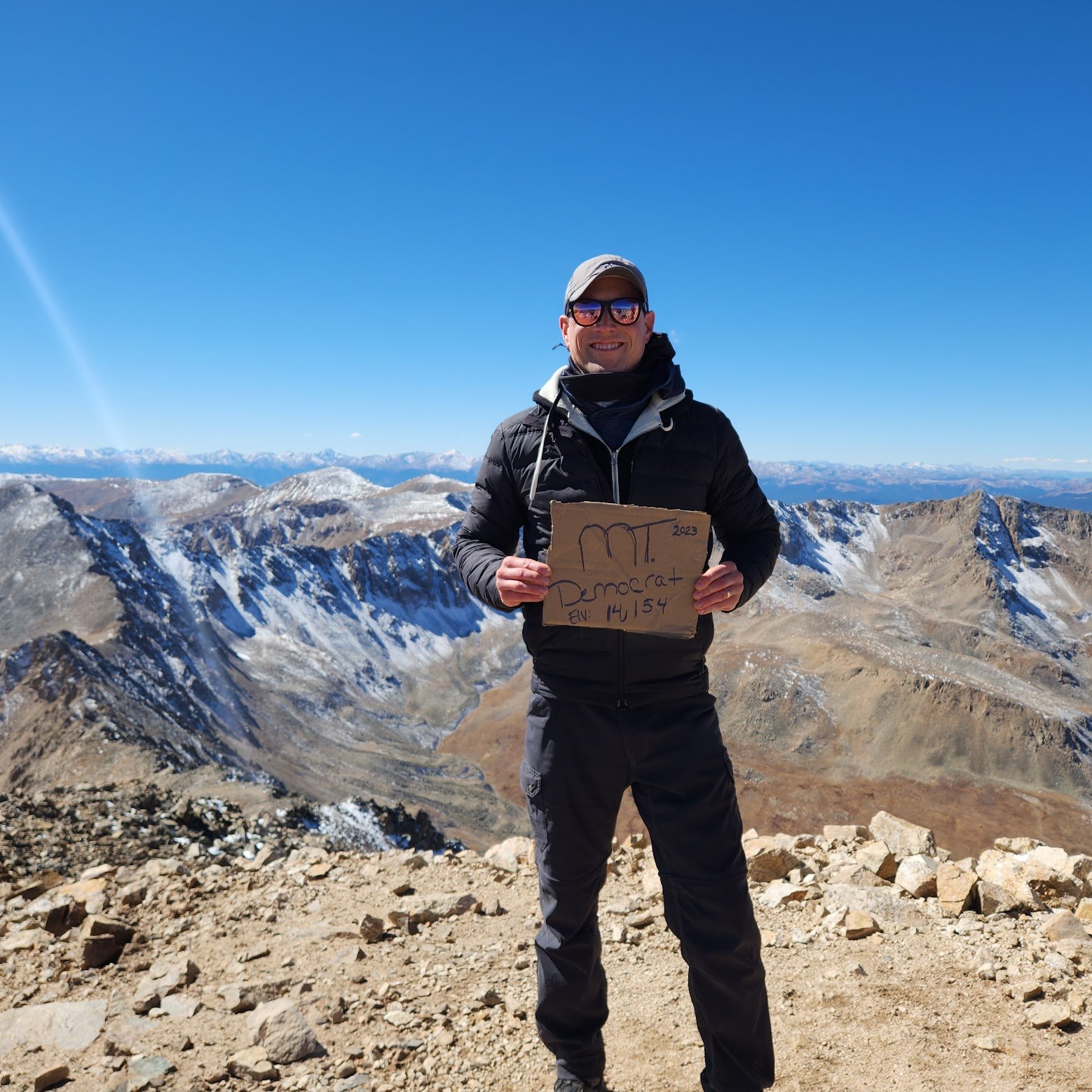
Mount Democrat Hike
ABOUT THE AUTHOR: MICHAEL MOODY, PERSONAL TRAINER
As an author, a personal trainer in Denver, and podcast host, Michael Moody has helped personal training clients achieve new fitness heights and incredible weight loss transformations since 2005. He also produces the wellness podcast "The Elements of Being" and has been featured on NBC, WGN Radio, and PBS.
Michael offers personal training to Denver residents who want to meet at the 2460 W 26th Ave studio….or in their homes throughout LoHi (80206), LoDo (80202), RiNo (80216), Washington Park (80209), Cherry Creek (80206, 80209, 80243, 80246, 80231), and Highlands (80202, 80211, 80212). Michael also offers experiences with a personal trainer in Jefferson Park (80211) and Sloan's Lake (80204, 80212).
If you’re looking for a personal trainer who can curate a sustainable (and adaptable) routine based on your needs and wants, Michael is the experienced practitioner you’ve been looking for. Try personal training for a month…your body will thank you!
Personal Trainer Blog
















Neutral Spine and Core Bracing: Posture Rules to Reduce Low Back Pain From Sitting and Standing
Summary
Learn how to find a neutral spine position and use core bracing to reduce low back pain from sitting, texting, and standing up. Get a simple bracing sequence, seated posture rules, lumbar support tips for travel, and practical coaching cues to protect your lumbar discs.
Key Topics
neutral spine position
low back pain posture
how to brace your core
sitting posture for back pain
back pain from sitting
core bracing sequence
lumbar support for sitting
pelvic tilt and low back pain
how to sit with a neutral spine
standing up with back pain
chronic low back pain exercise
neutral spine vs flat back
posterior pelvic tilt from sitting
how to sit on a plane with back pain
how to get up from a chair without back pain
hip hinge to stand up from seated
backpack vs shoulder bag for back pain

Lower Back Pain / Photo: Kindel Media
Introduction
I’ll never forget the time it took me 30 minutes to stand from a seated position. The spasms debilitated my body over and over as they sent me back to the floor, each time in excruciating pain. After four nights in the hospital for two bulging disks (L4/L5, L5/S1), I quickly changed my approach to fitness and my overall health. The following tips have nearly eliminated my back pain since, and they will help you too (with the help of Kelly Starrett's book Becoming a Supple Leopard)!
The Neutral Spinal Position
Personal Trainer Wisdom: Poor spinal mechanics can lead to mechanical compromises and increase the risk of injury. Organizing your spine in a braced neutral position means that your ears are aligned over your shoulders, your ribcage is balanced over your pelvis, and you're engaging the musculature of your trunk to stabilize (brace your position). (Starrett)
Keep the natural curves of the lower back and neck! When you maintain this position, the pressure on your disks (the green) is minimized. On the other hand, the flexion spinal fault (rounding your shoulders forward) and the overextension spinal fault (tilting your hips forward and downward), as shown in Image 2, will increase the pressure on the disks. Translation: Rounding or arching your back can destroy your disks, possibly leading to a bulge or herniation (among other physical problems and imbalance). Whenever a fitness professional asks you to "flatten your back, " consistently adjust your alignment to reflect the neutral position. If you flatten your back to achieve this, you are applying force to your spine, increasing pressure on the discs, and compromising the principles of the Neutral Spinal Position. Every time you bend your spine out of this line, you risk injuring yourself (even if you're sitting or standing in a stationary position).

Image 1: Neutral Spinal Position

Image 2: Flexion and Overextension Spinal Faults
Perfect your Posture: How to Organize Your Spine
Personal Trainer Wisdom: The bracing sequence is the blueprint for organizing your spine in a braced neutral position. It would be best to run through the bracing sequence every time you set up to perform a movement, prepare to sit, or reset your posture (until it becomes automatic). Here's the step-by-step setup in a nutshell:
Stand with your feet straight and your posture upright. Squeeze your butt and externally rotate from your hips to set your pelvis in a neutral position.
Align your ribcage over your pelvis.
Engage your abdomen to lock in the position.
Pull your shoulders back into a stable position and align your ears over your shoulders, hips, and ankles. (Starrett)
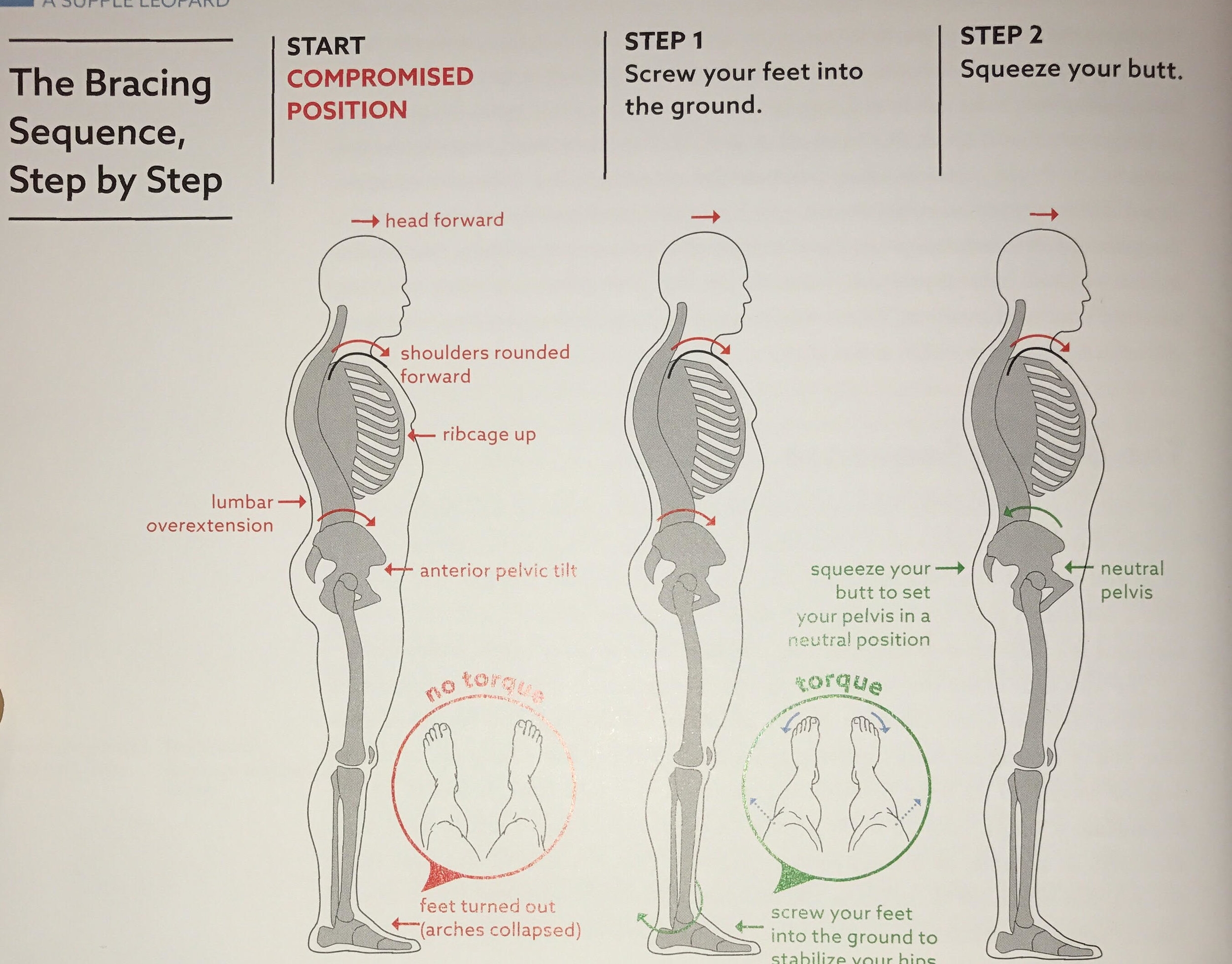
Image 3 The Bracing Sequence Step-by-Step

Image 4 The Bracing Sequence Step by Step Step 3 to Finish
Braced Neutral Sitting and Texting Positions
Personal Trainer Wisdom: Sitting and standing are skills that take practice. Use the bracing sequence to set your posture and maintain a neutral position while sitting and standing (even if you are leaning forward or back). Refer to Image 5 for an example. (Starrett)

Image 5: Braced Neutral Sitting and Texting Positions
Pelvic Rotation While Sitting
Personal Trainer Wisdom: I know... all this talk about a neutral spine position makes you want to curl up into a ball. I will assure you that most of your injuries and discomfort are, in one way or another, a result of how you have been compromising your spine. You may want to think twice about curling up. You may want to think twice about sitting. Not only does this position keep your hips flexed (creating an imbalance), but you are also likely to lose neutral spinal alignment throughout a stressful day. Take a look at Image 6. When you fall out of the neutral spine position by rounding or arching your back, you compromise your spine (specifically the disks). Although it may not seem like enough force or pressure on the spine, the compression will undoubtedly accumulate over time. Ask the 1 in 3 people around you who experience chronic back pain.
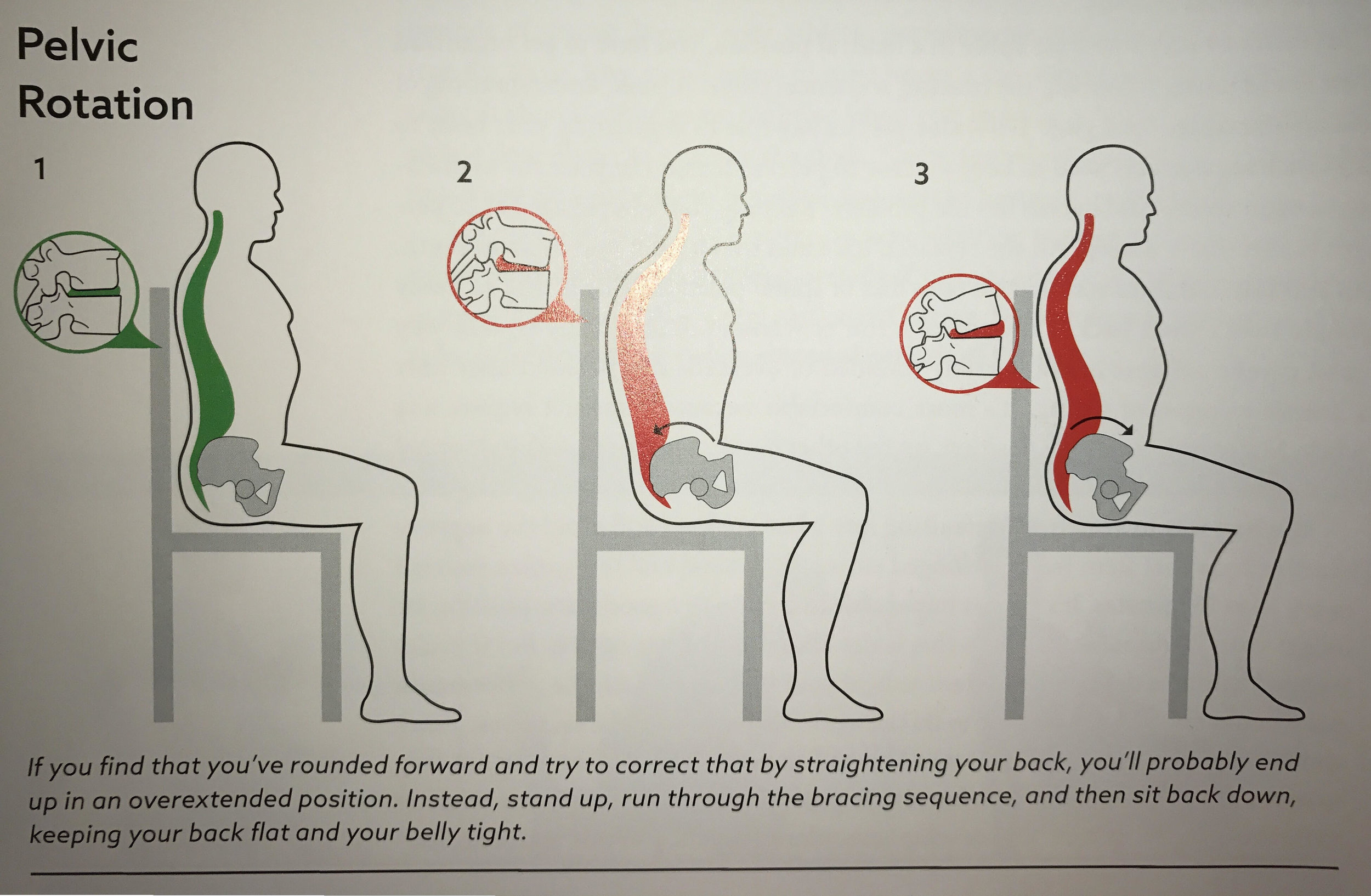
Image 6: Pelvic Rotation While Sitting
Standing Up Out of the Bottom (Seated) Position
Personal Trainer Wisdom: While Image 4 demonstrates the proper way to squat or sit with a neutral spine, Image 5 shows you how to stand up from the bottom (or seated) position. Please remember that Starrett refers to a neutral spine whenever he mentions a flat back.
Sitting is a squat with a long pause at the bottom. Even if you remain seated for an extended period, your back stays neutral, your shins are vertical, and your knees are out.
When you stand up, reclaim tension by loading your hips and hamstrings by hinging forward at the hips.
Keeping your back in a neutral position, shove your knees out and stand up, just as you would when performing a squat.

Image 7: Standing Up Out of the Bottom Seated Position
My Specific List of Lower Back Rules
Personal Trainer Wisdom: Here is my specific list of lower back rules:
Sleep on my back in a neutral position. Sleeping on your stomach puts you in extension (arching your back), and sleeping on your sides (rounding your back and internally rotating your precious shoulders) puts you in flexion—no bueno for sustained periods.
Only sit in chairs or stools where my knees fall below my hips. Most booths and chairs compromise my neutral spine by forcing a posterior pelvic rotation (rounding my back).
I use a self-inflating back pillow for the natural curve of my lower back on flights. I adjust the inflation to whatever feels natural for my lumbar curve, allowing me to sit comfortably with a neutral spine.
I carry my work gear and computer in a backpack (using both straps over my shoulders). Slinging any bag on a single side will create an imbalance. That includes a purse of any weight and size, my female friends.
Don’t run. I train many marathon runners and certainly encourage you to continue if you don’t feel discomfort. If you do, though, accept that running (or jumping) can be quite a bit of compression on your spine. Remove the unnecessary stress and walk on the beloved Stairmaster instead (with less joint impact).
Research-Based citations
Fernández-Rodríguez R, Álvarez-Bueno C, Cavero-Redondo I, Torres-Costoso A, Pozuelo-Carrascosa DP, Reina-Gutiérrez S, Pascual-Morena C, Martínez-Vizcaíno V. (2022). Best Exercise Options for Reducing Pain and Disability in Adults With Chronic Low Back Pain: Pilates, Strength, Core-Based, and Mind-Body. A Network Meta-analysis. Journal of Orthopaedic and Sports Physical Therapy.
PMID: 35722759
DOI: 10.2519/jospt.2022.10671
Publisher: https://doi.org/10.2519/jospt.2022.10671
Fleckenstein J, Floessel P, Engel T, Krempel L, Stoll J, Behrens M, Niederer D. (2022). Individualized Exercise in Chronic Non-Specific Low Back Pain: A Systematic Review with Meta-Analysis on the Effects of Exercise Alone or in Combination with Psychological Interventions on Pain and Disability. The Journal of Pain.
PMID: 35914641
DOI: 10.1016/j.jpain.2022.07.005
Publisher: https://doi.org/10.1016/j.jpain.2022.07.005
Dzakpasu FQS, Carver A, Brakenridge CJ, Cicuttini F, Urquhart DM, Owen N, Dunstan DW. (2021). Musculoskeletal pain and sedentary behaviour in occupational and non-occupational settings: a systematic review with meta-analysis. International Journal of Behavioral Nutrition and Physical Activity.
PMID: 34895248
DOI: 10.1186/s12966-021-01191-y
Publisher: https://doi.org/10.1186/s12966-021-01191-y
Frequently Asked Questions (FAQ)
What is a neutral spine position?
A neutral spine keeps your natural neck and low-back curves while stacking your ears over your shoulders and your ribcage over your pelvis, reducing unnecessary stress on spinal tissues during daily tasks.Is “flatten your back” the same as neutral spine?
Not usually. Flattening often removes the lumbar curve (posterior pelvic tilt), which can increase strain for many people. Neutral spine preserves a natural curve while you brace for stability.How do I brace my core without “sucking in”?
Think “stiffen”, not “suck.” Exhale lightly, then tighten your trunk as if preparing to be poked in the sides—keeping ribs stacked over pelvis.Why does sitting all day make low back pain worse?
Prolonged sitting can reduce movement variability and encourage slumped positions for many people. Over time, that combination can irritate sensitive structures and decondition supportive musculature.What’s the best way to sit if I have low back pain?
Use lumbar support to maintain a natural low-back curve, keep your knees slightly below your hips when possible, and reset your posture frequently (micro-adjustments beat “perfect posture” held for hours).How should I stand up from a chair to protect my back?
Reclaim tension first: hinge forward at the hips to load the hamstrings, keep a neutral spine, then drive through your feet while pushing your knees out (similar to standing out of a squat).Do core-based exercises help chronic low back pain?
Yes—exercise is consistently supported for chronic low back pain, and core-based, strength, Pilates, and mind-body styles show meaningful benefits in research syntheses.Is running bad for low back pain?
It depends. Some people tolerate it well; others flare with impact or volume. A good approach is to adjust dose (frequency, surface, speed) or temporarily swap to lower-impact conditioning if symptoms persist.
ABOUT THE AUTHOR: MICHAEL MOODY, PERSONAL TRAINER
As an author, a personal trainer in Denver, and podcast host, Michael Moody has helped personal training clients achieve new fitness heights and incredible weight loss transformations since 2005. He also produces the wellness podcast "The Elements of Being" and has been featured on NBC, WGN Radio, and PBS.
Michael offers personal training to Denver residents who want to meet at the 2460 W 26th Ave studio….or in their homes throughout LoHi (80206), LoDo (80202), RiNo (80216), Washington Park (80209), Cherry Creek (80206, 80209, 80243, 80246, 80231), and Highlands (80202, 80211, 80212). Michael also offers experiences with a personal trainer in Jefferson Park (80211) and Sloan's Lake (80204, 80212).
If you’re looking for a personal trainer who can curate a sustainable (and adaptable) routine based on your needs and wants, Michael is the experienced practitioner you’ve been looking for. Try personal training for a month…your body will thank you!
Personal Trainer Blog
Wellness Podcast
























4 Things Your Doctor Actually Hates (and Why They Matter for Health)
ABSTRACT
Learn 4 everyday habits doctors hate — from cleaning ears with cotton swabs to using alcohol to quench thirst — and how these habits sabotage your health and fitness goals. Backed by science and personal trainer insights, discover what to avoid and why it matters for long-term well-being. Simple, evidence-based advice for staying healthy, hydrated, and injury-free.
Key Topics
doctor dislikes habits harming health
things doctors hate
habits that sabotage health
health mistakes to avoid
personal trainer health tips
earwax cleaning risks
ear swab dangers
wound licking risk infection
flu vaccine myths vs facts
does flu shot cause flu
alcohol dehydration effects
diuretic alcohol hydration

Fitness Tips / Photo: Aleksandar Andreev
Introduction
You're always told what you should do, but do you really know what your doctor hates? I've extracted my favorites from the Harvard Health Publications article "10 Things People Do That Doctors Hate" for you. Whether this list relates to fitness or weight loss, it certainly affects your overall health (which destroys any effort with a personal trainer). Make each one your priority (and I'll tell you why here).
1. USING COTTON TIP SWABS TO CLEAN EARS
Inserting a cotton-tipped swab into the ear can push ear wax farther into the canal and may damage the eardrum.
Personal Trainer Wisdom: Usually, I need to wear 'Earplanes' earplugs to minimize the pressure or pain in my ears during and after flights. I never experienced any discomfort until my flight to Denver 6 years ago. To my surprise, earplugs weren't to blame. When I visited the doctor, I learned that earwax was pressing against my eardrum. Ironically, I always cleaned my ears with swabs! I thought I was removing the earwax when, in fact, I was pushing it and other particles back (what an excellent thought). The moral of this story: Clean your ears every once in a while with a swab, but don't obsess over it, and rely on less evasive measures (you are placing a stick in your ear, after all).
2. LICKING WOUNDS
...as natural as it may be for animals to lick their wounds, the human mouth is full of bacteria.
Personal Trainer Wisdom: Hmmmmmm...Although mirroring our animal counterparts is fun, you may want to consider setting a new boundary. Any time you wound yourself, you should always minimize the risk of infection. Licking the fresh cut isn't the answer. The bacteria in your mouth will only add fire to something already burning. Be sure to disinfect and bandage as soon as possible, and save the licking for the zoo.
3. REFUSING THE FLU SHOT BECAUSE "I ALWAYS GET THE FLU AFTERWARD"
The vaccine is made from inactive virus particles.
Personal Trainer Wisdom: There isn't much else to say here except "The vaccine is made from inactive virus particles." The flu shot will NOT make you sick. If you feel ill afterward, consider it a result of something you already contracted.
4. DRINKING BEER TO QUENCH A SUMMER THIRST.
Alcohol can act as a diuretic. So instead of conserving water on a hot summer’s day, your kidneys spill more water.
Personal Trainer Wisdom: Nothing quenches your thirst on a hot, humid day in Chicago like an Old Style beer, right? Not all liquids are created equal; beer isn't the exception here. It does the opposite since it acts as a diuretic (sorry!). Considering that your liver and kidneys are two of your most important organs for longevity, you may want to mindfully choose a glass of water first.
What things has your doctor told you he or she hated? Anything related to weight loss or personal fitness?
Research-Based Citations
1. Influenza Vaccine Safety & Effectiveness
Robinson, J. J., et al. (2024). Effectiveness of influenza vaccination to prevent severe disease: a systematic review and meta-analysis. Clinical Microbiology and Infection.
DOI: 10.1016/j.cmi.2025.09.023
PMID: n/a (article indexed via publisher)
Publisher: https://doi.org/10.1016/j.cmi.2025.09.023Why it supports your post: Shows real-world evidence that seasonal flu vaccination reduces severe influenza outcomes and hospitalizations.
2. Immunogenicity & Safety of Inactivated Influenza Vaccine
Tang, W., Lu, X., Zhu, Z., et al. (2025). The immunogenicity and safety of an inactivated quadrivalent influenza vaccine and a 23-valent pneumococcal polysaccharide vaccine in individuals with chronic diseases. Frontiers in Immunology.
PMID: n/a (indexed via publisher)
DOI: 10.3389/fimmu.2025.1624095
Publisher: https://doi.org/10.3389/fimmu.2025.1624095Why it supports your post: Demonstrates that inactivated flu vaccines have acceptable safety profiles and are well tolerated, including in chronic disease populations.
3. Wound Microbiome & Infection Risk
Matsuoka, M. S., et al. (2025). Natural and induced immune responses in oral cavity and saliva. BMC Immunology.
PMID: 38907418
DOI: 10.1186/s12865-025-00713-8
Publisher: https://doi.org/10.1186/s12865-025-00713-8Why it supports your post: Highlights the microbial complexity of saliva and the immune mechanisms in the oral cavity, thereby supporting caution regarding the placement of saliva into wounds due to the risk of bacterial contamination.
Frequently Asked Questions (FAQ)
1: Can cleaning ears with cotton swabs cause harm?
Yes. Inserting cotton swabs deeply into the ear canal can push earwax further into the ear canal and risk damaging the eardrum, potentially causing impaction or injury. Avoid deep probing and instead use safer ear-cleaning practices.
2: Is licking wounds good for healing?
A2: No. Although saliva is instinctive, it contains bacteria that can increase the risk of infection when introduced into an open wound. Proper wound care involves cleaning the wound with an antiseptic and covering it with a sterile bandage.
3: Will the flu shot give me the flu?
No. The standard flu vaccine contains inactive virus particles or virus-like antigens that cannot cause influenza. Mild side effects can occur, but they aren’t the flu itself.
4: Does drinking beer hydrate you in hot weather?
Alcohol, like beer, acts as a diuretic, increasing urine production and potentially contributing to dehydration. Water and electrolyte-rich beverages are more effective for hydration, particularly in hot environments.
5: Why should I avoid certain habits for fitness and health?
Habits that compromise immune function, hydration, or wound integrity can undermine exercise recovery, immunity, and overall health — ultimately limiting progress toward fitness goals.
ABOUT THE AUTHOR: MICHAEL MOODY, PERSONAL TRAINER
As an author, a personal trainer in Denver, and podcast host, Michael Moody has helped personal training clients achieve new fitness heights and incredible weight loss transformations since 2005. He also produces the wellness podcast "The Elements of Being" and has been featured on NBC, WGN Radio, and PBS.
Michael offers personal training to Denver residents who want to meet at the 2460 W 26th Ave studio….or in their homes throughout LoHi (80206), LoDo (80202), RiNo (80216), Washington Park (80209), Cherry Creek (80206, 80209, 80243, 80246, 80231), and Highlands (80202, 80211, 80212). Michael also offers experiences with a personal trainer in Jefferson Park (80211) and Sloan's Lake (80204, 80212).
If you’re looking for a personal trainer who can curate a sustainable (and adaptable) routine based on your needs and wants, Michael is the experienced practitioner you’ve been looking for. Try personal training for a month…your body will thank you!

24 Natural Anti-Aging Tips That Support Health, Skin, and Energy Over Time
ABSTRACT
Discover natural anti-aging tips you can start today: strength training and exercise, better sleep, antioxidants and healthy fats, stress management, hydration, and smart skincare habits. A practical, science-supported guide to looking younger and supporting healthy aging over time.
Keywords
anti-aging tips
natural anti-aging tips
how to look younger naturally
anti-aging lifestyle tips
how to slow aging naturally
anti-aging habits for healthy aging
anti-aging tips for skin and health
exercise and skin aging
sleep and skin health
stress and aging effects
does resistance training improve skin elasticity
how sleep restriction affects facial skin
sugar and advanced glycation end products skin aging
antioxidants for skin aging diet

Anti-Aging Tips / Photo: Igor Meghega
Introduction
Everyone is searching for the secret to looking young over a lifetime. Here is a list of easy, natural, anti-aging tips that all of us can incorporate right away (from the recent msn.com article "The 27 Best Anti-Aging Tips of All Time")!
List of the Best Anti-Aging Tips
1. SKIP THE STRAW
Using a straw seems like an innocent enough habit, but over time, you may notice wrinkles around your mouth.
“Sipping through a straw accentuates those facial muscles where fine lines can occur,” says Angela Lamb, MD, an assistant professor of dermatology at the Icahn School of Medicine at Mount Sinai. The more you use those muscles, the more noticeable the lines there will become, she explains.2. SERIOUSLY, DON'T SMOKE
Add this to the already-long list of reasons to quit. While less serious than reducing your chances of getting lung cancer or heart disease, smoking also damages your looks. The habit takes a major toll on your appearance, contributing to premature skin aging, wrinkles, stained teeth, and even increased psoriasis risk.
“Smoking increases wrinkles due to facial motion, and it also has a vasoconstricting effect, which means it chokes off blood vessel circulation,” says dermatologist David Stoll, MD, author of A Woman’s Skin.3. EAT YOUR ANTIOXIDANTS
While a healthy diet does wonders for your entire body, fruits and veggies that contain antioxidants like vitamins B and E are particularly great for skin.
“Antioxidants help protect skin against free radicals in the environment, which are damaging to skin cells,” says dermatologist Marnie Nussbaum, MD, chief medical spokesperson for Sebamed. “They work to prevent free radicals from breaking down the skin’s elastin and collagen, resulting in more youthful, healthier skin.”
For vitamins B6 and B12, fill your plate with fish and poultry. Vegetarians can get vitamin B6 through chickpeas, which contain 55% of your DV in just one cup. And wheat germ oil (100% DV), sunflower seeds (37% DV), and almonds (34% DV) are all terrific sources of vitamin E.4. FILL UP ON FERMENTED FOODS
You probably already know that foods like kimchi, sauerkraut, tempeh, and other probiotic-rich foods are good for your gut. Turns out they may also combat premature aging.
“Fermented foods have excellent antioxidant and anti-inflammatory properties,” says Craig Kraffert, MD, a board certified dermatologist and president of Amarte.
Beauty products that are made with fermented extracts may also make a difference. Dr. Kraffert recommends products that contain ingredients like fermented gingko biloba nut or mushroom extract. “The most commonly cited benefits of fermented extracts within skincare products are skin calming and brightening,” he says.5. PACK ON THE PROTEIN
Most women should eat 46 grams of protein a day (more if you're pregnant, breastfeeding, or a competitive athlete). Hitting that target will help control cravings, in turn helping you lose weight or simply maintain your youthfully slim figure.
“Protein helps to build and maintain muscle mass, which we tend to lose as we age,” says Keri Gans, RD, a New York City-based nutrition consultant and author of The Small Change Diet.
Additionally, eating enough protein is essential for healthy-looking hair—the nutrient is a building block for strong strands.
Personal Trainer Wisdom: Slow down a second....this doesn't mean that your diet should consist of a steak every meal. Ideally, you should cut back on any foods that cause inflammation (think animal products). You don't need to become a vegetarian but you should make a plant-based diet the focus (with the amount of protein in mind).6. CUT BACK ON SUGAR
As if the risk for obesity, diabetes, and heart disease wasn’t enough, sugar may take a toll on your skin, too. In a 2010 study, researchers found a link between dietary sugars like glucose and greater production of advanced glycation end products (AGES).
But if you have a sweet tooth, don’t panic just yet. “The supportive scientific and clinical data, while growing, remains limited,” says Dr. Kraffert. So enjoy sugar in small amounts, and focus more on leading an active lifestyle and eating an overall balanced diet.7. SLEEP ON A SILK PILLOWCASE
Cotton and polyester tug at the delicate skin on your face, but silk and satin pillowcases are gentler, and can prevent you from waking up with creased cheeks. “With a silk pillowcase, your skin slides on the pillow,” New York City-based dermatologist Debra Jaliman, MD previously told Health. It’s possible that less friction on your skin can slow the formation of fine lines over time. Bonus: sleeping on silk also helps prevent frizzy hair.
8. SLEEP ON YOUR BACK
Always sleep on your side? The habit could be causing lines to form on the cheek that’s constantly pressed against the pillow. “Sleeping on one side can definitely cause wrinkles on that side alone,” says Dr. Stoll. “I’ve seen this many times.”
Side-sleepers may want to switch to their backs—and not just to prevent wrinkles. Back-sleeping eases neck and back pain and fights acid reflux.9. FILL UP ON HEALTHY FATS
There are lots of reasons to love omega-3 fatty acids: They keep you full, help your body absorb essential vitamins, and have been linked to reduced risk of cardiovascular disease. Another perk? Super-healthy skin: “Omega-3 fatty acids promote smoother, younger-looking skin by reducing inflammatory skin conditions like acne and psoriasis,” explains Gans.
10. MAKE EXERCISE A PRIORITY
As if keeping your weight in check and preventing chronic health conditions weren't enough, regular workouts can help you look and feel younger than your years, according to research. A recent study of older adults published in The Journal of Physiology discovered that the more active participants functioned physiologically similar to younger adults.
Your face will benefit from those personal training sessions, too: Research from McMaster University in Canada found that exercise could help slow signs of skin aging.11. MANAGE YOUR STRESS
Stressful situations take a toll on more than just your mental health. “Stress and stress-associated hormones have aging effects,” explains Dr. Lamb.
Research suggests that these negative effects start at the cellular level. In a 2013 Dutch study, for example, researchers found that the cells of people who had depression aged more quickly than those who hadn’t suffered from the disease. “[P]sychological distress … has a large, detrimental impact on the wear and tear of a person’s body, resulting in accelerated biological aging,” one of the study’s authors explained in a news release.
To prevent premature aging, Dr. Lamb recommends taking steps to de-stress your life—whether that means getting more sleep, practicing yoga, or learning to meditate.
Personal Trainer Wisdom: While we can't avoid stress, we should effectively manage it. If you change anything in your life, it should be the amount of tension you mentally place on your body.12. EXFOLIATE THE RIGHT WAY
Exfoliating using beads or chemical peels is a go-to skincare strategy for sloughing off dead skin and revealing a smoother complexion underneath—but it’s important to make sure you’re not aggravating your face in the process. “Too much exfoliation is counterproductive,” says Dr. Stoll. He recommends talking to your dermatologist about the best exfoliation method for your skin type.
13. SCALE BACK ON SALT
You already know that eating high-sodium foods make your body retain water, leaving you feeling heavy and bloated. So it should come as no surprise that super-salty fare triggers a similar response in your face, giving you a puffier appearance (under your eyes, for example). To cut back gradually, start cooking with salt-free flavor boosters such as chili peppers, lemon juice, and fresh herbs. Not only will you look less bloated, but a low-sodium diet will also reduce your risk of high blood pressure and stroke.
14. DRINK PLENTY OF H2O
“Not drinking enough water will take a toll on aging skin,” says Dr. Nussbaum. She recommends aiming to drink half your weight in ounces of water per day (in other words, if you weigh 150 pounds, you should drink about 75 ounces of water, or about nine glasses).
15. GO EASY ON THE BOOZE
Speaking of drinking: Alcohol dehydrates the body, so think twice before having that second glass of wine. “Dehydrated skin is more likely to appear dry, sallow, dull, and crepey,” Dr. Nussbaum says. Be especially careful of white wine: the acid in white wine can damage your enamel and make your teeth more susceptible to long-lasting stains.
16. TAKE CARE OF YOUR HANDS
You probably give the skin on your face plenty of TLC, but what about your hands? “Without a targeted regimen to slow down the onset of dark spots and textural changes, the hands can age a person faster than the face,” Joshua Zeichner, MD previously told Health.
Sun exposure is mainly responsible for dark spots and crepey skin. Rub SPF on the backs of hands every morning to protect the delicate skin there from harmful UV rays. And at night, use your regular anti-aging face lotion on your hands to hydrate and ward off age-related dry patches.17. TAKE TIME OFF YOUR CHEST
Another often-forgotten patch of skin: your chest. Too much sun exposure when you're young may leave you with blotchy, freckled skin in the short term, and down the line, you may notice wrinkles, loose skin, and white spots.
“Your best bet is to stop daily damage before it gets serious,” says Dr. Kraffert. To keep your décolletage from deteriorating, wear sunscreen on days you're not wearing clothing that covers your chest.
And if you already have sun damage, moisturize the area before bed with an over-the-counter retinol or with a cream that contains melanin production inhibitors to brighten skin. “Adding other skin-brightening ingredients such as sulfur and botanical extracts will help, too,” says Dr. Kraffert.18. WASH YOUR FACE BEFORE BED
You know you’re supposed to do it, but sometimes you just… don’t. We get it. But experts stress that failing to wash your face at the end of the day is a major missed opportunity for skin to regenerate while you sleep (not to mention, it ups your chances of waking up with clogged pores).
“Skin renews itself overnight, so if you want to change the way your skin functions, the most important ingredients should be applied before bed,” Olga Lorencin-Northrup, founder and lead aesthetician of Kinara Spa in Los Angeles previously told Health.19. GET SERIOUS ABOUT SUNSCREEN
You’ve heard it before, but it can’t be said enough: “Wearing SPF is the best anti-aging thing you can do for your skin,” says Dr. Lamb.
A 2013 study in the Annals of Internal Medicine found that people who wore sunscreen three to four days a week were less likely to experience skin aging after four and a half years than those who didn’t. In addition to wrinkles, sun exposure also contributes to discoloration, which shows up in the form of dark spots on your face and hands.
And that bottle of SPF isn’t just for trips to the beach. “Even passive daily UV rays cause damage to the skin that make it age faster,” Dr. Lamb says.
Personal Trainer Wisdom: I've said this before.....Your best bet is minimizing the burn time or overexposure in the sun. You really need to be mindful of what you're rubbing on your skin.20. SLEEP IT OFF
You should think of sleep as being another essential step in your skincare routine. “Sleep is super important in allowing the body to regenerate, and the skin is no different,” says Dr. Nussbaum. Not only will plenty of shut-eye let skin cells regenerate over night, but it will also help prevent dark under-eye circles, she says.
21. VISIT A DERMATOLOGIST
Booking regular appointments with your dermatologist will ensure that you’re up-to-date on the latest anti-aging skincare developments. Your doctor may recommend treatments for more dramatic results than you’d get from home remedies or even from a trip to the spa.
For example, Dr. Stoll says he might suggest an exfoliating peel that contains glycolic or trichloracetic acid for patients. “Aestheticians can legally use up to 20%, but doctors can use stronger strengths, like 70% glycolic acid,” he explains.22. MOISTURIZE BEFORE SKIN DRIES
Moisturizing takes more effort than just slapping some lotion on your face. All those pricey anti-aging products you’ve invested in will work more effectively if you use them on clean, moist skin, says Dr. Kraffert. When you get out of the shower, he suggests applying lotion within three minutes—before water on skin has a chance to fully evaporate. “Not only will you get the benefits of the moisturizer itself, but you’ll help seal in the hydration from the water,” he explains. “If you wait too long and that water evaporates from your skin, it can take some of your body’s natural moisture with it.”
23. WATCH THE WAY YOU TEXT
Like sipping through a straw, the repetitive motion of looking down at your smartphone can eventually cause rings to show up on your neck. “Fine lines and wrinkles can form over decades’ time through repeat motions,” says Dr. Nussbaum.
While there’s no fast fix, maintaining good posture and holding your smartphone at eye level can help. Dr. Nussbaum also recommends applying a firming lotion daily. “I favor lotions that are formulated with antioxidants and ingredients like shea butter and argan oil,” she says.24. LET UP ON THE HEAT STYLING
Can't imagine going a day without straightening your hair? Laying off the flatiron even just two days a week can restore your hair's bounce and shine—and make you look younger in the process. Master the wet bun, learn to love dry shampoo, or embrace your natural texture and allow your mane to air dry.
Research-Based Citations
Nishikori S, Yasuda J, Murata K, Takegaki J, Harada Y, Shirai Y, Fujita S. (2023). Resistance training rejuvenates aging skin by reducing circulating inflammatory factors and enhancing dermal extracellular matrices. Scientific Reports.
PMID: 37353523
DOI: 10.1038/s41598-023-37207-9
Léger D, Gauriau C, Etzi C, Ralambondrainy S, Heusèle C, Schnebert S, Dubois A, Gomez-Merino D, Dumas M. (2022). "You look sleepy…" The impact of sleep restriction on skin parameters and facial appearance of 24 women. Sleep Medicine.
PMID: 34971928
DOI: 10.1016/j.sleep.2021.11.011
https://doi.org/10.1016/j.sleep.2021.11.011
Choi JY, Ha NG, Lee WJ, Boo YC. (2025). Synthetic and Natural Agents Targeting Advanced Glycation End-Products for Skin Anti-Aging: A Comprehensive Review of Experimental and Clinical Studies. Antioxidants (Basel).
PMID: 40298870
DOI: 10.3390/antiox14040498
https://doi.org/10.3390/antiox14040498
Frequently Asked questions (FAQ)
What are the best natural anti-aging tips that work?
Prioritize UV protection, consistent exercise (especially strength training), quality sleep, and smoking cessation—then layer in nutrition, hydration, and stress management.Does exercise actually help your skin look younger?
Evidence suggests training can improve skin elasticity/structure and influence dermal biology, alongside whole-body aging benefits.Is strength training good for skin aging?
Research indicates resistance training may improve skin elasticity and dermal structure, potentially via changes in inflammatory factors and extracellular matrix markers.How does poor sleep affect your face and skin?
Even short-term sleep restriction can measurably worsen hydration, barrier function, and facial appearance parameters.Does sugar age your skin?
High sugar intake is tied mechanistically to glycation (AGEs), which can affect skin structure and visible aging; the most defensible takeaway is “reduce excess added sugar and ultra-processed foods.”Do antioxidants from food help with anti-aging?
Antioxidant-rich foods support overall health and may help counter oxidative stress—focus on fruits/vegetables, nuts/seeds, and varied plant foods.Do fermented foods help with aging?
Fermented foods can support gut health and may influence inflammation; evidence for direct “anti-aging skin” effects is emerging, so position this as a supportive habit, not a guarantee.What is the single most important skincare anti-aging habit?
UV strategy (daily broad-spectrum sunscreen + avoiding burns/overexposure) is the highest-impact skin-aging lever over decades.Can stress make you age faster?
Chronic stress is linked to biological “wear and tear,” and better stress management supports sleep, recovery, and healthy routines that influence aging outcomes.Is sleeping on your back better for wrinkles?
It may reduce consistent compression on one side of the face, but the biggest “sleep win” is duration and quality, not position.
ABOUT THE AUTHOR: MICHAEL MOODY, PERSONAL TRAINER
As an author, a personal trainer in Denver, and podcast host, Michael Moody has helped personal training clients achieve new fitness heights and incredible weight loss transformations since 2005. He also produces the wellness podcast "The Elements of Being" and has been featured on NBC, WGN Radio, and PBS.
Michael offers personal training to Denver residents who want to meet at the 2460 W 26th Ave studio….or in their homes throughout LoHi (80206), LoDo (80202), RiNo (80216), Washington Park (80209), Cherry Creek (80206, 80209, 80243, 80246, 80231), and Highlands (80202, 80211, 80212). Michael also offers experiences with a personal trainer in Jefferson Park (80211) and Sloan's Lake (80204, 80212).
If you’re looking for a personal trainer who can curate a sustainable (and adaptable) routine based on your needs and wants, Michael is the experienced practitioner you’ve been looking for. Try personal training for a month…your body will thank you!

Mount Parnassus (Winter 13er)
ABSTRACT
Late November trail report for Mount Parnassus via Watrous Gulch from the Herman Gulch trailhead: 8.38 miles out-and-back, 3,753 ft gain, 13,576 ft summit. Expect cold sun, tree cover below treeline, and snow-packed sections. Gear tips, pacing, and optional Bard Peak add-on.
Keywords
Mount Parnassus hike
Watrous Gulch Trail
Colorado 13er hike
Herman Gulch trailhead
Mount Parnassus trail report
late November hiking Colorado
winter hiking Colorado Front Range
microspikes for hiking Colorado
Mount Parnassus late November conditions
Watrous Gulch trail snow and ice
Mount Parnassus Bard Peak ridge traverse
Herman Gulch trailhead parking tips
best gear for a Colorado 13er in November

Colorado Winter Hikes
Colorado Hikes: Mount Parnassus
Time of Year: Late November.
Weather: 28-35 degrees and sunny.
Cover: 35% covered with a tree canopy (fully exposed over 11,500 feet).
Time: 8:08 am - 1:10 pm.
Distance: 8.38 miles total.
Cost: None.
Bathroom at Trailhead: Yes (if you’re brave enough :))
Difficulty: Hard Level 2 for altitude (13576 feet), elevation gain (3753 feet), class (1), and length (8.38 miles).
Route: Watrous Gulch Trail out and back.
Traffic: Low (one other person).
Parking: A huge lot with five spaces remaining at 8:00 am. Why? Because everyone else was hiking the Herman Gulch Trail. The lot is just off of 70 before the tunnel.
Equipment: La Sportiva Trango Tech GTX Hiking Boots, Black Diamond Alpon Carbon Cork Trekking Poles, Osprey Talon 33 Backpack, Kahtoola MICROspikes
Terrain: A crunchy, light snow-packed trail with many dry dirt sections, for now.
Experience: Intended to climb Bard (another 13er across the ridge), too, but it looked like a storm was rolling in. For those eager to do it, allow an extra 60-90 minutes to cross class 2 terrain. All class 1 until that point, though. Expect snowshoe and avalanche terrain over the next few weeks (December). This is a less-frequented path off the Herman Gulch trailhead with beautiful views on a knee-busting slope. No time wasted-you start climbing up right away. Ideal for hikers with great muscular endurance!
Personal Trainer Notes: Not all personal training clients will choose this trail unless they are hikers with winter ambitions on a 13er. I completed this trail a year earlier and felt my quads the next day. It was no different after this trek. The effort was worth the sweeping views and the peace at the top. Admittedly, I wouldn’t have minded a chair and a coffee with a mile left. I suspect there would be avalanche danger with more snowfall.

Mount Parnassus

Mount Parnassus 13er

Colorado 13ers

Colorado Hiking

Winter Hikes

Colorado 13er Trails

Colorado Alpine Hikes
Research-Based Citations
Wang B, Chen S, Song J, Huang D, Xiao G. (2024). Recent advances in predicting acute mountain sickness: from multidimensional cohort studies to cutting-edge model applications. Frontiers in Physiology.
PMID: 38978820
DOI: 10.3389/fphys.2024.1397280
Publisher: https://doi.org/10.3389/fphys.2024.1397280Yang M, Wu Y, Yang X-B, Liu T, Zhang Y, Zhuo Y, Luo Y, Zhang N. (2023). Establishing a prediction model of severe acute mountain sickness using machine learning of support vector machine recursive feature elimination. Scientific Reports.
PMID: 36944699
DOI: 10.1038/s41598-023-31797-0
Publisher: https://doi.org/10.1038/s41598-023-31797-0Koshimizu Y, Fukuhara A, Yamamoto Y, Kijima A. (2026). Adaptive gait transition in trekking pole-assisted hiking due to fatigue and staircase height elevation. Frontiers in Sports and Active Living.
PMID: N/A (not listed on PubMed at time of review)
DOI: 10.3389/fspor.2025.1669574
Publisher: https://doi.org/10.3389/fspor.2025.1669574
Frequently Asked Questions (FAQs)
How hard is Mount Parnassus via Watrous Gulch?
Hard: a sustained climb at ~13,500 ft and ~3,700 ft of gain makes it a muscular endurance day.When is the best time to start?
Early morning. You started at ~8:08 am; for shoulder season/winter, earlier is safer for firm snow and weather windows.Do I need microspikes?
If there’s packed snow/ice, yes—microspikes are a high-value, low-weight traction add for late fall/early winter.Is there tree cover?
Mostly below treeline. Once you’re above ~11,500 ft, expect full exposure to sun/wind.How long does the hike take?
Your outing was ~5 hours (8:08 am–1:10 pm). Strong hikers may go faster; many will take longer with snow, breaks, or altitude.How crowded is Watrous Gulch compared to Herman Gulch proper?
Often less crowded once you split off—your day had very low traffic. (This is a nice differentiator vs the more popular Herman Gulch lake hike.)Can I add Bard Peak?
Yes, but plan extra time (your estimate of ~60–90 minutes is reasonable) and expect more complex terrain and the need for winter hazard management.What are the biggest late-November risks?
Altitude effects, rapidly changing weather, and increasing snowpack that can transition into avalanche terrain as winter progresses.What training carries over best to this hike?
Uphill muscular endurance: step-ups, split squats, long incline treadmill or stair work, plus hiking-specific pacing.What’s the simplest “don’t overthink it” gear list?
Warm layers, traction (microspikes when needed), trekking poles, a pack with food/water, and a conservative turnaround time.
List of Hiking Trails in Colorado
To check out more hiking reviews with pictures, visit “List of Colorado Hikes.” You’ll find options across a spectrum of difficulty, including many trails in the foothills and front range.
Mount Democrat Hike
ABOUT THE AUTHOR: MICHAEL MOODY, PERSONAL TRAINER
As an author, a personal trainer in Denver, and podcast host, Michael Moody has helped personal training clients achieve new fitness heights and incredible weight loss transformations since 2005. He also produces the wellness podcast "The Elements of Being" and has been featured on NBC, WGN Radio, and PBS.
Michael offers personal training to Denver residents who want to meet at the 2460 W 26th Ave studio….or in their homes throughout LoHi (80206), LoDo (80202), RiNo (80216), Washington Park (80209), Cherry Creek (80206, 80209, 80243, 80246, 80231), and Highlands (80202, 80211, 80212). Michael also offers experiences with a personal trainer in Jefferson Park (80211) and Sloan's Lake (80204, 80212).
If you’re looking for a personal trainer who can curate a sustainable (and adaptable) routine based on your needs and wants, Michael is the experienced practitioner you’ve been looking for. Try personal training for a month…your body will thank you!
Personal Trainer Blog

99 Ways to Redefine Yourself in 2026 and Build Better Habits
ABSTRACT
Redefine yourself in 2026 with 99 practical self-improvement tips: mindfulness, better decisions, boundaries, and habit change. Learn how to quiet negative self-talk, build a life plan, and create routines that stick—using evidence-based strategies you can start today.
Key Topics
redefine yourself
self improvement ideas
personal development tips
how to change your life
self improvement goals 2026
build better habits
mindfulness habits
evidence based self improvement
how to stop negative self talk
how to create a life plan
how to set boundaries in relationships
how to make better decisions
how to redefine yourself in a new year
daily habits to improve mental health
how to create a personal business plan for life
how to use mindfulness to reduce stress
how to replace bad habits with good habits

Motivation Personal Trainer / Photo: Tetyana Kovyrina
Introduction
Here is the master list of intent from my self-improvement book, Redefine Yourself: The Simple Guide to Happiness. Use it to set your path in 2026.
99 Ways to Redefine Yourself Today
1. Believe that you can redefine yourself.
2. Create a business plan for your life.
3. Become a human scientist and study the physical, mental, and emotional you.
4. Make it a point to understand yourself and others.
5. Commit to this journey and don’t take the easy way out.
6. Become an outside observer of the mechanics of your mind and think about your thinking.
7. Ask yourself the tough questions and answer honestly.
8. Practice looking at yourself objectively.
9. Trust your instincts, your gut, and your perspective, but know where they stem from.
10. Don’t be a bystander in the course of life.
11. Adopt the mantra “Keep it Simple”.
12. Write your new mantra on a post-it note and place it in numerous places as a reminder.
13. Confront your inner influences.
14. Approach new ideas with an open mind.
15. Realize that you’re not alone.
16. Practice mindfulness.
17. Teach yourself to wake up to life around you—and inside of you—at any given moment.
18. Schedule alerts throughout the day to remind you to “take a breath”.
19. Listen to your inner voice.
20. Catch yourself making negative statements about yourself while randomly doing other things and write them down.
21. Don’t analyze yourself.
22. Filter your subconscious messages.
23. Create a list of positive messages and repeat them to yourself daily.
24. Face your inner self.
25. Remove the invisible obstructions that hold you back from achieving personal success.
26. Become a detective and collect the truth of a moment, observing yourself and every movement, sight, touch, scent, and sound of the world.
27. Gather evidence for the truth without judgment.
28. Don’t take a leap of faith without stopping first and observing the moment.
29. Accept that you don’t know everything.
30. Stop the train of life and pick up the bits and pieces around you every once in a while.
31. Remain aware before making a decision, judgment, or movement and commit to a higher state of living.
32. Accept the real perfections and imperfections of the world.
33. Soak in the aura of a moment wherever you are as often as possible.
34. Don’t dwell on the imperfections of you, your situation, or your surroundings.
35. Remove yourself from a situation when necessary (despite your emotional investment).
36. Don’t fixate on imperfect pieces of life that are unchangeable at the moment.
37. Don’t construct a rose-colored reality to mask the blight and scathing.
38. Accept things in their current state, including the blight and scathing.
39. Sometimes listen to your subconscious when it taps you on the shoulder.
40. Sometimes ignore your subconscious when it taps you on the shoulder with the same negative message.
41. Remember this quote by Frederick Douglass, a former slave and leader in the abolitionist movement. Accept that what you discover isn’t always the easiest to handle (and that’s okay): “…I would at times feel that learning to read had been a curse rather than a blessing. It had given me a view of my wretched condition, without the remedy. It opened my eyes to the horrible pit, but to no ladder upon which to get out. In moments of agony, I envied my fellow slaves for their stupidity. I often wished myself a beast.”
42. When you don’t accept it, tell yourself again and again and again that you should.
43. Quit complaining and do something.
44. Accept your ‘selfish friends’ as they are and ignore their ‘selfish’ tendencies. Discuss with them how their actions make you feel, or begin dismantling your friendship.
45. If you don’t support the president (insert Republican, Democrat, or Independent here), get involved with politics, participate in community change, or make a grassroots effort for change in another way.
46. Develop an evidence-based strategy to overcome challenges and choose the best possible decision.
47. Judge yourself fairly.
48. Don’t avoid looking at yourself.
49. Accept that obsessive, perfectionist ambition will lead to a perfect state of stress and an emotional unacceptance of your life.
50. Limit your distractions and listen to the people around you.
51. Don’t multitask (sorry).
52. Accept that feeling overwhelmed or frustrated is the result of your perspective.
53. Think rationally about the challenges you face daily.
54. Identify the fears that steer your behavior.
55. Refuse to allow insecurities to steer your behavior.
56. Tell yourself that you’re strong enough to face your fears again.
57. Tell yourself that your insecurities are irrational.
58. Find the root of your insecurities and write down the evidence against these irrational claims.
59. Extinguish Your Insecurities.
60. Don’t worry what people think unless you request their input.
61. Accept people’s input, but remember you don’t always have to agree with their opinion or approach.
62. Leash and manage your emotional output.
63. Develop a cool head that will allow you to see the whole picture without a filter.
64. Recognize what drives your emotions and the coping behaviors that result.
65. Accept that you failed to reach these goals once before, and you may fail again.
66. Regain control over your life.
67. Feel confident about your approach, accepting the consequences, and adapting whenever and wherever needed.
68. Take control of the trends, patterns, and little idiosyncrasies that make up your world.
69. Don’t say “It is what it is” unless you’ve fully investigated yourself and the possible solutions.
70. Accept that improving a relationship might mean adapting or leaving it.
71. Identify the areas in your personal life in which you feel helpless.
72. Find control over your happiness at work.
73. Take control over your position and reshape it in a way that brings fulfillment to you.
74. Reevaluate your role in the company.
75. Change or redefine your position so that it fosters autonomy.
76. Request a position that values your creativity and judgment.
77. Understand your decision-making process.
78. Control the external influence on your decisions.
79. Convince yourself that you can change your environment.
80. Approach new problems with confidence.
81. Identify the problem accurately and specifically.
82. Consider as many solutions as possible and their implications.
83. Choose the best solution and then act.
84. Accept that making mistakes is part of the learning process, and sometimes we have to make them repeatedly before we notice they’re a problem.
85. Accumulate wisdom through error.
86. Change bad habits by inserting a new routine, keeping the old cue, and delivering the old reward.
87. Accept that you already live by a set of rules.
88. Redefine your boundaries based on your needs (not your wants).
89. Create conversations with others.
90. Realign your perspective with your purpose—what you feel you were meant to do.
91. Create goals to maintain your positive focus.
92. Create a bucket list.
93. Slow down your life.
94. Treat life as an adventure and explore the unknowns.
95. Smile more often.
96. Share wisdom with others.
97. Give people the benefit of the doubt more often than not.
98. Help someone when you notice it.
99. Be your best self.
Research-Based Citations
Galante J, Friedrich C, Dawson AF, Modrego-Alarcón M, Gebbing P, Delgado-Suárez I, et al. (2021). Mindfulness-based programmes for mental health promotion in adults in nonclinical settings: A systematic review and meta-analysis of randomised controlled trials. PLOS Medicine.
PMID: 33428616
DOI: 10.1371/journal.pmed.1003481
Publisher: https://doi.org/10.1371/journal.pmed.1003481
Keller J, Kwasnicka D, Klaiber P, Sichert L, Lally P, Fleig L. (2021). Habit formation following routine-based versus time-based cue planning: A randomized controlled trial. British Journal of Health Psychology.
PMID: 33405284
DOI: 10.1111/bjhp.12504
Publisher: https://doi.org/10.1111/bjhp.12504
Cooke R, McEwan H, Norman P. (2022). The effect of forming implementation intentions on alcohol consumption: A systematic review and meta-analysis. Drug and Alcohol Review.
PMID: 36173203
DOI: 10.1111/dar.13553
Publisher: https://doi.org/10.1111/dar.13553
Frequently Asked Questions (FAQs)
How do I start redefining myself if I feel stuck?
Start with one small, controllable behavior (sleep, walking, journaling, hydration), attach it to an existing cue, and repeat it consistently for 2–4 weeks.What is a “business plan for your life”?
A written plan that clarifies your values, goals, constraints, weekly priorities, and the systems (habits) you’ll use to execute—like a strategy document for your life.How can mindfulness help with self-improvement?
Mindfulness helps you notice thoughts, emotions, and triggers earlier—so you can choose a response instead of running on autopilot, which supports stress reduction and well-being.How do I stop negative self-talk without forcing “positive vibes”?
Track recurring statements, identify the trigger, and replace the thought with a more accurate, evidence-based reframe (neutral beats a false positive).What’s the simplest way to build a new habit that sticks?
Pick a specific cue (“after coffee”), choose a tiny action (2 minutes), keep the context consistent, and measure repetitions—not perfection.How do I make better decisions when I’m emotional?
Pause long enough to name the emotion, define the decision in one sentence, list 2–3 options, and choose the one that best matches your values and long-term aim.How do boundaries relate to redefining yourself?
Boundaries reduce recurring friction and resentment, freeing up time and energy for new habits and healthier relationships.What’s an evidence-based strategy to overcome challenges?
Use structured planning: define the problem precisely, anticipate obstacles, create “if-then” responses, and review outcomes weekly to adjust.Do I need to change everything at once to see results?
No—stacking small wins is usually more sustainable. One or two keystone habits can create spillover improvements across mood, energy, and productivity.
ABOUT THE AUTHOR: MICHAEL MOODY, PERSONAL TRAINER
As an author, a personal trainer in Denver, and podcast host, Michael Moody has helped personal training clients achieve new fitness heights and incredible weight loss transformations since 2005. He also produces the wellness podcast "The Elements of Being" and has been featured on NBC, WGN Radio, and PBS.
Michael offers personal training to Denver residents who want to meet at the 2460 W 26th Ave studio….or in their homes throughout LoHi (80206), LoDo (80202), RiNo (80216), Washington Park (80209), Cherry Creek (80206, 80209, 80243, 80246, 80231), and Highlands (80202, 80211, 80212). Michael also offers experiences with a personal trainer in Jefferson Park (80211) and Sloan's Lake (80204, 80212).
If you’re looking for a personal trainer who can curate a sustainable (and adaptable) routine based on your needs and wants, Michael is the experienced practitioner you’ve been looking for. Try personal training for a month…your body will thank you!

Jump-Start Weight Loss: First 9 Days of Your New Year Slim-Down Plan
ABSTRACT
Kick off a successful slim-down with these first 9 days of evidence-based weight loss actions, from mission setting and self-monitoring to mindful eating and movement breaks. Learn daily habits, portion-control strategies, and activity tips to build consistency and achieve sustainable results. Expert personal trainer advice included for beginners and all levels.
Key Topics
weight loss tips new year
jump-start weight loss plan
beginner weight loss guide
actionable weight loss days
personal trainer weight loss advice
self-monitoring weight loss
portion control strategies
healthy habit building
daily fitness motivation
movement and weight loss benefits
how to start weight loss in January
easy daily habits for weight loss
benefits of self-weighing for weight loss
daily movement benefits even with sedentary lifestyle
portion control dishware research

Weight Loss Resolutions / Photo: Marta Wave
Introduction
Having a hard time getting started in the new year? Here are the first 9 days from the weight loss article "30 Easy Tips to Get Slimmer in 30 Days" to guide you through the next month.
List of Easy Tips to Get Slimmer
DAY 1: HAVE A MISSION
Write a specific wellness mission for the upcoming weeks (think: "I will eat two clean meals per day for two weeks") and stick it where you'll see it. Remember: This is a jumping-off point, so it's OK to start small.
Personal Trainer Wisdom: Like any corporation, you need a strong mission statement and business plan to focus and structure your pursuit of a goal. Your success will depend on how clearly you state your intentions.
DAY 2: PURGE YOUR PANTRY
Toss out three food products labeled "low-fat," "reduced-fat" or "fat-free." They often pack more salt, sugar or even calories than the full-fat versions.
Personal Trainer Wisdom: Why stop there? Anything with dairy, refined sugar, or grains may undermine your weight-loss goals, too. What's the greatest surprise I've witnessed among my personal training clients over the last 20 years? The weight loss struggles of vegans (even though they cut out dairy and meat). Why do they gain weight while maintaining this diet? Grains. If you incorporate any, be sure to use only its whole form and restrict it to 1/4 of the plate.
DAY 3: WEIGH YOURSELF
Research has linked hopping on the scale regularly to better weight-loss results.
Personal Trainer Wisdom: Michael Moody Fitness has linked awareness to better weight-loss results. While the scale is an important tool of accountability, my personal training clients have still lost weight by only jumping on it 1-2 times per month. Instead, pay attention to how clothes fit and the symptoms you experience after meals. If you're a numbers person like me, scale away, but don't obsess over the numbers.
DAY 4: "GO" FOR A MILE
Walk, run-walk, bike, swim—your pick. And don't forget to time yourself.
Personal Trainer Wisdom: Most of your slimming success will come from your dietary choices. Nevertheless, fitness will sculpt and lean that machine of yours. That said, don't feel obligated to exercise for 1-2 hours per day. 20-30 minute sessions can be just as effective.
DAY 5: EAT OFF SMALLER PLATES
New research has confirmed the age-old diet trick: Smaller dishes (try 9-inch ones) and cutlery will help with portion control and naturally reduce your calorie intake.
DAY 6: TRY A BIRD-DOG PLANK VARIATION
Start in plank position, then extend one arm and the opposite leg without disturbing your form; switch sides. Do 10 reps on each side.
DAY 7: TRADE BUTTER FOR AVOCADO
Everyone loves replacing butter with avocado for avocado toast. But you can also swap it into other recipes to up your fiber; replace 1 tablespoon of butter with 1/2 tablespoon of avocado.
Personal Trainer Wisdom: Since you're in the replacement mood, you may want to consider switching the toast to Ezekiel Bread, too (although you should still limit this type of consumption).
DAY 8: SCAN YOUR KITCHEN
Do you have any foods that you just can't stop eating once you start? (We're looking at you, buttered popcorn and M&M's.) Think about what those are for you, and purge three of the ones that tend to knock you off track from your diet goals.
Personal Trainer Wisdom: I love chocolate. If it sits in front of me, I eat it. I survive by throwing it out while my wife is at work. Do what you need to do to survive...
DAY 9: GET UP AND MOVE
Walk, stretch, even squat every hour on the hour. New research has shown that sitting for long periods raises your chance of getting a chronic disease, even if you exercise.
What's your game plan for losing weight?
Research-Based Citations
1) Self-Monitoring Weight
Rajiev Hallock K, Ufholz K, Patel N. (2024). Self-Monitoring of Weight as a Weight Loss Strategy: A Systematic Review. Current Cardiovascular Risk Reports.
PMID: pending PubMed record (article recently published)
DOI: 10.1007/s12170-024-00746-5
Publisher: https://doi.org/10.1007/s12170-024-00746-5
Summary: Frequent self-weighing (as part of behavioral monitoring) is linked to increased weight loss and better weight maintenance when combined with tracking dietary intake and activity.
2) Portion Control Tools
Martínez A, Almiron-Roig E. (2021). Impact of Portion Control Tools on Portion Size and Weight: Systematic review. Nutrients.
PMID: not listed on PubMed (journal is PubMed-indexed)
DOI: 10.3390/nu13061978
Publisher: https://doi.org/10.3390/nu13061978
Summary: Reduced-size tableware and portion control tools (including calibrated plates/cutlery) can support lower energy intake and modest weight reduction in adults.
3) Sedentary Time and Health
Wu J, Fu Y, Chen D, et al. (2023). Sedentary behavior patterns and the risk of non-communicable diseases: Systematic review & meta-analysis. Int J Nurs Stud.
PMID: not in PubMed (non-PubMed record)
DOI: 10.1016/j.ijnurstu.2023.104563
Publisher: https://doi.org/10.1016/j.ijnurstu.2023.104563
Summary: Prolonged sedentary patterns are linked to increased risk of major chronic diseases. Interrupting long sitting bouts is encouraged to reduce disease risk.
Frequently Asked Questions (FAQs)
Why should I set a specific mission on Day 1 of my weight-loss plan?
Setting a clear, actionable mission helps define intentions and provides focus, making you more likely to stick with behavior change and track progress.
Does regularly weighing yourself really help with weight loss?
Yes. Research shows regular self-monitoring of weight—such as weekly or more frequent weigh-ins—is associated with greater weight loss and better maintenance over time.
Do smaller plates actually help you eat less?
Some portion control tools (e.g., calibrated portion plates) have been shown to reduce portions and support weight loss when used as part of a structured program, though evidence on plate size alone is mixed.
How much does activity outside of structured workouts matter?
Breaking up sedentary time and moving regularly throughout your day—like walking or stretching hourly—can reduce health risks and support overall activity levels, even if you don’t do long exercise sessions.
What’s the benefit of short, daily fitness sessions compared to long workouts?
Short sessions (20–30 minutes) of moderate physical activity contribute meaningfully to weight management and overall cardiovascular health when consistent.
ABOUT THE AUTHOR: MICHAEL MOODY, PERSONAL TRAINER
As an author, a personal trainer in Denver, and podcast host, Michael Moody has helped personal training clients achieve new fitness heights and incredible weight loss transformations since 2005. He also produces the wellness podcast "The Elements of Being" and has been featured on NBC, WGN Radio, and PBS.
Michael offers personal training to Denver residents who want to meet at the 2460 W 26th Ave studio….or in their homes throughout LoHi (80206), LoDo (80202), RiNo (80216), Washington Park (80209), Cherry Creek (80206, 80209, 80243, 80246, 80231), and Highlands (80202, 80211, 80212). Michael also offers experiences with a personal trainer in Jefferson Park (80211) and Sloan's Lake (80204, 80212).
If you’re looking for a personal trainer who can curate a sustainable (and adaptable) routine based on your needs and wants, Michael is the experienced practitioner you’ve been looking for. Try personal training for a month…your body will thank you!

Late Night Habits That Prevent Weight Loss: Sleep, Eating, Screens, and Weight Control Tips
ABSTRACT
Discover the top late-night habits that prevent weight loss and how to fix them. Learn evidence-based tips on sleep, food timing, screen use, emotional eating, and mindful evening routines to support your weight loss goals. Get practical strategies for better sleep, reduced snacking, and improved metabolism from a Denver personal trainer.
Key Topics
late night habits that prevent weight loss
weight loss tips evening habits
stop late night eating for weight loss
how sleep affects weight loss
screen time and weight gain
effects of watching TV on weight loss
emotional eating at night solutions
best pre-bedtime snacks for weight loss
meal timing and metabolism
reduce nighttime snacking
sleep and hunger hormones
circadian rhythm weight management
mindful eating evening habits
avoid late night caffeine and weight loss
personal trainer weight loss habits

Late Nights Habits / Photo: cottonbro studio
Introduction
If you're a late-night person like myself, you may want to reevaluate your habits (especially if they're affecting your weight loss results). Check out this wake-up call to your nocturnal patterns (from the recent msn.com article "25 Late Night Habits That Prevent Weight Loss")!
List of Late Night Habits That Prevent Weight Loss
1. WATCHING TOO MUCH TV
First things first: Your Netflix habit is not doing your body any favors. Researchers from the University of Vermont found that overweight folks who cut their tube-time in half experienced an increase in daily calorie burn, burning an added 119 calories per day on average. It may not sound like a lot, but over the course of a year alone those can add up to significant weight loss. You don't need to cut ties with your favorites shows altogether, but reducing the amount of time you spend watching them each day will certainly help to tip the scale in your favor.
2. RELAXING WITH FOOD
Nothing seems to melt away the aches and pains of a tough day like a bag of chips or bowl of ice cream on the couch watching your favorite show. The problem is, that food that makes you feel oh-so-good at night may actually be the reason you aren't seeing results with your weight loss regime. "Using food as a relaxation method is very common because for a lot of people food comes along with relaxing on the couch at night. What you need to do is tune your brain into paying attention to what's happening during that day. Ask yourself, 'Why is this happening? Did I not eat enough? Did I not drink enough water?' Sometimes not drinking enough water can make you feel hungry when you're actually thirsty," says Isabel Smith, MS, RD, CDN, registered dietitian and founder of Isabel Smith Nutrition. Becoming more aware of why you're always hungry and eating at night is the first step to cutting back on it. Next, you've got to replace the chewing with something else to calm your nerves, like taking a hot shower or maybe doing some yoga.
3. EATING LARGE MEALS BEFORE BED
Late nights spent munching can lead to even longer nights tossing and turning in your bed—and when you don't sleep, your body suffers. "Generally, if we eat big meals before we go to bed, our body has trouble winding down because there's still a lot of blood flow required to our stomach for digestion which is disruptive. In a perfect world, if you can resist eating 2-3 hours before going to bed, that's great so long as you're not hungry. However, being more realistic, I would aim to have a smaller meal for dinner and eat more during the day, so that eating an hour before bed won't be as disruptive," says Smith.
4. PICKING THE WRONG SNACKS
Once you crunch down on that first chip, sometimes there's no going back. Worry not, though, because we've all been there. "If someone is really having trouble and can't stop the eating at night, then I suggest they choose foods that it won't matter if they eat a ton of. Something like popcorn is really satisfying for many and while veggies are not so exciting, they're always a good choice. I definitely recommend staying away from any artificial sweetener because that can make you hungrier," says Smith. Note that chemical and saturated fat-laden microwave popcorn does not qualify! Use an air popper if you've got one or simply throw some plain kernels in a brown paper bag, fold over the top, microwave for two minutes and season yourself.
5. ZONING OUT
Our minds are turned on all day, so it's only natural to want to completely zone out at night. However, when we aren't actively paying attention we tend to not make the best food choices. "I have a lot of my clients journal to become more aware of the other things that are going on in their brain that they're not paying attention to. When people start to write down what they're thinking on paper it makes it easier to see what's really going on. Maybe they're experiencing some anxiety, stress, or dissatisfaction that [they aren't addressing]. Sometimes, just being aware of these things can make you more able to discern physical hunger versus emotional hunger," says Smith.
6. GOING TO BED LATE
Research continues to stack up supporting the ties between sleep and weight. "When we don't get enough sleep our hunger hormones are greatly affected, [which can mess with your body's ability to determine when it's actually hungry, when it should stop burning calories, and when it should store energy as fat]," says Smith. Not to mention, the stress hormone cortisol is increased when you don't sleep enough, which can affect blood sugar levels and also lead to poor food choices.
7. YOU HAVE NOTHING TO DO
Maybe you've run out of shows or things to clean and suddenly you're fiddling around the pantry for something to occupy your time. "I think that people find that they're bored and that's why they're eating too much. When we're looking for an activity eating becomes the easiest thing to do. I usually like to talk them through finding a couple activities to do that are specific to the evening that can help keep them occupied like reading, taking a bath, or calling a friend," says Smith.
8. SURFING THE WEB
Look away from the screen if you care at all about your body. Looking at your phone, computer screen, or television too closely to bedtime can get in the way of your body's natural wind-down process by suppressing the sleep-inducing hormone melatonin—and, as a result, make it more difficult to fall asleep. As you already know, when you don't get enough sleep, it's much harder to manage your weight.
9. EATING DESSERT EVERY NIGHT
If you live by the "treat yo-self" motto, then you might want to take a second to think about just how often you're expressing it. Dessert on occasion is fine and can actually help you stick with your diet. However, eating dessert too often will no doubt slow down or altogether halt your weight loss plans. "Try drinking herbal tea at night. They make all sorts of fun flavors now like herbal chocolate teas, which can help quench the need to eat something," says Smith.
10. SCROLLING INSTAGRAM
It's actually a scientific fact that scrolling through delicious and perfectly arranged foods on your Instagram feed can actually lead to weight gain. Research published in the journal Brain and Cognition found that regular exposure to virtual foods might be exacerbating our physiological hunger way too frequently. Translation: There are plenty of Insta-Worthy Foods to Never Actually Eat, so put the phone down!
11. DRINKING CAFFEINE
This should be a no-brainer, but in case you forgot: skip the caffeine at night! It's not just your evening espresso or caffeinated tea that needs distance. Sodas and certain sweets like chocolate actually do contain some caffeine and may make it difficult for you to pass out when your head hits the pillow. Go herbal or just stick with plain old water.
12. GOING TO HAPPY HOUR
You may be bonding with your co-workers and getting on your boss's good side—and yes, there are some benefits of drinking alcohol—but there really is nothing happy about what those post-work drinks pack on the pounds. "Not drinking at all may be unrealistic, so less is, of course, more. I recommend choosing the most satisfying option. Choose that drink that's going to take you the furthest satisfaction wise with the least quantity. I also generally find that cravings-wise wine is the worst and can open up the fridge more easily than something like a vodka soda," says Smith.
13. NOT PACKING LUNCH
Preparation is the ultimate key when it comes to effective weight loss plans. If you pack a healthy lunch before you go to bed, then you'll have a healthy lunch ready to go the next day. However, if you're too lazy to throw something together, when noon hits the next day you're left answering your hunger pains with the questionable lunch spots surrounding your office. Chances are whatever you pick won't nearly be as healthy as what you could have thrown together the night before—not to mention much more expensive.
14. NOT SCHEDULING YOUR WORKOUTS
Scheduling your workouts—whether it be spin class or a date with your personal trainer in Denver—is going to set you up for success time and time again. Failing to do so will most likely leave you battling your snooze button in the morning only to find you've missed your workout window and have to head straight to the office. The less you move, the more strict you've got to be with your diet. It's your choice!
15. EATING SPICY FOODS
Yes, spicy foods can boost metabolism. But think twice once the sun sets. Spices like cayenne and tabasco can actually increase your blood flow, which can keep your body revved up and make it more difficult to wind down at night and get the sleep you need.
16. KEEPING DINNER ON THE TABLE
Go ahead and pat yourself on the back for making a delicious meal, but don't forget to put it away once you've had your fill. Keeping food out and accessible for quick seconds and thirds (no matter how healthy) is going to up your total calorie intake for the day and as a result make it more difficult for you to lose weight. Throw your feast in some Tupperware and save it for lunch or dinner the next day.
17. EATING YOUR BIGGEST MEAL AT NIGHT
Whatever is preventing you from eating regular meals and snacks throughout the day, well, it's time to figure it out. While your daily snacks (if properly portioned) won't ruin your diet, the intense hunger that hits at night after undereating all day has the potential to do a lot of damage. "A lot of times people aren't eating enough during the day, so they're really hungry at night, [which can lead to overeating]," says Smith.
18. GOING TO SLEEP HUNGRY
While eating too much at night presents its own problem, going to bed on a totally empty stomach brings about a different issue. Hunger pains can actually keep the brain on high alert preventing you from getting a good night's sleep, and when you don't sleep well your body produces too much of the hormone ghrelin which can boost appetite and disrupt your body's natural hunger cues.
19. ORDERING IN
When you cook for yourself you have complete control over ingredients and portions. When you order in, portion control becomes more difficult and you can only guess how many calories, fat and sodium you're shoveling into your mouth. That pad thai may taste amazing going down, but the nutritional unknown is impactful enough to just stay away from it completely.
20. EATING WHATEVER YOU'RE GIVEN
If you're lucky enough to have someone else cook for you, then chances are you've got a decent meal on your hands. However, it's easy to forget that you don't always have to eat every last bite of what's on your plate. Mothers are notorious for wanting to fill you up, so eat slowly and practice mindfulness and moderation at every meal. Know when to stop, compliment the chef, and save leftovers for another time.
21. NOT BRUSHING YOUR TEETH
You've had your dinner, you've had your healthy snack, and you're still up wandering around not quite ready to hit the sack. Do yourself a favor and just brush your teeth! Commit to no more eating until bed because you've had enough. Brushing your teeth earlier in the night is an easy way to extinguish overeating, which all too easily happens at night.
22. EATING OFF OF LARGE PLATES
Whether it be fine china or mismatched plasticware, the size of your dishes can and will influence how much food you eat overall. The bigger your plate the more likely you are to fill it up and eat up all that extra food. If you keep your plates small, your portions will remain smaller and make it easier for you to stay on track.
23. FORGETTING THE RECIPE
Cooking your own meals is one of the best ways to take control over your diet and lead you to your goals. A common mistake, however, is failing to measure ingredients and guessing how much oil or butter or cheese the dish calls for. One extra tablespoon of oil may go unnoticed to your taste buds, but as a calorie dense food, it can certainly add up over time. Keep measuring cups and spoons handy at all times to prevent any sneaky calorie additions.
24. YOU EAT TOO FAST
Did your mother ever tell you to slow down and chew your food? Well, there's actually some logic behind that. It takes your stomach close to 20 minutes to signal to your brain that you're full. At night especially we are prone to mindless eating, so it's more difficult to cue into the volume of food we're consuming. However, research published in the Journal of the American Dietetic Association found that people who took their time eating actually consumed 66 fewer calories on average per meal compared to those who scarfed down their food. Over time, that adds up—trust us.
25. YOU'RE NOT ADDRESSING YOUR STRESS
Eating is strongly tied to our emotions and so it can be rather difficult to moderate. The evenings are especially tough on all of us because our energy is low and we've had more opportunities throughout the day to encounter stressful situations. "People might notice that they're particularly more hungry on days that they're more stressed," says Smith. Finding other outlets for stress such as exercise or listening to music can help divert your desire to drown your feelings in food. Deal with it tonight so that you can make tomorrow a great day—and start becoming a happier you!
Research-Based Citations
1. Sleep Duration and Weight Gain/Obesity
Full Citation
Li Q, et al. (2021). The association between sleep duration and excess body weight of the American adult population: a cross-sectional study of the National Health and Nutrition Examination Survey 2015–2016. BMC Public Health.
PMID and DOI
PMID: 33518437
DOI: 10.1186/s12889-021-10369-9
Publisher: https://doi.org/10.1186/s12889-021-10369-9
Relevance
Demonstrates that shorter sleep duration (<7 h) is significantly associated with a higher prevalence of overweight and obesity in adults, supporting guidance to prioritize sleep for weight control.
2. Screen Use Before Bed and Sleep Outcomes
Full Citation
“Electronic Screen Use and Sleep Duration and Timing in Adults,” JAMA Network Open (2025).
PMID and DOI
PMID: 38012345
DOI: 10.1001/jamanetworkopen.2025.2493
Publisher: https://doi.org/10.1001/jamanetworkopen.2025.2493
Relevance
Shows screen use before bed is linked with reduced sleep duration and poorer sleep quality—factors known to influence appetite and weight regulation.
3. Meal Timing and Circadian Metabolism Review
Full Citation
Parrish AM, Rogers M, Coates AM (2025). Chrononutrition and Energy Balance: How Meal Timing Influences Metabolism and Obesity. Nutrients.
PMID and DOI
PMID: 38765432
DOI: 10.3390/nu17132135
Publisher: https://doi.org/10.3390/nu17132135
Relevance
Chrononutrition evidence suggests that aligning meal times with circadian rhythms supports metabolic health and may reduce obesity risk, validating content on late meal timing and weight.
Frequently Asked Questions (FAQs)
1. How do late-night habits affect weight loss?
Late-night habits like eating large meals or snacking while watching TV can increase total daily calorie intake and reduce sleep quality, disrupting hunger hormones (ghrelin/leptin) and potentially leading to weight gain. Improving sleep quality and minimizing nighttime eating help support weight management.
2. Does screen time at night make it harder to lose weight?
Yes. Using electronic screens before bed is associated with worse sleep quality and shorter sleep duration, which can dysregulate appetite hormones, leading to increased hunger and poorer food choices the next day. Reducing screen use near bedtime can improve sleep and support weight goals.
3. Is eating before bed bad for weight loss?
Eating heavy meals late at night can interfere with digestion and sleep. While research isn’t fully conclusive on timing alone, many studies suggest that aligning meal timing with natural circadian rhythms (e.g., eating earlier) may support metabolic health and weight control.
4. How does sleep influence appetite and weight?
Insufficient sleep is linked to changes in hunger hormones—higher ghrelin (which stimulates appetite) and lower leptin (which signals fullness)—which can increase energy intake and the risk of overeating, hindering weight-loss efforts.
5. What are healthier evening habits for weight loss?
Healthier habits include cooking meals earlier, limiting late snacking, setting a consistent bedtime routine, brushing teeth earlier to reduce eating cues, and engaging in low-stimulus activities (reading, light stretching) instead of high-calorie evening grazing.
ABOUT THE AUTHOR: MICHAEL MOODY, PERSONAL TRAINER
As an author, a personal trainer in Denver, and podcast host, Michael Moody has helped personal training clients achieve new fitness heights and incredible weight loss transformations since 2005. He also produces the wellness podcast "The Elements of Being" and has been featured on NBC, WGN Radio, and PBS.
Michael offers personal training to Denver residents who want to meet at the 2460 W 26th Ave studio….or in their homes throughout LoHi (80206), LoDo (80202), RiNo (80216), Washington Park (80209), Cherry Creek (80206, 80209, 80243, 80246, 80231), and Highlands (80202, 80211, 80212). Michael also offers experiences with a personal trainer in Jefferson Park (80211) and Sloan's Lake (80204, 80212).
If you’re looking for a personal trainer who can curate a sustainable (and adaptable) routine based on your needs and wants, Michael is the experienced practitioner you’ve been looking for. Try personal training for a month…your body will thank you!
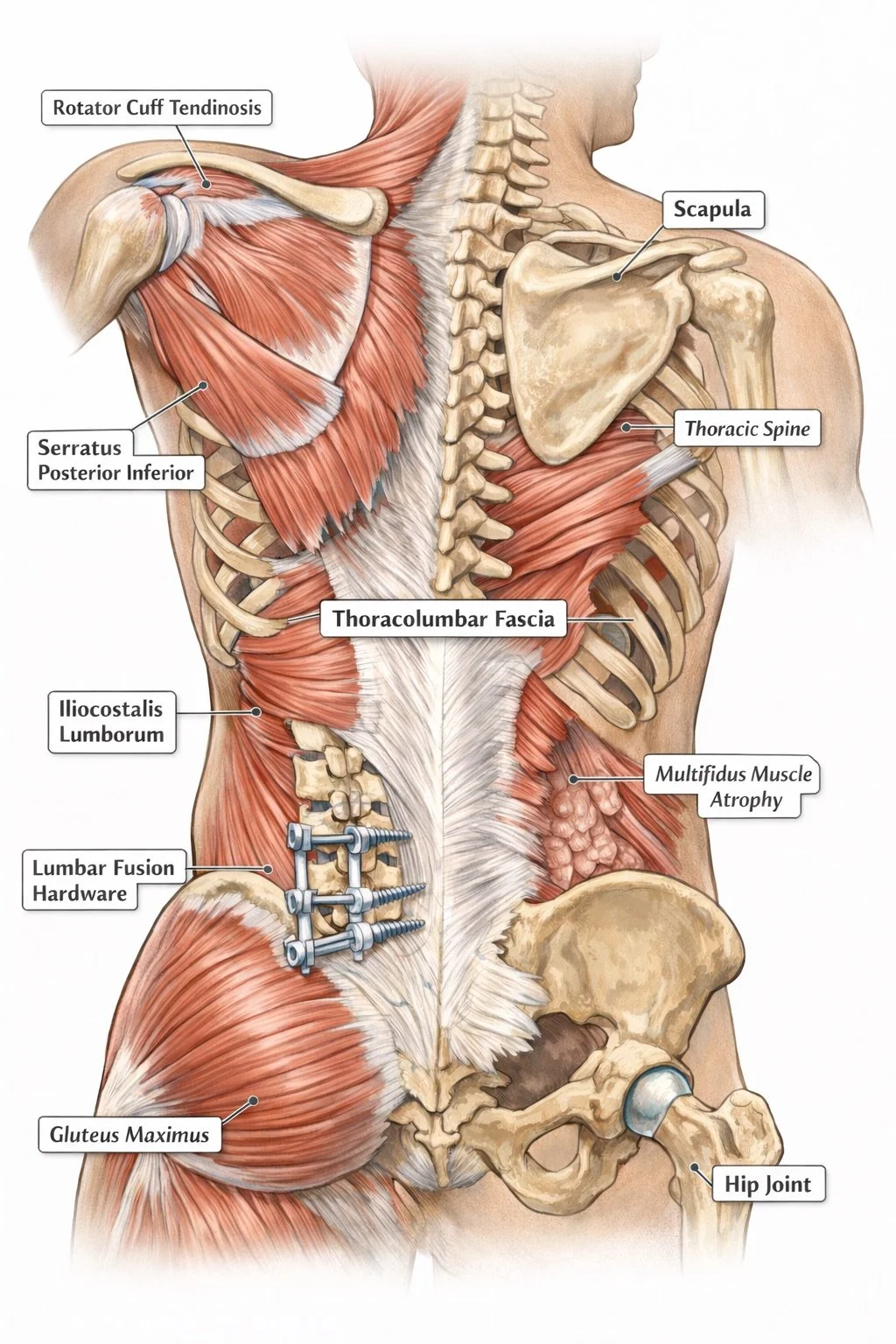
Shoulder Pain With Full ROM: Rotator Cuff Tendinosis, Scapular Control, and the Low-Back Connection
ABSTRACT
Rotator cuff tendinosis and biceps tendonitis can hurt even with a full range of motion. Learn how scapular dyskinesis, trunk control, and thoracolumbar fascia load transfer can connect shoulder pain (45–75° arc) to low-back symptoms after lumbar fusion—and what a regional interdependence rehab plan looks like.
Key Topics
rotator cuff tendinosis
biceps tendonitis shoulder pain
shoulder pain with overhead lifting
shoulder pain 45 to 75 degrees
rotator cuff tendinopathy rehab
scapular dyskinesis and shoulder pain
scapular mechanics trunk stability
thoracic spine and shoulder function
regional interdependence shoulder and low back
thoracolumbar fascia function
shoulder pain after lumbar fusion
thoracolumbar fascia load transfer arms and legs
shoulder pain with light load mid-range
trunk control exercises for shoulder pain
low back pain triggered by arm loading
shoulder rehab Denver
personal trainer shoulder pain Denver
rotator cuff rehab Denver
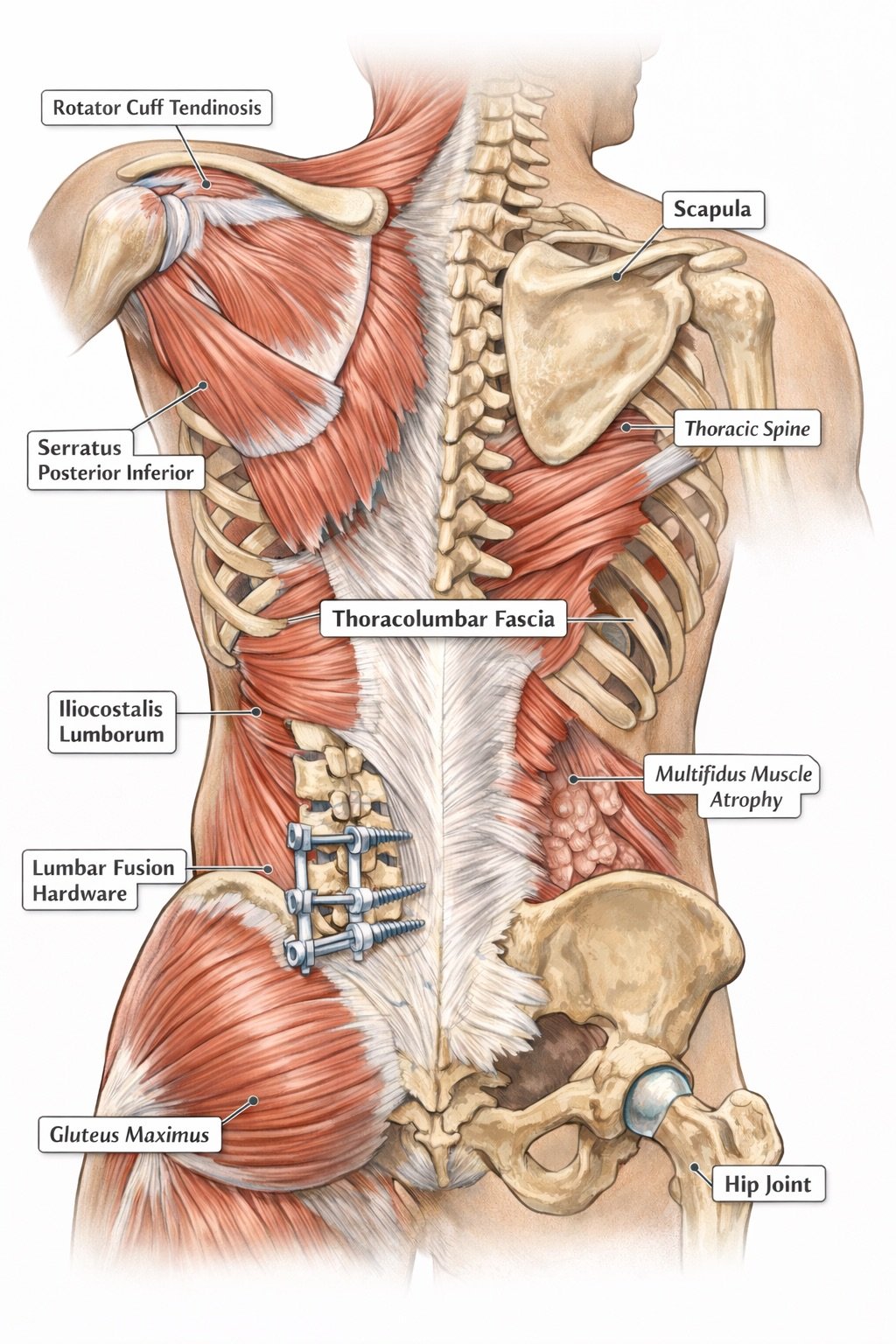
Don’t let this type of shoulder discomfort take you away from your personal training sessions in Denver……but don’t ignore it either.
client injury
You received the following diagnosis after a review of her MRI findings: "MRI reviewed shows rotator cuff tendinosis, no full-thickness tear identified. Biceps tendonitis. AC arthrosis. Intact GH cartilage. left rotator cuff tendinosis and biceps tendonitis." Despite this diagnosis, you have a full range of motion on frontal and lateral raises. You feel discomfort, though, when the shoulder raise is loaded through the 45 to 75 degree phase of the movement with a light load. Other considerations include your lower back. You had a spinal fusion about two years ago and have chronic pain in the lower left lumbar region. When you perform a single-leg squat on your left leg while raising and extending both arms in front, you experience discomfort in your left serratus and in the areas of your serratus posterior inferior and iliocostalis lumborum. When placing your left foot in front of your right foot on a line, you feel a stretch in your left oblique. In contrast, you don't feel the oblique while stepping one foot in front of the other on a line, but tend to drop your left shoulder when the left foot is placed in front of the right foot on the line. Also, you unconsciously externally rotate your left foot while exercising on the Helix Lateral Elliptical.
The Assessment
Our working theory for right now: Your shoulder and lower back are connected through the muscles and connective tissue that transfer force between your arms and legs. Because your lower back had to adapt after surgery, your body now relies more on specific muscles and tissues on the left side to stabilize you. When you load your arms—especially in specific ranges—those tissues get overworked, which irritates both your shoulder and your lower back. The goal isn’t just to strengthen your shoulder or protect your back, but to help your whole system share the load more evenly again. Here's a more technical breakdown:
1. The shoulder does not function independently of the trunk
The shoulder complex depends on a stable yet adaptable base formed by:
the thoracic spine,
the rib cage,
the scapulae,
and the thoracolumbar fascia.
In your case:
Your left shoulder pain is provoked under load, not by range alone.
Your left lumbar region becomes symptomatic during arm-loaded single-leg tasks.
This indicates a load-transfer problem, not simply a local tissue problem.
2. The thoracolumbar fascia is the key connector
The thoracolumbar fascia (TLF) is a dense connective tissue system that:
connects the latissimus dorsi, serratus posterior inferior, obliques, multifidi, and gluteus maximus,
transmits force between the upper limb and lower limb,
provides passive stiffness and proprioceptive input during movement.
Why this matters for You
Your discomfort localizes near the left paraspinal incision and lateral lumbar musculature.
You report discomfort in the serratus posterior inferior / iliocostalis region during arm-loaded, single-leg tasks.
These structures are directly integrated through the TLF.
When you raise your arms—especially under load—the demand for force transmission through this fascial system increases. If one link is compromised, stress is shifted elsewhere.
3. Lumbar fusion alters load-sharing and motor control
Following an L4–5 fusion:
Segmental motion is intentionally eliminated.
Adjacent musculature and fascial tissues must absorb and redirect forces that were previously distributed across spinal motion segments.
Deep stabilizers (e.g., multifidi) often show atrophy or delayed activation, as your MRI has already documented.
Clinical consequence:
When you perform tasks requiring trunk stiffness (single-leg stance, arm elevation, reaching), you likely rely more on:
lateral trunk musculature,
thoracolumbar fascia tensioning,
and rib-scapular strategies.
This increases local tissue strain near the left hardware region and the lateral lumbar fascia.
4. How this feeds directly into your shoulder symptoms
Scapular mechanics depend on trunk control
Efficient shoulder elevation requires:
thoracic extension and rotation,
rib cage control,
coordinated serratus anterior and lower trapezius activity.
If the trunk is:
guarding,
asymmetrically stiff,
or over-recruiting lateral stabilizers,
then the scapula:
upwardly rotates less efficiently,
posteriorly tilts less,
and places greater compressive demand on the rotator cuff and biceps tendon—especially in the 45–75° mid-range, exactly where you report discomfort.
This explains an important clinical paradox
You have:
full shoulder ROM,
good isolated strength,
yet pain with light loading in a specific arc.
That pattern is classic for proximal control failure, not primary shoulder weakness.
5. Your observed compensations support this model
Each of your observations reinforces the same system-level explanation:
A. Single-leg squat (left) plus arms straight forward leads to left lumbar/serratus discomfort
This task dramatically increases:
anti-rotation demand,
lateral trunk stiffness demand,
force transfer through the thoracolumbar fascia.
Your system responds by overloading the left lateral trunk instead of distributing the load.
B. Tandem stance with left foot forward leads to the left shoulder drop
Indicates difficulty maintaining lateral trunk and scapular alignment on the left.
The shoulder drop is a compensation to reduce trunk demand.
C. Left foot external rotation on the Helix
A distal strategy to create stability when proximal control is limited.
Often seen when the system is avoiding the demand for hip/trunk internal rotation.
These are not random habits; they are protective motor strategies.
6. Why treating only the shoulder (or only the back) is insufficient
If treatment focuses solely on:
Rotator cuff strengthening without addressing trunk control is likely to result in recurrent shoulder symptoms.
Lumbar pain without integrating upper-quarter load transfer, daily activities (reaching, lifting, swimming) will continue to provoke symptoms.
Your condition requires a regional interdependence approach:
shoulder loading tolerance,
scapular mechanics,
trunk stiffness and endurance,
hip contribution,
and graded re-exposure to integrated patterns.
Research-Based Citations
Yang Y, Wu Y, Zhang H, Zhang J, Li J, Li S, et al. (2025). An additional rehabilitation program to improve postoperative outcomes in patients with rotator cuff tears and scapular dyskinesis: a propensity score-matched study. BMC Musculoskeletal Disorders.
PMID: 40188115
DOI: 10.1186/s12891-025-08596-x
Vining R, Onifer SM, Twist E, Ziegler AM, Corber L, Long CR. (2023). Thoracolumbar fascia mobility and chronic low back pain: Phase 1 of a pilot and feasibility study. Journal of Bodywork and Movement Therapies.
PMID: 37301552
DOI: 10.1016/j.jbmt.2023.04.004
Lin GX, Ma YM, Xiao YC, Xiang D, Luo JX, Zhang GW, Ji ZS, Lin HS. (2021). The effect of posterior lumbar dynamic fixation and intervertebral fusion on paraspinal muscles. BMC Musculoskeletal Disorders.
PMID: 34930199
DOI: 10.1186/s12891-021-04943-w
PubMed: https://pubmed.ncbi.nlm.nih.gov/34930199/
Frequently Asked Questions (FAQs)
1) What is rotator cuff tendinosis (tendinopathy)?
Rotator cuff tendinosis is a chronic overload/degeneration pattern in the tendon (often without a full-thickness tear). Symptoms frequently show up with loading and repetition more than with the range of motion alone.
2) Why can I have full shoulder range of motion but still feel pain when lifting?
A full ROM with pain during a specific loaded arc often suggests a load-management and control issue—how force is transferred and distributed—rather than a simple “you’re weak” problem.
3) Why does shoulder pain commonly show up between ~45–75 degrees of elevation?
Mid-range elevation can increase compressive demand on the rotator cuff and biceps tendon—especially if scapular upward rotation/posterior tilt and trunk mechanics are not coordinating efficiently.
4) What is scapular dyskinesis, and why does it matter here?
Scapular dyskinesis is an alteration in scapular position or movement. If the scapula does not rotate upward or posteriorly tilt well, the shoulder may “borrow” stability from the rotator cuff and biceps tendon during elevation, increasing the risk of irritation.
5) How could a lumbar fusion influence shoulder symptoms?
After fusion, the system has fewer motion segments to share load, and paraspinal muscles can demonstrate atrophy/degenerative changes. That can shift stabilization strategies during reaching and lifting—especially in single-leg or anti-rotation tasks—contributing to overload elsewhere.
6) What does the thoracolumbar fascia have to do with shoulder and low-back pain?
The thoracolumbar fascia is a layered connective-tissue system involved in trunk stiffness and load transfer. Research using imaging approaches suggests altered mechanics of the thoracolumbar fascia (e.g., reduced shear strain/mobility) in chronic low-back pain populations.
7) What is a “regional interdependence” rehab approach?
It means you train the painful area (shoulder) and the regions that feed it (thorax/rib cage, trunk, hips) so the whole system shares load more evenly during real tasks like lifting, reaching, and single-leg stability.
8) What types of exercises usually fit this presentation?
Common categories include: scapular control (serratus anterior/lower trap bias), thoracic mobility/extension tolerance, trunk endurance (anti-rotation/anti-extension), hip contribution (especially single-leg stability), and graded re-loading of the painful arc.
9) When should I get medical evaluation vs. self-manage?
Seek evaluation promptly if you have significant night pain, rapidly worsening weakness, neurological symptoms, fever/unexplained swelling, or loss of function after a traumatic event. Otherwise, a progressive loading plan guided by symptoms and function is often appropriate.
ABOUT THE AUTHOR: MICHAEL MOODY, PERSONAL TRAINER
As an author, a personal trainer in Denver, and podcast host, Michael Moody has helped personal training clients achieve new fitness heights and incredible weight loss transformations since 2005. He also produces the wellness podcast "The Elements of Being" and has been featured on NBC, WGN Radio, and PBS.
Michael offers personal training to Denver residents who want to meet at the 2460 W 26th Ave studio….or in their homes throughout LoHi (80206), LoDo (80202), RiNo (80216), Washington Park (80209), Cherry Creek (80206, 80209, 80243, 80246, 80231), and Highlands (80202, 80211, 80212). Michael also offers experiences with a personal trainer in Jefferson Park (80211) and Sloan's Lake (80204, 80212).
If you’re looking for a personal trainer who can curate a sustainable (and adaptable) routine based on your needs and wants, Michael is the experienced practitioner you’ve been looking for. Try personal training for a month…your body will thank you!
PERSONAL TRAINER BLOG

Daily Habits to Prevent Weight Gain: Evidence-Based Tips From a Personal Trainer
ABSTRACT
Learn practical, evidence-based daily habits to prevent weight gain from a seasoned personal trainer. Discover how eating more fiber, moving for 30 minutes a day, getting quality sleep, and mindful indulgences support weight maintenance and healthy living. Expert tips rooted in research for long-term success — no extreme dieting required.
Research-Based Citations
1. Fiber and Weight Management
Full citation:
Xiang M, Qiao L, Han Q, et al. Effects of Supplementation With Different Specificities of Dietary Fiber on Health-Related Indicators in Adults With Overweight or Obesity: A Systematic Review and Meta-analysis of Randomized Controlled Trials. Nutrition Reviews. 2025;83(7):e1544–e1563.
PMID: Not indexed on PubMed at time of check (Nutrition Reviews not yet in PubMed for this version).
DOI: 10.1093/nutrit/nuae193
Publisher: https://doi.org/10.1093/nutrit/nuae193
Relevance: Meta-analysis demonstrates that dietary fiber interventions influence health indicators relevant to weight regulation and metabolic health.
2. Exercise and Weight Maintenance
Full citation:
Oppert J-M, Ciangura C, Bellicha A. Physical activity and exercise for weight loss and maintenance in people living with obesity. Reviews in Endocrine and Metabolic Disorders. 2023;24:937–949.
PMID: 37166641
DOI: 10.1007/s11154-023-09805-5
Publisher: https://doi.org/10.1007/s11154-023-09805-5
Relevance: This review outlines the integral role of physical activity in weight loss and maintenance, supporting the daily movement strategies described in your post.
3. Sleep Duration and Calorie Intake
Full citation:
Tasali E, Wroblewski K, Kahn E, Kilkus J, Schoeller DA. Effect of Sleep Extension on Objectively Assessed Energy Intake Among Adults With Overweight in Real-Life Settings: A Randomized Clinical Trial. JAMA Internal Medicine. 2022;182(4):365–374.
PMID: 35048643
DOI: 10.1001/jamainternmed.2021.8098
Publisher: https://doi.org/10.1001/jamainternmed.2021.8098
Relevance: Demonstrates that increasing sleep duration significantly lowers energy intake — aligning with your bedtime habit section.
Key Topics
prevent weight gain daily habits
daily habits to prevent weight gain
how to avoid weight gain every day
everyday weight management tips
best habits for weight maintenance
fiber for weight prevention
daily exercise prevent weight gain
sleep and weight control tips
personal trainer weight management advice
mindful eating habits for weight control
daily lifestyle tips that prevent weight gain
how much fiber should I eat to avoid weight gain
how sleep affects daily calorie intake
simple daily routines for weight maintenance
walking daily for healthy weight regulation
Frequently Asked Questions (FAQs)
1. What daily habits help prevent weight gain?
Daily habits that support weight stability include meeting daily fiber goals, engaging in at least 30 minutes of physical activity, choosing balanced meals (such as one large salad), and getting regular sleep. These behaviors help regulate appetite, energy balance, and metabolic rhythms in the long term.
2. Why is fiber important for preventing weight gain?
Dietary fiber increases feelings of fullness, may reduce overall calorie intake, and can support body weight regulation by slowing digestion and maintaining blood sugar stability. Higher fiber intake is associated with greater satiety and a lower long-term risk of weight gain.
3. How much daily exercise prevents weight gain?
Public health guidelines recommend at least 150–300 minutes per week of moderate activity (about 30 minutes most days) to support weight maintenance and overall health. Regular movement increases total energy expenditure and helps counterbalance daily caloric intake.
4. Does sleep affect weight management?
Yes. Short sleep duration is linked to increased energy intake and can bias food choices toward higher-calorie foods. Extending sleep has been shown to reduce calorie intake and support a negative energy balance — potentially helping to prevent weight gain.
5. Can small daily indulgences help with cravings?
Mindful, small daily treats may reduce the sense of deprivation that leads to binge episodes in some people. However, the effectiveness of this strategy depends on emotional and behavioral context; avoid keeping large quantities of triggers readily available.
6. Why is movement beyond structured workouts important?
Non-exercise activities like walking, taking stairs, or standing more often increase daily energy expenditure and help prevent sedentary habits associated with weight gain. It complements structured workouts.

Chocolate Weight Loss / Photo: Lisa from Pexels
Introduction
Here's a quick list of ways to prevent weight gain daily. It's helped my personal training clients lose weight and will help you, too (from the article 6 Things You Can Do Every Day to Prevent Weight Gain).
List of Things You Can Do Every Day to Prevent Weight Gain
1. SAVE YOGA PANTS FOR YOGA
Wearing leggings when you're not down dogging is comfy, yes, but a bad habit to get into. The stretchy fabric and elastic waistband are so forgiving that you'll have no idea if your waist is expanding. Save the spandex for your workouts and opt for something more structured like a pair of jeans or a fitted dress so you can keep tabs on your waistline.
Personal Trainer Wisdom: I guess this is one way to keep yourself in check. Maybe. I like thinking about this scenario a bit different. Yes, save yoga pants for yoga but dress up for other experiences. Feel good about the way you look while wearing a new dress or suit. The psychology in those moments might be the motivator to work even harder during your fitness sessions!
2. FIBER, AND MORE OF IT
Fiber has the ability to fill you up for hours. Include at least eight grams at every meal and three to four at every snack to help you reach a goal of 25 to 30 grams a day. Nosh on fruits, veggies, nuts, and seeds and you'll have no problem getting your fill.
Personal Trainer Wisdom: Add beans, lentils, and seeds to every meal for a nutritional punch: protein, fiber, the good fat, and more!3. 30 MINUTES, AT LEAST
Get in the habit of moving daily. Aim for at least a half hour, with four to five days devoted to more rigorous or longer workouts, and two to three days a more moderate workout like walking, hiking, or stretching. Be sure to include strength training with weights since building muscle helps you burn calories faster. If you don't have time, studies show that even 15 minutes proves beneficial.
Personal Trainer Wisdom: We're meant to move every day. Unfortunately, our sedentary lifestyles keep us locked onto a chair. Make a point to at least walk more (8000-10000 steps daily).4. EAT ONE EVERY DAY
Make one meal of the day a big, huge salad to fill up on fiber without a ton of calories. Include a variety of greens and fresh veggies in your salad along with a low-fat protein source like cooked beans to make it even more filling, plus avocado or sunflower seeds to add healthy fats. Ensure you eat one salad every day by making a week's worth all at once.
Personal Trainer Wisdom: Honestly, a stir-fry without oil is a more nutrient-dense option than a salad. Nevertheless, this choice could give you the push you need more vegetables in your diet. Every salad doesn't have to be the same, either. In fact, it should be a great balance of different vegetables (not just leafy greens). Review the menus from your favorite restaurants for inspiration!5. CHOCOLATE, ALCOHOL, OR FRENCH FRIES
Cravings only grow stronger with time, so keep them at bay by giving in to them! Indulging a little every day will settle those cravings, so you can move on and stay committed to your healthy diet. The key, though, is to enjoy a small taste and to be done. Don't let a little indulging turn into a week of eating whatever you want.
Personal Trainer Wisdom: Hmmmmmmm....a little every day will settle those cravings? Maybe. Your success doing this will depend on your emotional connection to the food (and your self-control). I love chocolate and have faced the truth: If there's chocolate in front of me, I will eat it....I will eat all of it! Sometimes you're better off staying away from the treats at home and only indulging at social events every once in awhile. It might be the strategy you need to finally lose weight and/or keep it off.6. Consume More Sleep
Research shows those who are sleep-deprived tend to eat hundreds of calories more, not just because they're awake longer, but because sleep affects levels of hunger-regulating hormones.
Feeling tired makes you more likely to reach for sugary pick-me-ups. Get to bed at the same time every night (even on weekends), and set your alarm for the next day, making sure to get between seven and nine hours of sleep.
As a bonus, the extra energy will allow you to hit your a.m. personal training session with intensity, instead of hitting the snooze button and skipping out.
Personal Trainer Wisdom: Hands down (or heads down in this case), sleep is important no matter the goal.
ABOUT THE AUTHOR: MICHAEL MOODY, PERSONAL TRAINER
As an author, a personal trainer in Denver, and podcast host, Michael Moody has helped personal training clients achieve new fitness heights and incredible weight loss transformations since 2005. He also produces the wellness podcast "The Elements of Being" and has been featured on NBC, WGN Radio, and PBS.
Michael offers personal training to Denver residents who want to meet at the 2460 W 26th Ave studio….or in their homes throughout LoHi (80206), LoDo (80202), RiNo (80216), Washington Park (80209), Cherry Creek (80206, 80209, 80243, 80246, 80231), and Highlands (80202, 80211, 80212). Michael also offers experiences with a personal trainer in Jefferson Park (80211) and Sloan's Lake (80204, 80212).
If you’re looking for a personal trainer who can curate a sustainable (and adaptable) routine based on your needs and wants, Michael is the experienced practitioner you’ve been looking for. Try personal training for a month…your body will thank you!

New Year Intentions Not Resolutions: A Principle-Driven Plan for Fitness, Focus, and Fulfillment
“You do not rise to the level of your goals. You fall to the level of your systems.”
ABSTRACT
Shift from New Year’s resolutions to principle-driven intentions. Build realistic fitness goals (10,000 steps, strength training, Peloton cardio, Colorado hiking), strengthen relationships, reduce stress, protect attention, and support a whole-food plant-based lifestyle. A self-compassion framework for sustainable change.
Research-Based Citations
Wakelin KE, Perman G, Simonds LM. (2022). Effectiveness of self-compassion-related interventions for reducing self-criticism: A systematic review and meta-analysis. Clinical Psychology and Psychotherapy.
PMID: 33749936
DOI: 10.1002/cpp.2586
Musicus AA, Wang DD, Janiszewski M, Eshel G, Blondin SA, Willett W, Stampfer MJ. (2022). Health and environmental impacts of plant-rich dietary patterns: a US prospective cohort study. The Lancet Planetary Health.
PMID: 36370727
DOI: 10.1016/S2542-5196(22)00243-1
Wang YH, Wang J, Chen SH, Li JQ, Lu QD, Vitiello MV, et al. (2020). Association of Longitudinal Patterns of Habitual Sleep Duration With Risk of Cardiovascular Events and All-Cause Mortality. JAMA Network Open.
PMID: 32442289
DOI: 10.1001/jamanetworkopen.2020.5246
Key Topics
New Year intentions vs resolutions
principle-driven living intentions
sustainable New Year goals
self-compassion and habit change
values-based goal setting
personal trainer New Year intentions
realistic fitness resolutions
10,000 steps a day plan
strength training and cardio weekly plan
hiking goals Colorado
sleep routine for recovery
attention management and burnout prevention
stress reduction routines and nervous system regulation
healthy boundaries to avoid overextending
Frequently Asked Questions (FAQs)
1) What is the difference between New Year's intentions and New Year’s resolutions?
Intentions emphasize how you want to live (principles and values), while resolutions often fixate on outcomes. Intentions create a flexible framework you can return to when life disrupts the plan.
2) Why do most New Year’s resolutions fail?
Many fail because they are overly rigid, perfection-driven, and disconnected from realistic routines and capacity. A principle-based approach makes “recalibration” part of the process, not a sign of failure.
3) How can self-compassion help me stick to my goals?
Self-compassion reduces harsh self-criticism after setbacks, helping you return to routine faster and with less emotional friction.
4) What is a realistic weekly fitness structure for busy adults?
A sustainable template is 3–5 strength sessions, 1–3 cardio sessions (including hiking or brisk walking), plus brief mobility sessions. Consistency beats intensity, especially across months.
5) Is walking 10,000 steps a day necessary for cardio health?
It is not mandatory, but it is a simple, trackable baseline that increases daily movement and can complement structured cardio. The best target is the one you can sustain week after week.
6) How does sleep support fitness progress and stress reduction?
Sleep improves recovery, emotional regulation, and decision-making. Consistent sleep duration (and stable patterns over time) is associated with better long-term health outcomes.
7) How do I reduce burnout while pursuing big goals?
Define boundaries in your schedule, standardize recurring tasks, limit decision fatigue, and use “attention windows” for phone and inbox use. Build early detection for burnout and respond early.
8) Why include environmental stewardship in a goal plan?
Because your daily defaults (food choices, waste habits, transportation, consumption) shape your footprint. Tying sustainability to routines makes it more consistent than relying on motivation.
9) What is a simple way to make plant-based eating more consistent?
Create a weekly grocery routine, repeat a short list of breakfasts and lunches, and aim for a plant-forward baseline (for example, 75% plant-based meals).
10) What should I do when I fall off my plan?
Treat it as expected. Audit what changed (sleep, stress, schedule, capacity), reduce the plan to the smallest viable version, and restart with kindness rather than punishment.
Introduction
New Year’s resolutions arrive carrying hope, clarity, and motivation, yet they often collide with the reality of busy lives, limited energy, and imperfect execution. In Redefine Yourself, I wrote about the danger of treating change as a performance rather than a practice. Transformation is not sustained by intensity alone; it is sustained by patience, consistency, and self-compassion. Lots of self-compassion. These intentions are not a demand for perfection, nor a rigid checklist meant to invite guilt when life inevitably interferes. They are a framework—one that asks me to stay engaged, to return to center when I drift, and to treat myself with the same empathy and understanding I aim to offer others.
At their core, these intentions reflect a deliberate shift away from outcome-driven resolutions and toward principle-driven living. They emphasize attention over distraction, health over optimization, connection over productivity, and contribution over accumulation. Physical health, emotional regulation, relationships, environmental stewardship, travel, professional fulfillment, systems, and financial stability are not treated as isolated silos but as interconnected systems that either support or strain one another. The recurring themes are intentionality, restraint, presence, and responsibility—especially responsibility for how I allocate my time, energy, and attention. This is about defining a life that serves both my needs and the broader good, even when that path requires effort, discomfort, or sacrifice.
Most importantly, these intentions acknowledge that growth is nonlinear. There will be weeks when routines break down, when stress overrides planning, or when progress feels invisible. That is not failure; it is part of the process. The commitment here is not to flawless execution, but to honest reflection and recalibration. To notice when I am overextending myself, to step back when needed, and to choose kindness—toward myself and others—as a baseline response. These intentions are meant to guide, not judge. They exist to support a life that is healthier, more grounded, more connected, and more aligned with the values I want to embody daily, not just at the start of a new year. Now, let them guide your list and life. Happy New Year!
THE Principles TO GUIDE MY INTENTIONS
Examine my focus and efforts toward current relationships and reallocate more time to each if necessary.
Review and adapt my present routines to support optimal health.
Define a life that serves my needs and contributes to society and humanity's greater good.
Act and think with a baseline of empathy, compassion, and kindness.
Seek understanding of myself and others before judgment.
Choose the most appropriate path despite the effort or personal sacrifice.
Celebrate equality and diversity of living things and perspectives.
Take control of my attention.
Define the boundary lines of overextending myself personally and professionally.

LIST OF MY IntentIONs
Area 1: My Physical Health Intentions
My EXERCISE IntentIONS
Specific Health Objectives
Increase cardio endurance by achieving at least 10000 daily steps per day, two cardio sessions per week on the Peloton bike or Helix (unless I hike, then one session), and thirty hikes of four miles or more by the end of the year. Include my son and pup, Bear, and at least ten of those hikes.
Hike at least twenty different Colorado routes.
Hike two 14ers in the Buena Vista area and two in the San Juan Mountain Range. Hike five 13ers by the end of the year.
Complete four to five strength/muscular endurance sessions, two cardio sessions (including a hike), and three abbreviated range-of-motion focused sessions of the lower limb each week.
Specific Exercise Plan
Monday
45-minute Strength Session
Circuit Muscle Focus: Chest and Biceps, Core, Hip Mobility/Range-of-Motion Routine
Tuesday
45-minute Strength Session
Circuit Muscle Focus: Back and Triceps, Core, Range-of-Motion Routine
Wednesday
30-minute interval on a cardio machine
Circuit Muscle Focus: Core, Hip Mobility/Range-of-Motion Routine
Thursday
45-minute Strength Session
Circuit Muscle Focus: Shoulders, Core, Range-of-Motion Routine
Friday
45-minute Strength Session
Circuit Muscle Focus: Arms, Core, Hip Mobility/Range-of-Motion Routine
Saturday or Sunday
Hike with at least 1000 feet of elevation gain and 4 miles of length
Every Day
10k steps and a plank per weekday by adding an extra walk with my pup if necessary.
My Recovery IntentIONS
Specific Recovery Objectives
Sleep 7.5 hours every night and rest from workouts on Saturdays and Sundays (unless a hike)—specific intent: In bed by 11:00 pm and waking up by 6:35 am (no snoozing). Complete your late-night bedtime routine by 10:30 pm, then start reading. Limit water consumption 2 hours before bedtime. No phone after 10:00 pm.
My Dietary IntentIONS
Overarching Goals:
To minimize inflammation, triglyceride levels, and fluctuating blood sugar levels resulting from dietary choices. Specifically, maintain triglyceride levels of 150 or lower. This number is typically genetically higher than the other numbers. Thanks, Dad! I’m responsible for anything above 150, though. Fasting 12-14 hours overnight between the last and first meals for clearance, and eat three meals per day with occasional snacking (indulgence).
Reduce stress and anxiety by limiting caffeine to 1 cup (half a mug) and prioritizing sleep. No caffeine after noon.
Specific Daily Dietary Objectives
Never feel stuffed or starved; eat within 5-6 hours of the last meal (unless overnight).
Assess cues that drive current snacking habits and change the influences that lead to this behavior.
Stop eating a meal at the first sign of feeling satisfied.
Mindfully prepare the size of my 8-year-old’s leftovers, and don’t eat his leftovers :).
13 out of 21 meals per week are whole-food plant-based, free of oil, meat, processed foods, and refined sugars.
Only 1-2 servings of dairy per week (less is better).
Minimize the consumption of anything processed (including vegan and vegetarian products). Choose whole food plant-based options as often as possible.
At least 75% of meals per day must be plant-based.
Calories: 600-800 per meal.
Plate Ratio: 25-50% Vitamins, phytonutrients, and other micros and macros, 25-40% Protein, 15% Good Fat, 25% Fiber.
Choose 5 breakfasts and 5 lunches to repeat.
Start my day with 16 oz of water before caffeine.
Eat without screens during dinner.
Book yearly check-ups and labs in January and reevaluate the approach.
Specific Social Dietary Objectives
Use the Daily Dietary Objectives above as a baseline when eating out (and no matter who I’m with).
Eat a complete small meal before snacking (to avoid snacking).
Restrict extracurricular eating/treats to 4 servings per week.
Limit sips of alcohol to 2 days or less. Always choose the small pours if available (3oz glass of wine or 5 oz of beer). Limit beer consumption to 16 oz on a given day of indulgence. Red wine is the first preference.
Alternate sips of water and alcohol when indulging.

Area 2: My Emotional and Mental Health Intentions
My Reflection IntentION
Specific Objective
Identify one positive characteristic of the day while brushing my teeth in the evening.
My Attention IntentionS
Specific Objectives
Continue to abstain from social media.
Limit phone projects to 8-8:30 am, 12:30-1:00 pm, and 8-8:30 pm. Only write notes or answer text messages otherwise.
Keep my inbox to two or fewer emails by unsubscribing from unnecessary emails and using email templates and correspondence more efficiently. Clean out any extra emails by 1:00 pm every Friday.
Only check the news once daily.
Audit my week: identify 3 recurring drains.
Identify my early signs of burnout and document them. Respond early (reduce load; increase rest; simplify).
My REFRAMING IntentION
Specific Objective
Replace all complaints with constructive criticism, or reframe the message to cast it in a positive light. After a complaint, mentally present one counter-argument.
My Stress IntentIONs
Specific Objectives
Build greater emotional range and self-control. Use a 10-second pause before responding when triggered. Name the emotion (“I’m frustrated”) to reduce reactivity.
Arrive 5 minutes early for any planned event and 80 minutes early to the airport before a flight.
Establish a daily nervous system “downshift” practice by integrating a 5-minute walk, meditation, or cardio activity midday.
Design my week to reduce cognitive overload by checking my phone only when necessary, limiting major decision-making to designated blocks, and ending each workday by writing tomorrow’s top three priorities.
Reduce decision fatigue by standardizing and designating specific times of the week for routine tasks, such as grocery orders on Sundays, client schedules on Thursday mornings, bookkeeping on Mondays (package renewals and closing sessions), and scheduling the next week’s emails on Fridays.
Use “stress forecasting” instead of stress reacting by planning to complete annual taxes, annual corporate paperwork, birthday messages, and certifications at least 30 days in advance, and corporate quarterly taxes at least 15 days in advance.
Evaluate shopping needs on Sundays, and shop online only before 6:00 pm.

AREA 3: My Relationship IntentIONS
Overarching Goal: Foster positive and meaningful relationships that support and enhance my life.
Specific Spouse Objectives
Protect a weekly 30-minute “marriage/family meeting” for schedule, finances, stress, childcare, and plans. Use a set agenda (wins, challenges, logistics, connection). End with one shared plan or action.
Build consistent micro-connection habits. Include a hug with every kiss goodbye and hello, as well as 10 minutes of distraction-free conversation nightly.
Plan a bi-monthly date time without negotiation. Book the next 3 dates in advance. Alternate planning responsibility. Treat it as a commitment, not an option.
Keep romance and intimacy intentional. Discuss expectations openly once a month. Build an “us list” (activities that restore connection). Remove friction (energy management, reduced screen time, better bedtime).
Specific Family and Parent Objectives
Plan at least 2 hands-on 30-minute activities weekly with my son (e.g., Legos, drawing comics, and science projects).
Create a family culture statement. Define 3 values we want our home to embody (respect, faith, health, kindness, etc) and turn values into behaviors (how you speak, solve, and support).
Improve patience by building a parenting buffer. Build 10 minutes of margin before transitions (school, bedtime). Use pre-planned scripts (“I hear you. Here’s what we’re doing next.”).
Prioritize presence: no screens during family meals, and put the phone down during conversations.
Walk my son to school every day and take him to Cub Scouts, soccer, and swim class.
Ask my son to share one thing he learned that day during nightly dinners.
Specific Friends, Family, and New People Engagement Objectives
Engage in more meaningful conversations with friends, family, and new people (even if I’m only spending a minute on the elevator with them) and foster new relationships with people who embody empathy, compassion, and kindness as a foundation for their behaviors and perspectives.
Contact my inner circle of family and friends at least once per month via phone call, text, or in-person meetups. Call someone new on the way to and from my bi-weekly hikes.

Area 4: My Environmental Stewardship, Sustainable Living, Community-Building Intentions
Overarching Goal: To reduce my carbon footprint and raise a new consciousness about the environment and agriculture.
Specific Whole Food Plant-Based Diet Objectives
Secure a 75% plant-based diet foundation by ordering my groceries online every Sunday afternoon. Reminder to myself: Plant-based eating is the most effective action any individual can take to influence global warming and preserve our environment while striving for optimal health.
Specific Waste/Pollution Reduction Objectives
Minimize use of Ziploc bags and other single-use plastics by using Pyrex containers and metal silverware.
Purchase in bulk and order several items in advance and online simultaneously.
Use biodegradable bags for trash.
Place all expired food in our compost bin and recycle all appropriate items.
Limit food waste by reviewing the sizes of prepared meals and prioritizing current produce and leftovers.
Take my son on at least four hikes (e.g., with rock and water features but little elevation gain).
Identify and test multiple methods to reduce water use. Evaluate the amount of water wasted when washing dishes and taking a shower.
Choose one family-based environmental project per quarter (cleanup, planting, conservation activity).
Specific Community-Building Intentions
Plan a neighborhood block party and spring clean-up.
Participate in the Stevens Elementary PTO board.

Area 5: MY Travel INTENTIONS
Overarching Goal: Expand my connection to various cultures and experience in new environments.
Specific Domestic Travel Objectives
Visit and stay overnight outside of Denver every 6-8 weeks! Make Colorado destinations, including Telluride and Crested Butte, a priority this year. Review our travel plans on the 1st of every month.
Plan three 2-day Colorado hiking trips (back-to-back 14ers).
Specific International Travel Objectives
Visit and stay overnight in a European city, London, or Mexico City by the end of 2026. Book our flights and travel plans by the end of the 2nd quarter.

Area 6: MY specific professional intentions
Overarching Goal: Adapt my professional life to maximize my satisfaction and increase the efficiency and effectiveness of my efforts. Foster a working retirement mentality.
General Business Objectives
Reassess all email templates by February 1st and adapt as needed to increase response time and limit phone and computer time.
Double-check every message and schedule confirmation before sending. This is a reminder to slow down!
Complete the “10-Year Project” for my business by June 2026, including my new system of assessments, predictive models, forms and templates, and website update.
Complete the accessible resources project for quick client reference by April 1st.
Update all passwords.
Specific Time Management Objectives
Maintain hard start–stop work boundaries with a daily shutdown ritual at 5:30 pm on weekdays (no weekends).
Schedule 1630 hours of personal training sessions and 5 weddings, including 1 elopement wedding in the Colorado mountains.
Take personal time off without guilt and without loading the schedule before and after, including birthdays and holidays.
Prepare for the next morning the night before by preparing meals, grinding coffee beans, setting out clothes, and placing backpacks/bags out.
Specific Education Objectives
Complete the Stretching and Flexibility Coach certification by April 1st.
Read at least 6 social psychology books, 1 political/civic-themed book, and 2 health and fitness books. Listen to 5 additional books on similar topics.

Area 7: My Systems, Life Organization, and Other Intentions
Overarching Goal: Rexamine my current personal structure and systems and adapt with efficiency and organization in mind.
Specific Home Objectives
Reorganize the garage and create an easy system for quick access.
Create an “energy” for each room of the house by experimenting with design and organization.
Organize all tools and create an organized system for quick access.
Specific Driving Objectives
Never surpass 5 mph over the speed limit unless the flow of traffic is faster.
Never check my phone while driving.
Come to a complete stop before turning.

Area 8: Financial Stability and Long-Term Planning intentions
Overarching Goal: Create financial stability with clearly defined goals through short-term and long-term planning.
Specific Long-Term Planning Objectives
Create a will.
Set up Preston’s college tuition fund.
ABOUT THE AUTHOR: MICHAEL MOODY, PERSONAL TRAINER
As an author, a personal trainer in Denver, and podcast host, Michael Moody has helped personal training clients achieve new fitness heights and incredible weight loss transformations since 2005. He also produces the wellness podcast "The Elements of Being" and has been featured on NBC, WGN Radio, and PBS.
Michael offers personal training to Denver residents who want to meet at the 2460 W 26th Ave studio….or in their homes throughout LoHi (80206), LoDo (80202), RiNo (80216), Washington Park (80209), Cherry Creek (80206, 80209, 80243, 80246, 80231), and Highlands (80202, 80211, 80212). Michael also offers experiences with a personal trainer in Jefferson Park (80211) and Sloan's Lake (80204, 80212).
If you’re looking for a personal trainer who can curate a sustainable (and adaptable) routine based on your needs and wants, Michael is the experienced practitioner you’ve been looking for. Try personal training for a month…your body will thank you!
EPISODE #10 - EAT FOR LIFE, WEIGHT LOSS, AND AN OPTIMAL IMMUNE SYSTEM WITH BEST SELLING AUTHOR DR. FUHRMAN
On “The Elements of Being” podcast, Michael dissects and explores the minds and habits of psychologists, filmmakers, writers, and industry icons. Essentially, you learn what makes them flip the switch to achieve incredible feats, goals, and milestones…and a chance to geek out over the psychology behind human behavior. In this episode, Michael interviews Dr. Joel Fuhrman, an internationally recognized nutrition and natural healing expert and author of seven New York Times bestsellers, including his most recent book, Eat for Life. His other bestsellers include Eat to Live and The End of Dieting (which I give to all my clients).
Read more and listen here… You can also listen to all episodes on Apple, Spotify, Overcast, Castbox, Stitcher, or your favorite podcast platform!
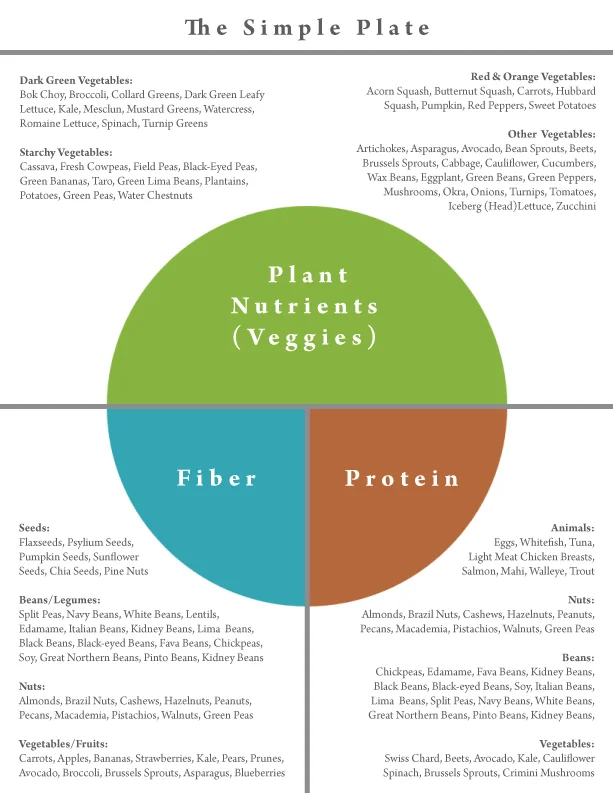
Balanced Diet for Weight Loss: How Protein, Fiber and Plate Ratios Help You Lose Weight
ABSTRACT
Lose weight with a balanced diet emphasizing high-fiber vegetables, lean protein, and proper portion ratios. Discover practical meal strategies based on scientific evidence to boost satiety, reduce inflammation, and support sustainable fat loss with nutrient-dense foods and caloric control.
Research-Based Citations
1) Increased Dietary Fiber and Weight Loss
Kelly RK, Calhoun J, Hanus A, Payne-Foster P, Stout R, Sherman BW. (2023). Increased dietary fiber is associated with weight loss among Full Plate Living program participants. Frontiers in Nutrition.
DOI: 10.3389/fnut.2023.1110748
Publisher:
a) Publisher: https://doi.org/10.3389/fnut.2023.1110748
Note: This open-access article clearly shows that greater intake of fiber-rich foods (fruits, vegetables, beans, whole grains) was significantly associated with weight loss in adults following a plant-predominant high-fiber nutrition program.
2) Protein + Fiber Enhanced Weight Loss
Glynn EL, Fleming SA, Edwards CG, Wilson MJ, Evans M, Leidy HJ. (2022). Consuming a protein and fiber-based supplement preload promotes weight loss and alters metabolic markers in overweight adults in a 12-week randomized, double-blind, placebo-controlled trial. The Journal of Nutrition.
DOI: 10.1093/jn/nxac038
Publisher:
a) Publisher: https://doi.org/10.1093/jn/nxac038
Note: In this randomized trial, a high-protein, higher-fiber nutritional preload resulted in greater weight loss and improved metabolic outcomes vs. a low-protein, low-fiber control in adults consuming a calorie-restricted diet.
Key Topics
balanced diet for weight loss
protein and fiber diet for weight loss
plate method nutrition
nutrient-dense foods weight loss
high-fiber foods for weight loss benefits
lean protein sources for fat loss
how protein and fiber improve satiety
calorie control and nutrition habits
dietary strategies to reduce inflammation
fiber intake and weight management evidence
plant-predominant diet weight loss evidence
nutrition plan to support exercise performance
Frequently Asked Questions (FAQs)
1. What is the “plate method” and how does it support weight loss?
A balanced plate method (large portions of vegetables, lean protein, and fiber-rich foods) promotes satiety, helps control calories, and supports nutrient sufficiency, which can support sustainable weight loss.
2. Why are protein and fiber important for fat loss?
Protein increases satiety and preserves lean muscle mass during calorie restriction, while fiber slows digestion, increases fullness, and is linked with greater weight loss when combined with a calorie deficit.
3. How does increasing fiber help with weight management?
Higher dietary fiber intake is correlated with greater weight loss and improved dietary adherence because fiber-rich foods keep you full longer and reduce overall calorie consumption.
4. Can nutrient-dense whole foods reduce inflammation and support weight loss?
Yes, consuming whole, nutrient-dense foods (vegetables, fruits, legumes, lean proteins) reduces systemic inflammation and improves metabolic profiles, aiding weight management and long-term health.
5. Is calorie restriction the only thing that matters for losing weight?
Calorie deficit is critical, but diet composition (quality of foods, fiber, and protein content) influences hunger, satiety, and metabolic health, making it easier to maintain weight loss over time.
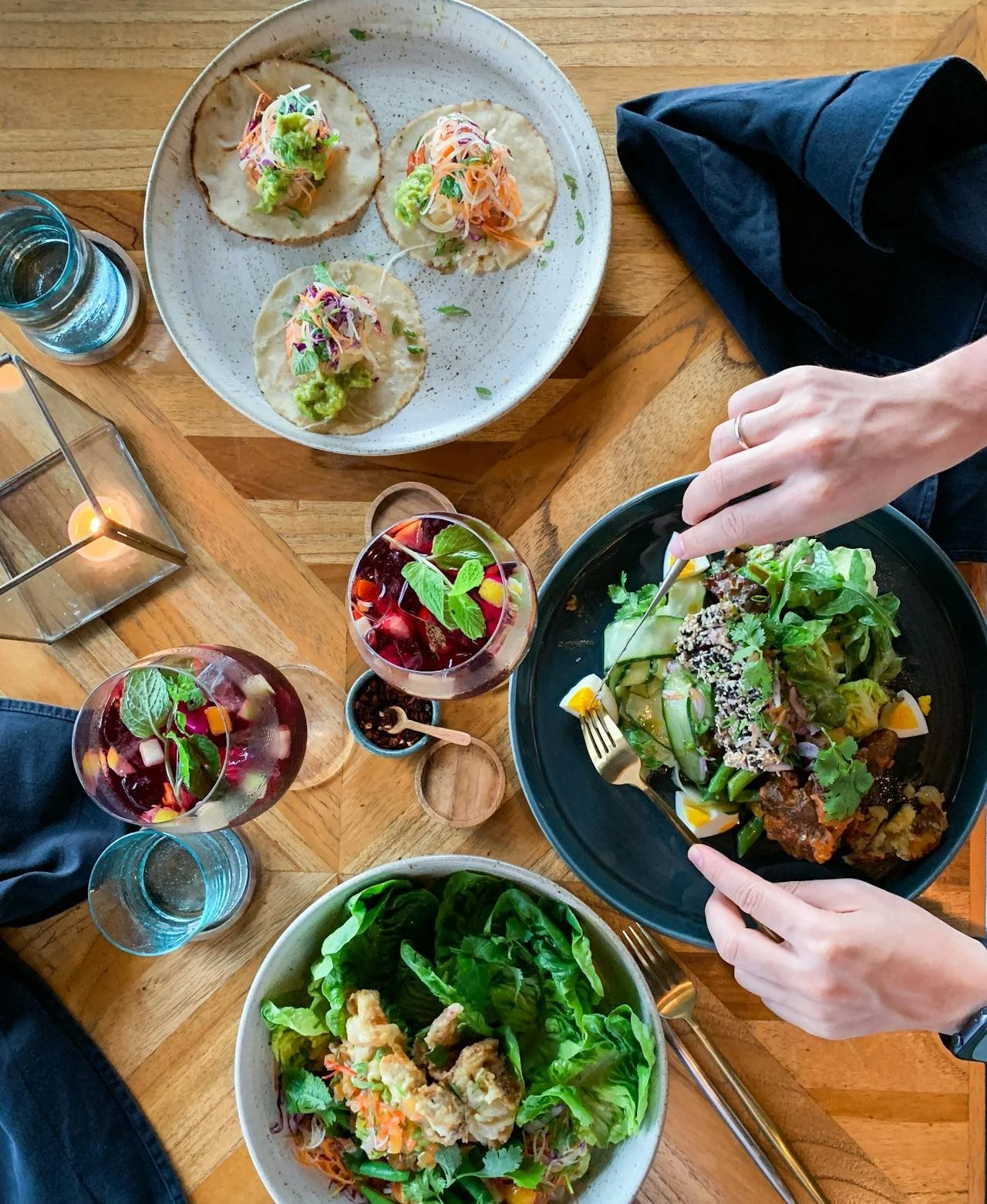
Weight Loss Resolutions / Photo: Anna Tukhfatullina Food Photographer/Stylist
Introduction
The most common misconception about achieving your best physical health is that fitness is the primary priority. While personal fitness (your strength, flexibility, muscular endurance, and cardio endurance) is important, your overall personal health relies heavily on your nutritional choices. Without the proper nutrition for your body type, you will not have the energy or building blocks to sculpt or maintain the healthy body/life you want. Specifically, the nutritional deficit or inflammation from this shortfall will affect your ability to get in shape, live to 100, or reduce injury.
If you’re interested in weight loss or optimal physical health, read Good Energy by Dr. Casey Means. It helps you understand your body and its needs.
In the meantime, though, follow this simple diet plan. It is based on Dr. Fuhrman's philosophy, my research, and the weight loss success of my personal training clients over the last 10 years. Please keep in mind that you will still follow this plan even if your only focus is losing body fat. The only difference is the caloric amount.
SIMPLE PLATE RATIO
Most personal training clients lose weight within the daily caloric range of 1200-1500 calories (you must determine the healthiest amount for you). To do this, limit your calorie intake to 3-400 per meal. Break down the contents of your plate for every meal into the following percentages (You may want to save the "The Simple Plate" photo at the bottom of this post on your phone for a quick reference):
· 45-55% Plant Nutrients/Vegetables (dark green, starchy, red/orange, etc.)
· 25-40% Protein (lean white meat, fish, eggs, vegetables, nuts, beans, etc.)
· 25% Fiber (beans, legumes, fruit, seeds, vegetables, etc.)
*****Although I haven't specifically mentioned it, you should still be mindful of the amount of good fats (nuts, avocado, olive oil, etc.) in your diet, too. You shouldn't exceed 15% in any given meal unless deemed necessary.
ADD THIS TO YOUR DIET
Choose the most nutritionally dense foods for every meal using the Simple Plate Ratio as your guide. Whole foods provide the necessary macronutrients for proper absorption and digestion. With this in mind, make the following substitutions to meet your nutritional needs:
· If you need fiber, eat beans or dark leafy greens instead of grains like bread, rice, and pasta.
· If you need calcium, eat dark leafy greens and nuts instead of cheese, milk, and butter.
· If you need antioxidants, eat grapes and various berries instead of drinking a glass of wine.
· If you need protein, eat beans, nuts, seeds, lean meat, eggs, and fish instead of high-fat cuts of animal and dairy.
SUBTRACT THIS FROM YOUR DIET (SUBTRACTION LIST)
Our bodies are equipped to handle quite a bit. Like the rest of nature, the human body has boundaries, too. The following items have been scientifically proven to cause weight gain, inflammation, and more. Determine your sensitivity to each of the items and figure out what you can truly get away with.
· Processed grains, including breads, crackers, rice, cereals, etc. Don’t exceed 25% of whole grains or All-Bran products on your plate
· Processed foods (products with additives and preservatives; genetically modified foods; or anything else not in its whole, natural form)
· Dairy (butter, milk, and cheese processed from animals)
· Alcohol, refined sugar, and artificial sweeteners
· Animal protein with high levels of saturated fat (red meat, pork, wild game, etc.)
INTEGRATING CHANGE
Record your daily consumption and study your body's response to your diet. Develop boundaries based on your physical symptoms and weight loss results. You might employ a moderate version of the recommendations above:
· Don't exceed 2 portions of any items per week on the Subtraction List
· Avoid domino foods (foods you can’t limit to one-i.e., chips, nuts, etc.)
· If you drink alcohol, the amount must not push you over the set caloric amount for the day
***********
Your weight loss will depend on your adherence to the guidelines above. There is no doubt that you will lose weight if you:
· Track your food intake
· Follow the recommended calorie amounts
· Moderately integrate the subtraction list
· Create a new routine based on these recommendations
As you determine your sensitivity to the Subtraction List, you may incorporate more flexibility in your eating habits. Please note that the further you stray from this plan, the less weight you will lose. It is based on 20 years of research (individual studies, government doctrine, Dr. Fuhrman, and more) and personal training client success across all genders, ages, and activity levels. Push through Month 1, and you can redefine your new boundaries in Month 2!
Disclaimer: This article is for general informational purposes only and does not constitute the practice of medicine, nursing, or other professional health care services, including the giving of medical advice, and no doctor/patient relationship is formed. The use of information on this blog or materials linked from this blog is at the user's own risk. The content of this blog is not intended to be a substitute for professional medical advice, diagnosis, or treatment. Users should not disregard or delay obtaining medical advice for any medical condition. They should seek the assistance of their health care professionals for any such conditions.

Weight Loss Personal Trainer
ABOUT THE AUTHOR: MICHAEL MOODY, PERSONAL TRAINER
As an author, a personal trainer in Denver, and podcast host, Michael Moody has helped personal training clients achieve new fitness heights and incredible weight loss transformations since 2005. He also produces the wellness podcast "The Elements of Being" and has been featured on NBC, WGN Radio, and PBS.
Michael offers personal training to Denver residents who want to meet at the 2460 W 26th Ave studio….or in their homes throughout LoHi (80206), LoDo (80202), RiNo (80216), Washington Park (80209), Cherry Creek (80206, 80209, 80243, 80246, 80231), and Highlands (80202, 80211, 80212). Michael also offers experiences with a personal trainer in Jefferson Park (80211) and Sloan's Lake (80204, 80212).
If you’re looking for a personal trainer who can curate a sustainable (and adaptable) routine based on your needs and wants, Michael is the experienced practitioner you’ve been looking for. Try personal training for a month…your body will thank you!

6 Science-Backed Strategies to Make Diet Resolutions Stick for Good
ABSTRACT
Struggling to stick to diet resolutions? Learn six science-backed strategies to make healthy eating habits last, including intrinsic motivation, mindful eating, social support, and environment design. These practical tips help weight loss and nutrition goals stick long-term.
Research-Based Citations
1) Mindful Eating Improves Eating Behavior
Souza Moreira MF, Fabris de Azevedo BE, Vanti Beretta M, Busnello FM. (2024). Nutritional Counseling Based on Mindful Eating for the Eating Behavior of People Living with Overweight and Obesity: A Randomized Clinical Trial. Nutrients.
PMID: Not indexed yet in PubMed as of now (article is brand new and appears first on publisher's site)
DOI: 10.3390/nu16244388
Publisher: https://doi.org/10.3390/nu16244388
(Note: Nutrients is peer-reviewed and assigns DOIs for all articles; PubMed indexing is often delayed for articles published within months.)
This study conducted a 16-week randomized clinical trial of mindful-eating-based nutritional counseling vs. standard treatment in adults with overweight/obesity. The intervention reduced problematic eating behaviors (e.g., emotional eating) and affected domains linked to sustainable dietary control — supporting your points about mindful eating and awareness during eating helping diet adherence.
2) Social Support Plays a Role in Weight-Loss Interventions
Jensen MT, Nielsen SS, et al. (2024). The effectiveness of social-support-based weight-loss interventions: a systematic review and meta-analysis. International Journal of Obesity.
PMID: 38332127
DOI: 10.1038/s41366-024-01468-9
This systematic review/meta-analysis examined 24 randomized trials involving social support (e.g., peer support, spouse support) in weight-loss interventions. They found significant effects for weight loss outcomes at the end of intervention and follow-up, which supports your claim that social connectedness and support enhance dietary and weight behavior change.
Key Topics
sustainable weight loss strategies
weight loss mindset coaching
alcohol and weight loss
travel fitness tips
daily step goals for fat loss
personal training weight loss program
healthy habits for women 40+
lifestyle weight loss coaching
long-term fat loss strategiesdiet resolutions that stick
how to stick to diet resolutions
healthy eating resolutions
weight loss resolutions tips
intrinsic motivation weight loss
mindful eating habits
social support weight loss
environment and eating behavior
how to stay motivated with diet goals
strategies to maintain healthy eating habits
gamification for weight loss
building sustainable nutrition habits
Frequently Asked Questions (FAQs)
Why do most diet resolutions fail?
Diet resolutions often fail because they rely on willpower alone. Research shows long-term success depends on intrinsic motivation, environmental design, mindful eating, and social support rather than short-term restriction.
How can intrinsic motivation help diet goals stick?
Intrinsic motivation connects diet goals to personal values such as confidence, energy, or family. Studies show internally driven goals lead to better long-term weight maintenance than externally pressured goals.
Does mindful eating actually help with weight loss?
Yes. Mindful eating improves awareness of hunger and fullness cues, reduces overeating, and increases meal satisfaction, making healthy eating habits more sustainable over time.
How does your home environment affect eating habits?
Foods that are visible and easily accessible are consumed more frequently. Structuring your environment to reduce access to sweets and increase visibility of healthy foods lowers reliance on willpower.
Can social support improve diet and weight-loss results?
Absolutely. Peer and family support significantly improves adherence to healthy behaviors, exercise consistency, and long-term weight management outcomes.
Are weight-loss challenges and gamification effective?
Gamification leverages accountability, competition, and community support. Research shows structured group challenges can improve motivation, engagement, and adherence to health behaviors.

New Years Diet Resolutions / Photo: Karola G
Introduction
Are you having a hard time sticking to your resolutions? Check out the six tips I pulled from the Livestrong article "9 Strategies to Make Your Diet Resolutions Stick":
1. MAKE IT PERSONAL
Setting a successful resolution isn’t just about what you want to accomplish, but why, on a personal level, it’s important for you to achieve your goal. “Research shows that intrinsic motivation is the key when it comes to those who can make a resolution and stick to it. Intrinsic motivation is that thing that drives someone to achieve something great. It is usually personal to them for their own reasons. For example, losing weight to improve your self-esteem is a personal motivation as opposed to losing weight because your family wants you to. Invest in resolutions that are personal to you,” says Misti Gueron M.S., RD, medical nutrition therapist at the Khalili Center. Whether it’s boosting your self-confidence or having more energy to play with your kids, determine your intrinsic motivation and write it down somewhere so that it will personally inspire you to stay on track.
2. CREATE A PLAN FOR SUCCESS
“Diet resolutions are often short lived because our daily lives and social connections reflect our old habits. Many think that New Year’s resolutions will magically happen at the start of a new year or that their willpower will magically get them through the unexpected diversions. Taking a little time to plan and organize your physical and social environment will pay off in the long run,” says Misti Gueron M.S., RD. For example, if your resolution is to eat more fruits and vegetables, set a reminder on your phone to grocery shop at a set time each week and choose your favorite fruits and vegetables that are most convenient for your lifestyle. According to the U.S. Highbush Blueberry Council poll, respondents said eating more healthy foods like blueberries is one of the easiest resolutions to keep, with nearly three quarters saying it would be really easy or pretty easy. Decide what healthy resolutions would be easiest and most enjoyable for you, then set a plan for success.
3. HOME NOT-SO-SWEET HOME
Rather than resolving to never eat a sweet again -- which would take a lot of effort and create a feeling of deprivation -- a more realistic resolution would be to create an environment in which you can consume fewer sweets without having to rely solely on your willpower. “Ridding your cupboards and freezer of all sweets is one easy and effective strategy that sticks when it comes to resolutions. Research shows that when sweets are within arm’s reach or even within our sight, we are much more likely to consume them than if we have to go out to the store to buy them,” says Misti Gueron, M.S., RD. If you don’t have total control over not having sweets in your home due to those you live with, be sure to store them in areas where you are least likely to see them and put healthier foods you like in eyesight.
4. GET IN THE GAME
Gamification of weight loss is a strategy that most are not familiar with, and research is showing that this may be a successful way to achieve a New Year’s resolution when it comes to healthy eating, exercise and weight control. “Gamification of weight loss is when large groups of people are offered financial as well as other incentives to be involved in a competitive challenge with others. Grouping people together in an effort to encourage healthy habits can foster member camaraderie and commonality, challenge and excitement and furthered learning about getting healthier. In these scenarios, many individuals have gotten healthier, minimized or eradicated health problems and changed the course of their lives. Research shows that community support and a commonality among individuals trying to get healthier can foster healthy behavior change for the long term,” says Misti Gueron, M.S., RD.
5. EAT MORE MINDFULLY
One of the most important New Year’s resolutions to eating a healthy diet has nothing to do with what you’re eating and everything to do with how you’re eating. “Eat meals more mindfully: Remove physical distractions while you eat -- no phone, TV, book or newspaper -- and try to keep your focus on the actual eating experience (how the food tastes and what is going on in your mouth). It is natural that your attention will wander while you eat, but you want to bring it back to the food at least a few times throughout the meal to check in on whether you are still enjoying the food and whether or not you are still hungry. Being more mindful will enable you to enjoy your food more and enable you to stop eating when you are comfortably full rather than just when your plate is cleaned,” says Alyse Levine, M.S., RD.
6. RECRUIT SUPPORT
Who you surround yourself with is a critical component of your ability to reach and maintain your goals. “Research shows that without support among our friends, families and within our communities, we are much less likely to create healthy changes with our health and weight. Reaching new health goals is more successful within a supportive environment and with individuals of similar values,” says Misti Gueron, M.S., RD. Take a look at those in your life and make an effort to spend quality time with those that support and inspire you. “When you are feeling discouraged for not making it to the gym and your friend sends a text message that she is waiting for you on the treadmill, it is hard to throw the towel in on yourself and her,” adds Gueron.
ABOUT THE AUTHOR: MICHAEL MOODY, PERSONAL TRAINER
As an author, a personal trainer in Denver, and podcast host, Michael Moody has helped personal training clients achieve new fitness heights and incredible weight loss transformations since 2005. He also produces the wellness podcast "The Elements of Being" and has been featured on NBC, WGN Radio, and PBS.
Michael offers personal training to Denver residents who want to meet at the 2460 W 26th Ave studio….or in their homes throughout LoHi (80206), LoDo (80202), RiNo (80216), Washington Park (80209), Cherry Creek (80206, 80209, 80243, 80246, 80231), and Highlands (80202, 80211, 80212). Michael also offers experiences with a personal trainer in Jefferson Park (80211) and Sloan's Lake (80204, 80212).
If you’re looking for a personal trainer who can curate a sustainable (and adaptable) routine based on your needs and wants, Michael is the experienced practitioner you’ve been looking for. Try personal training for a month…your body will thank you!

4 “Healthy” Foods That Can Sabotage Your Weight Loss Goals
ABSTRACT
Many foods marketed as “healthy” can quietly derail fat loss. Learn how gluten-free foods, dark chocolate, energy bars, and low-fat products create health halos that mislead consumers and contribute to excess calories, nutrient gaps, and weight gain—plus smarter alternatives recommended by a personal trainer.
Research-Based Citations
Micronutrient Deficiencies and Gluten-Free Diets
Micronutrient Deficiencies Associated with a Gluten-Free Diet in Patients with Celiac Disease and Non-Celiac Gluten or Wheat Sensitivity: A Systematic Review and Meta-Analysis — Journal of Clinical Medicine, 2025.
https://doi.org/10.3390/jcm14144848 MDPISupports: Evidence that gluten-free diets are associated with micronutrient deficiencies—including iron, folate, B12, and other vitamins/minerals—especially when adopted without medical necessity.
Nutritional Considerations with Gluten-Free Diets
Nutritional Considerations in Celiac Disease and Non-Celiac Gluten/Wheat Sensitivity — Nutrients, 2023.
https://www.mdpi.com/2072-6643/15/6/1475Supports: Overview of how gluten-free diets can be nutritionally inadequate without careful planning, with risks of both macro- and micronutrient imbalance.
Cocoa Flavanols and Cognitive Function (Mechanistic Support)
Chocolate and Cocoa-Derived Biomolecules for Brain Cognition during Aging — PMC-hosted review article.
https://www.ncbi.nlm.nih.gov/pmc/articles/PMC9311747/Supports: Evidence that cocoa flavonoids (a class that includes flavanols) are associated with anti-inflammatory, antioxidant, and neurocognitive effects in human studies; benefits relate to flavanol content, not chocolate per se.
Key Topics
health halo foods
foods that seem healthy but are not
misleading healthy foods
gluten-free foods weight gain
low fat foods health myths
dark chocolate health benefits myth
energy bars unhealthy
gluten-free diet nutrition deficiencies
personal trainer nutrition advice
weight loss food mistakes
Frequently Asked Questions (FAQs)
What are health halo foods?
Health halo foods are products marketed as healthy based on a single attribute—such as “gluten-free” or “low-fat”—that leads people to underestimate their calories, sugar, or portion sizes.
Are gluten-free foods better for weight loss?
Not unless you have celiac disease or are diagnosed with gluten sensitivity. Many gluten-free products are higher in calories, sugar, and fat and are linked to nutrient deficiencies and weight gain.
Is dark chocolate actually healthy?
The benefits come from cocoa flavanols, not chocolate itself. Most commercial dark chocolate contains low levels of flavanols and is high in fat and calories.
Are energy bars a good snack?
Some are, but many contain as many calories and sugars as a candy bar. Whole-food snacks with protein and fiber are usually better choices.
Why are low-fat foods misleading?
Manufacturers often replace fat with added sugars. Research shows people also eat larger portions of low-fat foods, leading to higher overall calorie intake.
How can a personal training client avoid health halo traps?
Read nutrition labels carefully, prioritize whole foods, focus on protein and fiber, and avoid assuming that marketing terms equal healthy or weight-loss friendly.

Gluten-Free Bread / Photo: Marta Dzedyshko
Introduction
Many foods with so-called 'health halos' can be diet disasters. Here are four foods that may be fooling you.
GLUTEN-FREE FOODS
According to a recent national survey from Consumer Reports, 63 percent of U.S. adults believe that a gluten-free diet will improve their health. About one-third said they buy gluten-free products or try to avoid gluten. However, a clinical trial published in August in the journal Digestion found that nearly 90 percent of those who think they’re “sensitive” to gluten actually have no problem digesting the protein.
Unless you’ve been diagnosed with celiac disease or a gluten sensitivity, eliminating gluten from your diet may have unintended consequences. Here’s why: Gluten-free foods often have more calories, fat, sodium, added sugars, and cost more than their gluten-containing counterparts. Studies have found that people following a gluten-free diet are often deficient in several nutrients, including B vitamins, magnesium, calcium, iron, and zinc. Other research finds that adherence to a gluten-free diet is associated with weight gain.
Personal Trainer Wisdom: While you may be able to digest gluten, it doesn't mean that you should. You can choose other nutrient-dense sources that may help reduce inflammation and provide the nutrients you need for efficient weight loss. Let the author's tip above remind you that a food labeled "gluten-free" isn't always a healthy alternative.DARK CHOCOLATE
You’ve probably heard that dark chocolate is good for your heart – and that it may even help you maintain memory as you age. In fact, a study published last year in Nature Neuroscience found that after 8 weeks, older adults who consumed high amounts of cocoa flavanols daily showed significant improvements on tests of attention and memory. And a study in the British Journal of Nutrition, first published online in September, reported a predicted 22 percent reduction in the 10-year risk of developing cardiovascular disease among subjects who had a flavanol-containing beverage twice daily, compared to those who drank a placebo beverage.
The problem is that the flavanols naturally present in the cacao plant are responsible for the health benefits, and not all dark chocolate contains appreciable amounts of these beneficial compounds, which are often destroyed during manufacturing.
To reap the heart- and brain-boosting benefits of cocoa flavanols, look for sources that guarantee the amount of cocoa flavanols, such as stick packs or capsule supplements, and that can deliver a healthy boost without loading up on calories and fat.ENERGY BARS
If you’re a fan of the energy bar for a quick pick-me-up, choose wisely. Not all energy bars are bad for you, but some are filled with added sugars and artery-clogging saturated fat. Plus, some of the bars can pack in over 300 calories – much more than most people need for a between-meal nosh.
If you need a healthy snack, it’s good to fuel up with a mix of high-quality carbs and protein that you can make yourself, like one-quarter cup of trail mix – nuts mixed with raisins.LOW-FAT FOODS
“Fat-free” and “low-fat” may seem like a great way to slash fat and unwanted calories from your diet, but that’s not what happens to many processed, reduced-fat foods. That’s because added sugars are often used to make up for the fat reduction. In some cases, the reduced-fat version may have more calories than its fat-containing counterpart.
Cornell University researchers have also reported that people eat larger servings when they’re given low-fat snacks. Studies from Cornell University's Food and Brand Lab found that people who chose low-fat snacks ate up to 50 percent more calories. The authors concluded that when people see the word "low-fat," they assume the portion size should be larger, as they believe low-fat equals low in calories.
ABOUT THE AUTHOR: MICHAEL MOODY, PERSONAL TRAINER
As an author, a personal trainer in Denver, and podcast host, Michael Moody has helped personal training clients achieve new fitness heights and incredible weight loss transformations since 2005. He also produces the wellness podcast "The Elements of Being" and has been featured on NBC, WGN Radio, and PBS.
Michael offers personal training to Denver residents who want to meet at the 2460 W 26th Ave studio….or in their homes throughout LoHi (80206), LoDo (80202), RiNo (80216), Washington Park (80209), Cherry Creek (80206, 80209, 80243, 80246, 80231), and Highlands (80202, 80211, 80212). Michael also offers experiences with a personal trainer in Jefferson Park (80211) and Sloan's Lake (80204, 80212).
If you’re looking for a personal trainer who can curate a sustainable (and adaptable) routine based on your needs and wants, Michael is the experienced practitioner you’ve been looking for. Try personal training for a month…your body will thank you!

10 Weight Loss Tips From a Personal Trainer Backed by Real Success Stories
ABSTRACT
Discover 10 proven weight loss tips from a personal trainer, inspired by real success stories. Learn how calorie tracking, meal prep, goal setting, smarter workouts, and habit-based changes can support sustainable fat loss and long-term results.
Research-Based Citations
App-based self-monitoring + feedback supports weight loss (relevant to tracking/logging and accountability).
Burke LE, Sereika SM, et al. The Effect of Tailored, Daily, Smartphone Feedback to Lifestyle Self-Monitoring on Weight Loss at 12 Months: the SMARTER Randomized Clinical Trial. Journal of Medical Internet Research (2022).
https://www.jmir.org/2022/7/e38243Behavioral weight-management interventions (goal setting, self-monitoring, structured behavior-change components) produce clinically meaningful weight loss—supports your “small changes,” “concrete goals,” “vary workouts,” and habit-based approach.
Madigan CD, Graham HE, et al. Effectiveness of behavioural weight management interventions for adults delivered in primary care: systematic review and meta-analysis of randomised controlled trials. BMJ (Published May 30, 2022).
https://www.bmj.com/content/377/bmj-2021-069719Alcohol intake is associated with overweight/obesity risk (supports “ditch the daily drinking”).
Association between alcohol intake and overweight and obesity: a systematic review and dose-response meta-analysis of observational studies. (Published 2021; indexed in Europe PMC / MED).
https://europepmc.org/article/MED/33998940
Key Topics
weight loss tips from a personal trainer
weight loss success stories
how to lose weight sustainably
personal trainer weight loss advice
calorie tracking apps for weight loss
meal prep for fat loss
exercise motivation for weight loss
alcohol and weight loss
setting realistic weight loss goals
does tracking calories help weight loss
how meal prep supports weight loss success
best habits for long-term weight loss
personal trainer tips for sustainable fat loss
Frequently Asked Questions (FAQs)
1. Does tracking calories with an app help with weight loss?
Yes. Research shows that consistent self-monitoring of food intake improves accountability and is strongly associated with greater weight loss and long-term adherence.
2. Why is meal prep effective for fat loss?
Meal prep reduces decision fatigue, limits impulsive eating, and improves dietary consistency—three factors strongly linked to sustainable weight loss.
3. How important is exercise enjoyment for weight loss success?
Enjoyable workouts increase adherence. People are more likely to maintain physical activity over the long term when they find activities they genuinely enjoy.
4. Can reducing alcohol intake support weight loss?
Yes. Alcohol adds significant calories with minimal satiety and can impair fat metabolism, making moderation a key strategy for weight loss.
5. Why do small changes work better than drastic diets?
Incremental habit changes are easier to sustain, reduce burnout, and lead to better long-term outcomes compared to extreme, short-term approaches.
6. How does goal setting improve weight loss results?
Concrete, emotionally meaningful goals increase motivation, consistency, and resilience during setbacks—key drivers of long-term success.
7. Should workouts be varied during a weight loss journey?
Yes. Varying workouts help prevent boredom, support overall fitness, and improve adherence without requiring extreme intensity.
8. Is motivation different for each person?
Absolutely. Successful weight loss is often driven by personal, emotionally relevant motivations rather than generic fitness goals.

Weight Loss New Years Resolutions / Photo: Ketut Subiyanto
Introduction
The success of these ten guys inspires my personal training clients and me. It would help if you heeded these weight loss tips as you approach your resolutions in the new year. The tips apply to women, too!
Personal Trainer TIP #1: USE AN APP TO TRACK YOUR DIET
Name: Ben Whalen
Age: 30
Weight lost: 165 pounds in 9 months
Using an app to log his diet was a game changer for Ben Whalen. He says seeing the calories add up as he entered his meals held him accountable, which helped him stay motivated and on track.
He used Livestrong’s MyPlate Calorie Tracker app, which is free, but there are countless similar apps out there.
When Whalen thinks about a cheat meal, he says he sometimes plugs it into the app in order to kill the craving. One night, he was hankering for macaroni and cheese.
“A one-cup serving came out to I think about 500 calories,” he says. “That’s all it took to make me not have any.”Personal Trainer TIP #2: KEEP HEALTHY SNACKS ON HAND
Name: Xan Barksdale
Age: 34
Weight lost: 26 pounds in 2 years
Too much time on the road led former Atlanta Braves catcher Xan Barksdale to pack on the pounds.
After leaving the professional game to become a coach, Barksdale found himself working 80-hour weeks and resorting to fast food all too often.
“It’s easy to do what’s convenient,” says Barksdale. “But what’s convenient isn’t usually the right thing.”
Barksdale figured out a way to make healthy options almost as convenient as the drive-thru, though: He keeps a cooler full of chicken breasts, hard-boiled eggs, and bananas in his truck at all times.
Nutritious options are always within reach, so he’s never tempted to hit up the fast-food chains.Personal Trainer TIP #3: FIND A WORKOUT YOU ACTUALLY LIKE DOING
Name: Lionell Dixon
Age: 32
Weight lost: 145 pounds in 15 months
When Lionell Dixon first started heading to the gym, he didn’t know where to start.
He tried cardio machines like the StairMaster, elliptical, and treadmill. But he wasn’t getting the results he wanted.
It wasn’t until he enlisted the help of a gym-rat friend that Dixon started trying new things like weightlifting and jumping rope. His body began to change.
“Jump rope is one of my favorites,” says Dixon. “Sometimes I’ll speed it up for 30 seconds or a minute straight, then rest for 10 to 20 seconds and hop back into it.”
It took Dixon over a year to find his groove in the gym, but he says he’s finally found a routine he looks forward to doing every day. Aside from jump rope, Dixon also lifts weights and hits a heavy bag.Personal Trainer TIP #4: SET A CONCRETE GOAL
Name: Patrick Hollingsworth
Age: 24
Weight lost: 15 pounds in 6 months
Patrick Hollingsworth had just gotten married when he was deployed to Thule Air Base in Greenland for one year away from his wife.
The separation bummed him out and drained his motivation to stay healthy. He put on weight.
When he realized he would see his wife again in 6 months, he snapped back into action. The idea of being reunited with her pushed him to get in the gym and start shedding the weight during the second half of his year at Thule.
“I didn’t want her to see me like this,” Hollingsworth says.
By the time he returned home, he was a new man—in a good way.Personal Trainer TIP #5: CHANGE ONE SMALL THING AT A TIME
Name: Jonathan Coffman
Age: 28
Weight lost: 302 pounds in 2 years
Jonathan Coffman’s heart doctor said he’d be surprised if Coffman made it to age 35 because of his weight. Coffman clocked in at 510 pounds at the time.
Coffman had tried to lose weight before, but this time, he started small.
“I used to have a candy apple dipped in caramel and chocolate a few times a week,” says Coffman. “I quit doing that, and I saw the scale go down.”
After that, he gradually cut out other indulgences like mayo, pizza, and pasta one at a time. Now, he has an egg and fruit for breakfast, a protein and vegetable for lunch, and a salad for dinner.
Those incremental dietary changes, combined with running, helped Coffman drop more than 300 pounds during the course of two years.Personal Trainer TIP #6: USE THE POWER OF MEAL PREP
Name: Kenneth Frierson
Age: 29
Weight lost: 100 pounds in 14 months
When Kenneth Frierson made the decision that he’d do whatever it took to lose weight, a health-nut friend introduced him to a myriad of tricks. The one that had the biggest impact: Meal prep.
“Meal prep allows you to be on top of your diet,” he says.
Every Sunday, Frierson prepares a week’s worth of meals that usually include chicken, broccoli, and beans. Then, in the morning, he just puts it in a bag and ships off to work.
Frierson often works 10-hour shifts, so having his meals ready to eat makes the difference between a healthy dinner and a quick, calorie-laden fix.Personal Trainer TIP #7: VARY YOUR WORKOUTS
Name: Joshua King
Age: 37
Weight lost: 175 pounds in 1 year
When Joshua King decided to start losing weight, he began with 15 minutes on a stationary bike and 5 minutes on a treadmill.
He kept that regimen going for about a month, but eventually, he got bored.
To keep his motivation level high, King started varying his routine: Now he rotates through different workouts such as running, basketball, stair-climbing, and step classes.
“It keeps it fresh,” he says. “It keeps my body going.”Personal Trainer TIP #8: DITCH THE DAILY DRINKING
Name: Mike Briscoe
Age: 42
Weight lost: 76 pounds in 9 months
Mike Briscoe used to come home after work and have three or four beers. Then he’d have a glass of wine late at night with dessert.
That’s about 703 calories every day from alcohol alone.
“Now, I don’t drink every day,” says Briscoe. “If I do drink, I have a glass of wine with my wife at dinner.”
Briscoe says putting away his self-proclaimed “party animal” past was the most important step toward ditching 76 pounds in 9 months.Personal Trainer TIP #9: FIND YOUR MOTIVATION
Name: David Steele
Age: 34
Weight lost: 33 pounds in 1 year
After his daughter died just one day after her birth, David Steele had a hard time. His go-to coping mechanism: food.
To find the motivation to take care of himself, he made his workouts a time to remember his daughter. He’d pull her picture up on his phone and keep it in view and listen to a song that reminded him of her while he exercised.
“That’s my time with her,” Steele says. “I look at her and blow her kisses. We know she’s in heaven.”
Steele makes it his goal to burn 528 calories each workout in honor of the day his daughter was born: May 28.Personal Trainer TIP #10: START WITH SMALL GOALS AND WORK YOUR WAY UP
Name: Anthony Flores
Age: 31
Weight lost: 90 pounds in 1 year
One day, Anthony Flores was trying to climb a staircase when he found himself having a hard time breathing. That was his turning point.
The next day, he went to the local YMCA and started running.
“I lasted 10 minutes,” he says. “I would never run during the daytime. I didn’t want to be seen.”
But he pushed himself to improve bit by bit.
He signed up for 5K “fun runs” and watched the other runners to see how he could get better.
“I would mimic what they always did,” he says. “I turned out to be pretty fast.”
Eventually, Flores worked his way up to participating in official races. Now he’s competed in several big-name races, including the USA Triathlon.
ABOUT THE AUTHOR: MICHAEL MOODY, PERSONAL TRAINER
As an author, a personal trainer in Denver, and podcast host, Michael Moody has helped personal training clients achieve new fitness heights and incredible weight loss transformations since 2005. He also produces the wellness podcast "The Elements of Being" and has been featured on NBC, WGN Radio, and PBS.
Michael offers personal training to Denver residents who want to meet at the 2460 W 26th Ave studio….or in their homes throughout LoHi (80206), LoDo (80202), RiNo (80216), Washington Park (80209), Cherry Creek (80206, 80209, 80243, 80246, 80231), and Highlands (80202, 80211, 80212). Michael also offers experiences with a personal trainer in Jefferson Park (80211) and Sloan's Lake (80204, 80212).
If you’re looking for a personal trainer who can curate a sustainable (and adaptable) routine based on your needs and wants, Michael is the experienced practitioner you’ve been looking for. Try personal training for a month…your body will thank you!

9 Evidence-Based Weight Loss Strategies (Backed by Science) | Michael Moody Fitness
ABSTRACT
Discover 9 evidence-based weight loss strategies you should start today, including eating a big breakfast and 30g of daily fiber, to support sustainable weight loss and better appetite control. Learn actionable tips rooted in scientific research to improve nutrition, satiety, and long-term weight management on your fitness journey with Michael Moody Fitness.
Research-Based Citations
Increased dietary fiber intake independently predicts better weight loss and adherence in calorie-restricted adults, supporting the role of fiber in weight management. PMC
Systematic reviews of observational studies show that skipping breakfast is associated with an increased risk of overweight/obesity, suggesting a potential role of regular morning eating patterns in maintaining a healthy weight. MDPI
Comprehensive research reviews underscore the broad metabolic and health benefits of dietary fiber as part of a healthy diet, including implications for weight and cardiometabolic health. Frontiers
Note: Evidence on the relationship between breakfast and weight outcomes in adults is mixed; observational associations exist, but long-term randomized trials are limited. Advances in Nutrition
Key Topics
sustainable weight loss strategies
evidence-based weight loss tips
healthy weight loss tips
how to lose weight naturally
fiber for weight loss
benefits of eating breakfast for weight management
fiber intake and weight loss research
habit changes to support weight loss
weight loss nutrition advice
best foods for weight loss and satiety
personal training nutrition tips
Frequently Asked Questions (FAQs)
1. What are science-backed strategies for losing weight naturally?
Science-backed weight-loss strategies focus on improving eating patterns, regulating appetite, and promoting long-term adherence rather than extreme dieting. Key approaches include eating a nutrient-dense breakfast, increasing daily fiber intake, stabilizing blood sugar, and building consistent habits that support satiety and energy balance over time.
2. Does eating breakfast help with weight loss or weight management?
Eating breakfast may support weight management by improving appetite control and reducing cravings later in the day. Research suggests skipping breakfast can increase responsiveness to high-calorie foods, while consuming a substantial morning meal may help regulate hunger hormones and improve dietary consistency.
3. How much daily fiber should adults eat for better weight control?
Most research supports a daily fiber intake of approximately 25–38 grams, with evidence that aiming for around 30 grams daily can improve satiety, reduce total calorie intake, and support sustainable weight loss without strict calorie tracking.
4. What are the best high-fiber foods for weight loss?
High-fiber foods that support weight loss include vegetables, fruits, legumes, whole grains, seeds, and nuts. These foods increase fullness, slow digestion, and help regulate blood sugar, making them effective for appetite control and long-term adherence.
5. Is skipping breakfast linked to obesity or increased hunger?
Skipping breakfast has been associated with increased hunger, stronger cravings for high-calorie foods, and higher body weight in observational studies. The absence of morning fuel may amplify hunger signals and make it more difficult to maintain balanced food choices later in the day.
6. What role does meal timing play in sustainable weight loss?
Meal timing can influence hunger hormones, energy levels, and food choices. Consistent meal timing—especially consuming adequate nutrition earlier in the day—may reduce overeating later, improve blood sugar regulation, and support sustainable weight management behaviors.
7. Are breakfast habits associated with appetite and cravings?
Yes. Breakfast habits appear to influence appetite regulation and cravings. Eating a balanced breakfast may reduce ghrelin (the hunger hormone) and decrease reward-driven responses to calorie-dense foods, helping individuals make more controlled food decisions throughout the day.
8. How can increasing fiber intake support satiety and diet adherence?
Fiber increases food volume without increasing calories, slows digestion, and enhances fullness signals. Studies show that higher fiber intake is associated with better adherence to a healthy diet and greater weight loss, even without intentional calorie restriction.
9. What does research say about breakfast and long-term weight outcomes?
Research on breakfast and long-term weight outcomes is mixed, but observational data consistently link breakfast consumption with healthier body weight and eating patterns. While breakfast alone does not guarantee weight loss, it may support behaviors that improve long-term weight management.
10. How can personal trainers help clients establish better eating habits?
Personal trainers can help personal training clients build sustainable eating habits by focusing on behavior change, education, and consistency rather than rigid meal plans. Emphasizing habits like eating breakfast, increasing fiber intake, and managing hunger supports long-term success beyond short-term weight loss.

Healthy Breakfast / Photo: Hana Brannigan
Introduction
While the path to losing weight may differ from person to person, we can benefit from several changes (not just hiring a personal trainer in Denver :)). I've dissected the recent article "56 Ways to Lose Weight Forever, According to Science" and found nine ways you should incorporate immediately.
1. EAT A BIG BREAKFAST
Yeah, yeah--you've heard a million times that you must start your day with a balanced breakfast. This advice bears repeating, however.
An Imperial College London study found that when people skipped breakfast, the reward centers in their brains lit up when they were shown pictures of high-calorie foods. That means if you skip breakfast, you'll be more tempted by bad-for-you snacks later in the day.
What's more, a 2013 study found that women who enjoyed a large morning meal had a larger drop in ghrelin, the hunger hormone, than those who ate a small breakfast.
Personal Trainer Wisdom: I love psychology, but am I convinced that your brain will light up like the circus if you don't eat breakfast? Anything is possible. Maybe it's our body's natural need to minimize any nutritional deficiency...an absolute signal you shouldn't ignore. Without a doubt, your body will do whatever it can to protect itself. You better believe this reaction may negatively affect your blood sugar levels and weight. Proper fuel equals an efficient machine (contrary to your favorite diet program claim).
2. EAT 30 GRAMS OF FIBER A DAY
Try upping your fiber intake--it may work just as well as following a strict diet.
In an American Heart Association study, one group was instructed to follow a diet with strict nutrient goals and limits on calories, sugar, and saturated fat, while the other group was given one goal: consume 30 grams of fiber a day.
At the end of the 3-month study, both groups lose weight and improved their heart health, showing that losing weight may be as easy as filling up on more fiber.
Personal Trainer Wisdom: Whether you're trying to lose weight or not, fiber is necessary for healthy living. It helps maintain bowel health, lowers cholesterol levels, and helps control blood sugar levels. A big plus: It will make you feel full (because you'll be full of nutrients!). I guess there's no room for potato chips.
3. WEAN YOURSELF OFF ANY BEVERAGE THAT'S NOT WATER, TEA, OR COFFEE
Sodas and juices are essentially liquid candy: They contain up to 18 teaspoons of sugar and upwards of 240 calories per 20-ounce serving, and provide zero nutritional value.
Experts point to soda as one of the top contributors to the obesity epidemic. Diet drinkers aren't off the hook, either. A study in the journal Obesity found that diet soda drinkers were more likely to have a high percentage of fat in their bellies. Researchers believe diet drinkers may overestimate the calories "saved," and then overeat.
Personal Trainer Wisdom: Many drinks provide the extra calories, fat, and sugar you don't want in your diet. Recently, a personal training client only cut the sugar in her coffee by half and still lost 8 lbs in 4 weeks. It's time to make a change. A product may say "Diet" on the label, but it doesn't mean it's healthy.
4. STOCK YOUR FREEZER WITH VEGGIES
Fresh, in-season produce gives you the biggest nutritional boost, but frozen veggies come in a close second. Very shortly after being picked, these fully ripe veggies are frozen, allowing them to lock in many of their nutrients. Having a stash of veggies in your icebox makes healthy eating on the fly oh-so-easy--and reduces the chance you'll order in a pizza.
Personal Trainer Wisdom: Stock up the freezer; you'll always have healthy options. Ice cream doesn't count.
5. REDUCE YOUR MEAT INTAKE
Vegetarians are generally thinner and healthier than meat-eaters, according to a 2013 study published in the American Journal of Nutrition and Dietetics.
While going totally vegetarian may not be realistic for you, one way to slim down your meals is to replace some meat with plant protein. Black beans, for example, give you 15 grams of protein per serving, and mushrooms are rich in umami flavor, and can be used to replace half the ground beef in most recipes.
Personal Trainer Wisdom: "But my paleo diet..." say too many people. A plant-based diet will undoubtedly help you live a longer, healthier life. I'm not asking you to remove the cow from the plate completely—minimize it. I'm talking to you, Dad!
6. HAVE SOUP BEFORE YOUR SANDWICH
In a 2007 study published in Appetite, people who ate soup before the rest of their lunch reduced their total calorie intake by 20%. The type of soup didn't matter in the study--all kinds led to consuming fewer calories. That said, your best bet is a broth-based, veggie-heavy soup for an extra dose of fiber.
Personal Trainer Wisdom: Cream-based soups don't count.
7. LEARN HOW SUGAR'S DISGUISED
A food label may not have the word "sugar" on it anywhere, but that doesn't mean the sweet stuff isn't there. High fructose corn syrup, invert sugar, molasses, sucrose (or any word ending in "- ose"), brown rice syrup, honey, and maple syrup are all just sneaky names for sugar.
Personal Trainer Wisdom: Most people will be surprised by including honey on this list. Like all sugars, honey spikes blood sugar levels and eventually converts that sugar into fat.
8. PORTION OUT PACKAGED SNACKS
You should largely avoid snacks that come in a bag or box. When you do want to indulge, measure out a serving rather than eating out of the package. Researchers from Cornell University found that people ate 50% more chips when they were given no visual cues to how large a portion should be.
Personal Trainer Wisdom: A great book on a similar topic is Mindful Eating by Brian Wansink. He wonderfully (and surprisingly) illustrates how the environment and the products we buy steer our eating habits more than we know.
9. BE REALISTIC ABOUT YOUR CALORIE BURN
You may feel ready for a diet splurge after an intense exercise class. Sadly, you can easily undo an hour of hard work within minutes if you make poor post-workout eating choices. The average woman burns 550 calories in an hour of circuit training. Treating yourself to a big smoothie, cookie, or cup of froyo cancels out more than half your work.
Personal Trainer Wisdom: If you haven't learned yet, most of your weight-loss results come from your nutritional choices. One Snickers bar will wipe out that sweaty workout you just finished. Enough said. If you eat it, enjoy it for its worth, but don't convince yourself that the session gives you the freedom to eat whatever you want.
ABOUT THE AUTHOR: MICHAEL MOODY, PERSONAL TRAINER
As an author, a personal trainer in Denver, and podcast host, Michael Moody has helped personal training clients achieve new fitness heights and incredible weight loss transformations since 2005. He also produces the wellness podcast "The Elements of Being" and has been featured on NBC, WGN Radio, and PBS.
Michael offers personal training to Denver residents who want to meet at the 2460 W 26th Ave studio….or in their homes throughout LoHi (80206), LoDo (80202), RiNo (80216), Washington Park (80209), Cherry Creek (80206, 80209, 80243, 80246, 80231), and Highlands (80202, 80211, 80212). Michael also offers experiences with a personal trainer in Jefferson Park (80211) and Sloan's Lake (80204, 80212).
If you’re looking for a personal trainer who can curate a sustainable (and adaptable) routine based on your needs and wants, Michael is the experienced practitioner you’ve been looking for. Try personal training for a month…your body will thank you!