Summary
Winter hiking near Denver doesn't require a four-wheel-drive expedition, a mountaineering background, or an entire day. Some of Colorado's most memorable winter landscapes are within 45 minutes of the city. These five trails offer red sandstone formations, snow-covered foothills, mountain overlooks, and quiet evergreen forests. This guide compares mileage, elevation gain, winter conditions, required equipment, and practical fitness considerations to help you choose a hike that fits your experience.
What Are the Best Scenic Winter Hikes Near Denver?
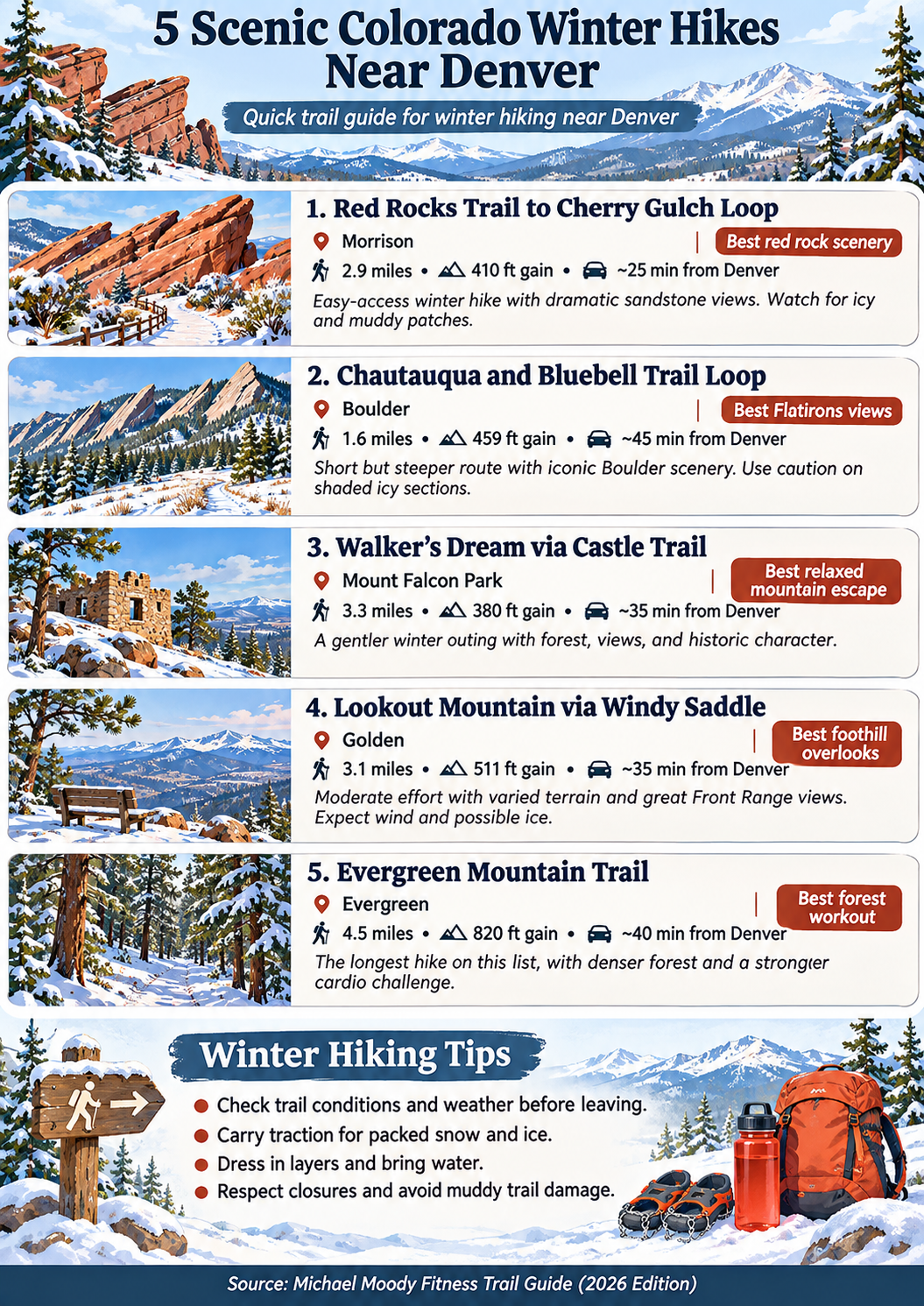
Five scenic winter hikes near Denver are Red Rocks Trail to Cherry Gulch Loop, Chautauqua and Bluebell Trail Loop, Walker's Dream at Mount Falcon, Lookout Mountain via Windy Saddle, and Evergreen Mountain Trail. Distances range from 1.6 to 4.5 miles, with winter access depending on weather, trail conditions, and closures.
Topics
Winter hikes near Denver, best winter hikes near Denver, scenic winter hikes Colorado, easy winter hikes near Denver, winter hiking Colorado Front Range, winter hikes near Golden Colorado, winter hikes near Boulder Colorado, snow hiking near Denver, winter hiking trails near Denver, Red Rocks winter hiking trails, Mount Falcon winter hike, Evergreen Mountain winter hiking, winter hiking tips Colorado, hiking strength training Denver.
Introduction
There's something unusual about a Colorado winter morning. You might leave Denver under an unremarkable gray sky, drive west for half an hour, and find yourself looking across a hillside where fresh snow has settled between the red rocks and ponderosa pines. By noon, the snow could be melting. By four, the wet trail may be turning to ice. That's part of the bargain when you hike along the Front Range in winter. The season is unpredictable, and the mountains don't always follow the forecast. A trail that feels like a pleasant afternoon walk in September can demand considerably more attention in January.
Since moving to Colorado, I've spent a great deal of time exploring the state's trails and documenting their distance, elevation, terrain, and physical demands. My Trail Guide (2026 Edition) includes 229 routes in its master list, with a customized difficulty ranking that considers more than mileage alone. For this article, I've selected five scenic hikes within roughly 45 minutes of Denver. Each offers a different winter landscape without requiring a high-alpine summit. These trails aren't guaranteed to be snow-free, nor are they appropriate every winter day. Their appeal lies in accessibility, varied scenery, and the opportunity to get outdoors when many people are inclined to stay inside. The goal isn't to conquer anything. It's to return home having enjoyed the mountains, with enough energy left to appreciate the rest of your day.
Table of Contents
Red Rocks Trail to Cherry Gulch Loop — The Best Red Rock Scenery
Chautauqua and Bluebell Trail Loop — The Best Flatirons Views
Walker's Dream via Castle Trail — The Best Relaxed Mountain Escape
Lookout Mountain via Windy Saddle — The Best Foothill Overlooks
Evergreen Mountain Trail — The Best Forest Workout
How to Prepare for Winter Hiking in Colorado
The Fitness Benefits of Hiking in Winter
A Practical Strength Program for Winter Hikers
Frequently Asked Questions
Related Articles and Hiking Resources
Colorado Winter Hikes / Photo: Michael Moody Fitness
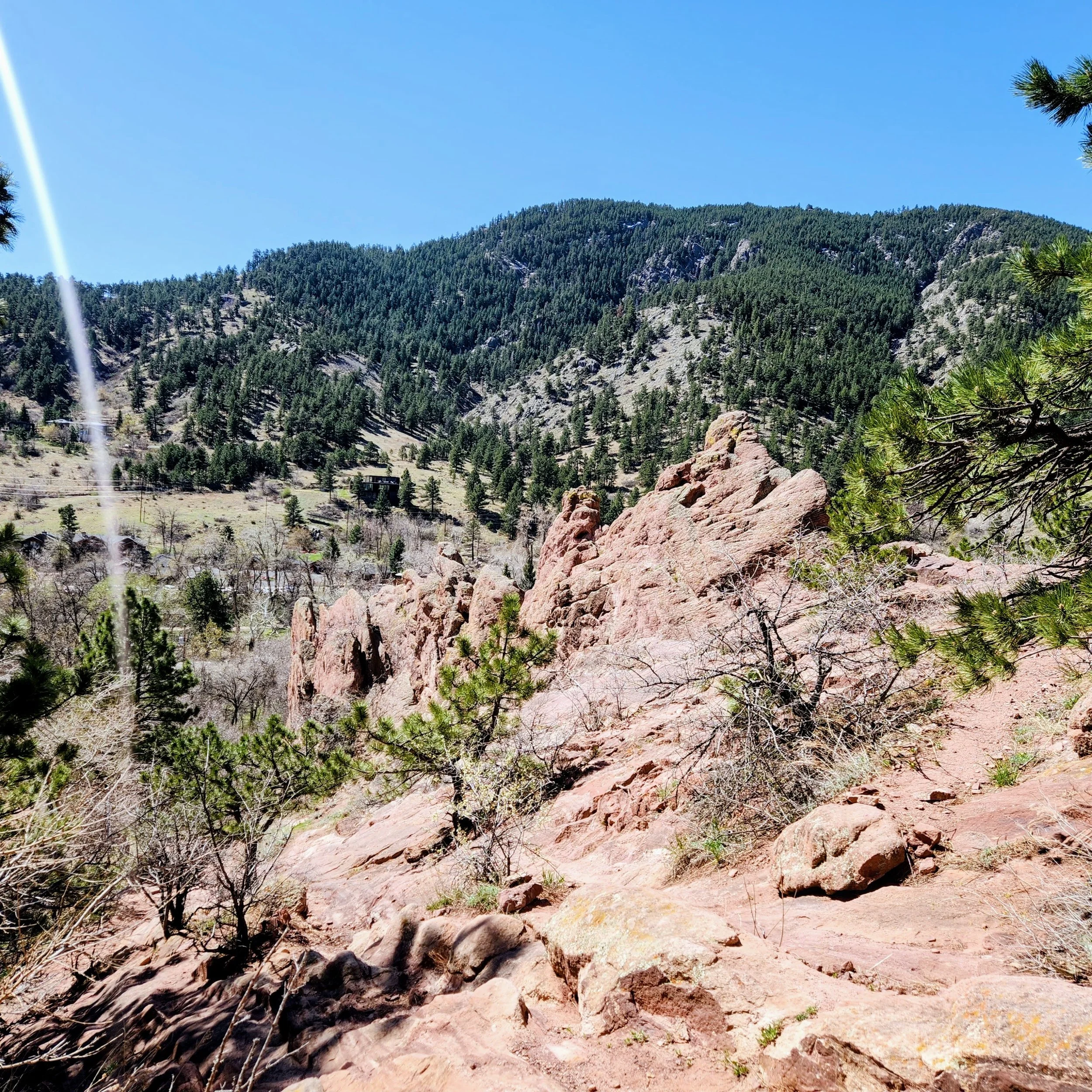
Red Rocks Trail to Cherry Gulch Loop / Photo: Michael Moody Fitness
1. Red Rocks Trail to Cherry Gulch Loop: The Best Red Rock Scenery
Location: Morrison, Colorado
Distance: 2.9 miles
Elevation gain: 410 feet
Approximate drive from Denver: 25 minutes
AllTrails difficulty: Easy
Route: Loop
View the Red Rocks Trail to Cherry Gulch Loop on AllTrails
Most Denver residents know Red Rocks as a concert destination. It's easy to forget that the surrounding landscape is impressive without a stage, an audience, or amplified music rolling across the foothills. Winter gives the park a different character. The enormous sandstone formations look particularly dramatic against snow. On some mornings, the rock's warm colors seem almost exaggerated against the white ground. The open terrain also allows long views across the surrounding foothills.
Of the five hikes in this guide, this is one of the most approachable options for someone beginning to explore winter trails. Its 2.9 miles provide a meaningful walk without requiring an extended afternoon, and the 410 feet of climbing are manageable for many reasonably active adults.
What makes this hike memorable
The contrast between sandstone, snow, and Colorado's winter light is the attraction. You won't need to reach a summit to appreciate the landscape. It's also conveniently close to Denver, making it a practical choice when you have only a few hours available.
What to watch for in winter
Red Rocks sits in an environment where sun exposure can dramatically influence trail conditions. A south-facing section may be mostly dry while nearby shaded terrain remains frozen. Meltwater can leave slick patches as temperatures fall. Exposed trails may also become muddy after warm afternoons. Don't assume that a visible dirt trail is consistently dry. Carry traction devices when freezing conditions are possible, and stay on designated trails rather than walking around muddy sections.
My personal training recommendation
Choose this hike for a relatively short winter outing, especially when you want excellent scenery without substantial elevation gain. For a comfortable pace with occasional photo stops, budget approximately 1.5–2 hours, adjusting for conditions and fitness. If the trail is excessively muddy or officially closed, choose another destination rather than contributing to trail damage.
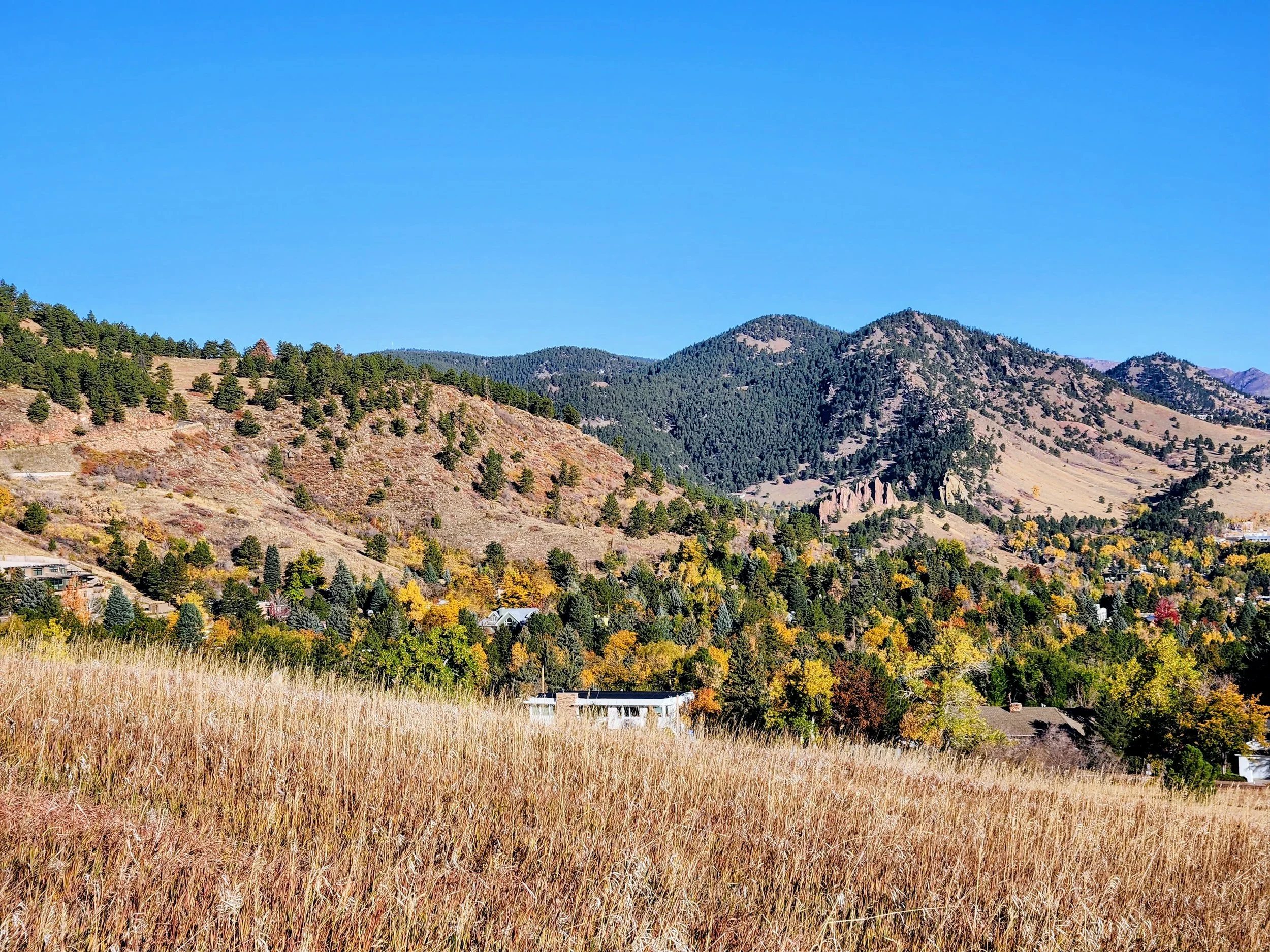
Chautauqua and Bluebell Trail Loop / Photo: Michael Moody Fitness
2. Chautauqua and Bluebell Trail Loop: The Best Flatirons Views
Location: Boulder, Colorado
Distance: 1.6 miles
Elevation gain: 459 feet
Approximate drive from Denver: 45 minutes
AllTrails difficulty: Moderate
Route: Loop
View the Chautauqua and Bluebell Trail Loop on AllTrails
Boulder's Flatirons hardly need an introduction. They're among the most recognizable geological formations along Colorado's Front Range, yet they remain compelling no matter how often you've seen them. In winter, the steep rock faces catch the changing light, and small pockets of snow collect along ledges and in the forest beneath them. The Chautauqua and Bluebell loop is a short hike with surprisingly substantial climbing for its distance. At 1.6 miles and 459 feet of elevation gain, it asks more of your legs than its mileage suggests. This distinction matters for hikers who choose trails based on distance alone. A mile of walking on a relatively flat path is not equivalent to a mile of climbing over rocky, uneven terrain. The cardiovascular and muscular demands can differ considerably.
What makes this hike memorable
The proximity to the Flatirons is the obvious attraction, but the transitions between open meadow, trees, and mountain views make the route interesting. The scenery changes quickly enough that the hike rarely feels repetitive.
What to watch for in winter
Shaded sections near the Flatirons can retain snow and ice after exposed areas have dried. This creates a particularly troublesome situation: hikers start on bare ground, assume the route will stay that way, and then encounter ice farther uphill. Microspikes may help on packed snow or moderate ice, but they don't replace judgment on steep or hazardous surfaces. Pay attention to the descent. A trail that feels comfortable during the climb can be more demanding when you're stepping downhill on slippery ground.
My personal training recommendation
This is a good option for reasonably fit hikers who want a shorter outing with a noticeable physical challenge. Allow about 1–1.5 hours of moving and sightseeing time, plus extra time if snow or ice slows the route. If you have persistent knee pain, difficulty controlling downhill movement, or limited experience with winter traction, wait for favorable conditions.
Walker's Dream via Castle Trail / Photo: Michael Moody Fitness
3. Walker's Dream via Castle Trail: The Best Relaxed Mountain Escape
Location: Mount Falcon Park, Colorado
Distance: 3.3 miles
Elevation gain: 380 feet
Approximate drive from Denver: 35 minutes
AllTrails difficulty: Easy
Route: Out and back
View Walker's Dream via Castle Trail on AllTrails
Mount Falcon is one of those parks that deserves more attention than it gets, especially when people habitually drive farther into the mountains. The landscape combines open meadows, ponderosa pines, mountain views, and remnants of the area's history. Walker's Dream adds an unusual destination: the remains of a project associated with John Brisben Walker's ambition to build a summer residence for United States presidents. It never became the presidential retreat he envisioned, but the setting remains worth visiting.
In winter, this part of Mount Falcon can feel wonderfully removed from Denver, even though the city is a relatively short drive away. The route in my trail guide covers 3.3 miles with approximately 380 feet of gain, making it one of the gentler options in this collection.
What makes this hike memorable
It's the combination of history, forest, and mountain scenery. Unlike hikes built around a summit, Walker's Dream gives you an interesting destination without demanding a difficult ascent. Depending on weather and visibility, the open sections also provide attractive views of the surrounding landscape.
What to watch for in winter
Mount Falcon has different access points and trail configurations. For this particular hike, use the upper western access and confirm the route before leaving. Don't confuse it with the much longer and steeper Castle Trail ascent from the Morrison side of the park. The difference matters: a casual winter walk can become a substantially harder hike if you start from the wrong trailhead. Snow may linger in shaded areas, and Jefferson County can close portions of Mount Falcon when mud threatens trail conditions.
My recommendation
This is my choice for someone who wants an enjoyable winter outing without making elevation gain the main event. Allow approximately 1.5–2 hours. Pack a warm layer for stopping at the historical site, even when the walking temperature feels comfortable. Your body produces less heat once you stop moving, and a pleasant winter afternoon can suddenly feel cold.
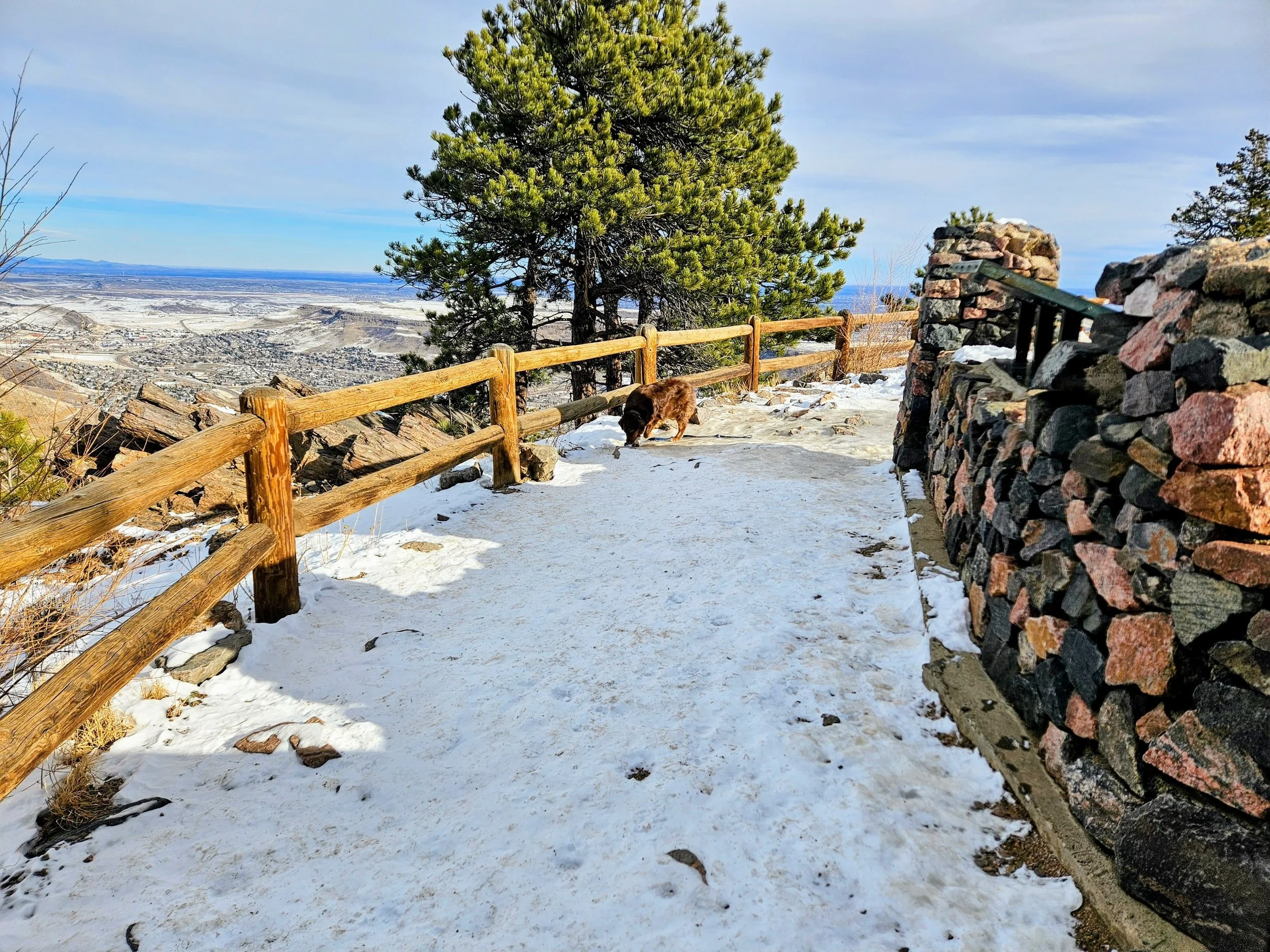
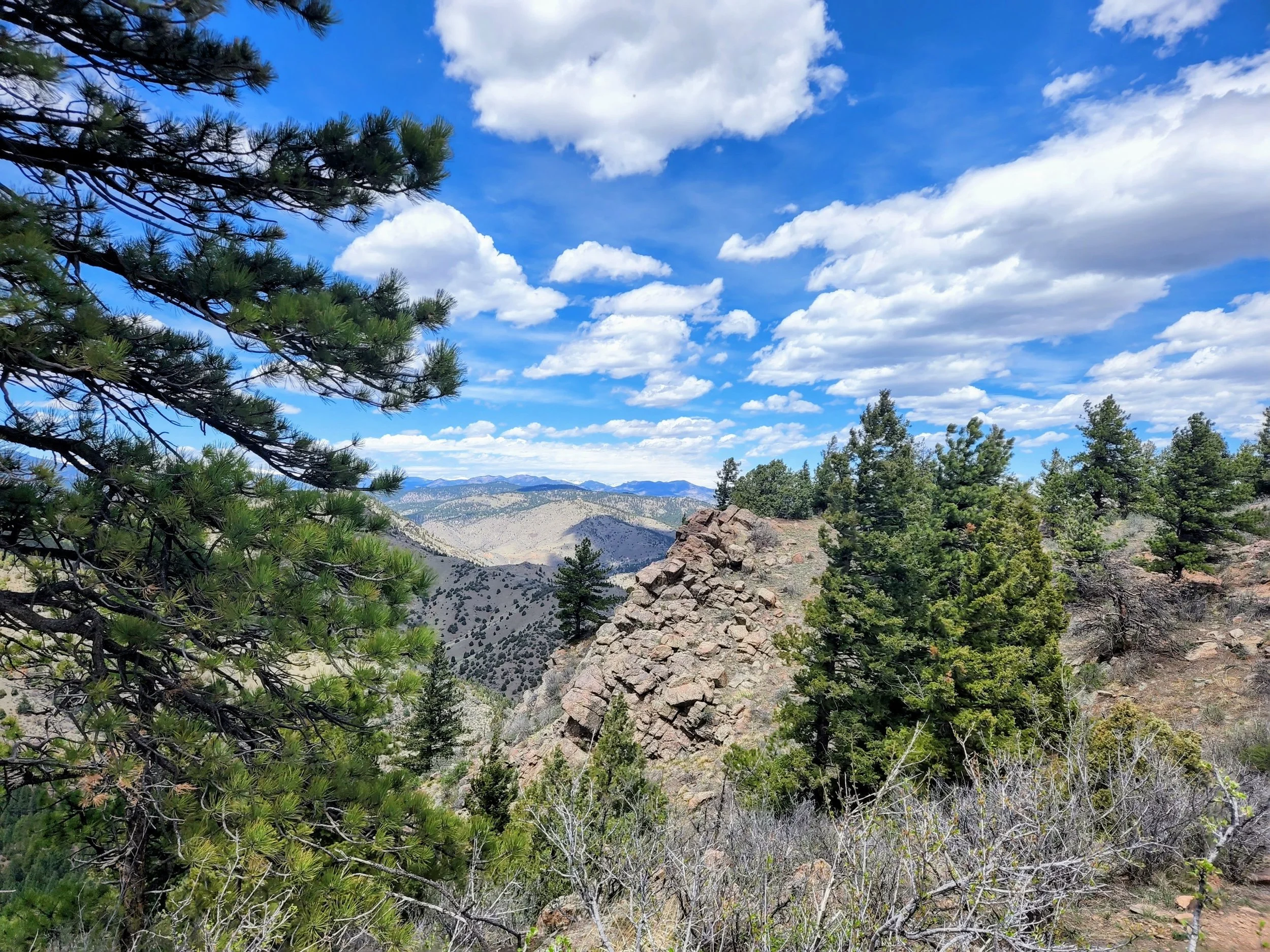
Lookout Mountain via Windy Saddle / Photo: Michael Moody Fitness
4. Lookout Mountain via Windy Saddle: The Best Foothill Overlooks
Location: Golden, Colorado
Distance: 3.1 miles
Elevation gain: 511 feet
Approximate drive from Denver: 35 minutes
AllTrails difficulty: Easy
View Lookout Mountain Trail via Windy Saddle Trailhead on AllTrails
Golden sits in an enviable spot between the city and the mountains. Within minutes, residential streets give way to rocky hillsides and forested slopes. Lookout Mountain makes particularly good use of that geography. From the Windy Saddle area, the trail explores terrain where glimpses of the foothills appear between trees and open areas. On clear winter days, the changing perspective between Golden, the plains, and nearby mountains provides much of the appeal. My guide lists this route at 3.1 miles with 511 feet of elevation gain. That places it comfortably between a casual walk and a more demanding mountain hike, although winter footing can increase the difficulty.
What makes this hike memorable
The varied terrain and proximity to Golden make this a convenient introduction to foothill hiking. It's also a useful place to observe how the landscape changes with elevation and exposure. One section may feel sunny and protected; another may be colder and noticeably windier.
What to watch for in winter
The name Windy Saddle provides a useful reminder about the conditions you might encounter. Wind can affect comfort, visibility, and your ability to stay warm, especially when clothing is damp. Icy sections also deserve attention, especially where the trail traverses slopes or has uneven footing. Before leaving Denver, check the weather for Golden and the Lookout Mountain area rather than relying solely on the downtown forecast. A few hundred feet of elevation and a change in exposure can make a noticeable difference.
My recommendation
Choose Lookout Mountain when you want a moderate-length outing that combines scenery with a manageable workout. Allow approximately 1.5–2 hours, depending on snow, pace, and stops. The hike is particularly appealing on clear days with good visibility, but avoid exposed sections if wind or icy footing makes travel uncomfortable.
5 Winter Hikes Near Denver: Quick Summary
Red Rocks Trail to Cherry Gulch Loop — 2.9 miles, 410 feet gain; red rock scenery.
Chautauqua and Bluebell Trail Loop — 1.6 miles, 459 feet gain; Flatirons views.
Walker's Dream via Castle Trail — 3.3 miles, 380 feet gain; forests and historic ruins.
Lookout Mountain via Windy Saddle — 3.1 miles, 511 feet gain; foothill overlooks.
Evergreen Mountain Trail — 4.5 miles, 820 feet gain; forest hiking and climbing.
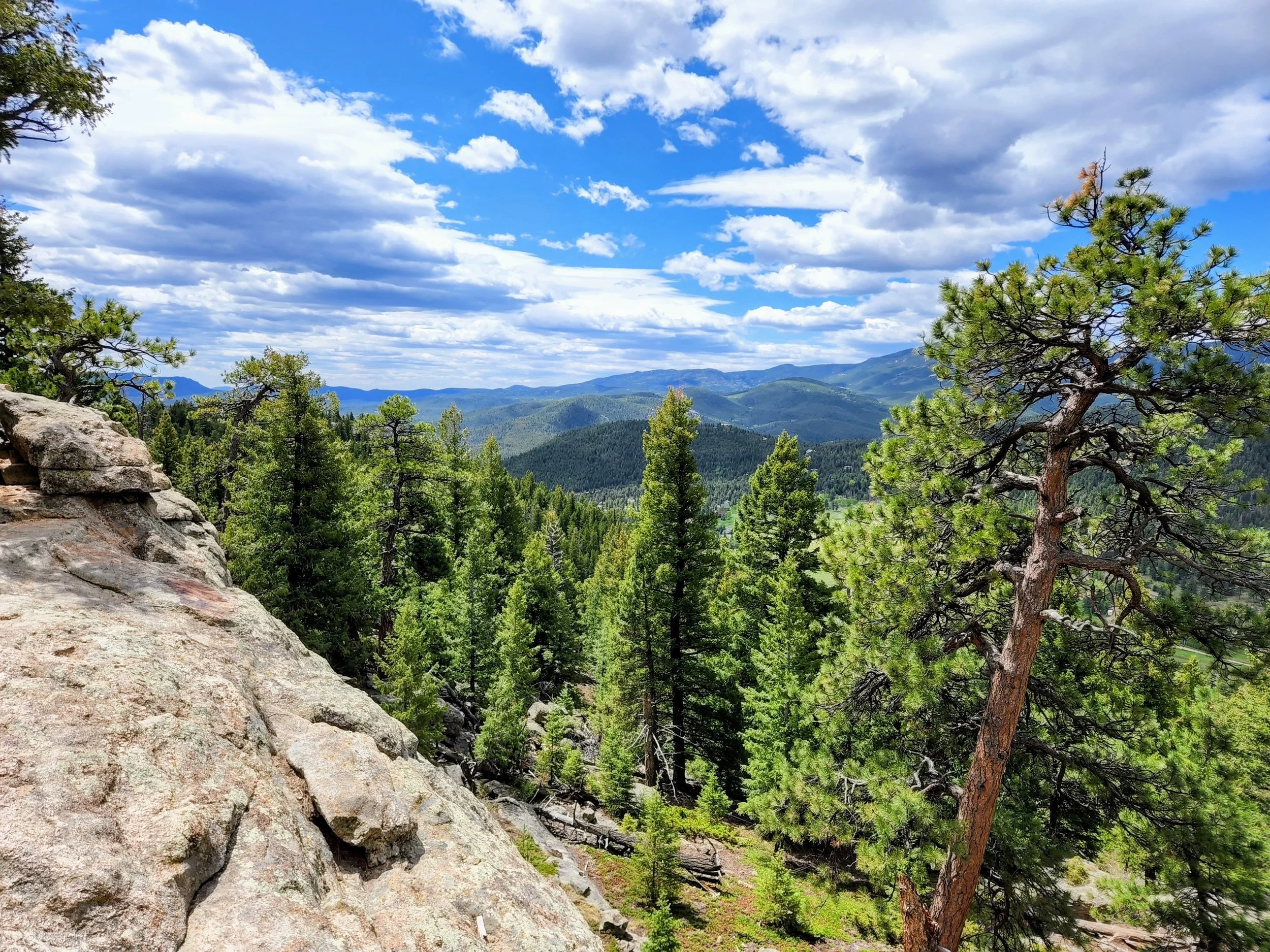
Evergreen Mountain Trail / Photo: Michael Moody Fitness
5. Evergreen Mountain Trail: The Best Forest Workout
Location: Evergreen, Colorado
Distance: 4.5 miles
Elevation gain: 820 feet
Approximate drive from Denver: 40 minutes
AllTrails difficulty: Moderate
Route: Out and back
View Evergreen Mountain Trail on AllTrails
Evergreen has a different atmosphere from the lower foothills near Morrison and Golden. The trees are denser, winter temperatures can be colder, and snow often persists longer in shaded areas. For hikers who enjoy forests as much as mountain overlooks, Evergreen Mountain is a satisfying choice. The route in my guide covers 4.5 miles with approximately 820 feet of elevation gain. It's the longest hike on this list and involves the greatest cumulative climb. That doesn't make it an extreme undertaking, but it does mean you'll want to pay closer attention to pacing, clothing, and winter trail conditions.
What makes this hike memorable
The forest is the attraction. Winter changes the way sound travels through the trees. A wooded trail can become remarkably quiet after fresh snowfall, particularly away from busy roads and parking areas. The climb provides a meaningful cardiovascular challenge, while the surrounding landscape offers an entirely different experience from Red Rocks or Chautauqua.
What to watch for in winter
Because the route reaches higher, more forested terrain, packed snow and ice may persist after lower-elevation trails are mostly clear. Microspikes can be especially valuable on a trail where repeated hikers have compacted snow into a hard, slippery surface. Deep, unconsolidated snow is another matter. Depending on conditions, snowshoes may be more suitable than microspikes, and hiking times can increase substantially. Check park access, trail conditions, and the weather before committing to the entire distance.
My recommendation
Evergreen Mountain is my choice for an established hiker who wants a stronger workout and a more immersive winter forest experience. Allow approximately 2.5–3 hours or more, depending on conditions. If you're relatively new to winter hiking, build experience on a shorter route before attempting this one after substantial snowfall.
6. How to Prepare for Winter Hiking in Colorado
Colorado winter hiking rewards preparation, not bravado. In my experience as a personal trainer, one of the most common problems with outdoor exercise is underestimating the physical demands of changing conditions. A familiar three-mile hike can become much harder when every step requires additional concentration and stabilization. Here are the decisions I'd make before leaving home.
Check More Than the Temperature
Look at wind speed, precipitation, overnight lows, and the forecast for the trail's actual elevation. A sunny Denver forecast doesn't necessarily describe conditions in Evergreen. I love the weather app OpenSnow! Check whether the park is open, whether trails are muddy or icy, and whether access roads have restrictions.
Carry Traction Before You Think You'll Need It
For many Front Range hikes, properly fitted microspikes or comparable trail traction can help on packed snow and moderate ice. They do not turn hazardous terrain into safe terrain. When conditions exceed your experience or equipment, turn around. For deeper snow, snowshoes may be appropriate. On these lower-elevation routes, conditions can vary too much to recommend one piece of equipment for every outing.
Dress for Movement and Stops
Start with a moisture-managing base layer, add insulation appropriate for the temperature, and carry a wind-resistant or waterproof outer layer. Avoid overheating early in the hike. If you sweat heavily under too many layers, your damp layers may become uncomfortable during rest stops or when the wind picks up. Carry dry gloves, a warm hat, and an extra insulating layer.
Pack the Essentials
Bring navigation, water, food, a headlamp, sun protection, a first-aid kit, emergency insulation, and a charged phone. Don't depend on cellular coverage or an electronic map working perfectly. Download your route in advance and tell someone where you're going.
Establish a Turnaround Time
Winter daylight is limited. Decide when you need to return before you begin hiking, and protect that margin even if you're having a wonderful afternoon. A destination isn't worth reaching if doing so leaves you navigating icy terrain after dark.
7. The Fitness Benefits of Hiking in Winter
Hiking effectively combines cardiovascular exercise with the physical demands of uneven terrain. Uphill walking increases the workload on your lower-body muscles and cardiovascular system. Descending introduces another challenge: controlling your body as gravity pulls you downhill. The quadriceps, glutes, calf muscles, and trunk all contribute, though their relative contribution changes with slope, speed, and technique. Winter can add a balance component because the surface beneath your feet is less predictable. That doesn't mean you should deliberately seek out dangerous footing. It means that even an ordinary trail may require more attention to posture, step placement, and controlled movement.
The Mental Health Connection
A growing body of research examines exercise in natural environments, sometimes called green exercise. A 2025 systematic review and meta-analysis by Hu and colleagues, involving 15 randomized controlled trials and 980 participants, found improvements in mental health outcomes associated with exercise in urban green spaces. A separate 2026 systematic review and meta-analysis by Liu and colleagues also reported improvements in mental well-being and positive affect associated with green exercise.
These findings are encouraging, but they don't prove that a snowy Colorado hike beats every indoor workout. Differences in exercise intensity, social interaction, environmental conditions, and study design complicate comparisons. The practical takeaway is more modest and useful: time spent moving in natural settings can be a worthwhile part of a broader routine that supports physical and mental health.
Why Consistency Matters More Than One Long Hike
A single ambitious winter outing is unlikely to transform your conditioning. Regular activity is more useful. If hiking is part of your weekly routine, alternate easier outings with more challenging ones. Walking on other days and maintaining strength training can help you develop the physical capacity required for longer adventures. Avoid interpreting soreness as proof of progress. You should recover adequately before your next demanding session.
8. A Practical Strength Program for Winter Hikers
Hiking doesn't replace a balanced strength-training routine. In particular, downhill walking requires controlled lowering of body weight. If the legs fatigue or the knees become uncomfortable, technique may deteriorate long before you finish the trail. A short program can address several common physical demands.
Step-Ups
2–3 sets of 8–10 repetitions per leg: Use a low, stable step. Drive through the planted foot and stand without pushing excessively from the trailing leg. Lower yourself slowly and maintain control. Increase the step height only when your knees and hips tolerate the movement comfortably.
Split Squats
2 sets of 6–10 repetitions per leg: Keep your torso controlled and descend within a comfortable range. Use support when necessary. The goal is to strengthen each leg independently while developing better control of the hips and knees.
Calf Raises
2–3 sets of 10–15 repetitions: Rise through the balls of your feet, pause briefly, and lower under control. Progress from two-legged to supported single-leg raises when appropriate. Calf strength matters during climbing, but ankle control also contributes to confident movement over irregular ground.
Suitcase Carries
2–3 carries of 30–45 seconds per side: Hold a manageable weight in one hand while walking slowly. Keep your shoulders level, ribs stacked over your pelvis, and steps controlled. This exercise trains trunk stability while requiring the body to resist sideways bending. For hikers with persistent back, knee, or ankle symptoms, modify these movements to match individual tolerance.
A qualified personal trainer in Denver can help identify strength, movement, and conditioning limitations that might affect hiking comfort. At my LoHi personal training studio, I emphasize functional movement, progressive strength training, and physical preparation for the outdoor activities people enjoy. The aim is not simply to perform better in the gym. It's to make your next adventure more manageable.
Frequently Asked Questions
What is the easiest scenic winter hike near Denver?
Red Rocks Trail to Cherry Gulch Loop is one of the easier options in this guide, covering approximately 2.9 miles with 410 feet of elevation gain. Walker's Dream via Castle Trail is another relatively gentle option, provided the trail is free of hazardous ice and excessive mud.
Which winter hikes near Denver are less than an hour away?
All five routes in this article have approximate driving times of 25–45 minutes from Denver under ordinary road conditions. Winter storms, traffic, and trailhead access can increase travel times.
Are Colorado winter hiking trails dangerous?
Some can be. Packed snow, ice, wind exposure, inadequate equipment, and rapid weather changes can make a short hike hazardous. Lower-elevation routes often avoid the extensive alpine hazards associated with winter mountaineering, but conditions still require careful assessment.
What muscles should I strengthen before winter hiking?
Prioritize the quadriceps, glutes, calves, and trunk muscles. Step-ups, split squats, calf raises, and loaded carries can build the strength and control you need to climb, descend, and move over uneven surfaces.
When is the best time of day for winter hiking near Denver?
Late morning through early afternoon can be convenient because temperatures may be warmer and daylight remains available. However, sun-warmed snow can soften into mud and refreeze later. The safest departure time depends on weather, trail orientation, and surface conditions.
Can hiking in nature improve mental health?
Research indicates that physical activity in natural settings may improve mental well-being and reduce negative mood. These benefits vary across individuals and studies, and outdoor exercise should complement, not replace, appropriate medical or mental health care.
Peer-reviewed scientific references
Study 1: Urban green exercise and mental health (2025)
Full citation: Hu, G., Luo, Q., Zhang, P., Zeng, H., and Ma, X. (2025). Effects of urban green exercise on mental health: a systematic review and meta-analysis. Frontiers in Public Health, 13, 1677223.
PMID: 41080844
DOI: 10.3389/fpubh.2025.1677223
Relevance: This meta-analysis included 15 randomized controlled trials involving 980 adults and found a statistically significant improvement in mental health outcomes associated with exercise in urban green spaces. It supports a cautious discussion of the psychological benefits of outdoor physical activity.
Study 2: Green exercise and psychological well-being (2026)
Full citation: Liu, X., Sun, Z., Wang, X., Dong, D., and Samsudin, S. B. (2026). Effects of green exercise on mental health: a systematic review and meta-analysis. Frontiers in Psychology, 17, 1802759.
PMID: 42058299
DOI: 10.3389/fpsyg.2026.1802759
Validated Links:
ABOUT THE AUTHOR: MICHAEL MOODY, PERSONAL TRAINER
As an author, a personal trainer in Denver, and a podcast host, Michael Moody has helped personal training clients reach new fitness heights and achieve incredible weight-loss transformations since 2005. He also produces the wellness podcast "The Elements of Being" and has been featured on NBC, WGN Radio, and PBS.
Michael offers personal training to Denver residents who want to meet at the 2460 W 26th Ave studio….or in their homes throughout LoHi (80206), LoDo (80202), RiNo (80216), Washington Park (80209), Cherry Creek (80206, 80209, 80243, 80246, 80231), and Highlands (80202, 80211, 80212). Michael also offers personal training sessions in Jefferson Park (80211) and Sloan's Lake (80204, 80212).
If you’re looking for a personal trainer who can curate a sustainable (and adaptable) routine based on your needs and wants, Michael is the experienced practitioner you’ve been looking for. Try personal training for a month…your body will thank you!
Related articles
From the Michael Moody Fitness directory, these are the most relevant internal articles to place at the bottom of this post. The directory includes the existing fast-food review under weight-loss obstacles and several related nutrition, dining-out, grocery, and food-label resources.
Michael Moody is a Denver personal trainer, author, and Colorado hiking enthusiast with approximately 20 years of personal training experience. Based in Denver's LoHi neighborhood, he works with personal training clients who want to maintain strength, mobility, balance, and cardiovascular conditioning for everyday activities and Colorado's outdoor recreation. Since moving from Chicago to Denver in 2021, Michael has explored and documented hundreds of Colorado hiking routes, developing a 2026 trail guide that compares distance, elevation gain, altitude, terrain, and difficulty. His approach connects functional strength training with the practical demands of hiking along the Front Range, from Golden and Morrison to Boulder and Evergreen.